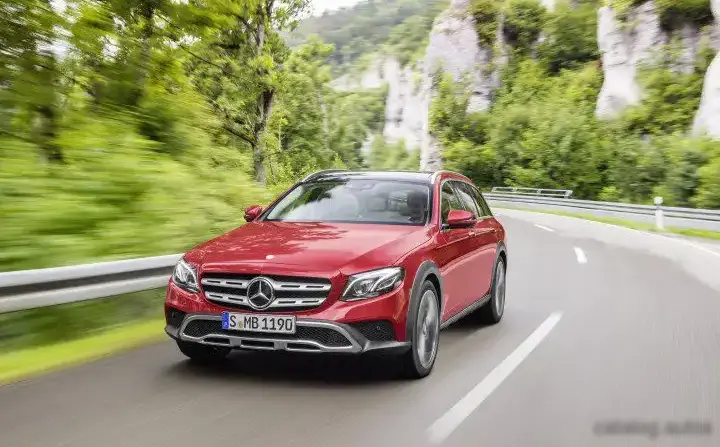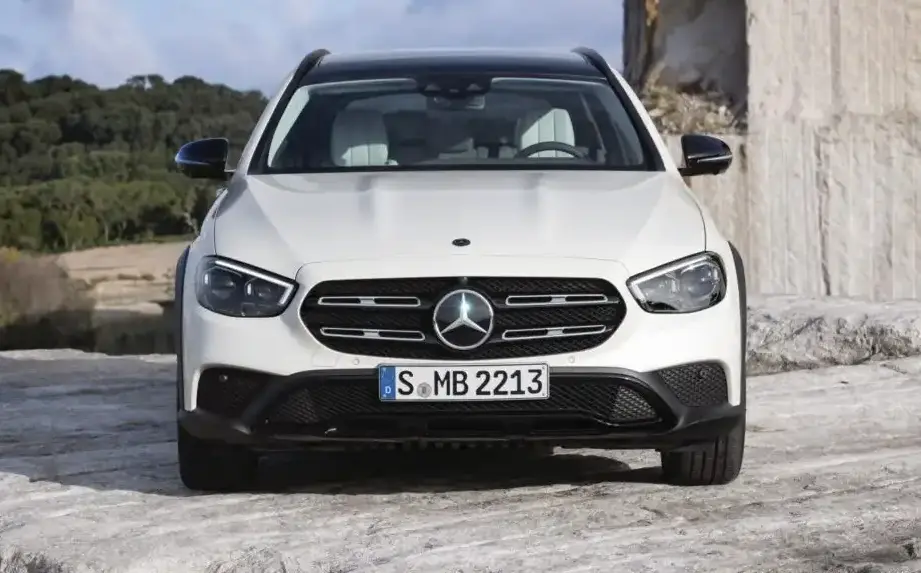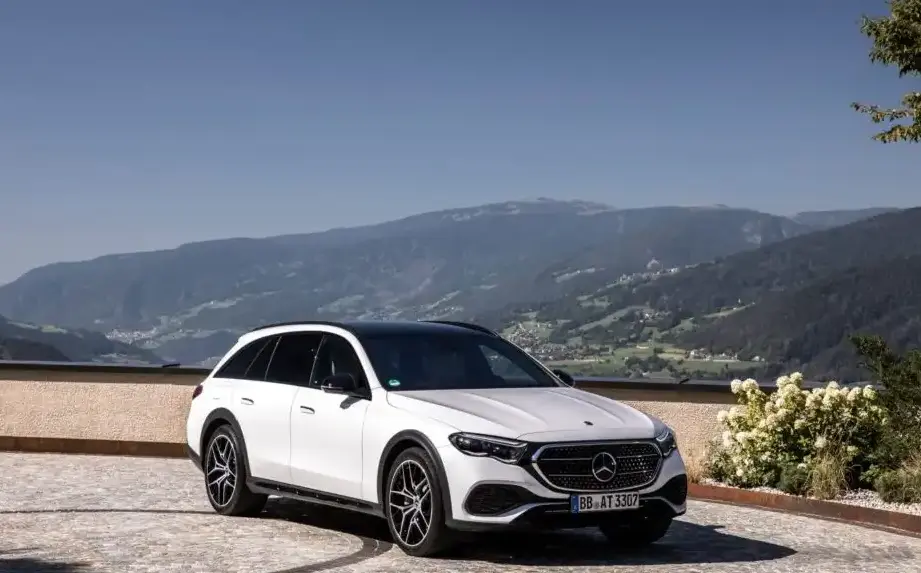
The Mercedes-Benz E-Class Cabriolet (A238) E 200 EQ Boost, produced from 2019 to 2020, represents a compelling entry point into the luxury open-top market. Positioned as a mid-range offering within the A238 generation, it combined a turbocharged four-cylinder engine with mild-hybrid technology and a sophisticated nine-speed automatic transmission. This variant aimed to deliver a balance of performance, efficiency, and comfort, appealing to buyers seeking a stylish and refined convertible experience. It served as a bridge between the base E 180 models (where available) and the more powerful E 300 and AMG variants.
Technical Specifications
| Brand | Mercedes-Benz |
| Model | E-Class |
| Generation | E-Class Cabrio (A238) |
| Type | E 200 (197 Hp) EQ Boost 9G-TRONIC |
| Start of production | 2019 |
| End of production | 2020 |
| Powertrain Architecture | MHEV (Mild Hybrid Electric Vehicle) |
| Body type | Cabriolet |
| Seats | 4 |
| Doors | 2 |
| Fuel consumption at Low speed (WLTP) | 7.3 l/100 km (32.2 US mpg, 38.7 UK mpg, 13.7 km/l) |
| Fuel consumption at very high speed (WLTP) | 8.4 l/100 km (28 US mpg, 33.6 UK mpg, 11.9 km/l) |
| CO2 emissions (WLTP) | 166-190 g/km |
| Fuel consumption (economy) – urban | 8.3-8.8 l/100 km (28.3 – 26.7 US mpg, 34 – 32.1 UK mpg, 12 – 11.4 km/l) |
| Fuel consumption (economy) – extra urban | 5.4-5.8 l/100 km (43.6 – 40.6 US mpg, 52.3 – 48.7 UK mpg, 18.5 – 17.2 km/l) |
| Fuel consumption (economy) – combined | 6.5-6.9 l/100 km (36.2 – 34.1 US mpg, 43.5 – 40.9 UK mpg, 15.4 – 14.5 km/l) |
| CO2 emissions | 148-157 g/km |
| Fuel Type | Petrol (Gasoline) |
| Acceleration 0 – 100 km/h | 7.9 sec |
| Acceleration 0 – 62 mph | 7.9 sec |
| Acceleration 0 – 60 mph | 7.5 sec |
| Maximum speed | 234 km/h (145.4 mph) |
| Emission standard | Euro 6d-TEMP-EVAP-ISC |
| Weight-to-power ratio | 8.9 kg/Hp, 112.3 Hp/tonne |
| Weight-to-torque ratio | 5.5 kg/Nm, 182.3 Nm/tonne |
| Battery voltage | 48 V |
| Electric motor power | 14 Hp |
| Electric motor location | Front, Longitudinal |
| Power | 197 Hp |
| Torque | 320 Nm @ 1650-4000 rpm (236.02 lb.-ft. @ 1650-4000 rpm) |
| Engine layout | Front, Longitudinal |
| Engine Model/Code | M 264 |
| Engine displacement | 1991 cm3 (121.5 cu. in.) |
| Number of cylinders | 4 |
| Engine configuration | Inline |
| Number of valves per cylinder | 4 |
| Fuel injection system | Direct injection |
| Engine aspiration | Twin-scroll turbo, Intercooler |
| Valvetrain | DOHC |
| Engine oil capacity | 6.6 l (6.97 US qt, 5.81 UK qt) |
| Kerb Weight | 1755 kg (3869.11 lbs.) |
| Max. weight | 2340 kg (5158.82 lbs.) |
| Max load | 585 kg (1289.7 lbs.) |
| Trunk (boot) space – minimum | 285 l (10.06 cu. ft.) |
| Fuel tank capacity | 50 l (13.21 US gal, 11 UK gal) |
| Permitted trailer load with brakes (12%) | 1800 kg (3968.32 lbs.) |
| Permitted trailer load without brakes | 750 kg (1653.47 lbs.) |
| Length | 4826 mm (190 in.) |
| Width | 1860 mm (73.23 in.) |
| Width including mirrors | 2055 mm (80.91 in.) |
| Height | 1428 mm (56.22 in.) |
| Wheelbase | 2873 mm (113.11 in.) |
| Front track | 1605 mm (63.19 in.) |
| Rear track | 1609 mm (63.35 in.) |
| Front overhang | 841 mm (33.11 in.) |
| Rear overhang | 1112 mm (43.78 in.) |
| Drivetrain Architecture | Rear wheel drive. MHEV. ICE and electric motor drive rear wheels. |
| Number of gears and type of gearbox | 9 gears, automatic transmission G-TRONIC |
| Front suspension | Independent multi-link suspension |
| Rear suspension | Independent multi-link suspension |
| Front brakes | Ventilated discs |
| Rear brakes | Ventilated discs |
| Tires size | 225/55 R17 |
| Wheel rims size | 7.5J x 17 |
INTRODUCTION
The A238 E-Class Cabriolet, launched in 2017, represented the fifth generation of Mercedes-Benz’s popular open-top luxury car. The E 200 EQ Boost variant, introduced in 2019, brought mild-hybrid technology to the lineup, enhancing fuel efficiency and providing a smoother driving experience. Built on the W213 E-Class sedan platform, the Cabriolet offered a sophisticated blend of luxury, performance, and open-air enjoyment. The EQ Boost system, a 48-volt electrical system, was a key differentiator, providing an additional power boost and enabling features like coasting with the engine off. This model year saw a relatively short production run before updates were implemented for the 2021 model year.
Powertrain & Engine Architecture
At the heart of the E 200 EQ Boost lies the M 264 2.0-liter inline-four cylinder engine. This engine utilizes direct fuel injection and a twin-scroll turbocharger to deliver 197 horsepower and 320 Nm (236 lb-ft) of torque between 1650 and 4000 rpm. The “EQ Boost” component consists of a 48-volt starter-alternator, which adds an additional 14 horsepower and 160 Nm (118 lb-ft) of torque temporarily. This system allows for quicker starts, smoother transitions, and the ability to ‘sail’ or coast with the engine switched off, further improving fuel economy. The engine features a DOHC valvetrain and an intercooler to manage intake air temperatures. The engine is longitudinally mounted, driving the rear wheels. The 9G-TRONIC nine-speed automatic transmission is standard, offering smooth and efficient gear changes. This transmission is known for its wide gear ratio spread, contributing to both fuel economy and responsive acceleration.
Driving Characteristics
The E 200 EQ Boost Cabriolet delivers a comfortable and refined driving experience. While not overtly sporty, the combination of the turbocharged engine and the 9G-TRONIC transmission provides adequate performance for everyday driving and relaxed cruising. Acceleration from 0 to 60 mph takes approximately 7.5 seconds. The EQ Boost system provides a noticeable boost during acceleration, filling in gaps in the torque curve and making the engine feel more responsive. The 9G-TRONIC transmission is well-tuned, offering seamless shifts and contributing to a smooth ride. Compared to the more powerful E 300 variants, the E 200 feels less urgent in its acceleration, but it offers a more fuel-efficient and relaxed driving experience. The rear-wheel drive configuration provides a balanced feel, although it doesn’t offer the all-weather capability of the 4MATIC all-wheel drive system available on other E-Class models.
Equipment & Trim Levels
The E 200 EQ Boost Cabriolet came standard with a generous array of features, befitting its luxury positioning. Standard equipment typically included leather upholstery, automatic climate control, a premium sound system, and a suite of driver-assistance systems such as automatic emergency braking and lane-keeping assist. The infotainment system featured a large central display screen controlled by a rotary dial and touchpad. Optional extras included features like heated and ventilated seats, a head-up display, a panoramic sunroof, and advanced driver-assistance packages. Interior trim options included various wood and metal finishes, allowing buyers to personalize the cabin to their taste. The Cabriolet’s soft top was available in a range of colors and could be operated at speeds up to 50 km/h (31 mph).
Chassis & Braking
The A238 E-Class Cabriolet utilizes a sophisticated chassis design, featuring an independent multi-link suspension at both the front and rear. This suspension setup provides a comfortable ride while maintaining good handling characteristics. The Cabriolet’s chassis is reinforced compared to the sedan to compensate for the lack of a fixed roof, ensuring structural rigidity. Ventilated disc brakes are fitted to all four wheels, providing ample stopping power. Anti-lock braking system (ABS) and electronic stability control (ESC) are standard safety features. The standard tire size is 225/55 R17, mounted on 7.5J x 17 alloy wheels. The suspension is tuned for comfort, prioritizing a smooth ride over aggressive handling.
Market Reception & Comparison
The E 200 EQ Boost Cabriolet was generally well-received by automotive critics. It was praised for its comfortable ride, refined interior, and fuel-efficient powertrain. The EQ Boost system was seen as a positive addition, enhancing the driving experience without compromising comfort. Compared to the E 300 Cabriolet, the E 200 offered a more affordable entry point into the E-Class Cabriolet range, but it lacked the E 300’s outright performance. Fuel economy figures were competitive, with combined fuel consumption ranging from 6.5 to 6.9 l/100 km (36.2 – 34.1 US mpg). Reliability reports have been generally positive, with few major issues reported with the M 264 engine and 9G-TRONIC transmission.
Legacy
The E 200 EQ Boost Cabriolet represents an important step in Mercedes-Benz’s electrification strategy. The introduction of the 48-volt EQ Boost system paved the way for more advanced hybrid and electric powertrains in subsequent models. In the used car market, the A238 E-Class Cabriolet remains a desirable option for buyers seeking a stylish and comfortable open-top luxury car. The M 264 engine and 9G-TRONIC transmission have proven to be reliable, making the E 200 a relatively low-risk purchase. As with any luxury vehicle, regular maintenance is essential to ensure long-term reliability and preserve the car’s value.