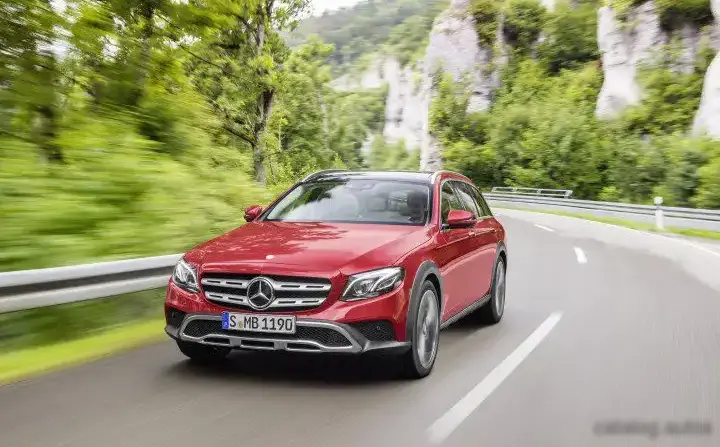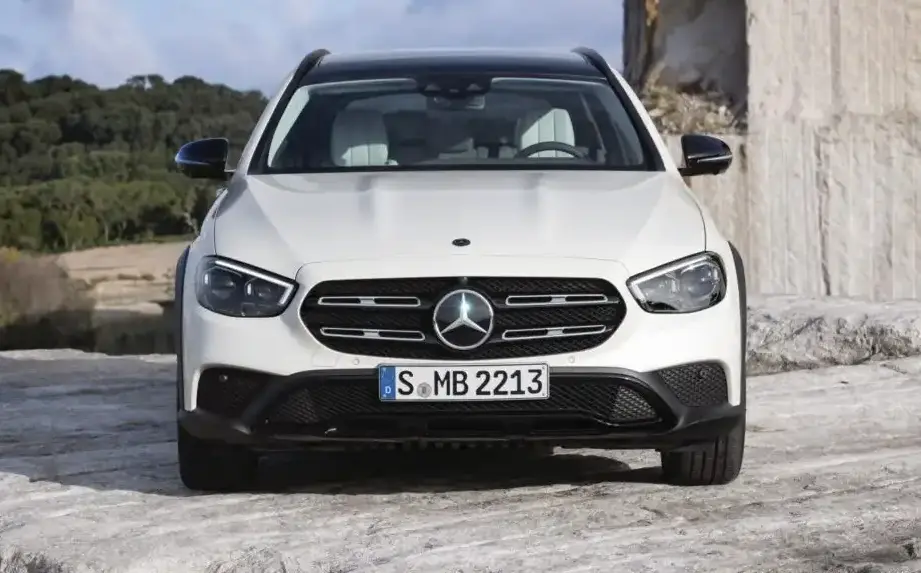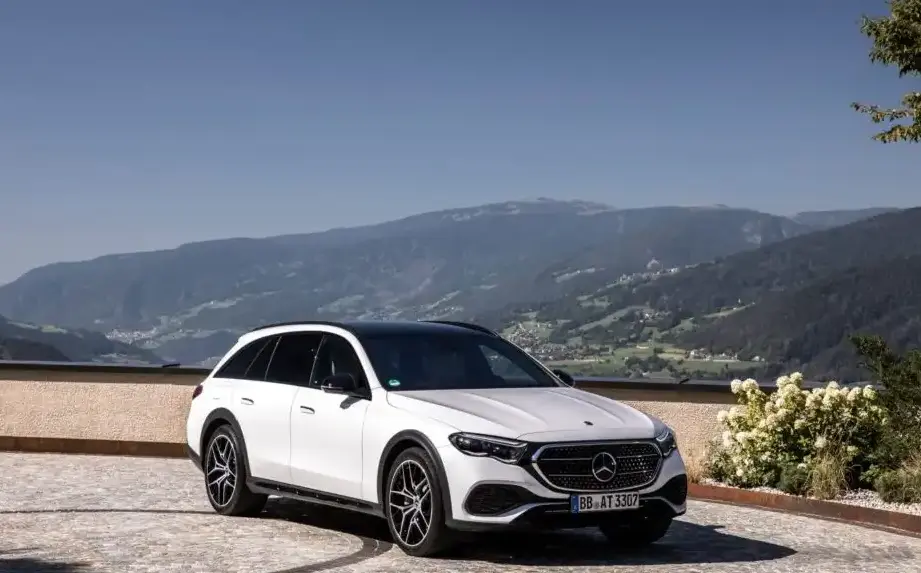
The Mercedes-Benz E-Class Cabriolet (A238) E 400 V6, produced from 2017 to 2018, represented a compelling blend of luxury, performance, and open-air driving enjoyment within the fifth generation (W238) E-Class range. Positioned as a mid-to-high-end variant, it offered a significant step up in power and refinement compared to the base E 300 models, while remaining more accessible than the range-topping E 53 AMG. This model catered to buyers seeking a sophisticated convertible experience without sacrificing the renowned Mercedes-Benz driving dynamics and build quality. It was primarily marketed in North America, Europe, and Asia, appealing to those desiring a premium open-top grand tourer.
Technical Specifications
| Brand | Mercedes-Benz |
| Model | E-Class |
| Generation | E-Class Cabrio (A238) |
| Type (Engine) | E 400 V6 (329 Hp) 9G-TRONIC |
| Start of production | 2017 |
| End of production | 2018 |
| Powertrain Architecture | Internal Combustion engine |
| Body type | Cabriolet |
| Seats | 4 |
| Doors | 2 |
| Fuel consumption (economy) – urban (EPA) | 11.8 l/100 km (19.9 US mpg, 23.9 UK mpg, 8.5 km/l) |
| Fuel consumption (economy) – extra urban (EPA) | 9 l/100 km (26.1 US mpg, 31.4 UK mpg, 11.1 km/l) |
| Fuel consumption (economy) – combined (EPA) | 10.7 l/100 km (22 US mpg, 26.4 UK mpg, 9.3 km/l) |
| Fuel Type | Petrol (Gasoline) |
| Acceleration 0 – 60 mph | 5.5 sec |
| Maximum speed | 210 km/h (130.49 mph), Electronically limited |
| Power | 329 Hp @ 5250-6000 rpm |
| Power per litre | 109.8 Hp/l |
| Torque | 480 Nm @ 1600-4000 rpm (354.03 lb.-ft. @ 1600-4000 rpm) |
| Maximum engine speed | 6300 rpm |
| Engine layout | Front, Longitudinal |
| Engine Model/Code | M 276.823 |
| Engine displacement | 2996 cm3 (182.83 cu. in.) |
| Number of cylinders | 6 |
| Engine configuration | V-engine |
| Cylinder Bore | 88 mm (3.46 in.) |
| Piston Stroke | 82.1 mm (3.23 in.) |
| Compression ratio | 10.5:1 |
| Number of valves per cylinder | 4 |
| Fuel injection system | Direct injection |
| Engine aspiration | BiTurbo, Intercooler |
| Valvetrain | DOHC |
| Engine oil capacity | 6.5 l (6.87 US qt | 5.72 UK qt) |
| Coolant | 12 l (12.68 US qt | 10.56 UK qt) |
| Trunk (boot) space – minimum | 310 l (10.95 cu. ft.) |
| Trunk (boot) space – maximum | 385 l (13.6 cu. ft.) |
| Fuel tank capacity | 66 l (17.44 US gal | 14.52 UK gal) |
| Length | 4826 mm (190 in.) |
| Width | 1860 mm (73.23 in.) |
| Width including mirrors | 2055 mm (80.91 in.) |
| Height | 1427 mm (56.18 in.) |
| Wheelbase | 2873 mm (113.11 in.) |
| Front track | 1608 mm (63.31 in.) |
| Rear (Back) track | 1613 mm (63.5 in.) |
| Front overhang | 841 mm (33.11 in.) |
| Rear overhang | 1112 mm (43.78 in.) |
| Minimum turning circle (turning diameter) | 11.4 m (37.4 ft.) |
| Drivetrain Architecture | The Internal combustion engine (ICE) drives the rear wheels of the vehicle. |
| Drive wheel | Rear wheel drive |
| Number of gears and type of gearbox | 9 gears, automatic transmission G-TRONIC |
| Front suspension | Coil spring, Independent multi-link suspension, Transverse stabilizer, Air Suspension – Optional |
| Rear suspension | Independent multi-link spring suspension with stabilizer, Air Suspension – Optional |
| Front brakes | Ventilated discs, 360×36 mm |
| Rear brakes | Ventilated discs, 360×26 mm |
| Assisting systems | ABS (Anti-lock braking system) |
| Steering type | Steering rack and pinion |
| Power steering | Electric Steering |
| Tires size | Front wheel tires: 245/45 R18Rear wheel tires: 245/40 R18 |
| Wheel rims size | 8J x 18 |
Powertrain & Engine Architecture
The E 400 V6 was powered by the M276.823 engine, a 3.0-liter (2996 cc) V6 engine featuring direct injection and twin-turbocharging. This engine was a mainstay in many Mercedes-Benz models during this period, known for its smooth power delivery and relatively efficient operation. The engine produced 329 horsepower at 5250-6000 rpm and 480 Nm (354 lb-ft) of torque between 1600-4000 rpm. The twin-turbo setup utilized smaller turbochargers to minimize turbo lag and provide a broad torque curve. The engine employed a DOHC (Double Overhead Camshaft) valvetrain with four valves per cylinder. Paired with the engine was the 9G-TRONIC nine-speed automatic transmission. This transmission was designed for both fuel efficiency and responsive shifting, offering a wide range of gear ratios to optimize performance in various driving conditions. The transmission featured a torque converter lock-up clutch to improve efficiency at cruising speeds.
Driving Characteristics
The E 400 V6 Cabriolet offered a refined and comfortable driving experience. The 329 hp engine provided ample power for effortless cruising and brisk acceleration. The 0-60 mph sprint was achieved in approximately 5.5 seconds, making it a genuinely quick convertible. The 9G-TRONIC transmission contributed to smooth gear changes, and the wide gear ratio spread allowed the engine to operate efficiently at highway speeds. Compared to the base E 300 models, the E 400 V6 offered a noticeable improvement in acceleration and overall responsiveness. While not as overtly sporty as the AMG variants, the E 400 V6 provided a balanced blend of performance and comfort. The rear-wheel-drive configuration contributed to a balanced chassis feel, although traction could be limited in wet conditions.
Equipment & Trim Levels
The E 400 V6 Cabriolet came standard with a generous array of features, including leather upholstery, wood trim, dual-zone automatic climate control, a premium sound system, and a power-operated soft top. Standard safety features included ABS, stability control, and a suite of airbags. Optional extras included air suspension (which further enhanced ride comfort), a head-up display, advanced driver-assistance systems (such as adaptive cruise control and lane-keeping assist), and upgraded interior trim options. The interior design was typical of Mercedes-Benz, emphasizing luxury and sophistication. The dashboard featured a combination of analog gauges and a central infotainment screen.
Chassis & Braking
The A238 E-Class Cabriolet utilized a robust chassis designed to provide a comfortable ride and good handling. The front suspension featured a multi-link setup with coil springs and a transverse stabilizer bar. The rear suspension also employed a multi-link design with coil springs and a stabilizer bar. Optional air suspension was available, which allowed the ride height to be adjusted for improved comfort or handling. The braking system consisted of ventilated discs on all four wheels, providing ample stopping power. ABS (Anti-lock Braking System) was standard. The steering system was a rack-and-pinion setup with electric power assistance.
Market Reception & Comparison
The E 400 V6 Cabriolet was generally well-received by automotive critics. It was praised for its powerful engine, smooth transmission, luxurious interior, and comfortable ride. Some reviewers noted that the handling was not as sharp as some of its competitors, but the overall driving experience was considered enjoyable. Compared to the E 300 Cabriolet, the E 400 V6 offered a significant performance upgrade, justifying the higher price tag for buyers seeking more power. Fuel economy was reasonable for a vehicle of this size and performance, averaging around 22 mpg in combined driving. Reliability reports have been generally positive, with few major issues reported with the M276 engine and 9G-TRONIC transmission.
Legacy
The Mercedes-Benz E 400 V6 Cabriolet (A238) remains a desirable used car today. The M276 engine and 9G-TRONIC transmission have proven to be relatively reliable, although regular maintenance is essential. The combination of luxury, performance, and open-air driving enjoyment continues to appeal to buyers seeking a premium convertible experience. The A238 generation E-Class Cabriolet, and specifically the E 400 V6 variant, represents a high point in Mercedes-Benz’s convertible offerings, blending traditional luxury with modern technology and performance.