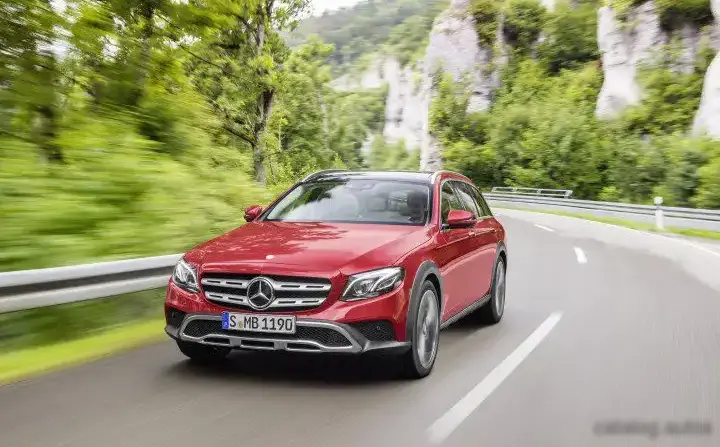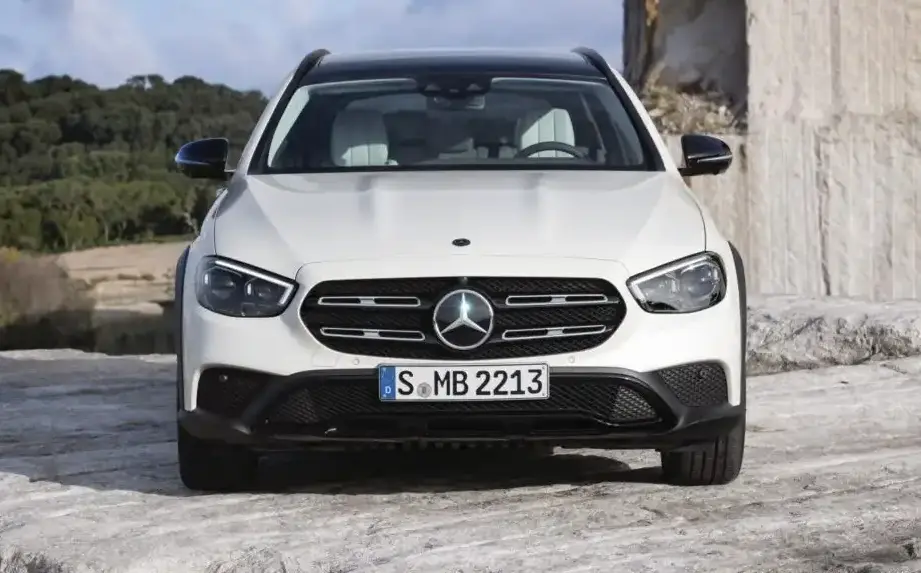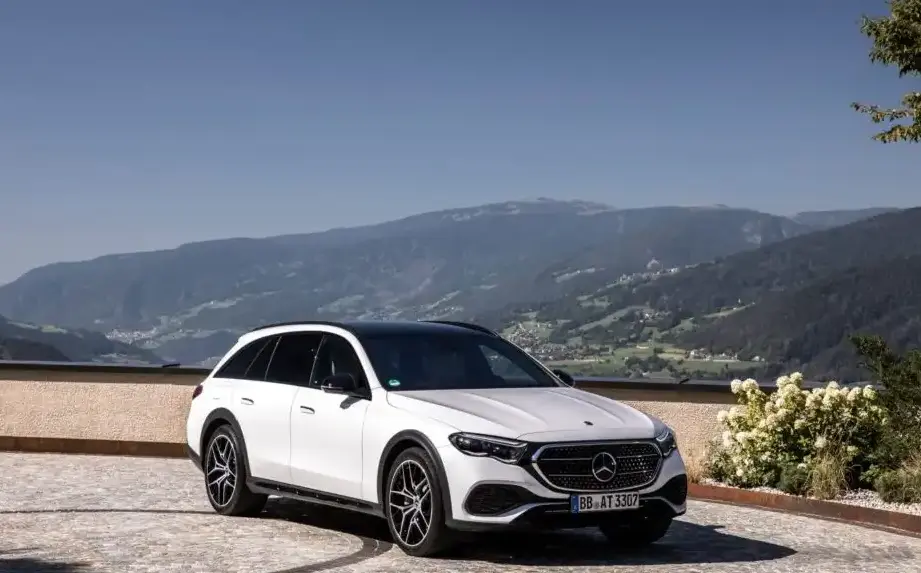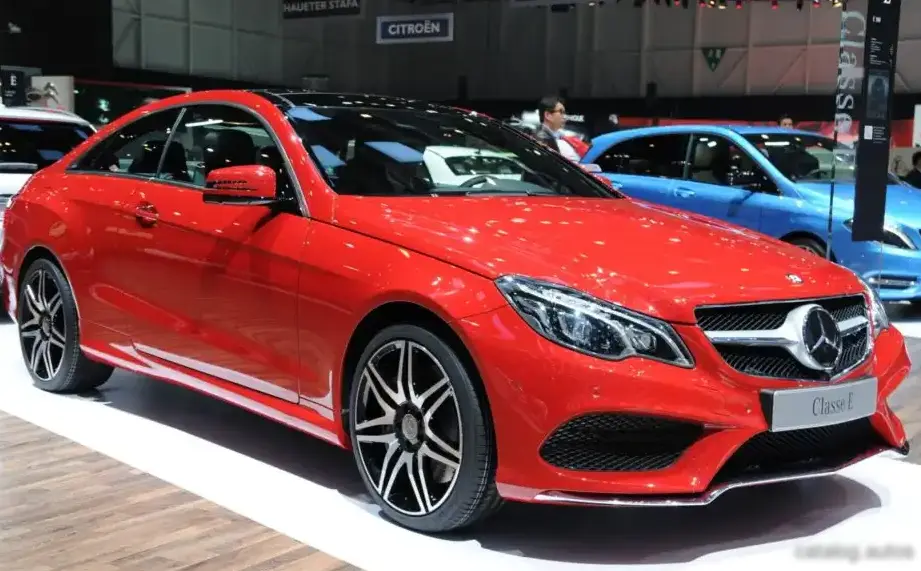
The Mercedes-Benz E 400 Coupe (C207, facelift) represents a compelling blend of luxury, performance, and technology within the E-Class range. Produced from June 2013 to July 2014, this variant occupied a significant position as a high-performance offering within the C207 coupe lineup, positioned above the E 250 and E 350 models. It was part of the facelifted C207 generation, benefiting from styling updates and revised technology compared to the pre-facelift models. The E 400 aimed to deliver a more engaging driving experience while maintaining the comfort and refinement expected of a Mercedes-Benz grand tourer.
Technical Specifications
| Brand | Mercedes-Benz |
| Model | E-Class |
| Generation | E-Class Coupe (C207, facelift 2013) |
| Type | E 400 V6 3.0 (333 Hp) 7G-TRONIC PLUS |
| Start of production | June, 2013 |
| End of production | July, 2014 |
| Powertrain Architecture | Internal Combustion engine |
| Body type | Coupe |
| Seats | 4 |
| Doors | 2 |
| Fuel consumption (urban) | 10.5-10.6 l/100 km (22.4 – 22.2 US mpg) |
| Fuel consumption (extra urban) | 5.6-5.8 l/100 km (42 – 40.6 US mpg) |
| Fuel consumption (combined) | 7.4-7.6 l/100 km (31.8 – 30.9 US mpg) |
| CO2 emissions | 172-177 g/km |
| Fuel Type | Petrol (Gasoline) |
| Acceleration 0 – 100 km/h | 5.2 sec |
| Acceleration 0 – 62 mph | 5.2 sec |
| Acceleration 0 – 60 mph | 4.9 sec |
| Maximum speed | 250 km/h (155.34 mph) – Electronically limited |
| Emission standard | Euro 6 |
| Weight-to-power ratio | 5 kg/Hp |
| Weight-to-torque ratio | 3.4 kg/Nm |
| Power | 333 Hp @ 5250-6000 rpm |
| Torque | 480 Nm @ 1600-4000 rpm (354.03 lb.-ft.) |
| Engine layout | Front, Longitudinal |
| Engine Model/Code | M 276.820 |
| Engine displacement | 2996 cm3 (182.83 cu. in.) |
| Number of cylinders | 6 |
| Engine configuration | V-engine |
| Cylinder Bore | 88 mm (3.46 in.) |
| Piston Stroke | 82.1 mm (3.23 in.) |
| Compression ratio | 10.5:1 |
| Number of valves per cylinder | 4 |
| Fuel injection system | Direct injection |
| Engine aspiration | BiTurbo, Intercooler |
| Valvetrain | DOHC |
| Engine oil capacity | 6.5 l (6.87 US qt | 5.72 UK qt) |
| Coolant capacity | 10.3 l (10.88 US qt | 9.06 UK qt) |
| Kerb Weight | 1650 kg (3637.63 lbs.) |
| Max. weight | 2195 kg (4839.15 lbs.) |
| Max load | 545 kg (1201.52 lbs.) |
| Trunk (boot) space (minimum) | 450 l (15.89 cu. ft.) |
| Fuel tank capacity | 66 l (17.44 US gal | 14.52 UK gal) |
| Max. roof load | 100 kg (220.46 lbs.) |
| Permitted trailer load (with brakes) | 1800 kg (3968.32 lbs.) |
| Permitted trailer load (without brakes) | 750 kg (1653.47 lbs.) |
| Permitted towbar download | 75 kg (165.35 lbs.) |
| Length | 4703 mm (185.16 in.) |
| Width | 1786 mm (70.31 in.) |
| Width including mirrors | 2016 mm (79.37 in.) |
| Height | 1397 mm (55 in.) |
| Wheelbase | 2760 mm (108.66 in.) |
| Front track | 1538 mm (60.55 in.) |
| Rear track | 1541 mm (60.67 in.) |
| Front overhang | 862 mm (33.94 in.) |
| Rear overhang | 1081 mm (42.56 in.) |
| Drag coefficient (Cd) | 0.28 |
| Minimum turning circle | 11.15 m (36.58 ft.) |
| Drivetrain | Rear wheel drive |
| Gearbox | 7 gears, automatic transmission 7G-TRONIC PLUS |
| Front suspension | Coil spring, Independent multi-link suspension, Transverse stabilizer |
| Rear suspension | Independent multi-link spring suspension with stabilizer |
| Front brakes | Ventilated discs |
| Rear brakes | Ventilated discs |
Powertrain & Engine Architecture
The heart of the E 400 Coupe is the M276.820 3.0-liter V6 engine. This engine is a naturally aspirated powerplant featuring direct fuel injection and twin turbochargers. The M276 engine family was a significant step forward for Mercedes-Benz, offering a balance of power and efficiency. The engine utilizes a DOHC (Dual Overhead Camshaft) valvetrain with four valves per cylinder, optimizing airflow for increased performance. The 7G-TRONIC PLUS automatic transmission, a seven-speed unit, was specifically tuned to complement the engine’s characteristics. This transmission offered smooth and responsive shifts, contributing to both performance and fuel economy. The transmission’s gear ratios were optimized for both acceleration and highway cruising, providing a comfortable driving experience.
Driving Characteristics
The E 400 Coupe delivered a noticeably more spirited driving experience compared to the lower-powered E 250 and E 350 variants. The 333 horsepower and 354 lb-ft of torque provided ample power for confident overtaking and brisk acceleration. The 0-60 mph time of around 4.9 seconds was impressive for a luxury coupe of its size. While the 7G-TRONIC PLUS transmission was generally smooth, it wasn’t as aggressively tuned as some sportier transmissions. The focus was on refinement and ease of use, making it well-suited for long-distance grand touring. The rear-wheel-drive configuration contributed to a balanced feel, although it didn’t offer the all-weather capability of the 4MATIC all-wheel-drive system available on other E-Class models.
Equipment & Trim Levels
The E 400 Coupe came standard with a generous array of features, befitting its position as a premium model. Standard equipment typically included leather upholstery, automatic climate control, a premium sound system, and a host of safety features such as ABS, traction control, and stability control. Optional extras included features like a panoramic sunroof, advanced driver-assistance systems (such as lane keeping assist and adaptive cruise control), and upgraded interior trim options. The interior design was characterized by Mercedes-Benz’s signature blend of luxury and technology, with high-quality materials and a well-integrated infotainment system.
Chassis & Braking
The C207 E-Class Coupe featured a sophisticated chassis design aimed at providing a comfortable yet engaging driving experience. The front suspension utilized a multi-link setup with coil springs and a transverse stabilizer bar, while the rear suspension employed an independent multi-link spring suspension with a stabilizer bar. This configuration helped to minimize body roll and provide precise handling. The E 400 Coupe was equipped with ventilated disc brakes on all four wheels, providing ample stopping power. ABS (Anti-lock Braking System) was standard, enhancing safety and control during emergency braking situations.
Market Reception & Comparison
The E 400 Coupe was generally well-received by automotive critics. It was praised for its powerful engine, refined ride, and luxurious interior. Compared to the E 350, the E 400 offered a significant performance upgrade, while maintaining a similar level of comfort and refinement. Fuel economy was respectable for a vehicle of its performance, although it wasn’t as efficient as the four-cylinder E 250. Reliability was generally good, although some owners reported minor issues with electronic components. The E 400 Coupe competed with other luxury coupes such as the BMW 6 Series and the Audi A7.
Legacy
The M276 engine family, including the version found in the E 400 Coupe, has proven to be relatively reliable over the long term, provided it receives regular maintenance. The 7G-TRONIC PLUS transmission is also known for its durability. In the used car market, the E 400 Coupe represents a compelling value proposition for buyers seeking a luxurious and powerful coupe. However, potential buyers should be aware of the potential for higher maintenance costs compared to the lower-powered variants, due to the more complex engine and drivetrain. The C207 E 400 Coupe remains a desirable vehicle for enthusiasts who appreciate its blend of performance, luxury, and technology.