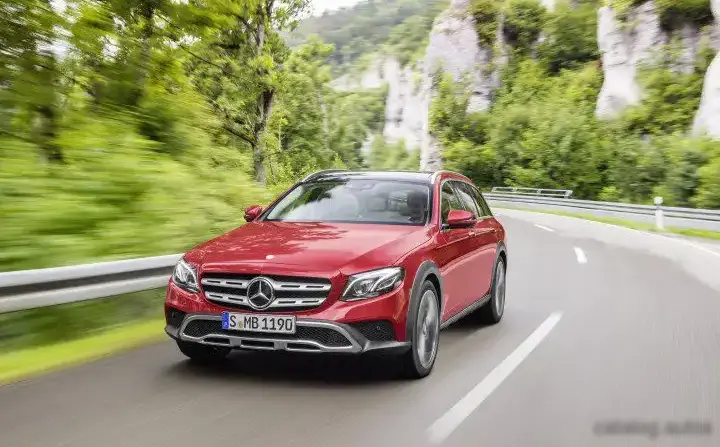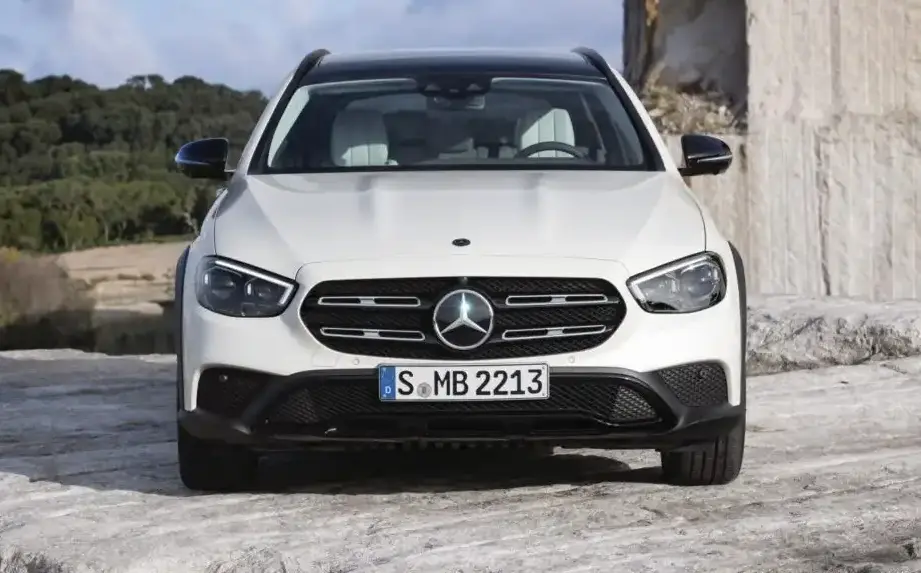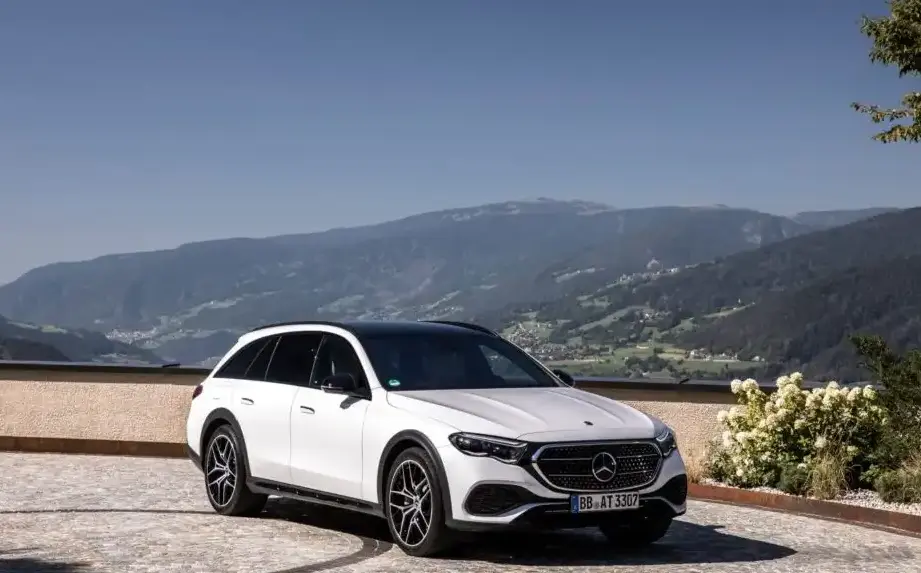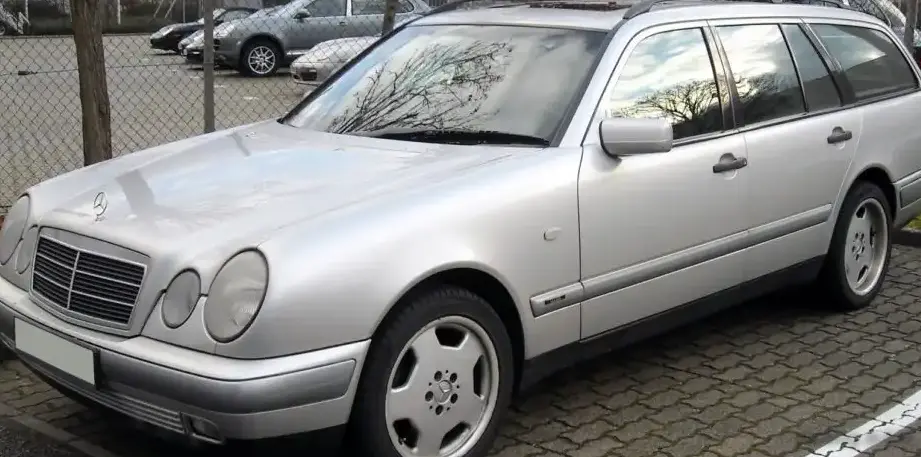
The Mercedes-Benz E-Class T-modell (S210) E 290 Turbodiesel Automatic, produced between December 1995 and July 1999, represented a compelling blend of practicality, luxury, and fuel efficiency within the W210 series. This variant occupied a mid-range position in the T-modell (estate) lineup, offering a balance between performance and economy for buyers seeking a versatile family vehicle. It was primarily marketed in Europe, where demand for diesel-powered wagons was significantly higher than in the United States. The E 290 Turbodiesel Automatic aimed to provide comfortable long-distance cruising and ample cargo space, appealing to families and professionals alike.
Technical Specifications
| Brand | Mercedes-Benz |
| Model | E-Class |
| Generation | E-Class T-modell (S210) |
| Type (Engine) | E 290 Turbodiesel (129 Hp) Automatic |
| Start of production | December, 1995 |
| End of production | July, 1999 |
| Powertrain Architecture | Internal Combustion engine |
| Body type | Station wagon (estate) |
| Seats | 5 |
| Doors | 5 |
| Fuel consumption (urban) | 7.3 l/100 km (32.2 US mpg) |
| Fuel consumption (extra urban) | 5.1 l/100 km (46.1 US mpg) |
| Fuel Type | Diesel |
| Acceleration 0 – 100 km/h | 12.2 sec |
| Acceleration 0 – 62 mph | 12.2 sec |
| Acceleration 0 – 60 mph | 11.6 sec |
| Maximum speed | 190 km/h (118.06 mph) |
| Weight-to-power ratio | 12.8 kg/Hp |
| Weight-to-torque ratio | 5.5 kg/Nm |
| Power | 129 Hp @ 4000 rpm |
| Torque | 300 Nm @ 1800 rpm (221.27 lb.-ft. @ 1800 rpm) |
| Engine layout | Front, Longitudinal |
| Engine Model/Code | OM 602 DE 29 LA / 602.982 |
| Engine displacement | 2874 cm3 (175.38 cu. in.) |
| Number of cylinders | 5 |
| Engine configuration | Inline |
| Cylinder Bore | 89 mm (3.5 in.) |
| Piston Stroke | 92.4 mm (3.64 in.) |
| Compression ratio | 22:1 |
| Number of valves per cylinder | 2 |
| Fuel injection system | Precombustion chamber injection |
| Engine aspiration | Turbocharger, Intercooler |
| Valvetrain | SOHC |
| Engine oil capacity | 7 l (7.4 US qt | 6.16 UK qt) |
| Coolant | 9.5 l (10.04 US qt | 8.36 UK qt) |
| Kerb Weight | 1650 kg (3637.63 lbs.) |
| Max. weight | 2230 kg (4916.31 lbs.) |
| Max load | 580 kg (1278.68 lbs.) |
| Trunk (boot) space – minimum | 600 l (21.19 cu. ft.) |
| Trunk (boot) space – maximum | 1975 l (69.75 cu. ft.) |
| Fuel tank capacity | 70 l (18.49 US gal | 15.4 UK gal) |
| Length | 4816 mm (189.61 in.) |
| Width | 1799 mm (70.83 in.) |
| Height | 1505 mm (59.25 in.) |
| Wheelbase | 2833 mm (111.54 in.) |
| Front track | 1542 mm (60.71 in.) |
| Rear (Back) track | 1546 mm (60.87 in.) |
| Drivetrain Architecture | Rear wheel drive |
| Number of gears | 5 |
| Gearbox type | Automatic transmission |
| Front suspension | Double wishbone |
| Rear suspension | Hydro-pneumatic element, Independent multi-link suspension |
| Front brakes | Ventilated discs |
| Rear brakes | Disc |
| Assisting systems | ABS (Anti-lock braking system) |
| Steering type | Steering rack and pinion |
| Power steering | Hydraulic Steering |
| Tires size | 205/60 R15 |
| Wheel rims size | 7J x 15 |
Powertrain & Engine Architecture
The heart of the E 290 Turbodiesel was the OM 602 DE 29 LA inline-five cylinder diesel engine. This engine, a mainstay of Mercedes-Benz’s diesel offerings in the 1990s, utilized precombustion chamber injection. This system involved injecting fuel into a small pre-chamber connected to the main combustion chamber, promoting more complete combustion and reducing engine noise. The addition of a turbocharger and intercooler boosted output to 129 horsepower at 4000 rpm and 300 Nm (221 lb-ft) of torque at a low 1800 rpm. The five-speed automatic transmission, a common unit in Mercedes-Benz vehicles of the era, was specifically tuned to complement the engine’s torque characteristics, prioritizing smooth shifts and fuel efficiency over outright performance. The engine’s longitudinal mounting and rear-wheel-drive configuration were typical for Mercedes-Benz passenger cars at the time.
Driving Characteristics
The E 290 Turbodiesel Automatic offered a comfortable and relaxed driving experience. While not a sports car, the engine’s ample torque provided sufficient power for everyday driving and highway cruising. Acceleration to 60 mph took around 11.6 seconds, and top speed was limited to 190 km/h (118 mph). The automatic transmission, while smooth, wasn’t particularly quick to downshift, and the overall driving experience was geared towards refinement rather than agility. Compared to the more powerful E 320 or the sportier E 280 variants, the E 290 Turbodiesel prioritized fuel economy and low-speed tractability. Manual transmission versions, while available, were less common and offered a slightly more engaging driving experience, but at the expense of some comfort.
Equipment & Trim Levels
The E 290 Turbodiesel Automatic typically came equipped with a respectable level of standard features, including power windows, central locking, and air conditioning. Interior upholstery was usually cloth, although leather was available as an option. Dashboard configuration was consistent with other E-Class models, featuring a classic Mercedes-Benz design with wood trim accents. Optional extras included a sunroof, upgraded audio system, and automatic climate control. The T-modell designation added the practicality of a large cargo area, with a split-folding rear seat for increased versatility.
Chassis & Braking
The S210 E-Class T-modell featured a double wishbone front suspension and an independent multi-link rear suspension, providing a comfortable ride and good handling characteristics. The E 290 Turbodiesel was equipped with ventilated disc brakes at the front and solid discs at the rear. Anti-lock braking system (ABS) was standard, enhancing safety and stability during braking. The suspension was tuned to balance comfort and handling, and stabilizer bars were fitted to reduce body roll. The steering was a hydraulic power-assisted rack and pinion system, providing precise and responsive steering feel.
Market Reception & Comparison
The E 290 Turbodiesel Automatic was generally well-received by automotive critics, who praised its fuel efficiency, comfortable ride, and spacious interior. However, some criticized its relatively slow acceleration and the somewhat dated feel of the automatic transmission. Compared to other trims in the E-Class lineup, the E 290 Turbodiesel offered the best fuel economy, making it an attractive option for drivers who prioritized efficiency. Its reliability was also considered to be good, although diesel engines of this era could be prone to issues with the fuel injection system and turbocharger.
Legacy
The OM 602 engine family, including the DE 29 LA variant found in the E 290 Turbodiesel, is known for its durability and longevity. Properly maintained examples can still be found on the road today, often with high mileage. The E 290 Turbodiesel Automatic has become a popular choice among enthusiasts seeking a classic Mercedes-Benz wagon that offers a blend of practicality, comfort, and fuel efficiency. While parts availability can be a concern, the engine’s robust design and relatively simple mechanics make it a relatively easy vehicle to maintain for those with mechanical aptitude. In the used car market, these vehicles typically command a reasonable price, reflecting their age and mileage, but also their enduring appeal.