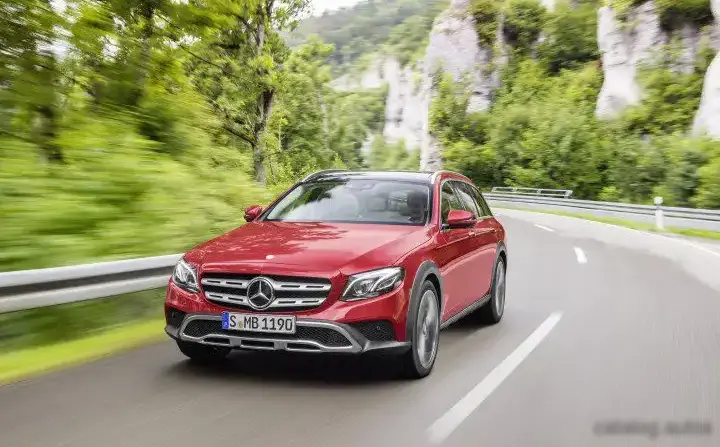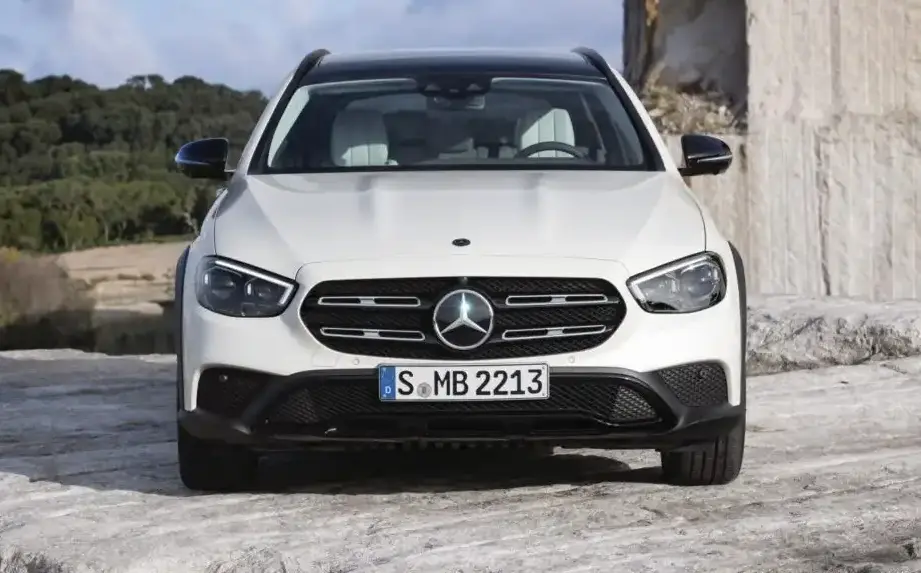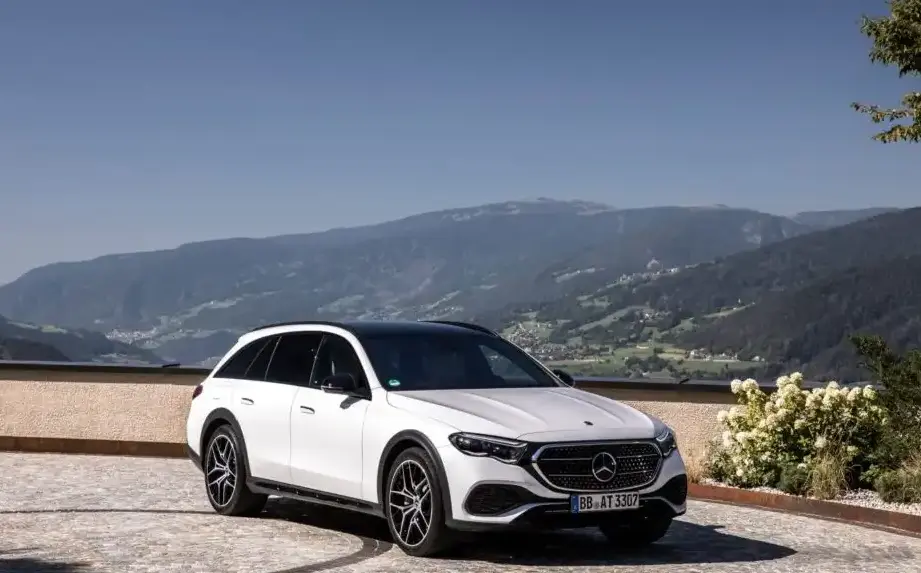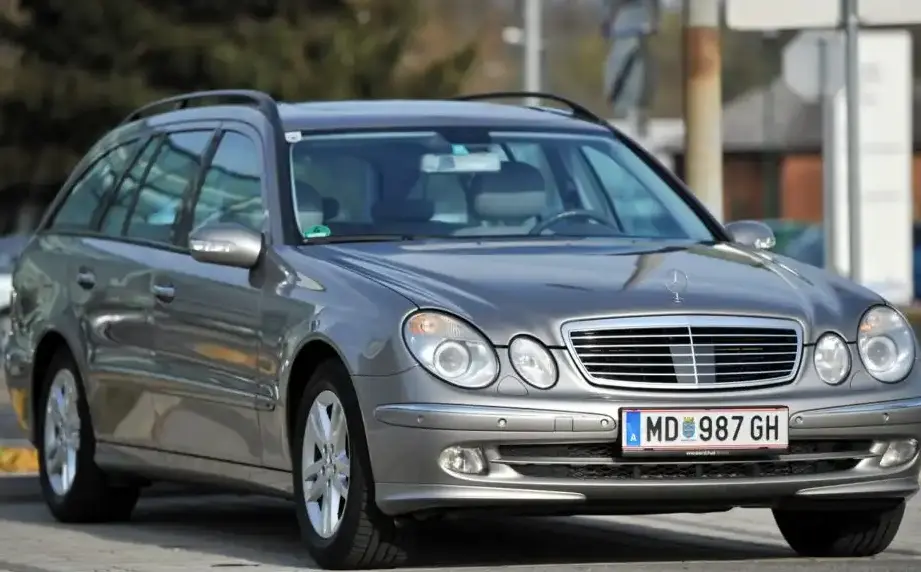
The Mercedes-Benz E 320 CDI T-modell (S211), produced from 2005 to 2006, represents a compelling blend of practicality, performance, and luxury within the E-Class range. Positioned as a mid-to-high-end variant of the S211 wagon, it offered a diesel-powered alternative to the gasoline engines available, appealing to buyers prioritizing fuel efficiency and torque. This model utilized the robust OM642 engine paired with a 5G-TRONIC automatic transmission and the 4MATIC all-wheel-drive system, making it a capable and comfortable grand tourer. It was part of the W211 generation, known for its advancements in safety and technology compared to its predecessor.
Technical Specifications
| Brand | Mercedes-Benz |
| Model | E-class |
| Generation | E-class T-modell (S211) |
| Type (Engine) | E 320 CDI V6 (224 Hp) 4MATIC 5G-TRONIC |
| Start of production | 2005 |
| End of production | 2006 |
| Powertrain Architecture | Internal Combustion engine |
| Body type | Station wagon (estate) |
| Seats | 5 |
| Doors | 5 |
| Fuel consumption (economy) – urban (NEDC) | 11-11.6 l/100 km (21.4 – 20.3 US mpg, 25.7 – 24.4 UK mpg, 9.1 – 8.6 km/l) |
| Fuel consumption (economy) – extra urban (NEDC) | 6.8-6.9 l/100 km (34.6 – 34.1 US mpg, 41.5 – 40.9 UK mpg, 14.7 – 14.5 km/l) |
| Fuel consumption (economy) – combined (NEDC) | 8.3-8.6 l/100 km (28.3 – 27.4 US mpg, 34 – 32.8 UK mpg, 12 – 11.6 km/l) |
| CO2 emissions (NEDC) | 220-228 g/km |
| Fuel Type | Diesel |
| Acceleration 0 – 100 km/h | 8.1 sec |
| Acceleration 0 – 62 mph | 8.1 sec |
| Acceleration 0 – 60 mph | 7.7 sec |
| Maximum speed | 236 km/h (146.64 mph) |
| Emission standard | Euro 4 |
| Weight-to-power ratio | 8.5 kg/Hp, 117.6 Hp/tonne |
| Weight-to-torque ratio | 3.7 kg/Nm, 267.7 Nm/tonne |
| Power | 224 Hp @ 3800 rpm |
| Power per litre | 75 Hp/l |
| Torque | 510 Nm @ 1600-2800 rpm (376.16 lb.-ft. @ 1600-2800 rpm) |
| Engine layout | Front, Longitudinal |
| Engine Model/Code | OM 642.921 |
| Engine displacement | 2987 cm3 (182.28 cu. in.) |
| Number of cylinders | 6 |
| Engine configuration | V-engine |
| Cylinder Bore | 83 mm (3.27 in.) |
| Piston Stroke | 92 mm (3.62 in.) |
| Compression ratio | 17.7:1 |
| Number of valves per cylinder | 4 |
| Fuel injection system | Diesel Commonrail |
| Engine aspiration | Turbocharger, Intercooler |
| Valvetrain | DOHC |
| Engine oil capacity | 8.5 l (8.98 US qt | 7.48 UK qt) |
| Coolant | 7.5 l (7.93 US qt | 6.6 UK qt) |
| Kerb Weight | 1905 kg (4199.81 lbs.) |
| Max. weight | 2555 kg (5632.81 lbs.) |
| Max load | 650 kg (1433 lbs.) |
| Trunk (boot) space – minimum | 690 l (24.37 cu. ft.) |
| Trunk (boot) space – maximum | 1950 l (68.86 cu. ft.) |
| Fuel tank capacity | 80 l (21.13 US gal | 17.6 UK gal) |
| Max. roof load | 100 kg (220.46 lbs.) |
| Permitted trailer load with brakes (12%) | 2100 kg (4629.71 lbs.) |
| Permitted trailer load without brakes | 750 kg (1653.47 lbs.) |
| Length | 4847 mm (190.83 in.) |
| Width | 1822 mm (71.73 in.) |
| Width including mirrors | 1990 mm (78.35 in.) |
| Height | 1499 mm (59.02 in.) |
| Wheelbase | 2854 mm (112.36 in.) |
| Front track | 1559 mm (61.38 in.) |
| Rear (Back) track | 1552 mm (61.1 in.) |
| Front overhang | 828 mm (32.6 in.) |
| Rear overhang | 1165 mm (45.87 in.) |
| Drag coefficient (Cd) | 0.32 |
| Minimum turning circle (turning diameter) | 11.4 m (37.4 ft.) |
| Drivetrain Architecture | The Internal combustion engine (ICE) drives permanently the four wheels of the vehicle. |
| Drive wheel | All wheel drive (4×4) |
| Number of gears and type of gearbox | 5 gears, automatic transmission G-TRONIC |
| Front suspension | Coil spring, Double wishbone, Transverse stabilizer, Air Suspension – Optional |
| Rear suspension | Independent multi-link suspension, Air suspension, Transverse stabilizer |
| Front brakes | Ventilated discs |
| Rear brakes | Ventilated discs |
| Assisting systems | ABS (Anti-lock braking system) |
| Steering type | Steering rack and pinion |
| Power steering | Hydraulic Steering |
| Tires size | 225/55 R16; 245/45 R17; 245/40 R18 |
| Wheel rims size | 7.5J x 16; 8J x 16; 8J x 17; 8.5J x 17; 8.5J x 18 |
Powertrain & Engine Architecture
The heart of the E 320 CDI T-modell is the OM642.921 3.0-liter V6 diesel engine. This engine is a significant departure from earlier Mercedes-Benz diesel designs, featuring a common-rail direct injection system, a variable geometry turbocharger, and an intercooler. The common-rail system, operating at extremely high pressures, allows for precise fuel metering and optimized combustion, contributing to both power and efficiency. The engine produces 224 horsepower at 3800 rpm and a substantial 510 Nm (376 lb-ft) of torque between 1600 and 2800 rpm. The 5G-TRONIC automatic transmission, a five-speed unit, was specifically calibrated to work with the engine’s torque characteristics. It offers smooth shifts and a ‘Comfort’ and ‘Sport’ mode for different driving styles. The 4MATIC all-wheel-drive system provides enhanced traction and stability, particularly in adverse weather conditions.
Driving Characteristics
The E 320 CDI T-modell delivers a refined and capable driving experience. The abundant torque from the diesel engine provides strong acceleration, especially in the mid-range. While not as overtly sporty as some of its gasoline-powered siblings, the E 320 CDI offers brisk performance, achieving 0-60 mph in approximately 7.7 seconds. The 5G-TRONIC transmission generally shifts smoothly, although it can sometimes feel a bit hesitant during quick downshifts. The 4MATIC system inspires confidence on slippery surfaces, and the optional air suspension (available on some trims) further enhances ride comfort. Compared to the E 320 gasoline variant, the CDI offers superior fuel economy and a more relaxed driving style, prioritizing effortless cruising over outright performance.
Equipment & Trim Levels
The E 320 CDI T-modell typically came well-equipped, reflecting its position in the E-Class lineup. Standard features included automatic climate control, power-adjustable front seats, a multi-function steering wheel, and a premium audio system. Leather upholstery was common, and options included navigation, sunroof, heated seats, and upgraded audio systems. The wagon configuration itself added to the practicality, offering a generous 690 liters (24.37 cu ft) of cargo space with the rear seats up, expanding to 1950 liters (68.86 cu ft) with the seats folded down. Trim levels varied slightly by market, but generally offered increasing levels of luxury and technology.
Chassis & Braking
The S211 E-Class wagon utilizes a robust chassis with a multi-link independent rear suspension, providing a comfortable ride and good handling characteristics. Front suspension consists of a coil spring, double wishbone setup with a transverse stabilizer. Braking duties are handled by ventilated discs on all four wheels, coupled with ABS (Anti-lock Braking System) and electronic brake-force distribution. The E 320 CDI, due to its increased weight compared to some other E-Class variants, often featured slightly stiffer springs and dampers to maintain composure during spirited driving.
Market Reception & Comparison
The E 320 CDI T-modell was generally well-received by automotive critics. It was praised for its fuel efficiency, strong torque, and comfortable ride. However, some reviewers noted that the diesel engine could be somewhat noisy compared to gasoline alternatives. Compared to the E 320 gasoline model, the CDI offered significantly better fuel economy, making it a popular choice for long-distance drivers. Against other diesel wagons of the time, such as the BMW 5 Series Touring and Audi A6 Avant, the E 320 CDI held its own in terms of performance, refinement, and practicality.
Legacy
The OM642 engine, found in the E 320 CDI, is known for its durability and reliability, provided it receives regular maintenance. These engines are capable of high mileage with proper care. However, potential issues can include injector failures, turbocharger wear, and problems with the diesel particulate filter (DPF). On the used car market, the E 320 CDI T-modell remains a desirable option for those seeking a practical, comfortable, and fuel-efficient wagon. Its combination of luxury, performance, and cargo capacity continues to appeal to buyers today, though finding well-maintained examples is becoming increasingly important.