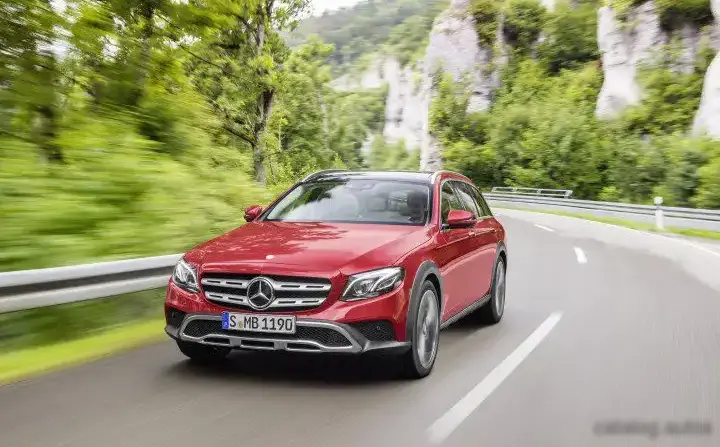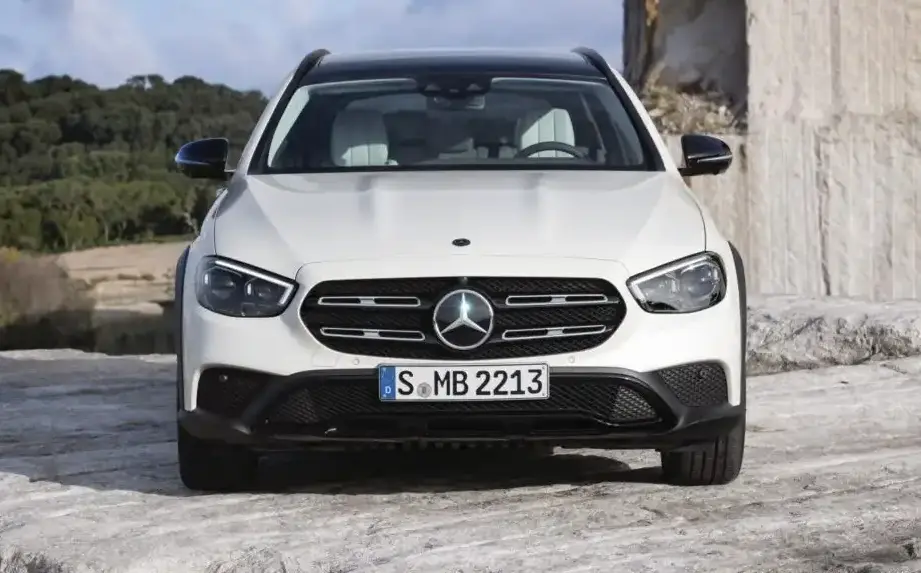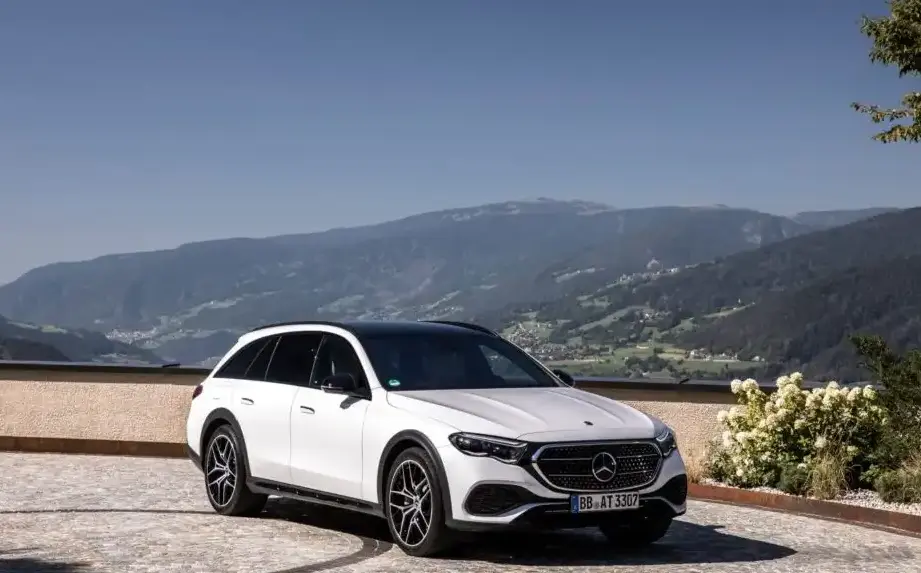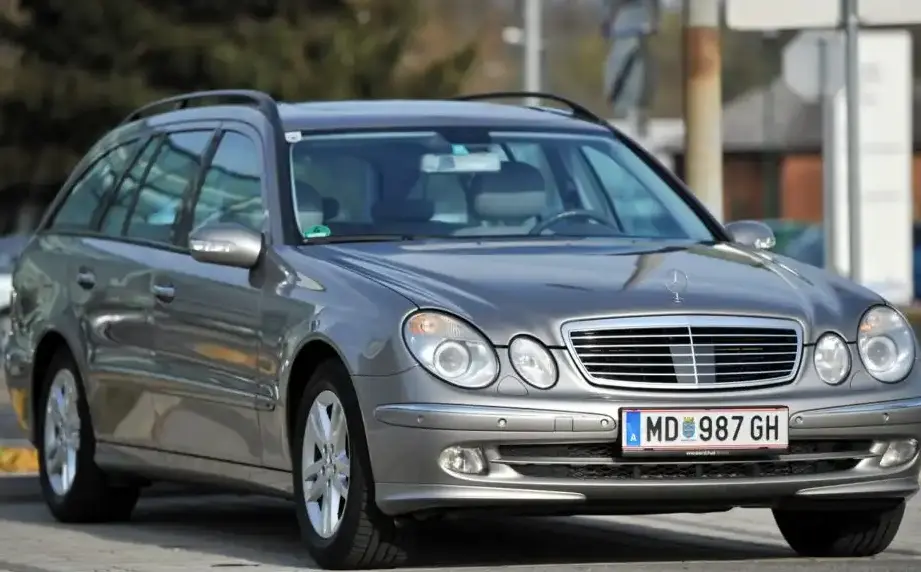
The Mercedes-Benz E 320 V6 4MATIC T-modell (S211), produced from 2003 to 2004, represented a compelling blend of luxury, practicality, and all-weather capability within the E-Class range. Positioned as a mid-to-upper tier offering, it catered to buyers seeking a spacious, comfortable wagon with strong performance and the added security of Mercedes-Benz’s 4MATIC all-wheel-drive system. This variant occupied a space between the more economical E 280 models and the higher-performance E 500, offering a balance of power and efficiency. It was part of the S211 generation, the wagon (estate) version of the W211 E-Class, known for its refined interior and advanced technology for its time.
Technical Specifications
| Brand | Mercedes-Benz |
| Model | E-class |
| Generation | E-class T-modell (S211) |
| Type (Engine) | E 320 V6 (224 Hp) 4MATIC 5G-TRONIC |
| Start of production | 2003 |
| End of production | 2004 |
| Powertrain Architecture | Internal Combustion engine |
| Body type | Station wagon (estate) |
| Seats | 5 |
| Doors | 5 |
| Fuel consumption (economy) – urban (NEDC) | 15.4 l/100 km (15.3 US mpg, 18.3 UK mpg, 6.5 km/l) |
| Fuel consumption (economy) – extra urban (NEDC) | 8.2 l/100 km (28.7 US mpg, 34.4 UK mpg, 12.2 km/l) |
| Fuel consumption (economy) – combined (NEDC) | 10.6 l/100 km (22.2 US mpg, 26.6 UK mpg, 9.4 km/l) |
| CO2 emissions (NEDC) | 254 g/km |
| Fuel Type | Petrol (Gasoline) |
| Acceleration 0 – 100 km/h | 9 sec |
| Acceleration 0 – 62 mph | 9 sec |
| Acceleration 0 – 60 mph | 8.6 sec |
| Maximum speed | 233 km/h (144.78 mph) |
| Emission standard | Euro 4 |
| Weight-to-power ratio | 8 kg/Hp, 124.8 Hp/tonne |
| Weight-to-torque ratio | 5.7 kg/Nm, 175.5 Nm/tonne |
| Power | 224 Hp @ 5600 rpm |
| Power per litre | 70 Hp/l |
| Torque | 315 Nm @ 3000-4800 rpm (232.33 lb.-ft. @ 3000-4800 rpm) |
| Engine layout | Front, Longitudinal |
| Engine Model/Code | M 112.954 |
| Engine displacement | 3199 cm3 (195.21 cu. in.) |
| Number of cylinders | 6 |
| Engine configuration | V-engine |
| Cylinder Bore | 89.9 mm (3.54 in.) |
| Piston Stroke | 84 mm (3.31 in.) |
| Compression ratio | 10:1 |
| Number of valves per cylinder | 3 |
| Fuel injection system | Multi-port manifold injection |
| Engine aspiration | Naturally aspirated engine |
| Valvetrain | SOHC |
| Engine oil capacity | 8 l (8.45 US qt, 7.04 UK qt) |
| Coolant | 10 l (10.57 US qt, 8.8 UK qt) |
| Kerb Weight | 1795 kg (3957.3 lbs.) |
| Max. weight | 2445 kg (5390.3 lbs.) |
| Max load | 650 kg (1433 lbs.) |
| Trunk (boot) space – minimum | 690 l (24.37 cu. ft.) |
| Trunk (boot) space – maximum | 1950 l (68.86 cu. ft.) |
| Fuel tank capacity | 80 l (21.13 US gal, 17.6 UK gal) |
| Permitted trailer load with brakes (12%) | 2100 kg (4629.71 lbs.) |
| Permitted trailer load without brakes | 750 kg (1653.47 lbs.) |
| Length | 4850 mm (190.94 in.) |
| Width | 1822 mm (71.73 in.) |
| Width including mirrors | 1990 mm (78.35 in.) |
| Height | 1495 mm (58.86 in.) |
| Wheelbase | 2854 mm (112.36 in.) |
| Front track | 1559 mm (61.38 in.) |
| Rear (Back) track | 1552 mm (61.1 in.) |
| Front overhang | 831 mm (32.72 in.) |
| Rear overhang | 1165 mm (45.87 in.) |
| Drag coefficient (Cd) | 0.30 |
| Minimum turning circle (turning diameter) | 11.4 m (37.4 ft.) |
| Drivetrain Architecture | The Internal combustion engine (ICE) drives permanently the four wheels of the vehicle. |
| Drive wheel | All wheel drive (4×4) |
| Number of gears and type of gearbox | 5 gears, automatic transmission |
| Front suspension | Coil spring, Double wishbone, Transverse stabilizer, Air Suspension – Optional |
| Rear suspension | Independent multi-link suspension, Air suspension, Transverse stabilizer |
| Front brakes | Ventilated discs |
| Rear brakes | Disc |
| Assisting systems | ABS (Anti-lock braking system) |
| Steering type | Steering rack and pinion |
| Power steering | Hydraulic Steering |
| Tires size | 225/55 R16; 245/45 R17 |
| Wheel rims size | 7.5J x 16; 8J x 17; 8.5J x 17 |
Powertrain & Engine Architecture
The E 320 4MATIC T-modell utilized the M112.954 3.2-liter V6 engine. This engine was a naturally aspirated, 60-degree V6 featuring a single overhead camshaft (SOHC) per cylinder bank and three valves per cylinder (two intake, one exhaust). The engine employed multi-port fuel injection, delivering fuel directly into the intake ports. The M112 engine family was known for its smooth operation and relatively high specific output. Paired with this engine was the 5G-TRONIC automatic transmission, a five-speed unit known for its smooth shifts and adaptive learning capabilities. This transmission adjusted shift points based on driving style and conditions. The 4MATIC system was a full-time all-wheel-drive system, distributing power between the front and rear axles for enhanced traction.
Driving Characteristics
The 224 horsepower and 315 Nm (232 lb-ft) of torque provided by the E 320 4MATIC T-modell delivered respectable performance for a wagon of its size. Acceleration from 0-60 mph took approximately 8.6 seconds, and top speed was electronically limited to 144.78 mph. While not as quick as the E 500, the E 320 offered a more relaxed and refined driving experience. The 5G-TRONIC transmission contributed to this smoothness, although it could sometimes feel hesitant during quick downshifts. The 4MATIC system provided excellent grip in all weather conditions, enhancing stability and confidence. Compared to the manual transmission versions, the automatic offered greater convenience, but at the expense of some driver engagement. The gear ratios were tuned for a balance of fuel economy and responsiveness, prioritizing comfortable cruising over outright acceleration.
Equipment & Trim Levels
The E 320 4MATIC T-modell came standard with a generous array of features, including leather upholstery, automatic climate control, power-adjustable front seats with memory function, a premium audio system, and rain-sensing wipers. Optional extras included a sunroof, navigation system, heated seats, and a rear entertainment system. The interior trim could be customized with various wood veneers and metallic accents. Safety features were also comprehensive, including ABS, traction control, stability control, and multiple airbags. The overall ambiance was one of understated luxury and sophistication.
Chassis & Braking
The S211 E-Class wagon featured a fully independent suspension system. The front utilized a coil spring, double wishbone setup, while the rear employed a multi-link independent suspension. Air suspension was available as an option, providing adjustable ride height and improved comfort. Brakes consisted of ventilated discs at all four corners, providing ample stopping power. The steering was a rack-and-pinion system with hydraulic power assistance, offering precise and responsive handling. Stabilizer bars were fitted front and rear to reduce body roll during cornering.
Market Reception & Comparison
The E 320 4MATIC T-modell was generally well-received by automotive critics. It was praised for its spacious interior, comfortable ride, and all-weather capability. However, some reviewers noted that the fuel economy was relatively poor compared to some competitors. Compared to the E 280 wagon, the E 320 offered significantly more power and a more refined driving experience. The E 500 wagon, while offering even greater performance, came at a considerably higher price point. The E 320 4MATIC struck a good balance between performance, luxury, and practicality, making it a popular choice for families and individuals who needed a versatile and capable vehicle.
Legacy
The M112 engine family, including the 3.2-liter V6 found in the E 320, is generally considered to be a reliable and durable powerplant. However, like any older vehicle, the E 320 4MATIC T-modell is prone to age-related issues, such as worn suspension components, leaking seals, and electrical gremlins. The 5G-TRONIC transmission, while generally reliable, can sometimes experience issues with the valve body or torque converter. Today, well-maintained examples of the E 320 4MATIC T-modell are sought after by enthusiasts who appreciate its classic Mercedes-Benz styling, comfortable ride, and all-weather capability. Finding parts can sometimes be challenging, but a dedicated network of suppliers and enthusiasts helps to keep these vehicles on the road.