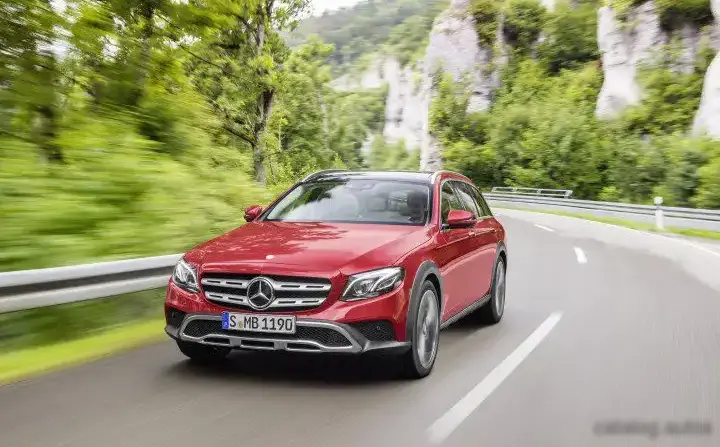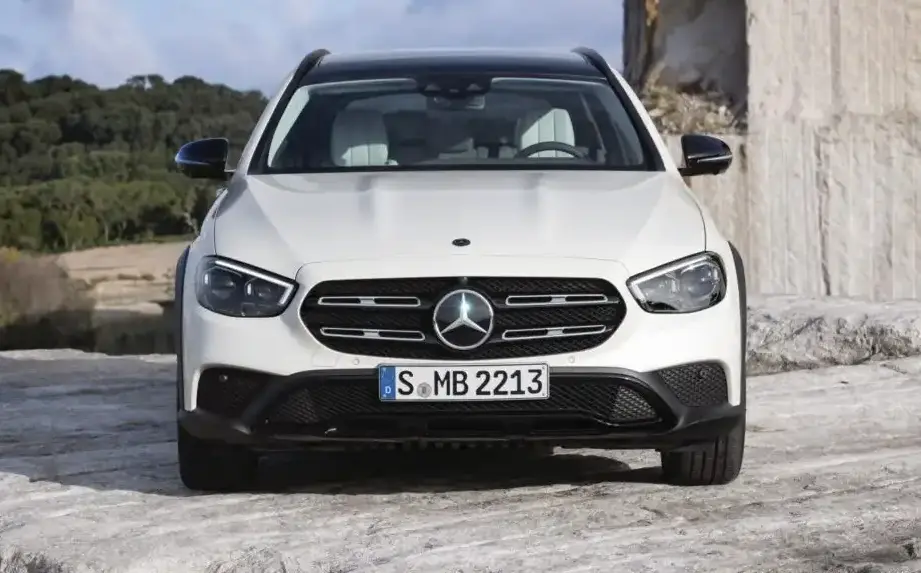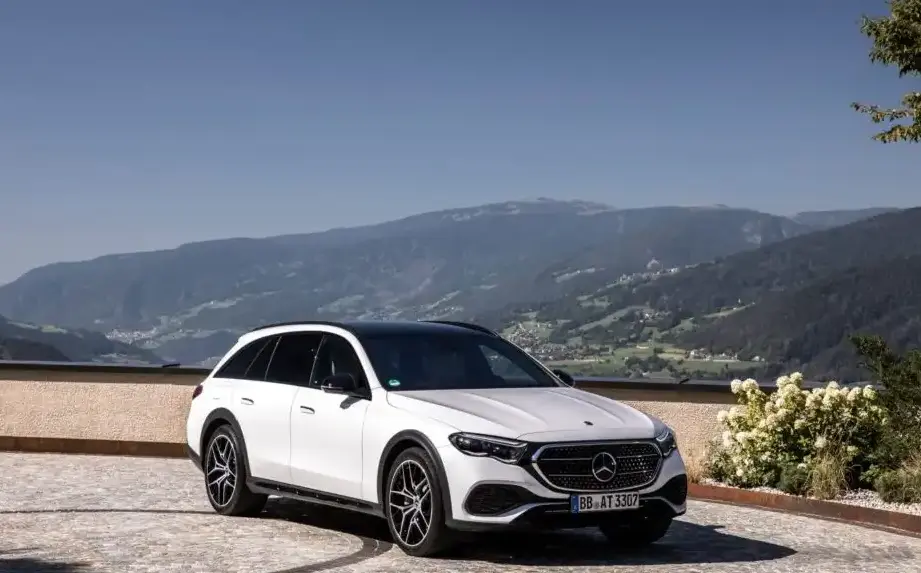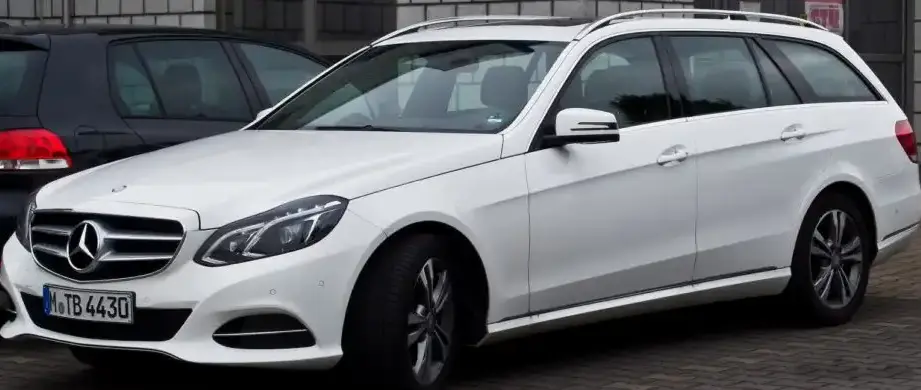
The Mercedes-Benz E-Class T-modell (S212 facelift), specifically the E 250 BlueTEC 4MATIC variant with the 7G-TRONIC PLUS automatic transmission, was produced from July 2014 to July 2016. This model represents a mid-cycle refresh of the S212 wagon, offering a blend of practicality, efficiency, and luxury within the E-Class range. Positioned as a mid-range offering, it catered to buyers seeking a balance between performance and fuel economy, particularly those needing the versatility of a wagon body style combined with all-wheel drive capability. It was part of the broader W212 E-Class family, known for its sophisticated engineering and comfortable ride.
Technical Specifications
| Brand | Mercedes-Benz |
| Model | E-Class |
| Generation | E-Class T-modell (S212, facelift 2013) |
| Type | E 250 BlueTEC (204 Hp) 4MATIC 7G-TRONIC PLUS |
| Start of production | July, 2014 |
| End of production | July, 2016 |
| Powertrain Architecture | Internal Combustion engine |
| Body type | Station wagon (estate) |
| Seats | 5 |
| Doors | 5 |
| Fuel consumption (urban) | 6.3-6.6 l/100 km (37.3 – 35.6 US mpg, 44.8 – 42.8 UK mpg, 15.9 – 15.2 km/l) |
| Fuel consumption (extra urban) | 4.7-5 l/100 km (50 – 47 US mpg, 60.1 – 56.5 UK mpg, 21.3 – 20 km/l) |
| Fuel consumption (combined) | 5.3-5.6 l/100 km (44.4 – 42 US mpg, 53.3 – 50.4 UK mpg, 18.9 – 17.9 km/l) |
| CO2 emissions | 140-147 g/km |
| Fuel Type | Diesel |
| Acceleration 0 – 100 km/h | 8.1 sec |
| Acceleration 0 – 62 mph | 8.1 sec |
| Acceleration 0 – 60 mph | 7.7 sec |
| Maximum speed | 230 km/h (142.92 mph) |
| Emission standard | Euro 6 |
| Weight-to-power ratio | 9.2 kg/Hp, 108.5 Hp/tonne |
| Weight-to-torque ratio | 3.8 kg/Nm, 266 Nm/tonne |
| Power | 204 Hp @ 3800 rpm |
| Power per litre | 95.2 Hp/l |
| Torque | 500 Nm @ 1600-1800 rpm (368.78 lb.-ft. @ 1600-1800 rpm) |
| Engine layout | Front, Longitudinal |
| Engine Model/Code | OM 651.924 |
| Engine displacement | 2143 cm3 (130.77 cu. in.) |
| Number of cylinders | 4 |
| Engine configuration | Inline |
| Cylinder Bore | 83 mm (3.27 in.) |
| Piston Stroke | 99 mm (3.9 in.) |
| Compression ratio | 16.2:1 |
| Number of valves per cylinder | 4 |
| Fuel injection system | Diesel Commonrail |
| Engine aspiration | BiTurbo, Intercooler |
| Valvetrain | DOHC |
| Engine oil capacity | 6.5 l (6.87 US qt | 5.72 UK qt) |
| Coolant | 10 l (10.57 US qt | 8.8 UK qt) |
| Kerb Weight | 1880 kg (4144.69 lbs.) |
| Max. weight | 2535 kg (5588.72 lbs.) |
| Max load | 655 kg (1444.03 lbs.) |
| Trunk (boot) space – minimum | 600 l (21.19 cu. ft.) |
| Trunk (boot) space – maximum | 1855 l (65.51 cu. ft.) |
| Fuel tank capacity | 59 l (15.59 US gal | 12.98 UK gal) |
| AdBlue tank | 25.5 l (6.74 US gal | 5.61 UK gal) |
| Max. roof load | 100 kg (220.46 lbs.) |
| Permitted trailer load with brakes (12%) | 2100 kg (4629.71 lbs.) |
| Permitted trailer load without brakes | 750 kg (1653.47 lbs.) |
| Permitted towbar download | 84 kg (185.19 lbs.) |
| Length | 4905 mm (193.11 in.) |
| Width | 1854 mm (72.99 in.) |
| Width including mirrors | 2071 mm (81.54 in.) |
| Height | 1507 mm (59.33 in.) |
| Wheelbase | 2874 mm (113.15 in.) |
| Front track | 1583 mm (62.32 in.) |
| Rear track | 1604 mm (63.15 in.) |
| Front overhang | 849 mm (33.43 in.) |
| Rear overhang | 1182 mm (46.54 in.) |
| Minimum turning circle | 11.5 m (37.73 ft.) |
| Drivetrain Architecture | ICE drives all four wheels permanently |
| Drive wheel | All wheel drive (4×4) |
| Number of gears | 7 |
| Gearbox type | Automatic transmission G-TRONIC PLUS |
Powertrain & Engine Architecture
The E 250 BlueTEC utilized the OM 651.924 2.1-liter inline-four cylinder diesel engine. This engine was a mainstay in the Mercedes-Benz lineup, known for its robust construction and fuel efficiency. It featured a sophisticated common-rail direct injection system, delivering fuel at extremely high pressures for optimized combustion. The engine employed a bi-turbocharger setup – a small turbocharger for quick response at low engine speeds and a larger turbocharger for increased power at higher RPMs. An intercooler further enhanced performance by cooling the compressed intake air. The valvetrain consisted of a double overhead camshaft (DOHC) design with four valves per cylinder. The 7G-TRONIC PLUS automatic transmission, a seven-speed unit, was specifically tuned to complement the engine’s torque characteristics. This transmission offered smooth and efficient gear changes, contributing to both fuel economy and driving comfort.
Driving Characteristics
The E 250 BlueTEC 4MATIC offered a comfortable and refined driving experience. While not a performance-oriented variant, the 204 horsepower and 368 lb-ft of torque provided adequate acceleration for everyday driving and highway cruising. The 0-60 mph time of around 7.7 seconds was respectable for a wagon of its size. The 7G-TRONIC PLUS transmission was programmed for smooth shifts and prioritized fuel efficiency, sometimes at the expense of immediate responsiveness. Compared to the more powerful E 350 or the performance-focused AMG variants, the E 250 BlueTEC felt less urgent in its acceleration. However, it offered significantly better fuel economy. The 4MATIC all-wheel-drive system provided enhanced traction and stability, particularly in inclement weather conditions.
Equipment & Trim Levels
The E 250 BlueTEC 4MATIC typically came standard with features such as automatic climate control, power-adjustable front seats, a multi-function steering wheel, and a high-quality audio system. Interior upholstery was typically MB-Tex (artificial leather) or optional leather. The dashboard featured a classic Mercedes-Benz design with wood or aluminum trim options. Optional extras included a navigation system, a panoramic sunroof, heated seats, and advanced driver-assistance systems like lane keeping assist and blind spot monitoring. The facelifted S212 models also benefited from updated infotainment systems and improved connectivity features.
Chassis & Braking
The E 250 BlueTEC 4MATIC featured a fully independent suspension system, with coil springs and multi-link setups at both the front and rear. Air suspension was available as an option, providing an even more comfortable ride and the ability to adjust ride height. The braking system consisted of ventilated discs at the front and solid discs at the rear. Anti-lock brakes (ABS) and electronic stability control (ESC) were standard safety features. The steering was a rack-and-pinion system with power assistance.
Market Reception & Comparison
The E 250 BlueTEC 4MATIC was generally well-received by automotive critics. It was praised for its fuel efficiency, comfortable ride, and spacious interior. However, some reviewers noted that the engine could feel a bit underpowered for more spirited driving. Compared to the E 350, the E 250 BlueTEC offered a significant fuel economy advantage, but at the cost of performance. The E 250 BlueTEC also provided a more affordable entry point into the E-Class wagon range. Its reliability was generally considered good, typical of Mercedes-Benz diesel engines.
Legacy
The OM 651 engine family, including the 2.1-liter variant found in the E 250 BlueTEC, has proven to be remarkably durable. These engines are known for their longevity and relatively low maintenance costs, provided they are properly maintained. In the used car market, the E 250 BlueTEC 4MATIC remains a popular choice for buyers seeking a practical, efficient, and comfortable wagon. However, potential buyers should be aware of the potential for diesel emissions system issues, such as problems with the AdBlue system or the diesel particulate filter (DPF). Overall, the E 250 BlueTEC 4MATIC represents a well-engineered and capable vehicle that continues to offer value in the used car market.