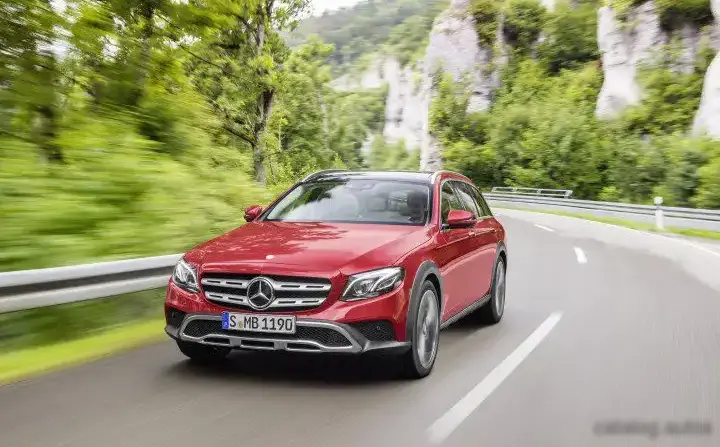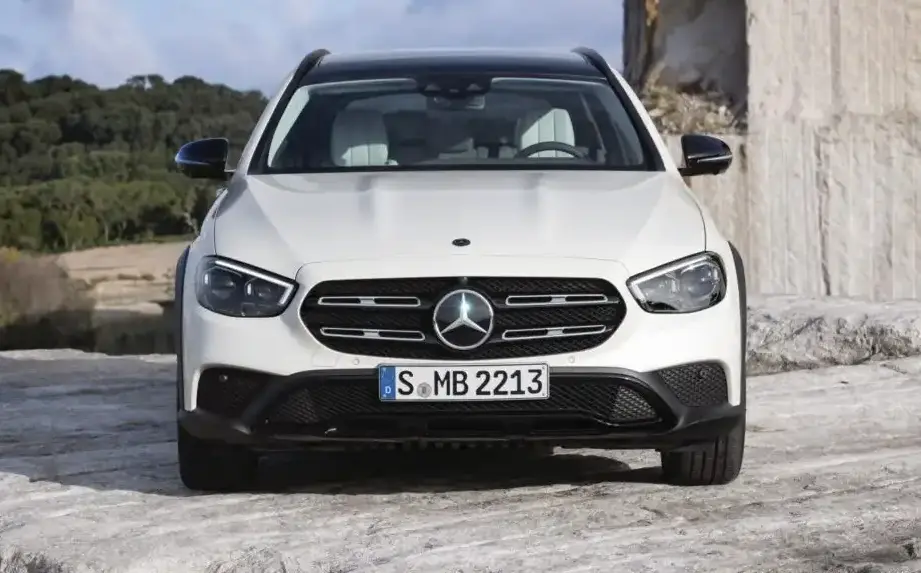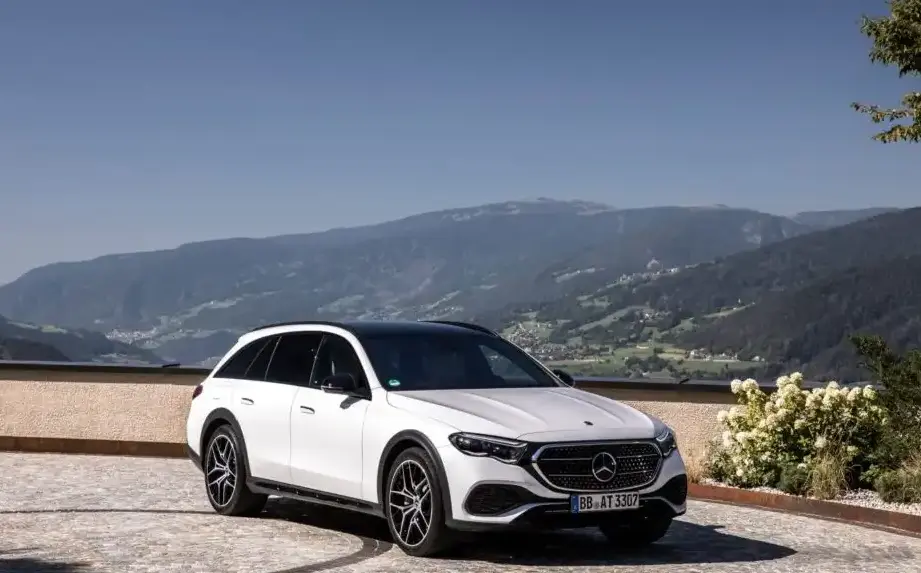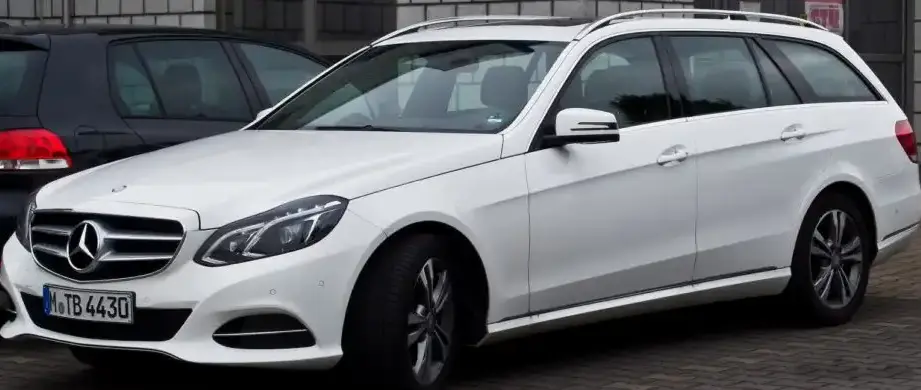
The Mercedes-Benz E 400 T-modell, part of the S212 facelift series produced from April 2013 to July 2014, represented a compelling blend of luxury, performance, and practicality within the E-Class range. Positioned as a premium offering, it catered to buyers seeking a spacious, high-performance wagon with the refinement expected of the three-pointed star. This variant utilized a 3.0-liter V6 engine paired exclusively with the 7G-TRONIC PLUS seven-speed automatic transmission, offering a sophisticated driving experience. The S212 generation, and specifically this facelift, aimed to modernize the E-Class while retaining its core values of comfort and engineering excellence.
Technical Specifications
| Brand | Mercedes-Benz |
| Model | E-class |
| Generation | E-class T-modell (S212, facelift 2013) |
| Type (Engine) | E 400 V6 3.0 (333 Hp) 7G-TRONIC PLUS |
| Start of production | April, 2013 |
| End of production | July, 2014 |
| Powertrain Architecture | Internal Combustion engine |
| Body type | Station wagon (estate) |
| Seats | 5 |
| Doors | 5 |
| Fuel consumption (economy) – urban (NEDC) | 10.7-11 l/100 km (22 – 21.4 US mpg) |
| Fuel consumption (economy) – extra urban (NEDC) | 6.1-6.2 l/100 km (38.6 – 37.9 US mpg) |
| Fuel consumption (economy) – combined (NEDC) | 7.9 l/100 km (29.8 US mpg) |
| CO2 emissions (NEDC) | 183-184 g/km |
| Fuel Type | Petrol (Gasoline) |
| Acceleration 0 – 100 km/h | 5.4 sec |
| Acceleration 0 – 62 mph | 5.4 sec |
| Acceleration 0 – 60 mph | 5.1 sec |
| Maximum speed | 250 km/h (155.34 mph), Electronically limited |
| Emission standard | Euro 6 |
| Weight-to-power ratio | 5.4 kg/Hp, 184 Hp/tonne |
| Weight-to-torque ratio | 3.8 kg/Nm, 265.2 Nm/tonne |
| Power | 333 Hp @ 5250-6000 rpm |
| Power per litre | 111.1 Hp/l |
| Torque | 480 Nm @ 1600-4000 rpm (354.03 lb.-ft. @ 1600-4000 rpm) |
| Engine layout | Front, Longitudinal |
| Engine Model/Code | M 276.820 |
| Engine displacement | 2996 cm3 (182.83 cu. in.) |
| Number of cylinders | 6 |
| Engine configuration | V-engine |
| Cylinder Bore | 88 mm (3.46 in.) |
| Piston Stroke | 82.1 mm (3.23 in.) |
| Compression ratio | 10.5:1 |
| Number of valves per cylinder | 4 |
| Fuel injection system | Direct injection |
| Engine aspiration | BiTurbo, Intercooler |
| Valvetrain | DOHC |
| Engine oil capacity | 6.5 l (6.87 US qt | 5.72 UK qt) |
| Coolant | 10.3 l (10.88 US qt | 9.06 UK qt) |
| Kerb Weight | 1810 kg (3990.37 lbs.) |
| Max. weight | 2480 kg (5467.46 lbs.) |
| Max load | 670 kg (1477.1 lbs.) |
| Trunk (boot) space – minimum | 695 l (24.54 cu. ft.) |
| Trunk (boot) space – maximum | 1950 l (68.86 cu. ft.) |
| Fuel tank capacity | 59 l (15.59 US gal | 12.98 UK gal) |
| Max. roof load | 100 kg (220.46 lbs.) |
| Permitted trailer load with brakes (12%) | 2100 kg (4629.71 lbs.) |
| Permitted trailer load without brakes | 750 kg (1653.47 lbs.) |
| Permitted towbar download | 84 kg (185.19 lbs.) |
| Length | 4905 mm (193.11 in.) |
| Width | 1854 mm (72.99 in.) |
| Width including mirrors | 2071 mm (81.54 in.) |
| Height | 1507 mm (59.33 in.) |
| Wheelbase | 2874 mm (113.15 in.) |
| Front track | 1583 mm (62.32 in.) |
| Rear (Back) track | 1604 mm (63.15 in.) |
| Front overhang | 849 mm (33.43 in.) |
| Rear overhang | 1182 mm (46.54 in.) |
| Drag coefficient (Cd) | 0.31 |
| Minimum turning circle (turning diameter) | 11.28 m (37.01 ft.) |
| Drivetrain Architecture | The Internal combustion engine (ICE) drives the rear wheels of the vehicle. |
| Drive wheel | Rear wheel drive |
| Number of gears and type of gearbox | 7 gears, automatic transmission G-TRONIC PLUS |
| Front suspension | Coil spring, Independent multi-link suspension, Transverse stabilizer, Air Suspension – Optional |
| Rear suspension | Independent multi-link suspension, Air suspension, Transverse stabilizer |
| Front brakes | Ventilated discs |
| Rear brakes | Ventilated discs |
| Assisting systems | ABS (Anti-lock braking system) |
| Steering type | Steering rack and pinion |
| Power steering | Electric Steering |
| Tires size | Front wheel tires: 245/45 R17; 245/40 R18; 245/35 R19Rear wheel tires: 245/45 R17; 245/40 R18; 265/35 R18; 275/30 R19 |
| Wheel rims size | Front wheel rims: 8J x 17; 8.5J x 18; 8.5J x 19Rear wheel rims: 8J x 17; 8.5J x 18; 9J x 18; 9.5J x 19 |
Powertrain & Engine Architecture
The heart of the E 400 T-modell is the M276.820 3.0-liter V6 engine. This engine is a naturally aspirated powerplant featuring direct fuel injection and twin turbochargers. The engine produces 333 horsepower at 5250-6000 rpm and 480 Nm (354 lb-ft) of torque between 1600-4000 rpm. The M276 engine family was known for its smooth operation and relatively high efficiency for a V6 of this displacement. The 7G-TRONIC PLUS seven-speed automatic transmission was the sole transmission option. This transmission is renowned for its smooth and quick shifts, contributing to both performance and fuel economy. It features a torque converter lock-up clutch that engages in most gears, improving efficiency. The transmission also offers manual shift capability via steering wheel-mounted paddles.
Driving Characteristics
The E 400 T-modell delivered a refined and capable driving experience. The combination of the potent V6 engine and the 7G-TRONIC PLUS transmission resulted in brisk acceleration – 0 to 60 mph in approximately 5.1 seconds. While not as overtly sporty as some competitors, the E 400 offered ample power for effortless cruising and overtaking. The automatic transmission was well-tuned for both comfort and responsiveness. The gear ratios were optimized for a balance of acceleration and fuel efficiency. Compared to the E 350 models with smaller engines, the E 400 provided a noticeable increase in performance. It also offered a more luxurious experience than the diesel-powered E 350 BlueTEC models, which prioritized fuel economy.
Equipment & Trim Levels
The E 400 T-modell typically came well-equipped as standard. Features included leather upholstery, automatic climate control, a premium sound system, and a host of safety technologies such as ABS, stability control, and multiple airbags. Optional extras included a panoramic sunroof, advanced driver-assistance systems (such as lane keeping assist and adaptive cruise control), and upgraded interior trim options. The E 400 was generally positioned as a higher-end trim level, often bundled with desirable options packages.
Chassis & Braking
The S212 E-Class wagon featured a sophisticated chassis design. The front suspension utilized a multi-link setup with coil springs, while the rear suspension employed an independent multi-link design. Air suspension was available as an option, providing a more comfortable ride and the ability to adjust ride height. Braking duties were handled by ventilated discs on all four wheels, providing ample stopping power. The E 400 T-modell typically featured larger brake rotors than the base models to accommodate the increased performance.
Market Reception & Comparison
The E 400 T-modell was generally well-received by automotive critics. It was praised for its powerful engine, refined ride, and spacious interior. However, some reviewers noted that the price was relatively high compared to competitors. In terms of fuel economy, the E 400 offered respectable figures for a V6-powered wagon, but it was less efficient than the four-cylinder or diesel-powered models. Compared to rivals like the BMW 5 Series Touring and Audi A6 Avant, the E 400 offered a compelling combination of luxury, performance, and practicality.
Legacy
The M276 engine family, including the 3.0-liter V6 used in the E 400, has proven to be relatively reliable. While some early examples experienced issues with timing chain tensioners, these were addressed in later production runs. Today, the E 400 T-modell remains a desirable used car, particularly for buyers seeking a spacious, well-equipped, and relatively powerful wagon. Maintenance costs can be higher than for more mainstream vehicles, but the E 400 offers a rewarding ownership experience for those who appreciate its blend of luxury and performance.