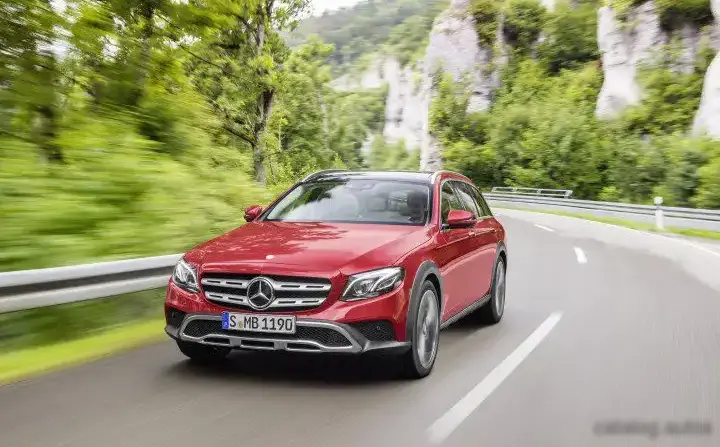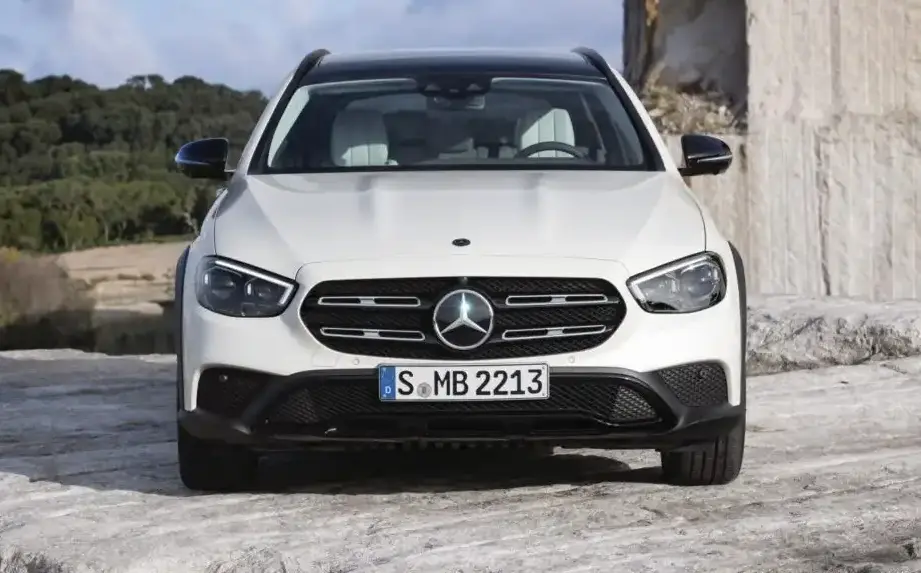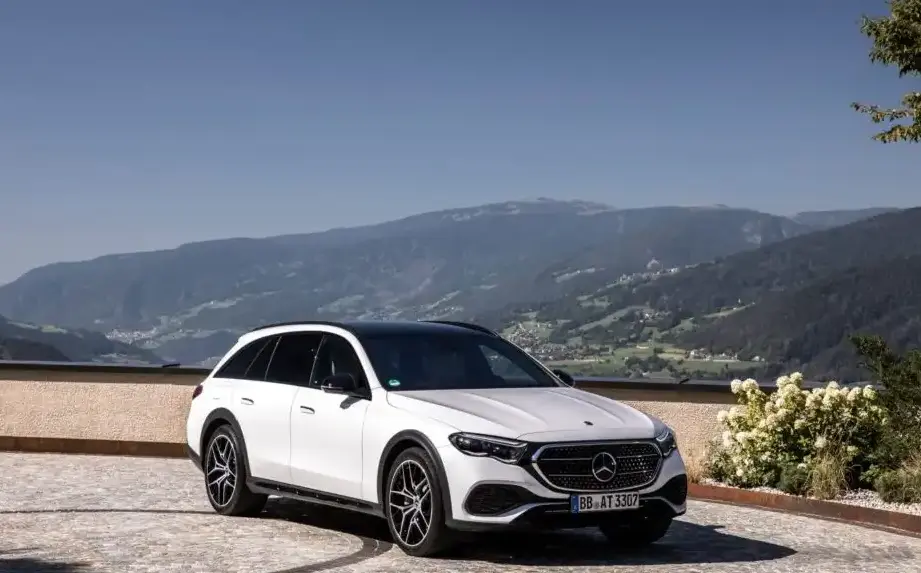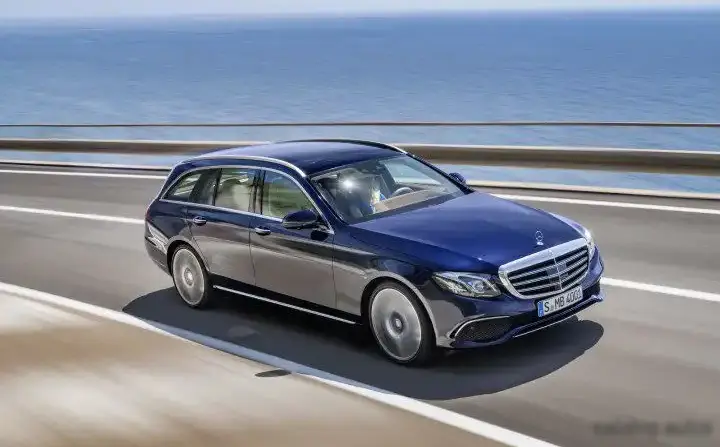
The Mercedes-Benz E-Class T-modell (S213) E 400 4MATIC, produced from 2016 to 2018, represents a compelling blend of performance, practicality, and luxury within the fifth generation of the E-Class estate (wagon) range. Positioned as a mid-to-high-range offering, it catered to buyers seeking a more spirited driving experience than the four-cylinder models, without the outright performance focus of the AMG variants. This variant combined a potent 3.0-liter V6 engine with Mercedes-Benz’s 4MATIC all-wheel-drive system and the sophisticated 9G-TRONIC nine-speed automatic transmission, creating a versatile vehicle suitable for both long-distance touring and everyday family duties.
Technical Specifications
| Brand | Mercedes-Benz |
| Model | E-Class |
| Generation | E-Class T-modell (S213) |
| Type | E 400 V6 3.0 (329 Hp) 4MATIC 9G-TRONIC |
| Start of production | 2016 |
| End of production | 2018 |
| Powertrain Architecture | Internal Combustion engine |
| Body type | Station wagon (estate) |
| Seats | 7 |
| Doors | 5 |
| Fuel consumption (urban) | 12.4 l/100 km (19 US mpg, 22.8 UK mpg) |
| Fuel consumption (extra urban) | 9.4 l/100 km (25 US mpg, 30.1 UK mpg) |
| Fuel consumption (combined) | 11.2 l/100 km (21 US mpg, 25.2 UK mpg) |
| Fuel Type | Petrol (Gasoline) |
| Acceleration 0 – 60 mph | 5.3 sec |
| Maximum speed | 210 km/h (130.49 mph) – Electronically limited |
| Weight-to-power ratio | 5.9 kg/Hp |
| Weight-to-torque ratio | 4 kg/Nm |
| Power | 329 Hp @ 5250-6000 rpm |
| Power per litre | 109.8 Hp/l |
| Torque | 480 Nm @ 1600-4000 rpm (354.03 lb.-ft. @ 1600-4000 rpm) |
| Maximum engine speed | 6500 rpm |
| Engine layout | Front, Longitudinal |
| Engine Model/Code | M 276.823 |
| Engine displacement | 2996 cm3 (182.83 cu. in.) |
| Number of cylinders | 6 |
| Engine configuration | V-engine |
| Cylinder Bore | 88 mm (3.46 in.) |
| Piston Stroke | 82.1 mm (3.23 in.) |
| Compression ratio | 10.5:1 |
| Number of valves per cylinder | 4 |
| Fuel injection system | Direct injection |
| Engine aspiration | BiTurbo, Intercooler |
| Valvetrain | DOHC |
| Engine oil capacity | 6.5 l (6.87 US qt | 5.72 UK qt) |
| Coolant capacity | 12 l (12.68 US qt | 10.56 UK qt) |
| Kerb Weight | 1940-1950 kg (4276.97 – 4299.01 lbs.) |
| Trunk (boot) space – minimum | 640 l (22.6 cu. ft.) |
| Trunk (boot) space – maximum | 1820 l (64.27 cu. ft.) |
| Fuel tank capacity | 66 l (17.44 US gal | 14.52 UK gal) |
| Length | 4933 mm (194.21 in.) |
| Width | 1852 mm (72.91 in.) |
| Width including mirrors | 2065 mm (81.3 in.) |
| Height | 1466-1481 mm (57.72 – 58.31 in.) |
| Wheelbase | 2939 mm (115.71 in.) |
| Front track | 1600 mm (62.99 in.) |
| Rear track | 1609 mm (63.35 in.) |
| Front overhang | 841 mm (33.11 in.) |
| Rear overhang | 1153 mm (45.39 in.) |
| Minimum turning circle | 11.9 m (39.04 ft.) |
| Drivetrain | All wheel drive (4×4) |
| Gearbox | 9 gears, automatic transmission G-TRONIC |
| Front suspension | Coil spring, Independent multi-link suspension, Transverse stabilizer, Air Suspension – Optional |
| Rear suspension | Independent multi-link spring suspension with stabilizer, Air Suspension – Optional |
| Front brakes | Ventilated discs, 360×36 mm |
| Rear brakes | Ventilated discs, 360×26 mm |
| Tire size | 245/45 R18 |
| Wheel rims size | 8J x 18 |
INTRODUCTION
The S213 E-Class T-modell, launched in 2016, represented a significant step forward for Mercedes-Benz’s estate car offerings. Built on the modular MRA (Mercedes Rear-wheel-drive Architecture) platform, also underpinning the W205 C-Class and W213 E-Class sedans, it offered increased space, improved refinement, and a wider range of technology compared to its predecessor. The E 400 4MATIC variant, with its 3.0-liter V6 engine, occupied a sweet spot in the lineup, providing a substantial performance upgrade over the base models while remaining more accessible than the high-performance AMG versions. It was aimed at buyers who valued a blend of practicality, comfort, and driving enjoyment.
Powertrain & Engine Architecture
At the heart of the E 400 4MATIC lies the M276.823 engine, a 2,996 cc (182.8 cu in) V6 engine. This engine utilizes direct fuel injection and is equipped with twin turbochargers, resulting in a robust 329 horsepower and 480 Nm (354 lb-ft) of torque. The engine’s architecture features a 60-degree V-angle, contributing to its smooth operation and relatively compact size. The 9G-TRONIC nine-speed automatic transmission is a key component of this powertrain. This transmission is known for its wide gear ratio spread, allowing for both efficient cruising at highway speeds and responsive acceleration. The 4MATIC all-wheel-drive system employs a multi-plate clutch to distribute torque between the front and rear axles, providing enhanced traction in various driving conditions. The Start & Stop system was standard, contributing to improved fuel economy in urban environments.
Driving Characteristics
The E 400 4MATIC delivers a refined and capable driving experience. The V6 engine provides ample power for effortless acceleration, with the 0-60 mph sprint taking just 5.3 seconds. The 9G-TRONIC transmission shifts smoothly and efficiently, and the all-wheel-drive system inspires confidence in all weather conditions. Compared to the four-cylinder E-Class models, the E 400 offers a noticeably more relaxed and responsive driving experience, particularly when fully loaded or tackling challenging terrain. While not as overtly sporty as the AMG variants, the E 400 provides a satisfying balance between performance and comfort. The gear ratios are tuned for both fuel efficiency and quick response, making it a versatile vehicle for a variety of driving situations.
Equipment & Trim Levels
The E 400 4MATIC typically came well-equipped as standard. Features included leather upholstery, automatic climate control, a high-resolution infotainment system with navigation, and a suite of driver-assistance technologies such as adaptive cruise control and lane-keeping assist. Optional extras included air suspension (which further enhanced ride comfort), a panoramic sunroof, premium sound systems, and various interior trim upgrades. The interior design was characterized by Mercedes-Benz’s signature blend of luxury and technology, with high-quality materials and a user-friendly interface.
Chassis & Braking
The S213 E-Class T-modell featured a sophisticated chassis design. The front suspension utilized a multi-link setup with coil springs, while the rear suspension employed a similar multi-link configuration. Air suspension was available as an option, providing adjustable ride height and damping. The braking system consisted of ventilated discs on all four wheels, providing ample stopping power. ABS (Anti-lock Braking System) was standard, along with electronic stability control. The steering system was a rack-and-pinion setup with electric power assistance.
Market Reception & Comparison
The E 400 4MATIC was generally well-received by automotive critics. It was praised for its powerful engine, comfortable ride, and spacious interior. Compared to the E 200 and E 250 models, the E 400 offered a significant performance advantage. Fuel economy, while respectable, was naturally lower than that of the four-cylinder variants. Compared to the E 43 AMG, the E 400 offered a more comfortable and refined driving experience, albeit with less outright performance. The E 400 4MATIC positioned itself as a practical and luxurious option for buyers who wanted a capable all-weather estate car.
Legacy
The M276 engine family, including the 3.0-liter V6 used in the E 400 4MATIC, has proven to be relatively reliable. While some early examples experienced issues with the timing chain tensioner, these were generally addressed through warranty repairs. Today, well-maintained E 400 4MATIC models represent a good value on the used car market. They offer a compelling combination of performance, luxury, and practicality, making them a desirable choice for buyers seeking a premium estate car. The 9G-TRONIC transmission has also proven to be durable, and parts availability remains good. The S213 E-Class T-modell, and particularly the E 400 4MATIC variant, continues to be regarded as a benchmark in the luxury estate car segment.