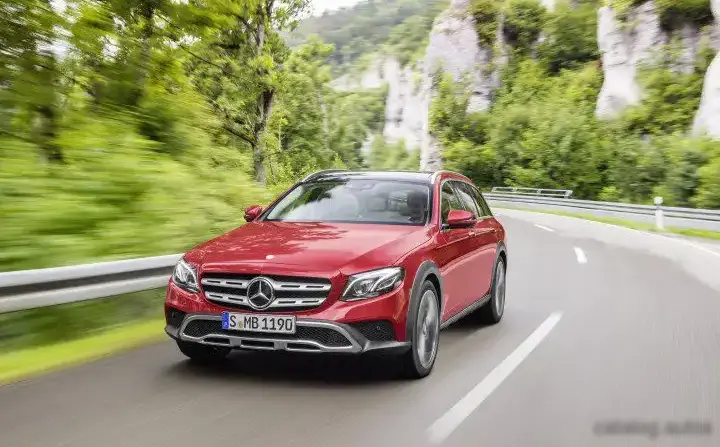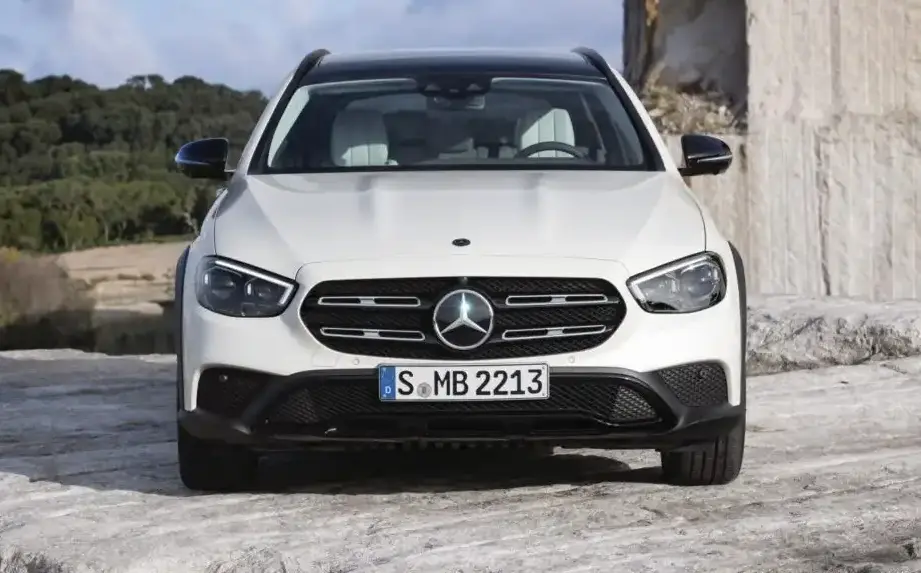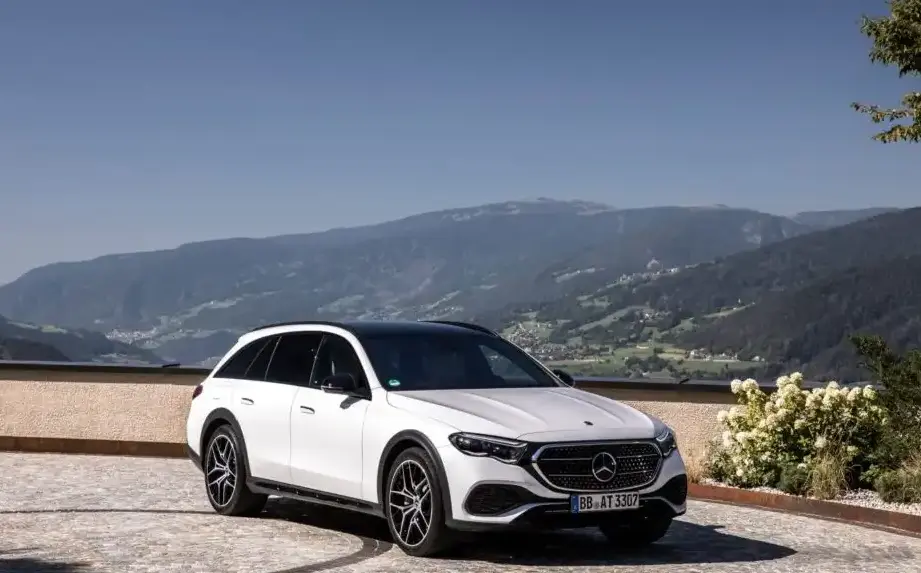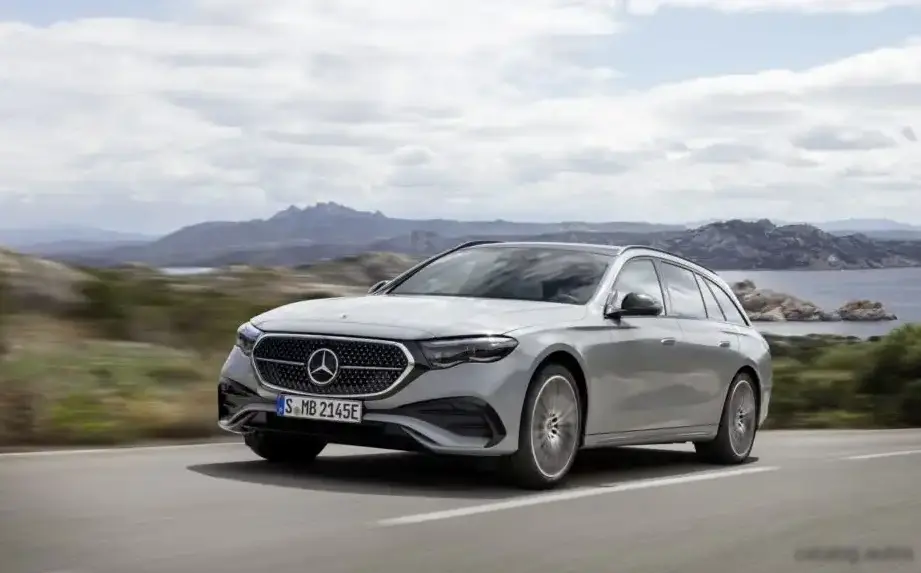
The Mercedes-Benz E 300 de T-modell (S214), introduced in 2023, represents the estate (wagon) variant of the fifth-generation E-Class, incorporating a plug-in hybrid diesel-electric powertrain. Positioned as a premium offering within the E-Class range, it caters to buyers seeking a blend of practicality, efficiency, and luxury. This model is a key component of Mercedes-Benz’s strategy to offer a diverse range of electrified vehicles, particularly in European markets where diesel-electric hybrids remain popular due to favorable tax incentives and fuel economy regulations. The S214 chassis signifies the latest generation of E-Class estates, building upon the advancements of the W213 predecessor.
Technical Specifications
| Brand | Mercedes-Benz |
| Model | E-class |
| Generation | E-class T-modell (S214) |
| Type | E 300de (313 Hp) Plug-in Hybrid 9G-TRONIC |
| Start of production | 2023 |
| Powertrain Architecture | PHEV (Plug-in Hybrid Electric Vehicle) |
| Body type | Station wagon (estate) |
| Seats | 5 |
| Doors | 5 |
| Combined fuel consumption (WLTP) | 0.5-0.7 l/100 km (470.4 – 336 US mpg, 565 – 403.5 UK mpg, 200 – 142.9 km/l) |
| CO2 emissions (WLTP) | 13-18 g/km |
| Fuel Type | Diesel / electricity |
| Acceleration 0 – 100 km/h | 6.6 sec |
| Acceleration 0 – 62 mph | 6.6 sec |
| Acceleration 0 – 60 mph | 6.3 sec |
| Maximum speed | 225 km/h (139.81 mph) |
| Emission standard | Euro 6d-ISC-FCM |
| Weight-to-power ratio | 7.2 kg/Hp, 138.5 Hp/tonne |
| Weight-to-torque ratio | 3.2 kg/Nm, 309.7 Nm/tonne |
| Gross battery capacity | 25.4 kWh |
| Battery technology | Lithium-ion (Li-Ion) |
| All-electric range (WLTP) | 91-102 km (56.54 – 63.38 mi) |
| Average Energy consumption (WLTP) | 20.7-23.1 kWh/100 km (33.31 – 37.18 kWh/100 mi, 101 – 91 MPGe, 4.8 – 4.3 km/kWh, 3 – 2.7 mi/kWh) |
| Max speed (electric) | 140 km/h (86.99 mph) |
| Electric motor power | 129 Hp |
| Electric motor Torque | 440 Nm (324.53 lb.-ft.) |
| Electric motor location | Between the combustion engine and the transmission |
| Electric motor type | Synchronous |
| System power | 313 Hp |
| System torque | 700 Nm (516.29 lb.-ft.) |
| Power | 197 Hp @ 3600 rpm |
| Torque | 440 Nm @ 1800-2800 rpm (324.53 lb.-ft. @ 1800-2800 rpm) |
| Engine layout | Front, Longitudinal |
| Engine Model/Code | OM 654 M |
| Engine displacement | 1993 cm3 (121.62 cu. in.) |
| Number of cylinders | 4 |
| Engine configuration | Inline |
| Cylinder Bore | 82 mm (3.23 in.) |
| Piston Stroke | 94.3 mm (3.71 in.) |
| Compression ratio | 15.5:1 |
| Number of valves per cylinder | 4 |
| Fuel injection system | Diesel Commonrail |
| Engine aspiration | Turbocharger, Intercooler |
| Valvetrain | DOHC |
| Engine oil capacity | 6 l (6.34 US qt | 5.28 UK qt) |
| Kerb Weight | 2260 kg (4982.45 lbs.) |
| Max. weight | 2910 kg (6415.45 lbs.) |
| Max load | 650 kg (1433 lbs.) |
| Trunk (boot) space – minimum | 460 l (16.24 cu. ft.) |
| Trunk (boot) space – maximum | 1675 l (59.15 cu. ft.) |
| Fuel tank capacity | 50 l (13.21 US gal | 11 UK gal) |
| AdBlue tank | 24 l (6.34 US gal | 5.28 UK gal) |
| Max. roof load | 100 kg (220.46 lbs.) |
| Permitted trailer load with brakes (12%) | 2100 kg (4629.71 lbs.) |
| Permitted trailer load without brakes | 750 kg (1653.47 lbs.) |
| Permitted towbar download | 84 kg (185.19 lbs.) |
| Length | 4949 mm (194.84 in.) |
| Width | 1880 mm (74.02 in.) |
| Width including mirrors | 2065 mm (81.3 in.) |
| Height | 1470 mm (57.87 in.) |
| Wheelbase | 2961 mm (116.57 in.) |
| Front track | 1623 mm (63.9 in.) |
| Rear (Back) track | 1609 mm (63.35 in.) |
| Front overhang | 848 mm (33.39 in.) |
| Rear overhang | 1140 mm (44.88 in.) |
| Drag coefficient (Cd) | 0.26 |
| Minimum turning circle (turning diameter) | 11.6 m (38.06 ft.) |
| Drivetrain Architecture | Rear wheel drive. PHEV. ICE and electric motor drive rear wheels. |
| Number of gears and type of gearbox | 9 gears, automatic transmission G-TRONIC |
| Front suspension | Independent multi-link suspension, Transverse stabilizer, Air Suspension – Optional |
| Rear suspension | Independent multi-link suspension, Air suspension, Transverse stabilizer |
| Front brakes | Ventilated discs |
| Rear brakes | Ventilated discs |
| Tires size | Front: 245/40 R19, Rear: 275/35 R19 |
| Wheel rims size | Front: 8.5J x 19, Rear: 9.5J x 19 |
INTRODUCTION
The Mercedes-Benz E 300 de T-modell (S214) is a plug-in hybrid estate car launched in 2023 as part of the fifth-generation E-Class (S214). It combines a 2.0-liter four-cylinder diesel engine with an electric motor, offering a total system output of 313 horsepower and 700 Nm (516 lb-ft) of torque. This configuration allows for both all-electric driving for a significant range (91-102 km / 56.5-63.4 miles WLTP) and the extended range provided by the diesel engine. The E 300 de T-modell is positioned as a premium, efficient, and versatile vehicle, appealing to customers who prioritize practicality, low running costs, and a luxurious driving experience. It builds upon the legacy of the E-Class as a benchmark in the executive car segment, now with a focus on sustainable mobility.
Powertrain & Engine Architecture
At the heart of the E 300 de lies the OM 654 M, a 2.0-liter inline-four cylinder diesel engine. This engine utilizes a common-rail direct injection system and a turbocharger with intercooling to deliver 197 horsepower at 3600 rpm and 440 Nm (325 lb-ft) of torque between 1800-2800 rpm. The engine features a high compression ratio of 15.5:1 and a DOHC valvetrain. Integrated with the diesel engine is a 129 horsepower electric motor, powered by a 25.4 kWh lithium-ion battery pack. The electric motor is strategically positioned between the engine and the 9G-TRONIC nine-speed automatic transmission. This arrangement allows for seamless transitions between electric, diesel, and combined power modes. The 9G-TRONIC transmission is specifically calibrated to work in conjunction with the electric motor, optimizing efficiency and providing smooth gear changes. The hybrid system intelligently manages power delivery, prioritizing electric drive whenever possible and seamlessly engaging the diesel engine when needed for increased performance or extended range.
Driving Characteristics
The E 300 de T-modell offers a unique driving experience, blending the refinement of a diesel engine with the instant torque and quiet operation of an electric motor. In electric-only mode, the vehicle provides smooth and silent acceleration, ideal for urban driving. The 91-102 km (56.5-63.4 miles) electric range allows for many daily commutes to be completed without using any fuel. When the diesel engine engages, the transition is virtually seamless. The combined system output of 313 hp and 700 Nm (516 lb-ft) delivers brisk acceleration, with a 0-100 km/h (0-62 mph) time of 6.6 seconds. The 9G-TRONIC transmission provides well-spaced gear ratios, ensuring efficient power delivery across a wide range of speeds. Compared to the petrol-powered E-Class variants, the E 300 de offers superior fuel economy and lower emissions. While not as sporty as the higher-performance E-Class models, the E 300 de provides a comfortable and capable driving experience suitable for long journeys and everyday use.
Equipment & Trim Levels
The E 300 de T-modell typically comes well-equipped as standard, reflecting its premium positioning. Standard features generally include Mercedes-Benz’s MBUX infotainment system with a large touchscreen display, leather upholstery, automatic climate control, and a comprehensive suite of safety features such as adaptive cruise control, lane keeping assist, and automatic emergency braking. Optional extras often include air suspension, a panoramic sunroof, premium sound system, and various interior trim upgrades. The interior design emphasizes luxury and comfort, with high-quality materials and meticulous attention to detail. The estate body style provides ample cargo space, with a minimum of 460 liters (16.24 cu ft) and a maximum of 1675 liters (59.15 cu ft) with the rear seats folded down.
Chassis & Braking
The S214 E-Class estate utilizes an independent multi-link suspension system at both the front and rear axles. The suspension is tuned to provide a comfortable ride while maintaining good handling characteristics. Optional air suspension is available, offering adjustable ride height and further enhancing ride comfort. The E 300 de is equipped with ventilated disc brakes on all four wheels, providing ample stopping power. Anti-lock braking system (ABS), electronic stability control (ESC), and other advanced braking assist systems are standard. The steering system is a rack-and-pinion type with electric power assistance, offering precise and responsive steering feel.
Market Reception & Comparison
The E 300 de T-modell has been generally well-received by automotive critics, praised for its fuel efficiency, comfortable ride, and spacious interior. Compared to other E-Class variants, the E 300 de offers a compelling combination of performance and economy. While the petrol-powered models may offer slightly more exhilarating performance, the E 300 de excels in fuel efficiency and reduced emissions. Compared to the E 300 e (petrol plug-in hybrid), the diesel-electric variant offers a longer electric range and potentially better fuel economy on longer journeys. The E 300 de’s market success is particularly strong in Europe, where diesel engines remain popular and plug-in hybrid vehicles benefit from government incentives.
Legacy
The OM 654 diesel engine, used in the E 300 de, has proven to be a reliable and durable powerplant. The combination of a modern diesel engine and an electric motor is expected to provide long-term reliability, although the longevity of the battery pack will be a key factor. In the used car market, the E 300 de T-modell is likely to hold its value well due to its fuel efficiency, practicality, and premium brand image. As environmental regulations become stricter, plug-in hybrid vehicles like the E 300 de are expected to play an increasingly important role in the automotive landscape, bridging the gap between traditional combustion engines and fully electric vehicles.