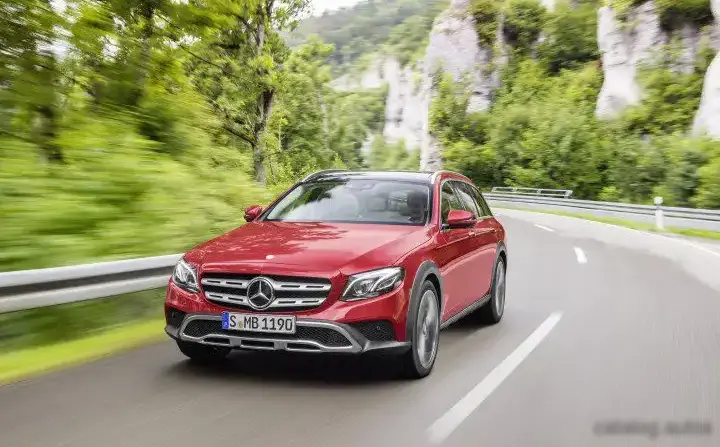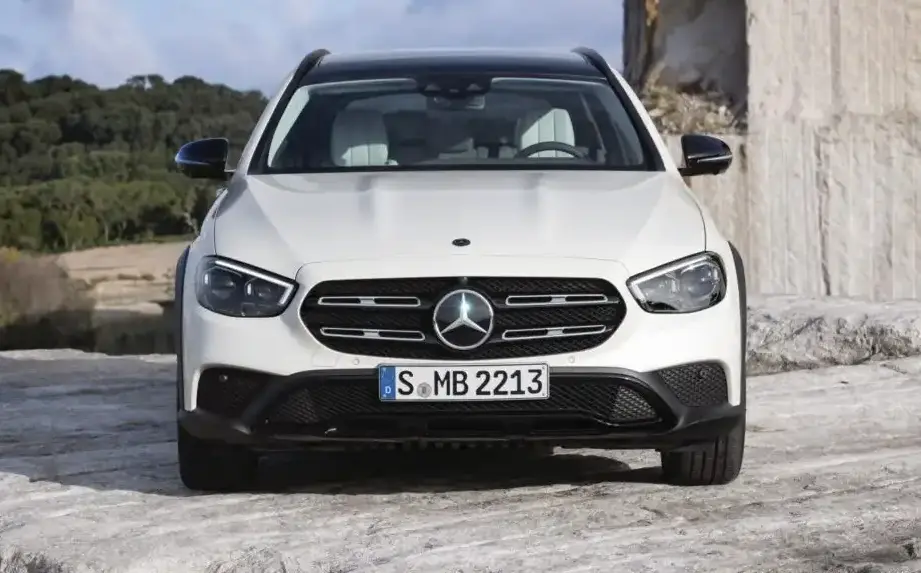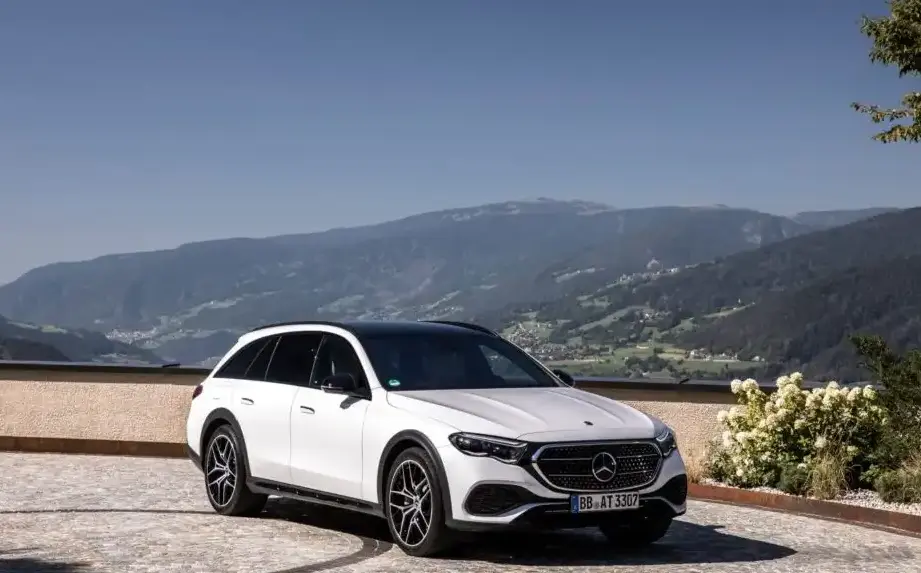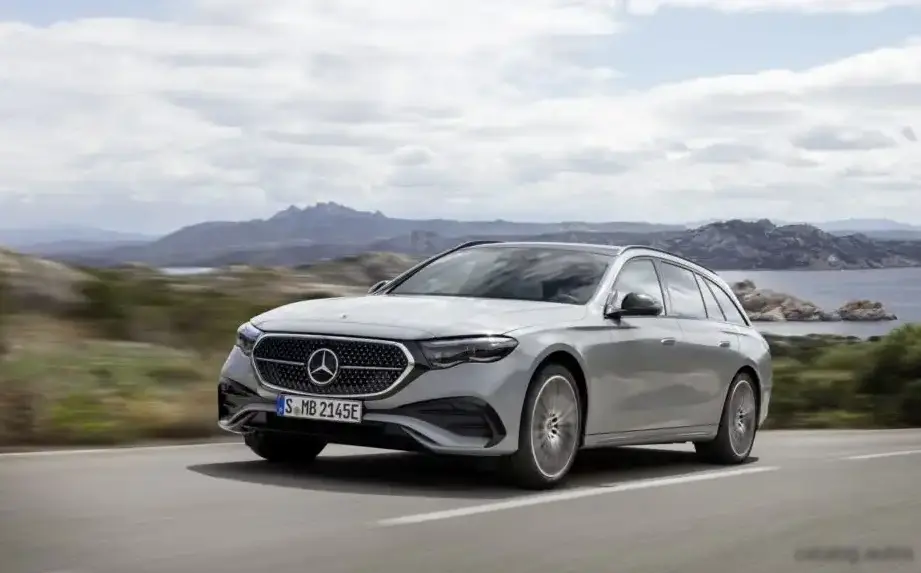
The Mercedes-Benz E 300e T-modell (S214), launched in June 2023, represents the estate (wagon) variant of the fifth-generation E-Class, incorporating plug-in hybrid technology. Positioned as a premium offering within the E-Class range, the E 300e combines a 2.0-liter turbocharged gasoline engine with an electric motor, delivering a combined system output of 313 horsepower. It’s built on the W214 platform, sharing its underpinnings with the E-Class sedan and aiming to provide a balance of performance, efficiency, and practicality for the European market, with limited availability in the US. This variant caters to buyers seeking a luxurious and technologically advanced wagon with the flexibility of electric-only driving for shorter commutes.
Technical Specifications
| Brand | Mercedes-Benz |
| Model | E-class |
| Generation | E-class T-modell (S214) |
| Type | E 300e (313 Hp) Plug-in Hybrid 9G-TRONIC |
| Start of production | June, 2023 |
| Powertrain Architecture | PHEV (Plug-in Hybrid Electric Vehicle) |
| Body type | Station wagon (estate) |
| Seats | 5 |
| Doors | 5 |
| Combined fuel consumption (WLTP) | 0.6-0.9 l/100 km (392 – 261.3 US mpg, 470.8 – 313.9 UK mpg, 166.7 – 111.1 km/l) |
| CO2 emissions (WLTP) | 13-20 g/km |
| Fuel Type | Petrol / electricity |
| Acceleration 0 – 100 km/h | 6.5 sec |
| Acceleration 0 – 62 mph | 6.5 sec |
| Acceleration 0 – 60 mph | 6.2 sec |
| Maximum speed | 227 km/h (141.05 mph) |
| Emission standard | Euro 6 |
| Weight-to-power ratio | 6.8 kg/Hp, 146.6 Hp/tonne |
| Weight-to-torque ratio | 3.9 kg/Nm, 257.6 Nm/tonne |
| Gross battery capacity | 25.4 kWh |
| Battery technology | Lithium-ion (Li-Ion) |
| All-electric range (WLTP) | 95-113 km (59.03 – 70.21 mi) |
| Average Energy consumption (WLTP) | 19.1-21.4 kWh/100 km (30.74 – 34.44 kWh/100 mi, 110 – 98 MPGe, 5.2 – 4.7 km/kWh, 3.3 – 2.9 mi/kWh) |
| Max speed (electric) | 140 km/h (86.99 mph) |
| Electric motor power | 129 Hp |
| Electric motor Torque | 440 Nm (324.53 lb.-ft.) |
| Electric motor location | Between the combustion engine and the transmission |
| Electric motor type | Synchronous |
| System power | 313 Hp |
| System torque | 550 Nm (405.66 lb.-ft.) |
| Power | 204 Hp @ 6100 rpm (102.1 Hp/l) |
| Torque | 320 Nm @ 2000-4000 rpm (236.02 lb.-ft. @ 2000-4000 rpm) |
| Engine layout | Front, Longitudinal |
| Engine Model/Code | M 254 |
| Engine displacement | 1999 cm3 (121.99 cu. in.) |
| Number of cylinders | 4 |
| Engine configuration | Inline |
| Compression ratio | 10:1 |
| Number of valves per cylinder | 4 |
| Fuel injection system | Direct injection |
| Engine aspiration | Turbocharger, Intercooler |
| Engine oil capacity | 5.3 l (5.6 US qt | 4.66 UK qt) |
| Kerb Weight | 2135 kg (4706.87 lbs.) |
| Max. weight | 2805 kg (6183.97 lbs.) |
| Max load | 670 kg (1477.1 lbs.) |
| Trunk (boot) space – minimum | 460 l (16.24 cu. ft.) |
| Trunk (boot) space – maximum | 1675 l (59.15 cu. ft.) |
| Fuel tank capacity | 50 l (13.21 US gal | 11 UK gal) |
| Permitted trailer load with brakes (12%) | 2100 kg (4629.71 lbs.) |
| Permitted trailer load without brakes | 750 kg (1653.47 lbs.) |
| Permitted towbar download | 84 kg (185.19 lbs.) |
| Length | 4949 mm (194.84 in.) |
| Width | 1880 mm (74.02 in.) |
| Width including mirrors | 2065 mm (81.3 in.) |
| Height | 1470 mm (57.87 in.) |
| Wheelbase | 2961 mm (116.57 in.) |
| Front track | 1623 mm (63.9 in.) |
| Rear (Back) track | 1609 mm (63.35 in.) |
| Drag coefficient (Cd) | 0.26 |
| Minimum turning circle (turning diameter) | 11.6 m (38.06 ft.) |
| Drivetrain Architecture | Rear wheel drive. PHEV. ICE and electric motor drive rear wheels. |
| Number of gears and type of gearbox | 9 gears, automatic transmission G-TRONIC |
| Front suspension | Coil spring, Independent multi-link suspension, Transverse stabilizer |
| Rear suspension | Independent multi-link suspension, Transverse stabilizer, Coil spring |
| Front brakes | Ventilated discs |
| Rear brakes | Ventilated discs |
Powertrain & Engine Architecture
The E 300e utilizes a sophisticated plug-in hybrid powertrain. At its core is the M 254 2.0-liter inline-four cylinder gasoline engine, featuring direct injection and a single turbocharger. This engine produces 204 horsepower and 320 Nm (236 lb-ft) of torque. Integrated with this is a 129 horsepower electric motor, delivering 440 Nm (324 lb-ft) of torque. The combined system output is a substantial 313 horsepower and 550 Nm (405 lb-ft) of torque. The electric motor is strategically positioned between the engine and the 9G-TRONIC nine-speed automatic transmission. This configuration allows for seamless transitions between electric, gasoline, and combined power delivery. The 25.4 kWh lithium-ion battery pack provides an all-electric range of 95-113 km (59-70 miles) under WLTP testing. The 9G-TRONIC transmission is calibrated to optimize efficiency and responsiveness in both electric and hybrid modes.
Driving Characteristics
The E 300e T-modell offers a refined and versatile driving experience. In electric mode, it provides near-silent operation and brisk acceleration for urban driving. The instant torque from the electric motor contributes to a responsive feel. When the gasoline engine engages, the transition is generally smooth and unobtrusive. The combined power output allows for a 0-100 km/h (0-62 mph) sprint in 6.5 seconds. Compared to the non-hybrid E-Class variants, the E 300e prioritizes efficiency over outright performance, but still delivers ample power for highway cruising and overtaking. The 9G-TRONIC transmission provides well-spaced gear ratios, ensuring the engine remains in its optimal power band. The added weight of the battery pack is noticeable, but the sophisticated suspension system mitigates much of the impact on handling.
Equipment & Trim Levels
The E 300e T-modell typically comes well-equipped as standard. Features include Mercedes-Benz’s MBUX infotainment system with a large touchscreen display, digital instrument cluster, premium upholstery (often Artico leather or a combination of leather and microfiber), automatic climate control, and a comprehensive suite of safety features like adaptive cruise control, lane keeping assist, and automatic emergency braking. Optional extras include advanced driver-assistance systems, a Burmester surround sound system, panoramic sunroof, and upgraded interior trim options. Trim levels may vary by market, but generally offer increasing levels of luxury and technology.
Chassis & Braking
The E 300e T-modell utilizes a sophisticated chassis setup designed to balance comfort and handling. It features a four-link front suspension and a multi-link rear suspension, both incorporating coil springs and transverse stabilizers. The suspension is tuned to provide a comfortable ride while maintaining good body control. Braking is handled by ventilated discs on all four wheels, providing ample stopping power. The regenerative braking system captures energy during deceleration, helping to recharge the battery and improve efficiency. ABS (Anti-lock Braking System) and electronic stability control are standard safety features.
Market Reception & Comparison
The E 300e T-modell has been generally well-received by automotive critics. It’s praised for its fuel efficiency, comfortable ride, and refined driving experience. Compared to other E-Class variants, the E 300e offers a compelling alternative for buyers prioritizing environmental consciousness and the convenience of electric-only driving. Its fuel economy and lower emissions are significant advantages. However, the higher purchase price and added weight are potential drawbacks. Compared to the E 200 or E 220d models, the E 300e offers more power and the ability to drive in zero-emission mode, but at a higher cost. Reliability is expected to be on par with other modern Mercedes-Benz models, but long-term data is still emerging.
Legacy
The E 300e T-modell represents Mercedes-Benz’s commitment to electrification and sustainable mobility. The M 254 engine, combined with the plug-in hybrid system, is expected to be a reliable and durable powertrain. As the used car market matures, the E 300e is likely to hold its value well, particularly among buyers seeking a luxurious and efficient wagon. The longevity of the battery pack will be a key factor in its long-term appeal. The E 300e’s integration of advanced technology and its focus on both performance and efficiency position it as a significant model in the evolution of the E-Class lineage.