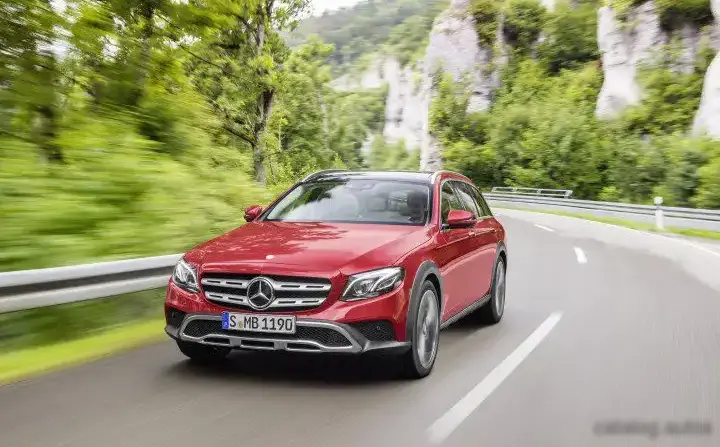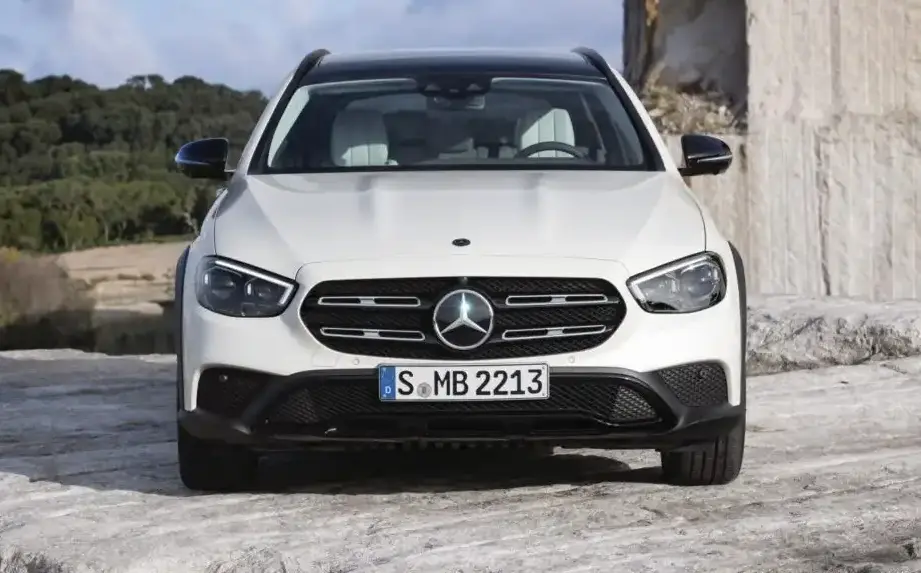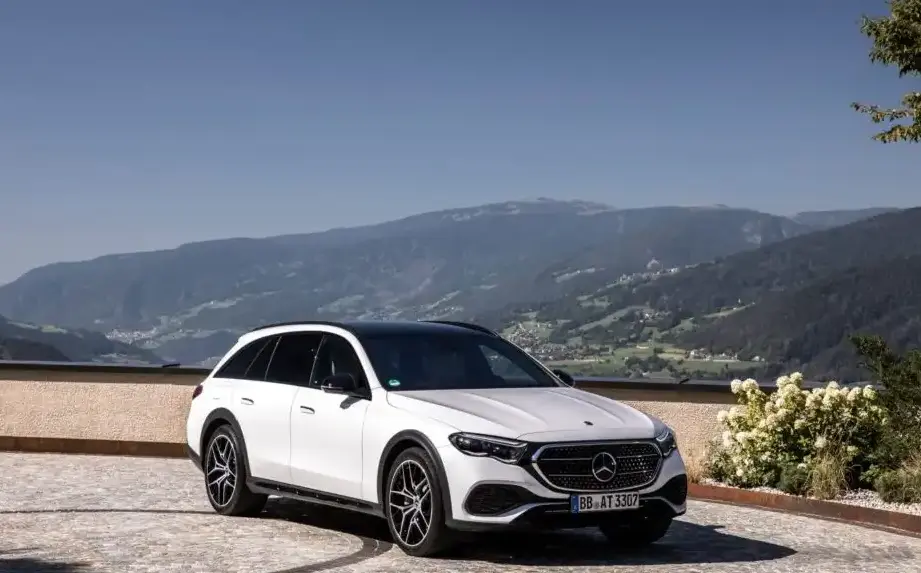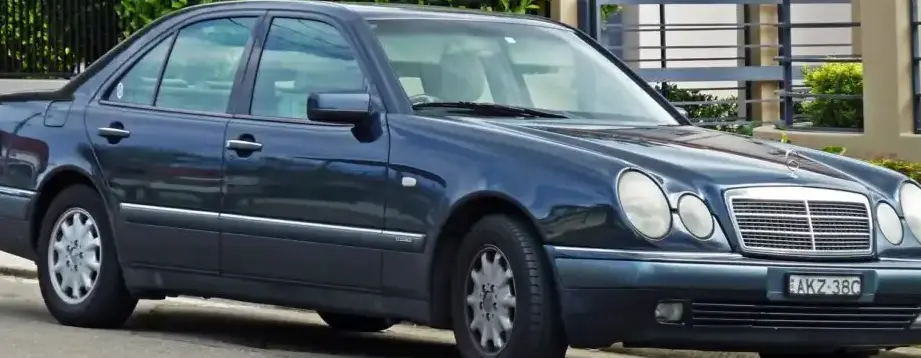
The Mercedes-Benz E 280, produced between August 1995 and March 1997, was a key variant within the W210 E-Class range. Representing a mid-tier offering, it bridged the gap between the entry-level E 220 and the more powerful E 320. The W210 generation, launched in 1995, marked a significant evolution for Mercedes-Benz, introducing a more contemporary design and a host of technological advancements. The E 280 specifically aimed to provide a balance of performance, refinement, and fuel efficiency for the discerning buyer, primarily targeting the European and North American markets. It was offered exclusively as a four-door sedan.
Technical Specifications
| Brand | Mercedes-Benz |
| Model | E-class |
| Generation | E-class (W210) |
| Type (Engine) | E 280 (193 Hp) |
| Start of production | August, 1995 |
| End of production | March, 1997 |
| Powertrain Architecture | Internal Combustion engine |
| Body type | Sedan |
| Seats | 5 |
| Doors | 4 |
| Fuel consumption (urban) | 13.6 l/100 km (17.3 US mpg) |
| Fuel consumption (extra urban) | 7.5 l/100 km (31.4 US mpg) |
| Fuel Type | Petrol (Gasoline) |
| Acceleration 0 – 100 km/h | 8.6 sec |
| Acceleration 0 – 62 mph | 8.6 sec |
| Acceleration 0 – 60 mph | 8.2 sec |
| Maximum speed | 230 km/h (142.92 mph) |
| Weight-to-power ratio | 8.1 kg/Hp |
| Weight-to-torque ratio | 5.8 kg/Nm |
| Power | 193 Hp @ 5500 rpm |
| Power per litre | 69 Hp/l |
| Torque | 270 Nm @ 3750 rpm (199.14 lb.-ft. @ 3750 rpm) |
| Engine layout | Front, Longitudinal |
| Engine Model/Code | M 104 E 28 / 104.945 |
| Engine displacement | 2799 cm3 (170.81 cu. in.) |
| Number of cylinders | 6 |
| Engine configuration | Inline |
| Cylinder Bore | 89.9 mm (3.54 in.) |
| Piston Stroke | 73.5 mm (2.89 in.) |
| Compression ratio | 10:1 |
| Number of valves per cylinder | 4 |
| Fuel injection system | Multi-port manifold injection |
| Engine aspiration | Naturally aspirated engine |
| Valvetrain | DOHC |
| Engine oil capacity | 7.5 l (7.93 US qt | 6.6 UK qt) |
| Coolant | 10 l (10.57 US qt | 8.8 UK qt) |
| Kerb Weight | 1570 kg (3461.26 lbs.) |
| Max. weight | 2100 kg (4629.71 lbs.) |
| Max load | 530 kg (1168.45 lbs.) |
| Trunk (boot) space – minimum | 500 l (17.66 cu. ft.) |
| Fuel tank capacity | 80 l (21.13 US gal | 17.6 UK gal) |
| Length | 4795 mm (188.78 in.) |
| Width | 1799 mm (70.83 in.) |
| Height | 1439 mm (56.65 in.) |
| Wheelbase | 2833 mm (111.54 in.) |
| Front track | 1534 mm (60.39 in.) |
| Rear (Back) track | 1528 mm (60.16 in.) |
| Drivetrain Architecture | The Internal combustion engine (ICE) drives the rear wheels of the vehicle. |
| Drive wheel | Rear wheel drive |
| Number of gears and type of gearbox | 5 gears, manual transmission |
| Front suspension | Double wishbone |
| Rear suspension | Independent multi-link spring suspension with stabilizer |
| Front brakes | Ventilated discs |
| Rear brakes | Disc |
| Assisting systems | ABS (Anti-lock braking system) |
| Steering type | Steering rack and pinion |
| Power steering | Hydraulic Steering |
| Tires size | 215/55 R16 |
| Wheel rims size | 7.5J x 16 |
Powertrain & Engine Architecture
The heart of the E 280 was the M104 E 28 inline-six engine. This 2.8-liter (2799 cc) powerplant was a naturally aspirated, three-valve-per-cylinder design featuring multi-port fuel injection. The engine code, 104.945, identifies specific variations within the M104 family. The M104 was renowned for its smoothness and durability, a hallmark of Mercedes-Benz engineering. It utilized a double overhead camshaft (DOHC) valvetrain, contributing to its efficient breathing and power delivery. The 10:1 compression ratio was a standard figure for the era, balancing performance and fuel economy. The five-speed manual transmission was the standard offering, providing a direct connection between the engine and the rear wheels. While an automatic transmission was available, the manual was favored by enthusiasts for its enhanced control and responsiveness.
Driving Characteristics
The E 280 with the manual transmission offered a refined and engaging driving experience. While not overtly sporty, the 193 horsepower and 270 Nm (199 lb-ft) of torque provided ample power for comfortable cruising and confident overtaking. Acceleration from 0 to 60 mph took approximately 8.2 seconds, respectable for a mid-size luxury sedan of the mid-1990s. The gear ratios were well-matched to the engine’s characteristics, providing strong acceleration in each gear. Compared to the E 220, the E 280 offered a noticeable performance boost. However, it lacked the outright punch of the E 320, which featured a larger displacement engine. The rear-wheel-drive configuration contributed to a balanced chassis and predictable handling.
Equipment & Trim Levels
The E 280 typically came equipped with a respectable array of standard features, including power windows, power locks, air conditioning, and a high-quality audio system. Interior upholstery was typically cloth, with leather options available as an upgrade. The dashboard layout was functional and ergonomically designed, reflecting Mercedes-Benz’s commitment to driver comfort. Optional extras included a sunroof, heated seats, automatic climate control, and upgraded audio systems. The E 280 occupied a middle ground in terms of trim levels, offering a step up in luxury and features compared to the base E 220, but without the full extravagance of the E 320 or the AMG models.
Chassis & Braking
The W210 E-Class featured a robust chassis with a double wishbone front suspension and an independent multi-link rear suspension. This setup provided a comfortable ride while maintaining good handling characteristics. The E 280 was equipped with ventilated disc brakes at the front and solid disc brakes at the rear. Anti-lock braking system (ABS) was standard, enhancing safety and control during emergency braking. The steering was a rack-and-pinion system with hydraulic power assistance, providing precise and responsive steering feel. The standard tire size was 215/55 R16, mounted on 7.5J x 16 alloy wheels.
Market Reception & Comparison
The E 280 was generally well-received by automotive critics. It was praised for its smooth engine, comfortable ride, and refined interior. However, some critics noted that it lacked the sporting character of some of its rivals. Fuel economy was considered reasonable for a vehicle of its size and class. Compared to the E 220, the E 280 offered a significant performance improvement, making it a more appealing option for drivers who prioritized power and responsiveness. Against the E 320, the E 280 represented a more affordable alternative, albeit with slightly less performance. Reliability was generally good, although like all vehicles of this era, regular maintenance was essential.
Legacy
The M104 engine, found in the E 280, is known for its longevity and robustness. Well-maintained examples continue to provide reliable service today. The W210 E-Class, including the E 280, has gained a reputation as a durable and comfortable classic. In the used car market, the E 280 represents a good value proposition for buyers seeking a classic Mercedes-Benz experience. Parts availability is generally good, and the relatively simple mechanical design makes it a relatively straightforward vehicle to maintain for those with some mechanical aptitude. The E 280 remains a testament to Mercedes-Benz’s engineering prowess and a popular choice among enthusiasts.