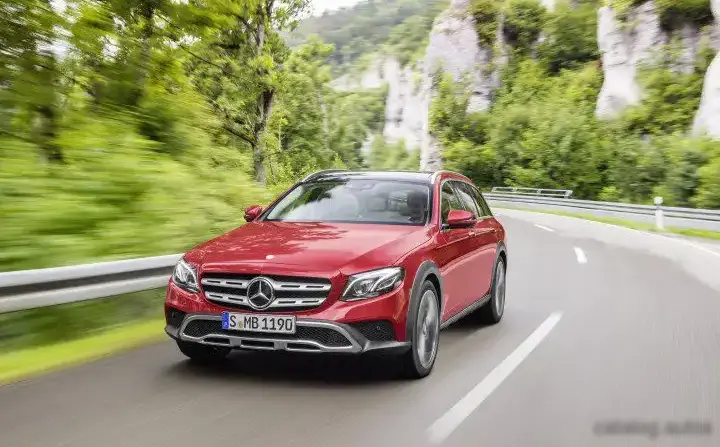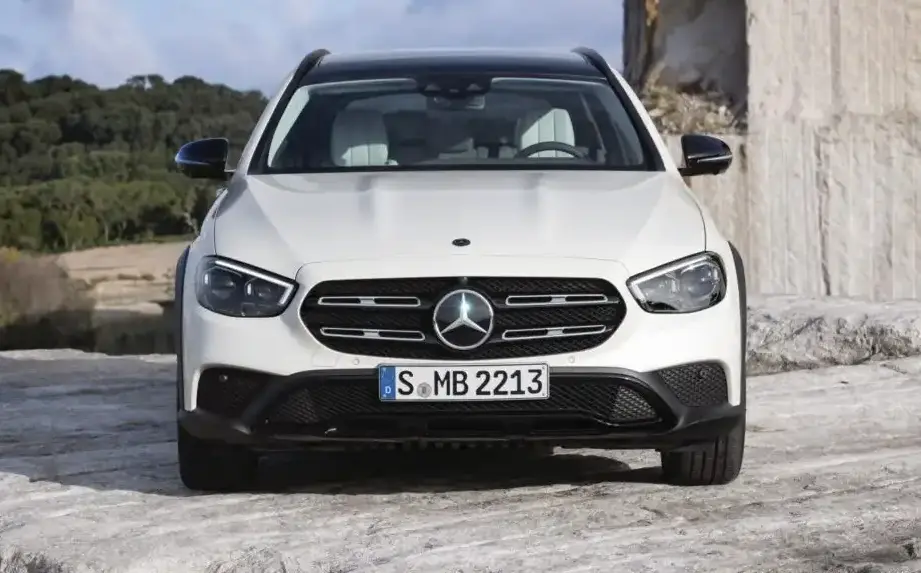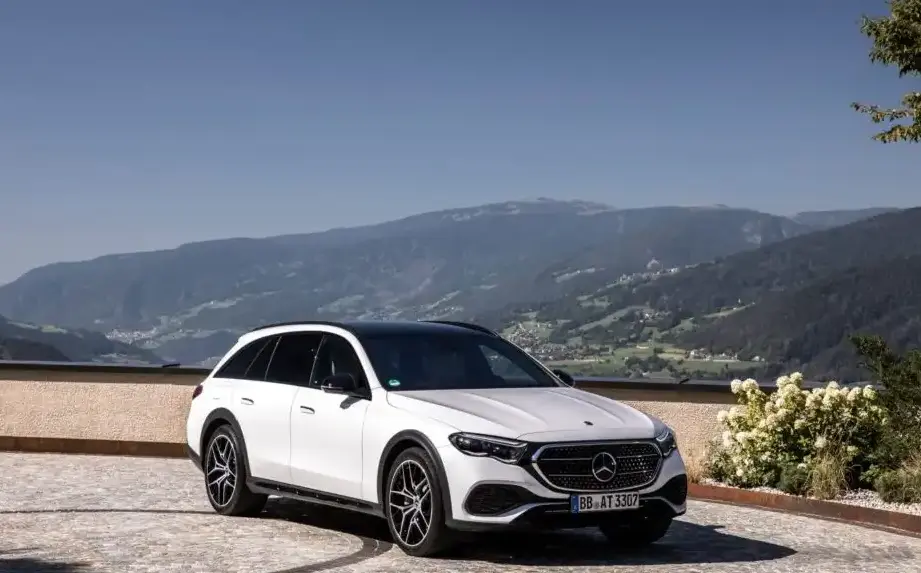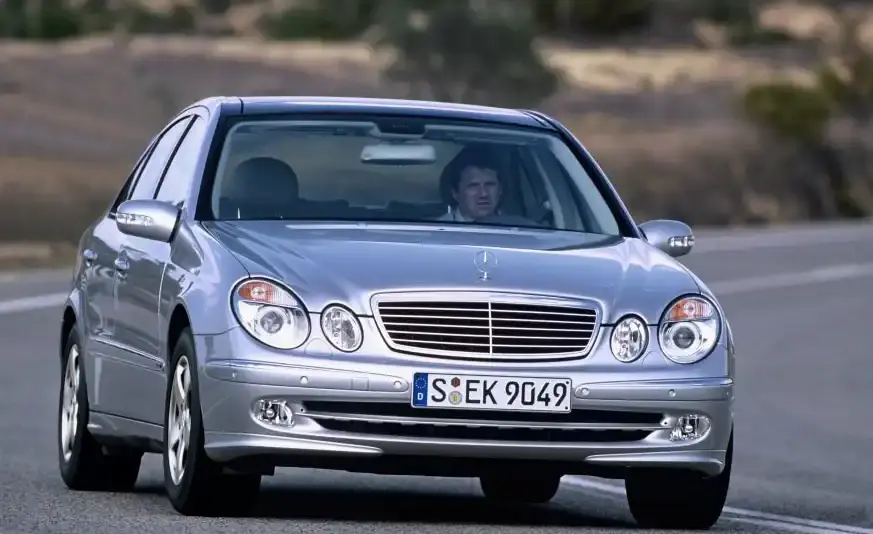
The Mercedes-Benz E 270 CDI, produced between 2003 and 2005, was a key variant within the W211 E-Class range. Positioned as a diesel-powered offering, it aimed to balance fuel efficiency with respectable performance for the European market, where diesel engines held significant popularity. While not initially offered in the United States due to emissions regulations and consumer preference for gasoline engines at the time, the W211 E-Class, in its various forms, represented Mercedes-Benz’s commitment to luxury, technology, and driving refinement in the mid-size executive car segment. The E 270 CDI specifically targeted buyers seeking a comfortable and economical long-distance cruiser.
Technical Specifications
| Brand | Mercedes-Benz |
| Model | E-class |
| Generation | E-class (W211) |
| Type (Engine) | E 270 CDI (177 Hp) |
| Start of production | 2003 |
| End of production | 2005 |
| Powertrain Architecture | Internal Combustion engine |
| Body type | Sedan |
| Seats | 5 |
| Doors | 4 |
| Fuel consumption (urban) | 9.3 l/100 km (25.3 US mpg) |
| Fuel consumption (extra urban) | 5.1 l/100 km (46.1 US mpg) |
| Fuel consumption (combined) | 6.7 l/100 km (35.1 US mpg) |
| Fuel Type | Diesel |
| Acceleration 0 – 100 km/h | 9 sec |
| Acceleration 0 – 62 mph | 9 sec |
| Acceleration 0 – 60 mph | 8.6 sec |
| Maximum speed | 233 km/h (144.78 mph) |
| Weight-to-power ratio | 9.4 kg/Hp |
| Weight-to-torque ratio | 4.2 kg/Nm |
| Power | 177 Hp @ 4200 rpm |
| Torque | 400 Nm @ 1800 rpm (295.02 lb.-ft. @ 1800 rpm) |
| Engine layout | Front, Longitudinal |
| Engine Model/Code | OM 647.961 |
| Engine displacement | 2685 cm3 (163.85 cu. in.) |
| Number of cylinders | 5 |
| Engine configuration | Inline |
| Cylinder Bore | 88 mm (3.46 in.) |
| Piston Stroke | 88.3 mm (3.48 in.) |
| Compression ratio | 18:1 |
| Number of valves per cylinder | 4 |
| Fuel injection system | Diesel Commonrail |
| Engine aspiration | Turbocharger, Intercooler |
| Engine oil capacity | 6.5 l (6.87 US qt | 5.72 UK qt) |
| Coolant capacity | 11.7 l (12.36 US qt | 10.29 UK qt) |
| Kerb Weight | 1665 kg (3670.7 lbs.) |
| Max. weight | 2200 kg (4850.17 lbs.) |
| Max load | 535 kg (1179.47 lbs.) |
| Trunk (boot) space – minimum | 540 l (19.07 cu. ft.) |
| Fuel tank capacity | 65 l (17.17 US gal | 14.3 UK gal) |
| Length | 4818 mm (189.69 in.) |
| Width | 1822 mm (71.73 in.) |
| Height | 1452 mm (57.17 in.) |
| Wheelbase | 2854 mm (112.36 in.) |
| Front track | 1577 mm (62.09 in.) |
| Rear (Back) track | 1570 mm (61.81 in.) |
| Drag coefficient (Cd) | 0.27 |
| Drivetrain Architecture | Rear wheel drive |
| Number of gears | 6 |
| Type of gearbox | Manual transmission |
| Front suspension | Double wishbone |
| Rear suspension | Independent multi-link spring suspension with stabilizer |
| Front brakes | Ventilated discs |
| Rear brakes | Disc |
| Assisting systems | ABS (Anti-lock braking system) |
| Steering type | Steering rack and pinion |
| Power steering | Hydraulic Steering |
| Tires size | 225/55 R16 |
| Wheel rims size | 16 |
Powertrain & Engine Architecture
The heart of the E 270 CDI is the OM 647.961, a 2.7-liter inline-five cylinder diesel engine. This engine was a significant development for Mercedes-Benz, representing a move towards more refined and powerful diesel technology. It featured a common rail direct injection system, delivering fuel at extremely high pressure for improved combustion efficiency and reduced emissions. The engine also incorporated a variable geometry turbocharger (VGT) and an intercooler to boost power and torque. The five-cylinder configuration, while unusual, offered a good balance between smoothness and fuel economy. The 6-speed manual transmission was standard, providing precise gear changes and contributing to the car’s overall driving experience. The engine produced 177 horsepower at 4200 rpm and a substantial 400 Nm (295 lb-ft) of torque at just 1800 rpm, making it well-suited for effortless cruising and overtaking.
Driving Characteristics
The E 270 CDI with the manual transmission offered a compelling blend of performance and economy. The high torque output meant strong acceleration from low speeds, making it easy to navigate city traffic or climb hills. On the highway, the engine settled into a relaxed rhythm, providing ample power for passing maneuvers. While not a sports car, the E 270 CDI felt composed and stable at higher speeds. The manual gearbox allowed for greater driver control, but the long gearing emphasized fuel efficiency over outright acceleration. Compared to the more powerful E 320 CDI or the gasoline-powered E 320, the E 270 CDI prioritized fuel economy and lower running costs. It was a practical choice for drivers who covered long distances regularly.
Equipment & Trim Levels
The E 270 CDI typically came well-equipped, reflecting Mercedes-Benz’s reputation for luxury. Standard features included automatic climate control, power windows and mirrors, a multi-function steering wheel, and a high-quality audio system. Upholstery was usually a durable fabric, with leather options available as an upgrade. Optional extras included a sunroof, navigation system, heated seats, and parking sensors. Trim levels varied depending on the market, but generally, the E 270 CDI occupied a mid-range position in the E-Class lineup, offering a good balance of features and price.
Chassis & Braking
The W211 E-Class featured a sophisticated chassis design. The front suspension utilized a double wishbone setup, while the rear employed an independent multi-link system with a stabilizer bar. This configuration provided a comfortable ride and good handling characteristics. The E 270 CDI was equipped with ventilated disc brakes at the front and solid discs at the rear. Anti-lock braking system (ABS) was standard, enhancing safety and control. The steering was a hydraulic power-assisted rack and pinion system, offering precise and responsive steering feel.
Market Reception & Comparison
The E 270 CDI was generally well-received by automotive critics. It was praised for its fuel efficiency, comfortable ride, and refined engine. However, some reviewers noted that the engine could be somewhat noisy compared to gasoline alternatives. Compared to the E 320 CDI, the E 270 CDI offered lower running costs but less outright performance. Against gasoline-powered E-Class models, it provided significantly better fuel economy but lacked the same level of refinement. The E 270 CDI proved to be a popular choice for fleet operators and private buyers seeking a practical and economical luxury car.
Legacy
The OM 647 engine family, including the OM 647.961 found in the E 270 CDI, has proven to be relatively reliable, although preventative maintenance is crucial. Common issues include injector failures and turbocharger wear. Today, the E 270 CDI represents an affordable entry point into Mercedes-Benz ownership. Well-maintained examples are still sought after by enthusiasts and those looking for a comfortable and economical classic car. The W211 E-Class, as a whole, is remembered as a technologically advanced and well-built vehicle that set a high standard for the mid-size executive car segment.