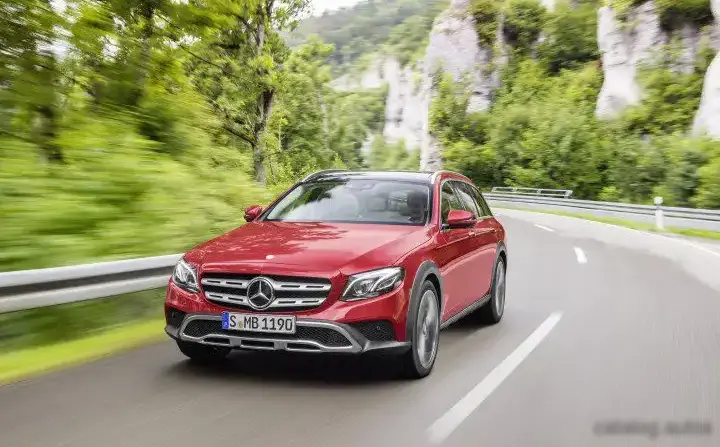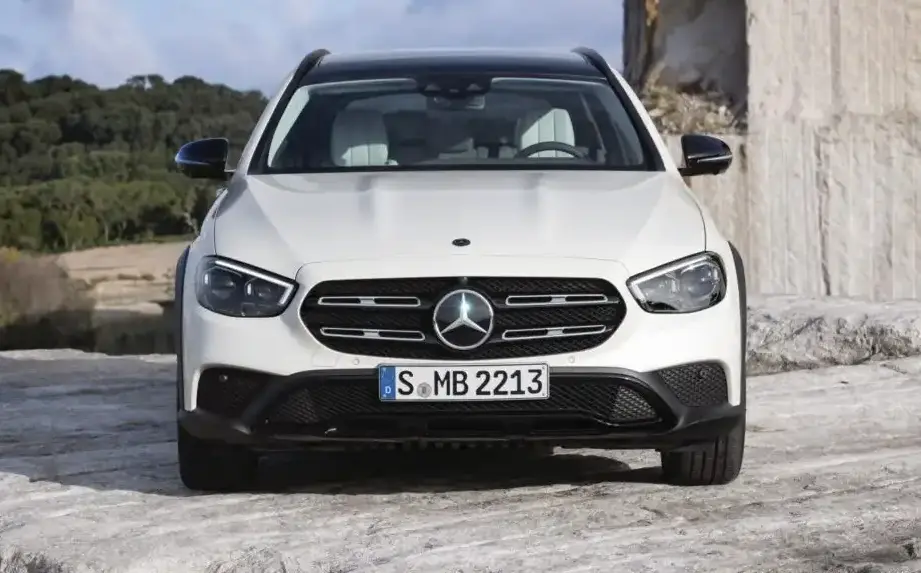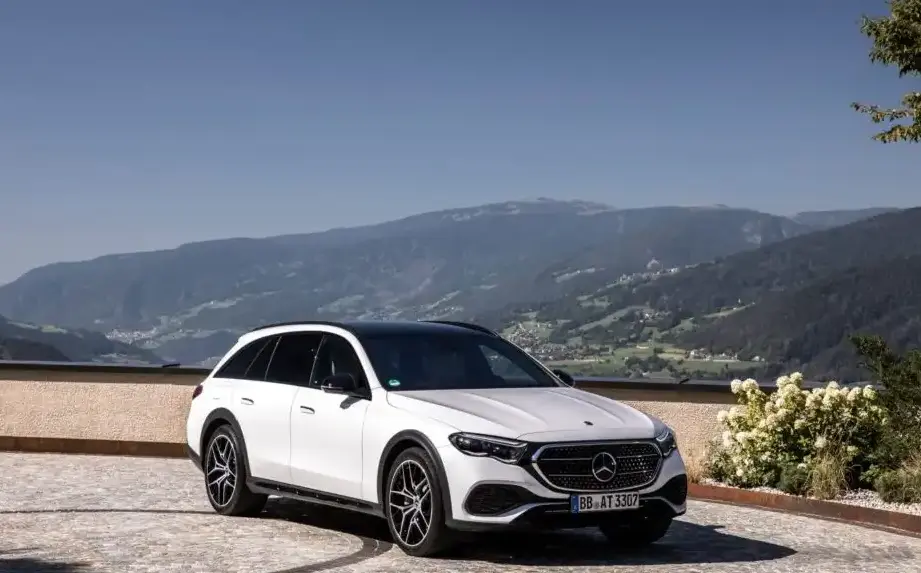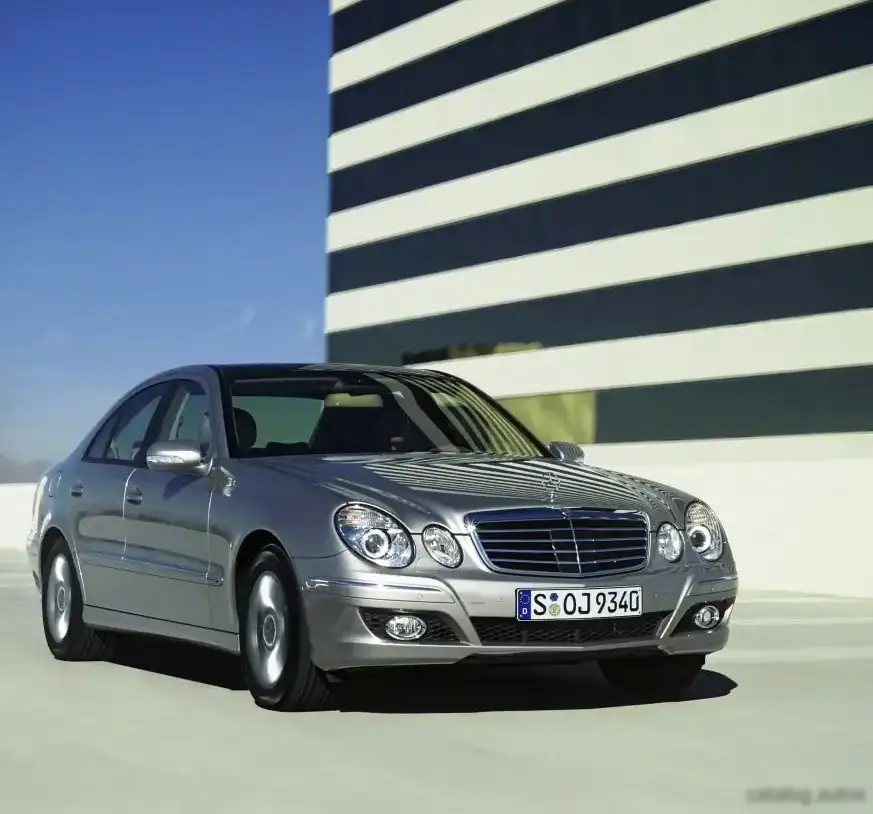
The Mercedes-Benz E 320 CDI 4MATIC, produced from 2006 to 2009 as part of the W211 facelift generation (also known as the E-Class T-Model), represented a compelling blend of luxury, performance, and fuel efficiency within the mid-size executive car segment. This variant, equipped with a 3.0-liter turbocharged diesel V6 engine and a 5G-TRONIC automatic transmission, offered all-wheel drive capability and positioned itself as a sophisticated alternative to its gasoline-powered siblings and other European competitors. It was a key offering in the North American market, where diesel engines were gaining popularity for their torque and fuel economy.
Technical Specifications
| Brand | Mercedes-Benz |
| Model | E-class |
| Generation | E-class (W211, facelift 2006) |
| Type (Engine) | E 320 CDI V6 (224 Hp) 4MATIC 5G-TRONIC |
| Start of production | 2006 |
| End of production | 2009 |
| Powertrain Architecture | Internal Combustion engine |
| Body type | Sedan |
| Seats | 5 |
| Doors | 4 |
| Fuel consumption (urban) | 10.5-10.7 l/100 km (22.4 – 22 US mpg) |
| Fuel consumption (extra urban) | 6.4-6.6 l/100 km (36.8 – 35.6 US mpg) |
| Fuel consumption (combined) | 7.9-8.1 l/100 km (29.8 – 29 US mpg) |
| CO2 emissions | 210-215 g/km |
| Fuel Type | Diesel |
| Acceleration 0 – 100 km/h | 7.4 sec |
| Acceleration 0 – 60 mph | 7 sec |
| Maximum speed | 244 km/h (151.61 mph) |
| Emission standard | Euro 4 |
| Weight-to-power ratio | 7.9 kg/Hp |
| Weight-to-torque ratio | 3.5 kg/Nm |
| Power | 224 Hp @ 4000 rpm |
| Torque | 510 Nm @ 1600-2800 rpm (376.16 lb.-ft.) |
| Engine layout | Front, Longitudinal |
| Engine Model/Code | OM 642.921 |
| Engine displacement | 2987 cm3 (182.28 cu. in.) |
| Number of cylinders | 6 |
| Engine configuration | V-engine |
| Cylinder Bore | 83 mm (3.27 in.) |
| Piston Stroke | 92 mm (3.62 in.) |
| Compression ratio | 17.7:1 |
| Number of valves per cylinder | 4 |
| Fuel injection system | Diesel Commonrail |
| Engine aspiration | Turbocharger, Intercooler |
| Valvetrain | DOHC |
| Engine oil capacity | 8.5 l (8.98 US qt | 7.48 UK qt) |
| Coolant capacity | 13 l (13.74 US qt | 11.44 UK qt) |
| Kerb Weight | 1770 kg (3902.18 lbs.) |
| Max. weight | 2370 kg (5224.96 lbs.) |
| Max load | 600 kg (1322.77 lbs.) |
| Trunk (boot) space | 540 l (19.07 cu. ft.) |
| Fuel tank capacity | 80 l (21.13 US gal | 17.6 UK gal) |
| Permitted trailer load (braked) | 1900 kg (4188.78 lbs.) |
| Permitted trailer load (unbraked) | 750 kg (1653.47 lbs.) |
| Length | 4856 mm (191.18 in.) |
| Width | 1822 mm (71.73 in.) |
| Width including mirrors | 2063 mm (81.22 in.) |
| Height | 1499 mm (59.02 in.) |
| Wheelbase | 2854 mm (112.36 in.) |
| Front track | 1557 mm (61.3 in.) |
| Rear track | 1552 mm (61.1 in.) |
| Front overhang | 869 mm (34.21 in.) |
| Rear overhang | 1133 mm (44.61 in.) |
| Minimum turning circle | 11.5 m (37.73 ft.) |
| Drivetrain | All wheel drive (4×4) |
| Number of gears | 5 |
| Gearbox type | Automatic transmission G-TRONIC |
| Front suspension | Double wishbone, Transverse stabilizer |
| Rear suspension | Independent multi-link suspension, Transverse stabilizer |
| Front brakes | Ventilated discs |
| Rear brakes | Ventilated discs |
| Steering type | Steering rack and pinion |
| Power steering | Hydraulic |
| Tires size | 225/55 R16 |
| Wheel rims size | 7.5J x 16 |
INTRODUCTION
The W211 E-Class, introduced in 2002 and facelifted in 2006, represented a significant step forward for Mercedes-Benz in terms of technology and safety. The 2006 facelift brought revised styling, updated engines, and improved interior appointments. The E 320 CDI 4MATIC, launched with this facelift, was a diesel-powered variant aimed at buyers seeking a balance of performance, economy, and all-weather capability. It occupied a mid-range position within the E-Class lineup, slotting above the E 300 and below the more powerful E 500 models. The 4MATIC all-wheel-drive system was a key selling point, particularly in regions experiencing inclement weather.
Powertrain & Engine Architecture
At the heart of the E 320 CDI 4MATIC lies the OM 642.921, a 3.0-liter V6 diesel engine. This engine is a robust and technologically advanced design, featuring a common rail direct injection system, a variable geometry turbocharger, and an intercooler. The common rail system, operating at extremely high pressures, allowed for precise fuel metering and optimized combustion. The engine also incorporated four valves per cylinder and a double overhead camshaft (DOHC) valvetrain for improved breathing and efficiency. A particulate filter was standard equipment, reducing harmful emissions. The 5G-TRONIC automatic transmission, a five-speed unit, was specifically tuned to complement the engine’s torque characteristics. It featured a torque converter lockup clutch to improve fuel economy at cruising speeds.
Driving Characteristics
The E 320 CDI 4MATIC offered a distinctly different driving experience compared to its gasoline-powered counterparts. The engine’s substantial 376 lb-ft of torque, available from a low 1600 rpm, provided effortless acceleration and strong pulling power. While not as outright quick as the E 500, the diesel delivered a more relaxed and refined driving experience, particularly during highway cruising. The 5G-TRONIC transmission shifted smoothly and responsively, although some drivers noted a slight delay in downshifts. The 4MATIC all-wheel-drive system provided excellent traction in all conditions, enhancing stability and confidence. The gear ratios were optimized for fuel efficiency and relaxed cruising, rather than aggressive acceleration.
Equipment & Trim Levels
The E 320 CDI 4MATIC came standard with a comprehensive list of features, befitting its luxury positioning. These included leather upholstery, automatic climate control, a premium audio system, power-adjustable front seats with memory function, and a sunroof. Optional extras included navigation system, upgraded audio systems (such as Harman Kardon), rear-seat entertainment, and various driver-assistance features like Distronic adaptive cruise control and parking assist. Interior trim options ranged from wood veneers to aluminum accents, allowing buyers to personalize their vehicle.
Chassis & Braking
The W211 E-Class featured a sophisticated chassis design, incorporating a double wishbone front suspension and an independent multi-link rear suspension. Both ends of the suspension utilized a transverse stabilizer bar to reduce body roll. The E 320 CDI 4MATIC was equipped with ventilated disc brakes on all four wheels, providing ample stopping power. Anti-lock braking system (ABS) was standard, along with electronic brake-force distribution. The suspension was tuned to provide a comfortable ride, while still offering good handling characteristics.
Market Reception & Comparison
The E 320 CDI 4MATIC was generally well-received by automotive critics. It was praised for its fuel efficiency, strong torque, and comfortable ride. However, some reviewers noted that the diesel engine was slightly noisier than its gasoline counterparts. Compared to the E 350 (gasoline-powered V6), the E 320 CDI offered superior fuel economy and torque, but slightly less horsepower. Against the E 500 (V8), the CDI provided a more economical option with comparable luxury and features, albeit with less overall performance. Reliability was generally good, although diesel particulate filters could require occasional maintenance.
Legacy
The Mercedes-Benz E 320 CDI 4MATIC (W211) has proven to be a durable and reliable vehicle. On the used car market, these models are sought after for their combination of luxury, fuel efficiency, and all-wheel-drive capability. The OM 642 engine is known for its longevity, provided it has been properly maintained. While diesel emissions regulations have become stricter in recent years, the E 320 CDI remains a viable option for buyers seeking a comfortable and economical luxury sedan. Parts availability is generally good, and the vehicle’s robust construction ensures that many examples remain on the road today.