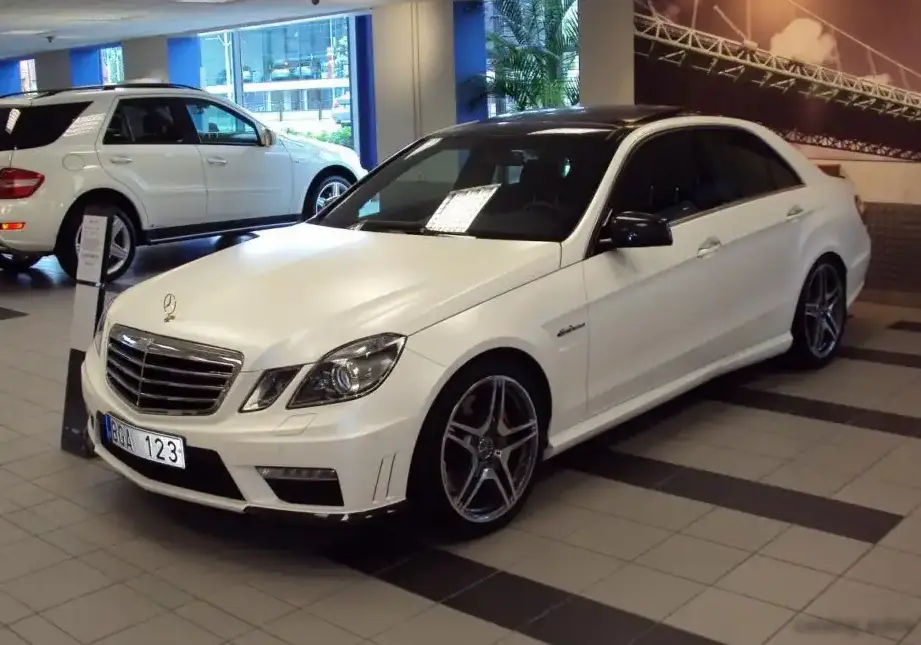
The Mercedes-Benz E-Class AMG E 63, specifically in its W212 iteration produced between 2009 and April 2011, represented the high-performance variant of the fifth-generation E-Class. Positioned as the flagship sedan, it offered a substantial increase in power and handling compared to other E-Class models. This particular version, equipped with the naturally aspirated 6.2-liter V8 engine producing 525 horsepower and the 7-speed AMG SPEEDSHIFT MCT transmission, aimed to deliver a thrilling driving experience while maintaining a degree of luxury expected from the Mercedes-Benz brand. It competed directly with performance sedans from BMW (M5) and Audi (RS6), establishing itself as a key player in the high-performance executive car segment.
Technical Specifications
| Brand | Mercedes-Benz |
| Model | E-class |
| Generation | E-class (W212) |
| Type | AMG E 63 V8 (525 Hp) AMG SPEEDSHIFT MCT |
| Start of production | 2009 |
| End of production | April, 2011 |
| Powertrain Architecture | Internal Combustion engine |
| Body type | Sedan |
| Seats | 5 |
| Doors | 4 |
| Fuel consumption (urban) | 18.7 l/100 km (12.6 US mpg, 15.1 UK mpg, 5.3 km/l) |
| Fuel consumption (extra urban) | 9.1 l/100 km (25.8 US mpg, 31 UK mpg, 11 km/l) |
| Fuel consumption (combined) | 12.6 l/100 km (18.7 US mpg, 22.4 UK mpg, 7.9 km/l) |
| CO2 emissions | 295 g/km |
| Fuel Type | Petrol (Gasoline) |
| Acceleration 0 – 100 km/h | 4.5 sec |
| Acceleration 0 – 62 mph | 4.5 sec |
| Acceleration 0 – 60 mph | 4.3 sec |
| Maximum speed | 250 km/h (155.34 mph), Electronically limited |
| Emission standard | Euro 5 |
| Weight-to-power ratio | 3.4 kg/Hp, 297.5 Hp/tonne |
| Weight-to-torque ratio | 2.8 kg/Nm, 356.9 Nm/tonne |
| Power | 525 Hp @ 6800 rpm |
| Power per litre | 84.6 Hp/l |
| Torque | 630 Nm @ 5200 rpm (464.66 lb.-ft. @ 5200 rpm) |
| Engine layout | Front, Longitudinal |
| Engine Model/Code | M 156.984 |
| Engine displacement | 6208 cm3 (378.84 cu. in.) |
| Number of cylinders | 8 |
| Engine configuration | V-engine |
| Cylinder Bore | 102.2 mm (4.02 in.) |
| Piston Stroke | 94.6 mm (3.72 in.) |
| Compression ratio | 11.3:1 |
| Number of valves per cylinder | 4 |
| Fuel injection system | Multi-port manifold injection |
| Engine aspiration | Naturally aspirated engine |
| Valvetrain | DOHC |
| Engine oil capacity | 8.8 l (9.3 US qt | 7.74 UK qt) |
| Kerb Weight | 1765 kg (3891.16 lbs.) |
| Max. weight | 2390 kg (5269.05 lbs.) |
| Max load | 625 kg (1377.89 lbs.) |
| Trunk (boot) space (minimum) | 532 l (18.79 cu. ft.) |
| Fuel tank capacity | 66 l (17.44 US gal | 14.52 UK gal) |
| Max. roof load | 100 kg (220.46 lbs.) |
| Length | 4868 mm (191.65 in.) |
| Width | 1854 mm (72.99 in.) |
| Width including mirrors | 2071 mm (81.54 in.) |
| Height | 1464 mm (57.64 in.) |
| Wheelbase | 2874 mm (113.15 in.) |
| Front track | 1600 mm (62.99 in.) |
| Rear track | 1619 mm (63.74 in.) |
| Front overhang | 841 mm (33.11 in.) |
| Rear overhang | 1153 mm (45.39 in.) |
| Drag coefficient (Cd) | 0.29 |
| Minimum turning circle | 11.3 m (37.07 ft.) |
| Drivetrain Architecture | Rear wheel drive |
| Number of gears | 7 |
| Gearbox type | Automatic transmission AMG SPEEDSHIFT MCT |
| Front suspension | Independent multi-link suspension |
| Rear suspension | Independent multi-link suspension |
| Front brakes | Ventilated discs, 360×36 mm |
| Rear brakes | Ventilated discs, 360×26 mm |
| Assisting systems | ABS (Anti-lock braking system) |
| Steering type | Steering rack and pinion |
| Power steering | Hydraulic Steering |
| Front tires | 255/40 R18 |
| Rear tires | 285/35 R18 |
| Front wheel rims | 9J x 18 |
| Rear wheel rims | 9.5J x 18 |
Powertrain & Engine Architecture
The heart of the AMG E 63 is the M 156.984 6.2-liter naturally aspirated V8 engine. This engine, hand-built by AMG technicians, was renowned for its robust construction and immediate throttle response. It featured a cast aluminum block with silicon-aluminum alloy cylinder liners, a forged crankshaft, and lightweight connecting rods. The engine utilized a multi-port fuel injection system and a double overhead camshaft (DOHC) valvetrain with four valves per cylinder. The AMG SPEEDSHIFT MCT 7-speed automatic transmission was a key component, replacing a traditional torque converter with a wet multi-plate clutch. This design allowed for quicker shifts and a more direct connection between the engine and the wheels. The MCT transmission also featured selectable drive modes – Comfort, Sport, Sport Plus, and Manual – allowing the driver to tailor the shift points and responsiveness to their preferences.
Driving Characteristics
The 525 hp and 464 lb-ft of torque delivered by the M 156 engine, combined with the quick-shifting MCT transmission, resulted in exhilarating acceleration. The 0-60 mph sprint was achieved in approximately 4.3 seconds, and the car was electronically limited to a top speed of 155 mph. While the automatic transmission offered smooth operation in everyday driving, it truly shined when driven aggressively. The gear ratios were optimized for both acceleration and high-speed cruising. Compared to the standard E-Class models, the AMG E 63 offered significantly more power and a more engaging driving experience. However, it lacked the fuel efficiency of the smaller-engined variants. The manual shift mode allowed for precise control, but the transmission wasn’t as quick or refined as some dual-clutch transmissions found in competing models.
Equipment & Trim Levels
The AMG E 63 came standard with a comprehensive list of features, including leather upholstery, sport seats, a premium sound system, and a host of driver-assistance technologies. Interior trim options included carbon fiber, wood, and aluminum accents. Optional extras included a panoramic sunroof, adaptive cruise control, and a rear-seat entertainment system. The exterior styling was also enhanced with AMG-specific body kit, including a more aggressive front bumper, side skirts, and rear diffuser. Larger wheels and performance tires were also standard, contributing to the car’s sporty appearance and improved handling.
Chassis & Braking
The AMG E 63 featured a sport-tuned suspension with stiffer springs and dampers compared to the standard E-Class. The front suspension utilized an independent multi-link design, while the rear suspension also employed a multi-link setup. Braking performance was exceptional, thanks to large ventilated discs with multi-piston calipers. The AMG E 63 also included an anti-lock braking system (ABS) and electronic stability control (ESC) as standard equipment. The car’s weight distribution was carefully balanced to enhance handling and stability.
Market Reception & Comparison
The AMG E 63 was generally well-received by automotive critics, who praised its powerful engine, responsive transmission, and engaging driving dynamics. However, some reviewers noted its relatively high fuel consumption and firm ride quality. Compared to the E 550, the E 63 offered a significant performance advantage, but at a higher price point. Against rivals like the BMW M5 and Audi RS6, the E 63 held its own, offering a unique blend of luxury and performance. The naturally aspirated engine was a point of differentiation, providing a distinct sound and feel compared to the turbocharged engines found in some competitors.
Legacy
The M 156 engine, while eventually replaced by more fuel-efficient turbocharged engines, remains highly regarded for its reliability and durability. The AMG E 63 (W212) has become a sought-after vehicle in the used car market, particularly among enthusiasts who appreciate its raw power and analog driving experience. Maintenance costs can be higher than those of standard E-Class models due to the specialized components and labor required for the AMG engine and transmission. However, with proper care, these cars can provide years of reliable performance and driving enjoyment. The W212 E63 represents a high point in naturally aspirated AMG performance, and continues to be a desirable vehicle for those seeking a thrilling and engaging driving experience.