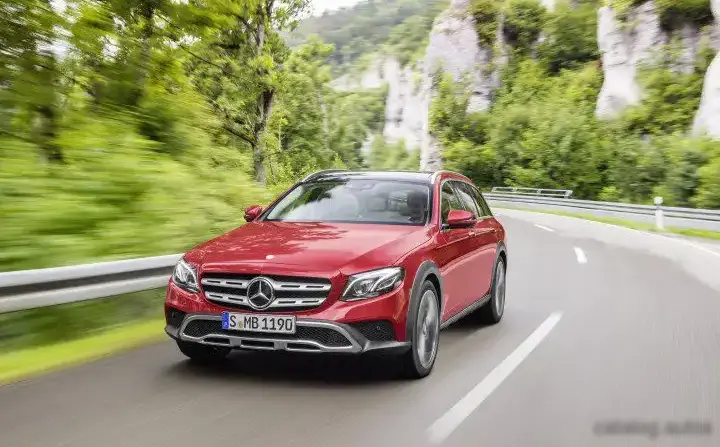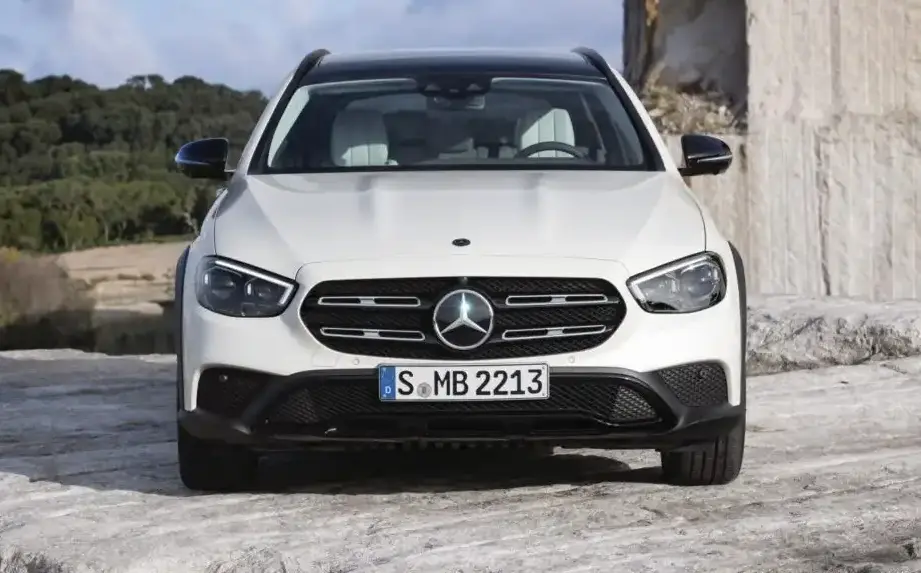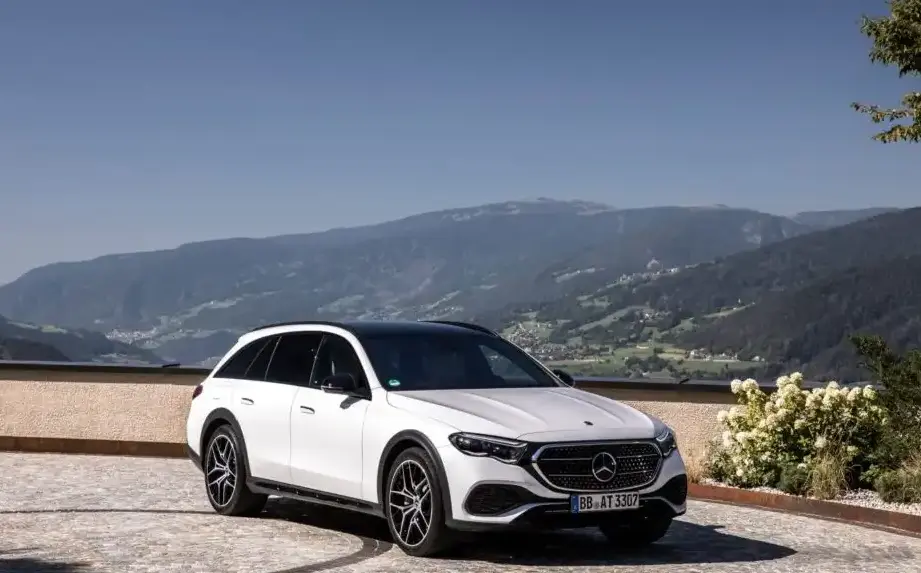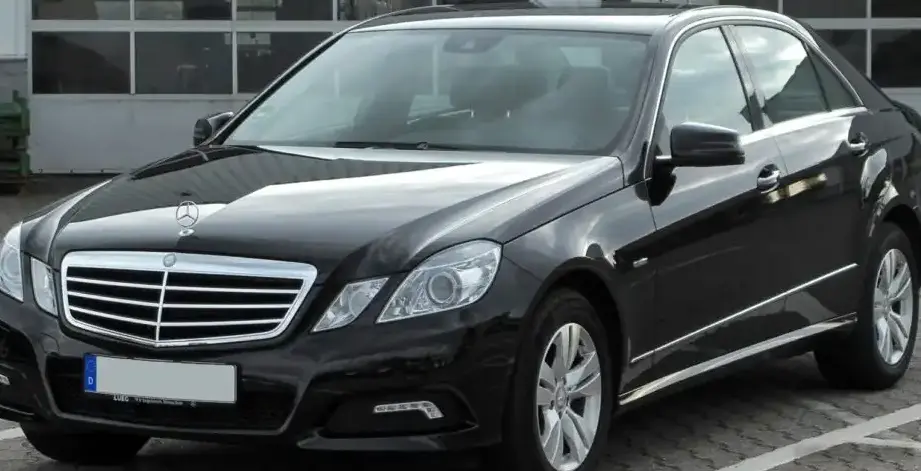
The Mercedes-Benz E 250 CDI BlueEFFICIENCY, produced between February 2011 and January 2013, was a key variant within the W212 E-Class range. Positioned as a fuel-efficient diesel option, it aimed to balance performance with economy, appealing to buyers seeking a comfortable and refined executive sedan. This model incorporated Mercedes’ BlueEFFICIENCY technologies, including a Start & Stop system, to minimize fuel consumption and emissions. It served as a popular choice in European markets where diesel engines held a significant share of the automotive landscape, and was offered as an alternative to the gasoline-powered E 250 and higher-performance E 350 models.
Technical Specifications
| Brand | Mercedes-Benz |
| Model | E-class |
| Generation | E-class (W212) |
| Type (Engine) | E 250 CDI BlueEFFICIENCY (204 Hp) Start & Stop |
| Start of production | February, 2011 |
| End of production | January, 2013 |
| Powertrain Architecture | Internal Combustion engine |
| Body type | Sedan |
| Seats | 5 |
| Doors | 4 |
| Fuel consumption (economy) – urban (NEDC) | 6.2-6.6 l/100 km (37.9 – 35.6 US mpg, 45.6 – 42.8 UK mpg, 16.1 – 15.2 km/l) |
| Fuel consumption (economy) – extra urban (NEDC) | 4.2-4.6 l/100 km (56 – 51.1 US mpg, 67.3 – 61.4 UK mpg, 23.8 – 21.7 km/l) |
| Fuel consumption (economy) – combined (NEDC) | 5-5.3 l/100 km (47 – 44.4 US mpg, 56.5 – 53.3 UK mpg, 20 – 18.9 km/l) |
| CO2 emissions (NEDC) | 130-139 g/km |
| Fuel Type | Diesel |
| Acceleration 0 – 100 km/h | 7.7 sec |
| Acceleration 0 – 62 mph | 7.7 sec |
| Acceleration 0 – 60 mph | 7.3 sec |
| Maximum speed | 240 km/h (149.13 mph) |
| Emission standard | Euro 5 |
| Weight-to-power ratio | 8.1 kg/Hp, 122.9 Hp/tonne |
| Weight-to-torque ratio | 3.3 kg/Nm, 301.2 Nm/tonne |
| Power | 204 Hp @ 4200 rpm |
| Power per litre | 95.2 Hp/l |
| Torque | 500 Nm @ 1600-1800 rpm (368.78 lb.-ft. @ 1600-1800 rpm) |
| Engine layout | Front, Longitudinal |
| Engine Model/Code | OM 651.924 |
| Engine displacement | 2143 cm3 (130.77 cu. in.) |
| Number of cylinders | 4 |
| Engine configuration | Inline |
| Cylinder Bore | 83 mm (3.27 in.) |
| Piston Stroke | 99 mm (3.9 in.) |
| Compression ratio | 16.2:1 |
| Number of valves per cylinder | 4 |
| Fuel injection system | Diesel Commonrail |
| Engine aspiration | BiTurbo, Intercooler |
| Valvetrain | DOHC |
| Engine oil capacity | 6.5 l (6.87 US qt | 5.72 UK qt) |
| Coolant | 9 l (9.51 US qt | 7.92 UK qt) |
| Kerb Weight | 1660 kg (3659.67 lbs.) |
| Max. weight | 2280 kg (5026.54 lbs.) |
| Max load | 620 kg (1366.87 lbs.) |
| Trunk (boot) space – minimum | 540 l (19.07 cu. ft.) |
| Fuel tank capacity | 59 l (15.59 US gal | 12.98 UK gal) |
| Max. roof load | 100 kg (220.46 lbs.) |
| Permitted trailer load with brakes (12%) | 1900 kg (4188.78 lbs.) |
| Permitted trailer load without brakes | 750 kg (1653.47 lbs.) |
| Permitted towbar download | 84 kg (185.19 lbs.) |
| Length | 4868 mm (191.65 in.) |
| Width | 1854 mm (72.99 in.) |
| Width including mirrors | 2071 mm (81.54 in.) |
| Height | 1471 mm (57.91 in.) |
| Wheelbase | 2874 mm (113.15 in.) |
| Front track | 1598 mm (62.91 in.) |
| Rear (Back) track | 1614 mm (63.54 in.) |
| Front overhang | 841 mm (33.11 in.) |
| Rear overhang | 1153 mm (45.39 in.) |
| Drag coefficient (Cd) | 0.26 |
| Minimum turning circle (turning diameter) | 11.25 m (36.91 ft.) |
| Drivetrain Architecture | The Internal combustion engine (ICE) drives the rear wheels of the vehicle. |
| Drive wheel | Rear wheel drive |
| Number of gears and type of gearbox | 6 gears, manual transmission |
Powertrain & Engine Architecture
The E 250 CDI BlueEFFICIENCY was powered by the OM651.924, a 2.1-liter inline-four diesel engine. This engine was a mainstay of the Mercedes-Benz lineup, known for its robust construction and fuel efficiency. It featured common-rail direct injection, delivering fuel at extremely high pressure for optimized combustion. The engine employed a sophisticated bi-turbocharger system – a smaller turbocharger for quick response at low engine speeds and a larger turbocharger for increased power at higher RPMs. This configuration helped to mitigate turbo lag and provide a broad torque curve. The engine also incorporated an intercooler to further enhance performance by cooling the intake air. The 16.2:1 compression ratio was typical for a diesel engine, contributing to its thermal efficiency. The engine was longitudinally mounted in the engine bay, driving the rear wheels.
Driving Characteristics
The 204 horsepower and 368 lb-ft of torque delivered by the E 250 CDI BlueEFFICIENCY provided adequate performance for everyday driving. Acceleration from 0-60 mph took approximately 7.3 seconds, and top speed was electronically limited to 149 mph. While not a sports sedan, the engine’s strong low-end torque made it well-suited for overtaking maneuvers and cruising on the highway. Compared to the more powerful E 350, the E 250 CDI offered a more relaxed driving experience, prioritizing fuel economy over outright speed. The manual transmission, with its six forward gears, was well-matched to the engine’s characteristics, providing smooth shifts and allowing the driver to keep the engine in its optimal power band. The gear ratios were tuned for efficiency, with a taller final drive to maximize fuel economy at cruising speeds.
Equipment & Trim Levels
The E 250 CDI BlueEFFICIENCY typically came standard with features such as automatic climate control, power windows and locks, a multi-function steering wheel, and a high-quality audio system. Upholstery was generally cloth or leatherette, with leather being an optional upgrade. Available options included a sunroof, navigation system, premium sound system, and various driver-assistance features like parking sensors and adaptive cruise control. The interior design was typical of Mercedes-Benz, emphasizing luxury and refinement. The dashboard layout was clean and functional, with intuitive controls.
Chassis & Braking
The W212 E-Class featured a sophisticated suspension system designed to provide a comfortable ride and precise handling. The E 250 CDI utilized a coil spring, independent multi-link suspension at both the front and rear. An optional air suspension system was available, offering adjustable ride height and damping for enhanced comfort and control. Braking duties were handled by ventilated discs at the front and solid discs at the rear. Anti-lock brakes (ABS) and electronic stability control (ESP) were standard features, providing enhanced safety and stability. The steering system was a hydraulic power-assisted rack and pinion setup, offering precise and responsive steering feel.
Market Reception & Comparison
The E 250 CDI BlueEFFICIENCY was well-received by automotive critics for its fuel efficiency and comfortable ride. It was often praised for its refined engine and smooth-shifting transmission. Compared to the gasoline-powered E 250, the CDI offered significantly better fuel economy, making it a more practical choice for drivers who covered long distances. However, some critics noted that the diesel engine was slightly noisier than the gasoline counterpart. In terms of reliability, the OM651 engine proved to be generally robust, although regular maintenance was essential to ensure long-term durability.
Legacy
The Mercedes-Benz E 250 CDI BlueEFFICIENCY (W212) remains a popular choice in the used car market, particularly for those seeking a fuel-efficient and reliable executive sedan. The OM651 engine is known for its longevity, and with proper maintenance, it can provide many years of trouble-free service. While newer E-Class models offer more advanced technology and features, the W212 E 250 CDI continues to represent a compelling value proposition, offering a blend of luxury, comfort, and economy.