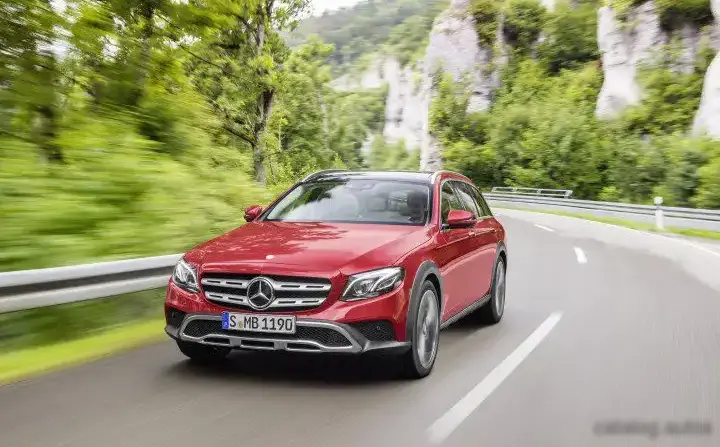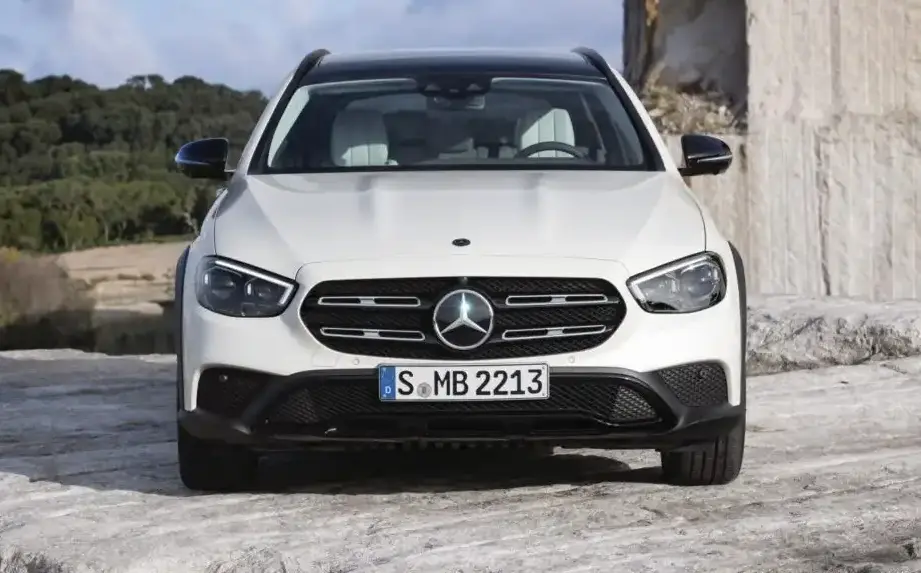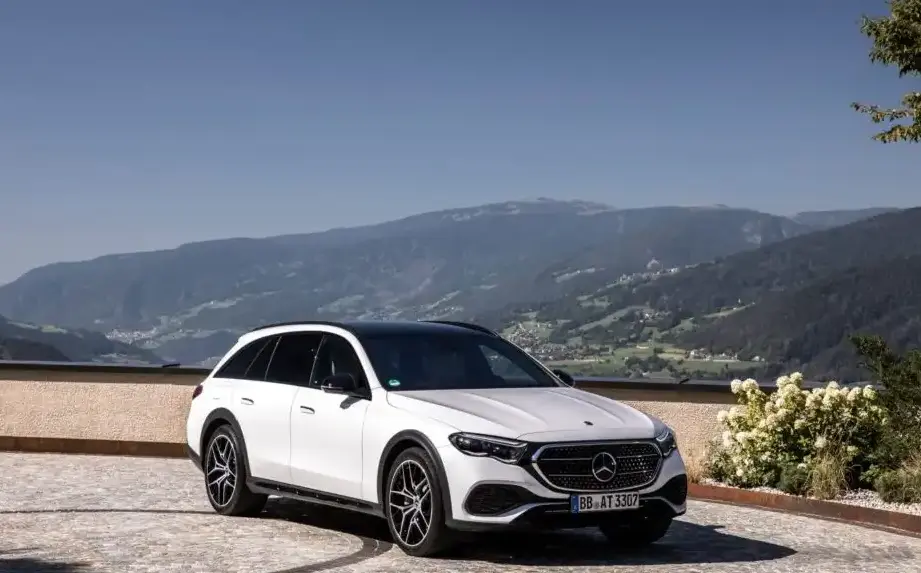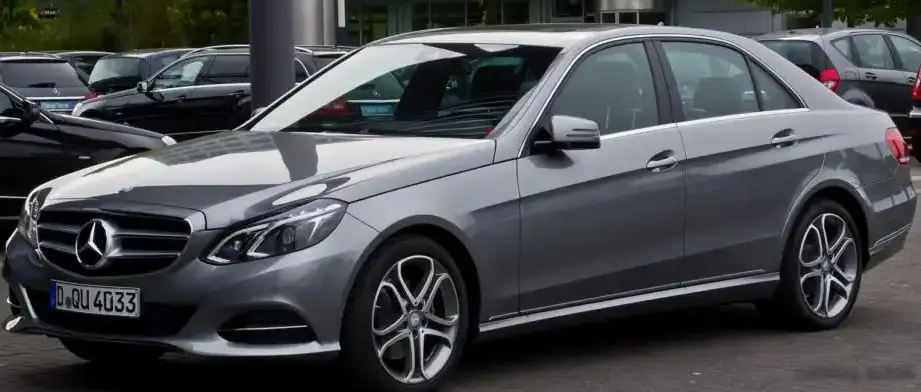
The Mercedes-Benz E 250 BlueTEC, produced from July 2014 to January 2016, was a key variant within the W212 E-Class facelift range. Representing a blend of efficiency and respectable performance, this model occupied a mid-range position in the lineup, appealing to buyers seeking a diesel-powered executive sedan with lower running costs than the more potent E 350 or E 550 models. It was primarily marketed in Europe and other regions where diesel engines held significant market share, offering a sophisticated and comfortable driving experience characteristic of the E-Class. The E 250 BlueTEC benefitted from the extensive updates introduced with the 2013 facelift, including revised styling, enhanced technology, and improved fuel economy.
Technical Specifications
| Brand | Mercedes-Benz |
| Model | E-class |
| Generation | E-class (W212, facelift 2013) |
| Type (Engine) | E 250 BlueTEC (204 Hp) |
| Start of production | July, 2014 |
| End of production | January, 2016 |
| Powertrain Architecture | Internal Combustion engine |
| Body type | Sedan |
| Seats | 5 |
| Doors | 4 |
| Fuel consumption (urban) | 5.6-6 l/100 km (42 – 39.2 US mpg) |
| Fuel consumption (extra urban) | 4-4.4 l/100 km (58.8 – 53.5 US mpg) |
| Fuel consumption (combined) | 4.6-5 l/100 km (51.1 – 47 US mpg) |
| CO2 emissions | 121-130 g/km |
| Fuel Type | Diesel |
| Acceleration 0 – 100 km/h | 7.5 sec |
| Acceleration 0 – 62 mph | 7.5 sec |
| Acceleration 0 – 60 mph | 7.1 sec |
| Maximum speed | 240 km/h (149.13 mph) |
| Emission standard | Euro 6 |
| Weight-to-power ratio | 8.4 kg/Hp |
| Weight-to-torque ratio | 3.4 kg/Nm |
| Power | 204 Hp @ 3800 rpm |
| Torque | 500 Nm @ 1600-1800 rpm (368.78 lb.-ft. @ 1600-1800 rpm) |
| Engine layout | Front, Longitudinal |
| Engine Model/Code | OM 651.924 |
| Engine displacement | 2143 cm3 (130.77 cu. in.) |
| Number of cylinders | 4 |
| Engine configuration | Inline |
| Cylinder Bore | 83 mm (3.27 in.) |
| Piston Stroke | 99 mm (3.9 in.) |
| Compression ratio | 16.2:1 |
| Number of valves per cylinder | 4 |
| Fuel injection system | Diesel Commonrail |
| Engine aspiration | BiTurbo, Intercooler |
| Valvetrain | DOHC |
| Engine oil capacity | 6.5 l (6.87 US qt | 5.72 UK qt) |
| Coolant capacity | 10 l (10.57 US qt | 8.8 UK qt) |
| Kerb Weight | 1710 kg (3769.9 lbs.) |
| Max. weight | 2370 kg (5224.96 lbs.) |
| Max load | 660 kg (1455.05 lbs.) |
| Trunk (boot) space (minimum) | 490 l (17.3 cu. ft.) |
| Fuel tank capacity | 59 l (15.59 US gal | 12.98 UK gal) |
| AdBlue tank capacity | 25.5 l (6.74 US gal | 5.61 UK gal) |
| Max. roof load | 100 kg (220.46 lbs.) |
| Permitted trailer load (with brakes) | 1900 kg (4188.78 lbs.) |
| Permitted trailer load (without brakes) | 750 kg (1653.47 lbs.) |
| Permitted towbar download | 84 kg (185.19 lbs.) |
| Length | 4879 mm (192.09 in.) |
| Width | 1854 mm (72.99 in.) |
| Width including mirrors | 2071 mm (81.54 in.) |
| Height | 1474 mm (58.03 in.) |
| Wheelbase | 2874 mm (113.15 in.) |
| Front track | 1598 mm (62.91 in.) |
| Rear track | 1614 mm (63.54 in.) |
| Front overhang | 849 mm (33.43 in.) |
| Rear overhang | 1156 mm (45.51 in.) |
| Minimum turning circle | 11.28 m (37.01 ft.) |
| Drivetrain | Rear wheel drive |
| Number of gears | 6 |
| Gearbox type | Manual transmission |
Powertrain & Engine Architecture
The E 250 BlueTEC was powered by the OM 651.924, a 2.1-liter inline-four diesel engine. This engine was a mainstay of the Mercedes-Benz lineup, known for its robust construction and fuel efficiency. The OM 651 featured a sophisticated common-rail direct injection system, delivering fuel at extremely high pressures for optimized combustion. A bi-turbocharger setup, utilizing a small and a large turbocharger, minimized turbo lag and provided a broad torque curve. The smaller turbocharger spooled up quickly at low engine speeds, while the larger turbocharger provided increased power at higher RPMs. The engine also incorporated an intercooler to further enhance performance by cooling the intake air. The valvetrain employed a double overhead camshaft (DOHC) design with four valves per cylinder, contributing to efficient gas exchange. The 6-speed manual transmission was standard, offering precise gear changes and a direct connection to the engine.
Driving Characteristics
The E 250 BlueTEC with a manual transmission offered a balanced driving experience. While not as overtly sporty as the gasoline-powered E 350, it provided ample torque for confident overtaking and comfortable cruising. The 500 Nm (368.78 lb-ft) of torque, available from just 1600-1800 rpm, meant that the car felt responsive in most driving situations. The 6-speed manual gearbox was well-matched to the engine’s characteristics, allowing drivers to make the most of the available power. Compared to the automatic version, the manual offered a more engaging driving experience and slightly improved fuel economy. The gear ratios were tuned for efficiency, prioritizing comfortable highway cruising over outright acceleration. Acceleration from 0-60 mph took approximately 7.1 seconds, respectable for a diesel-powered executive sedan.
Equipment & Trim Levels
The E 250 BlueTEC typically came well-equipped, reflecting its position as a premium vehicle. Standard features included automatic climate control, a multi-function steering wheel, power-adjustable front seats, and a high-quality audio system. The interior upholstery was typically a combination of fabric and Artico (Mercedes’ synthetic leather). Optional extras included leather upholstery, a panoramic sunroof, a navigation system, and advanced driver-assistance systems such as lane keeping assist and blind spot monitoring. The facelifted W212 models also benefitted from an updated infotainment system with a larger display screen and improved functionality.
Chassis & Braking
The E 250 BlueTEC utilized a sophisticated suspension system designed to provide a comfortable and controlled ride. The front suspension featured coil springs and an independent multi-link setup, while the rear suspension employed an independent multi-link spring suspension. Air suspension was available as an optional extra, further enhancing ride comfort and allowing drivers to adjust the vehicle’s ride height. The braking system consisted of ventilated discs at the front and solid discs at the rear. Anti-lock braking system (ABS) was standard, along with electronic brakeforce distribution (EBD) and brake assist. The steering system was a rack-and-pinion setup with electric power steering.
Market Reception & Comparison
The E 250 BlueTEC was generally well-received by automotive critics. It was praised for its fuel efficiency, comfortable ride, and refined interior. However, some reviewers noted that the engine could be somewhat noisy compared to its gasoline counterparts. Compared to the E 350, the E 250 BlueTEC offered significantly better fuel economy but less outright performance. The E 200 CDI (a lower-powered diesel variant) was more affordable but lacked the E 250’s extra power and refinement. In terms of reliability, the OM 651 engine proved to be a durable and long-lasting unit, although regular maintenance was essential to ensure optimal performance.
Legacy
The Mercedes-Benz E 250 BlueTEC (W212) remains a popular choice in the used car market. Its combination of fuel efficiency, comfort, and reliability makes it an attractive option for buyers seeking a well-rounded executive sedan. The OM 651 engine is known for its longevity, and with proper maintenance, these vehicles can provide many years of trouble-free service. However, potential buyers should be aware of the potential costs associated with diesel engine maintenance, such as diesel particulate filter (DPF) replacement and AdBlue refills. The W212 E-Class, including the E 250 BlueTEC, is considered a well-built and refined vehicle that represents a sweet spot in terms of value and ownership experience.