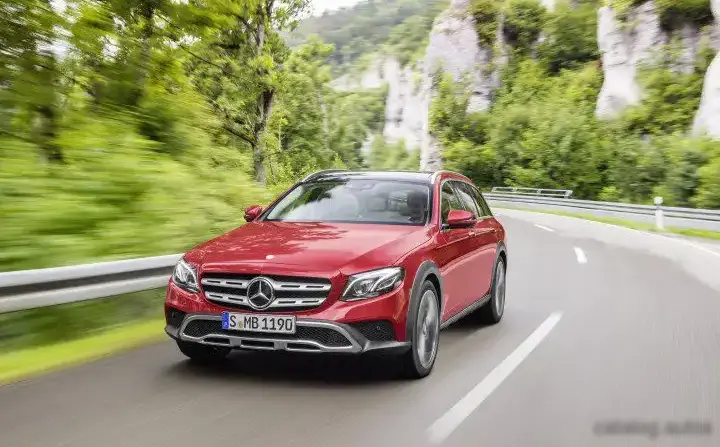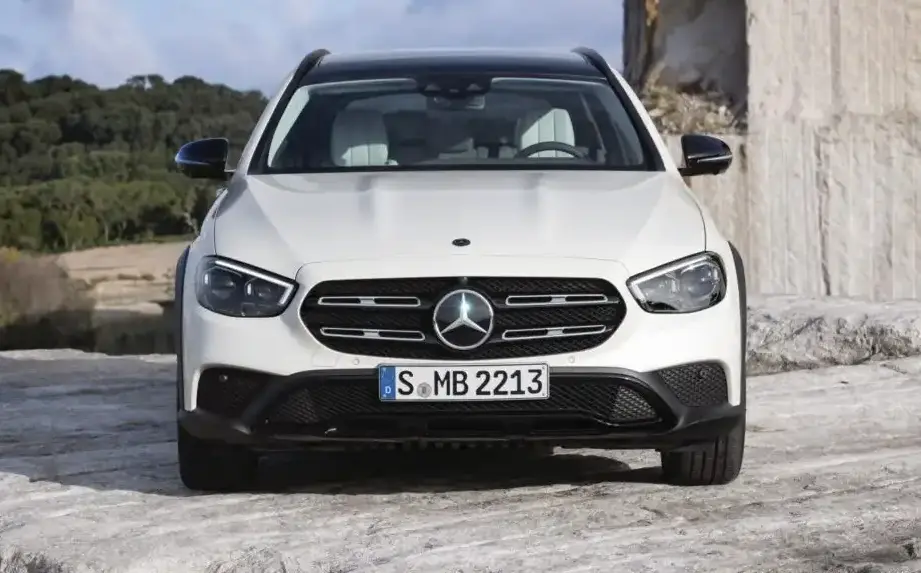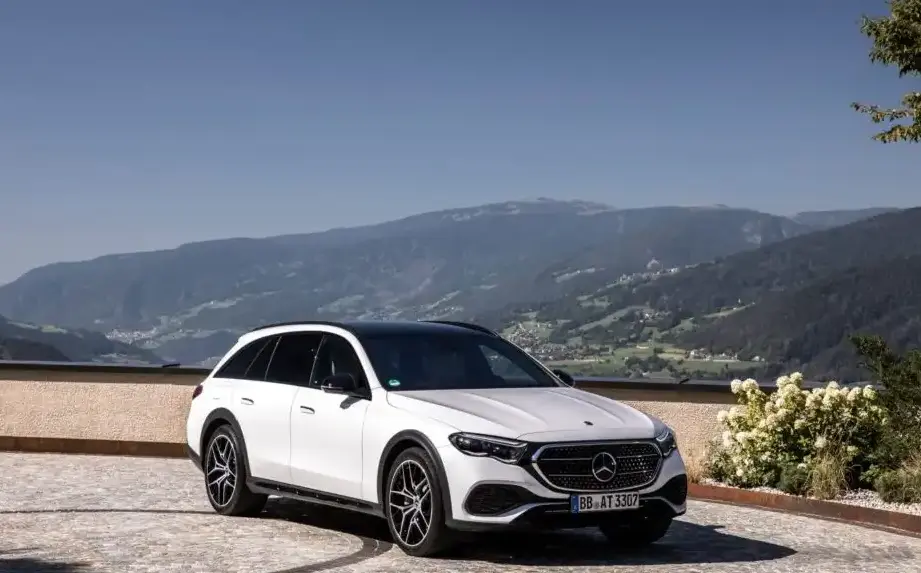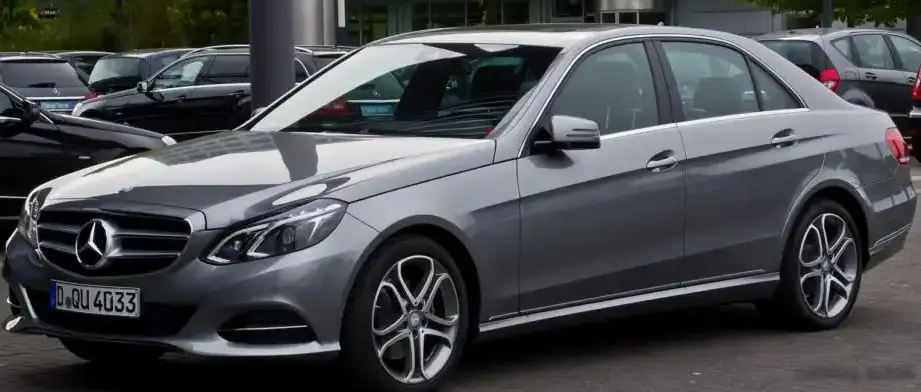
The Mercedes-Benz E 300 BlueTEC HYBRID, produced from April 2013 to October 2015, represents a significant step in the W212 E-Class facelift’s push towards fuel efficiency and reduced emissions. Positioned as a premium offering within the E-Class range, this variant combined a diesel engine with a full hybrid electric system, aiming to deliver both respectable performance and impressive economy. It was part of the broader W212 generation, which spanned from 2009 to 2016, receiving a substantial facelift in 2013 that included revised styling, updated technology, and the introduction of new powertrain options like this hybrid model. The E 300 BlueTEC HYBRID was primarily marketed in Europe and other regions with strong diesel acceptance, offering a sophisticated alternative to traditional gasoline-powered E-Class models.
Technical Specifications
| Brand | Mercedes-Benz |
| Model | E-class |
| Generation | E-class (W212, facelift 2013) |
| Type | E 300 BlueTEC (204 Hp) HYBRID 7G-TRONIC PLUS |
| Start of production | April, 2013 |
| End of production | October, 2015 |
| Powertrain Architecture | FHEV (Full Hybrid Electric Vehicle) |
| Body type | Sedan |
| Seats | 5 |
| Doors | 4 |
| Fuel consumption (urban) | 3.9-4.2 l/100 km (60.3 – 56 US mpg, 72.4 – 67.3 UK mpg, 25.6 – 23.8 km/l) |
| Fuel consumption (extra urban) | 3.8-4.2 l/100 km (61.9 – 56 US mpg, 74.3 – 67.3 UK mpg, 26.3 – 23.8 km/l) |
| Fuel consumption (combined) | 3.8-4.2 l/100 km (61.9 – 56 US mpg, 74.3 – 67.3 UK mpg, 26.3 – 23.8 km/l) |
| CO2 emissions | 99-110 g/km |
| Fuel Type | Diesel |
| Acceleration 0 – 100 km/h | 7.5 sec |
| Acceleration 0 – 62 mph | 7.5 sec |
| Acceleration 0 – 60 mph | 7.1 sec |
| Maximum speed | 242 km/h (150.37 mph) |
| Emission standard | Euro 5 |
| Weight-to-power ratio | 8.7 kg/Hp, 115.3 Hp/tonne |
| Weight-to-torque ratio | 3.5 kg/Nm, 282.5 Nm/tonne |
| Gross battery capacity | 0.8 kWh |
| Battery technology | Lithium-ion (Li-Ion) |
| Battery location | Under the front hood |
| Electric motor power | 27 Hp @ 1000 rpm |
| Electric motor Torque | 250 Nm (184.39 lb.-ft.) |
| Electric motor location | Between the combustion engine and the transmission |
| Engine Power | 204 Hp @ 4200 rpm |
| Power per litre | 95.2 Hp/l |
| Engine Torque | 500 Nm @ 1600-1800 rpm (368.78 lb.-ft. @ 1600-1800 rpm) |
| Engine layout | Front, Longitudinal |
| Engine Model/Code | OM 651.924 |
| Engine displacement | 2143 cm3 (130.77 cu. in.) |
| Number of cylinders | 4 |
| Engine configuration | Inline |
| Cylinder Bore | 83 mm (3.27 in.) |
| Piston Stroke | 99 mm (3.9 in.) |
| Compression ratio | 16.2:1 |
| Number of valves per cylinder | 4 |
| Fuel injection system | Diesel Commonrail |
| Engine aspiration | BiTurbo, Intercooler |
| Valvetrain | DOHC |
| Engine oil capacity | 6.5 l (6.87 US qt | 5.72 UK qt) |
| Coolant capacity | 10 l (10.57 US qt | 8.8 UK qt) |
| Kerb Weight | 1770 kg (3902.18 lbs.) |
| Max. weight | 2430 kg (5357.23 lbs.) |
| Max load | 660 kg (1455.05 lbs.) |
| Trunk (boot) space (minimum) | 505 l (17.83 cu. ft.) |
| Fuel tank capacity | 59 l (15.59 US gal | 12.98 UK gal) |
| Max. roof load | 100 kg (220.46 lbs.) |
| Permitted trailer load (with brakes) | 300 kg (661.39 lbs.) |
| Permitted trailer load (without brakes) | 300 kg (661.39 lbs.) |
| Length | 4879 mm (192.09 in.) |
| Width | 1854 mm (72.99 in.) |
| Width including mirrors | 2071 mm (81.54 in.) |
| Height | 1474 mm (58.03 in.) |
| Wheelbase | 2874 mm (113.15 in.) |
| Front track | 1598 mm (62.91 in.) |
| Rear track | 1614 mm (63.54 in.) |
| Front overhang | 849 mm (33.43 in.) |
| Rear overhang | 1156 mm (45.51 in.) |
| Drag coefficient (Cd) | 0.26 |
| Minimum turning circle | 11.28 m (37.01 ft.) |
| Drivetrain Architecture | Rear wheel drive. FHEV. ICE and electric motor drive rear wheels. |
| Number of gears | 7 |
| Gearbox type | Automatic transmission G-TRONIC PLUS |
| Front suspension | Coil spring, Independent multi-link, Transverse stabilizer |
| Rear suspension | Independent multi-link spring, stabilizer |
| Front brakes | Ventilated discs |
| Rear brakes | Disc |
| Assisting systems | ABS (Anti-lock braking system) |
| Steering type | Steering rack and pinion |
| Power steering | Electric |
| Tires size | 225/55 R16 |
| Wheel rims size | 7.5J x 16 |
Powertrain & Engine Architecture
At the heart of the E 300 BlueTEC HYBRID lies the OM 651.924 2.1-liter inline-four cylinder diesel engine. This engine, a mainstay in many Mercedes-Benz models, is characterized by its robust construction and efficient operation. It utilizes a sophisticated commonrail direct injection system, delivering fuel at extremely high pressures for optimized combustion. The engine is further enhanced by a bi-turbocharger setup – a small turbocharger for quick response at low engine speeds and a larger turbocharger for increased power at higher RPMs. This configuration contributes to the engine’s 204 horsepower at 4200 rpm and a substantial 500 Nm (368.78 lb-ft) of torque available from 1600-1800 rpm. The hybrid system incorporates a 27 hp electric motor, powered by a 0.8 kWh lithium-ion battery pack located under the front hood. This electric motor works in conjunction with the diesel engine, providing assistance during acceleration and enabling short periods of all-electric driving. The 7G-TRONIC PLUS seven-speed automatic transmission efficiently manages power delivery, offering smooth and responsive gear changes.
Driving Characteristics
The E 300 BlueTEC HYBRID delivers a refined and comfortable driving experience. The combination of the diesel engine and electric motor results in strong low-end torque, providing brisk acceleration. While not as overtly sporty as some of the higher-powered E-Class variants, the 7.5-second 0-62 mph acceleration time is more than adequate for most driving situations. The hybrid system’s electric assistance smooths out power delivery, and the transmission’s programming is geared towards efficiency. Compared to the E 250 CDI (diesel) or the E 350 (gasoline) models, the hybrid offers superior fuel economy, but slightly less outright performance. The electric motor’s contribution is most noticeable during initial acceleration and in stop-and-go traffic, where it can operate in near-silent electric mode. The steering is precise and well-weighted, and the suspension provides a comfortable ride, absorbing bumps and imperfections in the road surface effectively.
Equipment & Trim Levels
The E 300 BlueTEC HYBRID typically came well-equipped, reflecting its position as a premium model. Standard features included leather upholstery, automatic climate control, a high-resolution infotainment system with navigation, and a suite of safety technologies such as adaptive cruise control, lane keeping assist, and automatic emergency braking. Optional extras included a panoramic sunroof, premium sound system, and various interior trim upgrades. The interior design was characterized by Mercedes-Benz’s signature blend of luxury and technology, with high-quality materials and a user-friendly interface. Trim levels varied slightly depending on the market, but generally offered a range of customization options to suit individual preferences.
Chassis & Braking
The E 300 BlueTEC HYBRID utilizes a sophisticated chassis design, featuring a four-link front suspension and a multi-link rear suspension. This setup provides excellent ride comfort and handling characteristics. The car is equipped with ventilated disc brakes at the front and solid disc brakes at the rear, providing ample stopping power. Anti-lock braking system (ABS) and electronic stability control (ESC) are standard features, enhancing safety and control. The suspension is tuned to balance comfort and handling, offering a composed and stable ride even when pushed. The steering is electrically assisted, providing precise and responsive control.
Market Reception & Comparison
The E 300 BlueTEC HYBRID was generally well-received by automotive critics, who praised its fuel efficiency, refined driving experience, and luxurious interior. However, some reviewers noted that the hybrid system added complexity and weight, and that the performance was not as exhilarating as some of the more powerful E-Class models. Compared to the E 250 CDI, the hybrid offered significantly better fuel economy, but at a higher price point. Against the E 350, the hybrid provided comparable fuel economy with slightly less power. The car’s appeal was strongest in markets where diesel fuel was readily available and where fuel efficiency was a high priority.
Legacy
The Mercedes-Benz E 300 BlueTEC HYBRID represents an important step in the evolution of hybrid technology within the luxury car segment. While not a massive sales success, it demonstrated Mercedes-Benz’s commitment to fuel efficiency and reduced emissions. The OM 651 diesel engine, in particular, has proven to be a reliable and durable powerplant. In the used car market, these models are generally sought after for their fuel economy and comfortable ride. However, potential buyers should be aware of the added complexity of the hybrid system, which may require specialized maintenance. Overall, the E 300 BlueTEC HYBRID remains a compelling option for those seeking a luxurious and efficient mid-size sedan.