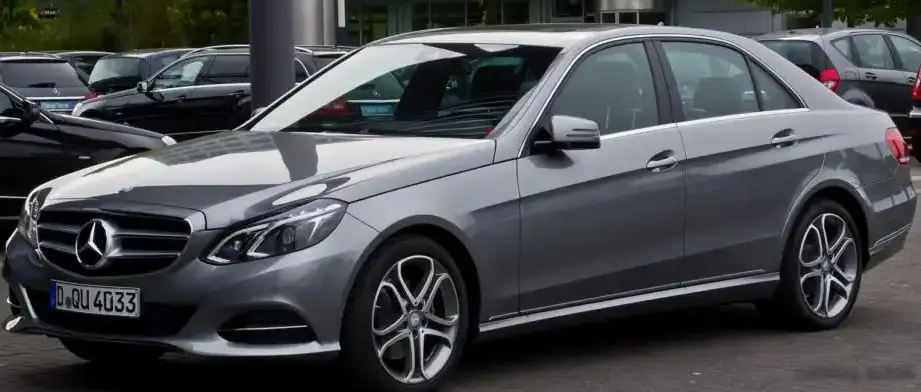
The Mercedes-Benz E 400 4MATIC, produced from April 2013 to July 2014, represented a significant performance upgrade within the W212 E-Class facelift range. Positioned as a near-top-of-the-line offering, it bridged the gap between the more mainstream E350 and the high-performance E63 AMG. This variant combined a potent 3.0-liter twin-turbocharged V6 engine with Mercedes-Benz’s 4MATIC all-wheel-drive system and the 7G-TRONIC PLUS seven-speed automatic transmission, offering a blend of luxury, performance, and all-weather capability. It was primarily marketed towards buyers seeking a refined and powerful executive sedan without the outright sporting focus of the AMG models.
Technical Specifications
| Brand | Mercedes-Benz |
| Model | E-class |
| Generation | E-class (W212, facelift 2013) |
| Type | E 400 V6 3.0 (333 Hp) 4MATIC 7G-TRONIC PLUS |
| Start of production | April, 2013 |
| End of production | July, 2014 |
| Powertrain Architecture | Internal Combustion engine |
| Body type | Sedan |
| Seats | 5 |
| Doors | 4 |
| Fuel consumption (urban) | 11.2-11.6 l/100 km (21 – 20.3 US mpg) |
| Fuel consumption (extra urban) | 6.4-6.8 l/100 km (36.8 – 34.6 US mpg) |
| Fuel consumption (combined) | 8.1-8.5 l/100 km (29 – 27.7 US mpg) |
| CO2 emissions | 189-199 g/km |
| Fuel Type | Petrol (Gasoline) |
| Acceleration 0 – 100 km/h | 5.3 sec |
| Acceleration 0 – 60 mph | 5 sec |
| Maximum speed | 250 km/h (155.34 mph) |
| Emission standard | Euro 6 |
| Weight-to-power ratio | 5.3 kg/Hp |
| Weight-to-torque ratio | 3.7 kg/Nm |
| Power | 333 Hp @ 5500 rpm |
| Torque | 480 Nm @ 1400-4000 rpm (354.03 lb.-ft.) |
| Engine layout | Front, Longitudinal |
| Engine Model/Code | M 276.820 |
| Engine displacement | 2996 cm3 (182.83 cu. in.) |
| Number of cylinders | 6 |
| Engine configuration | V-engine |
| Cylinder Bore | 88 mm (3.46 in.) |
| Piston Stroke | 82.1 mm (3.23 in.) |
| Compression ratio | 10.5:1 |
| Number of valves per cylinder | 4 |
| Fuel injection system | Direct injection |
| Engine aspiration | BiTurbo, Intercooler |
| Valvetrain | DOHC |
| Engine oil capacity | 6.5 l (6.87 US qt | 5.72 UK qt) |
| Coolant capacity | 10.3 l (10.88 US qt | 9.06 UK qt) |
| Kerb Weight | 1770 kg (3902.18 lbs.) |
| Max. weight | 2410 kg (5313.14 lbs.) |
| Max load | 640 kg (1410.96 lbs.) |
| Trunk (boot) space | 540 l (19.07 cu. ft.) |
| Fuel tank capacity | 59 l (15.59 US gal | 12.98 UK gal) |
| Length | 4879 mm (192.09 in.) |
| Width | 1854 mm (72.99 in.) |
| Height | 1474 mm (58.03 in.) |
| Wheelbase | 2874 mm (113.15 in.) |
| Drivetrain Architecture | All wheel drive (4×4) |
| Number of gears | 7 |
| Gearbox type | Automatic transmission G-TRONIC PLUS |
Powertrain & Engine Architecture
The heart of the E 400 4MATIC is the M276.820 3.0-liter V6 engine. This engine utilizes direct fuel injection and twin turbochargers – one for each bank of cylinders – to deliver a substantial 333 horsepower and 354 lb-ft of torque. The engine’s architecture is notable for its all-aluminum construction, which contributes to weight savings and improved thermal management. The 7G-TRONIC PLUS seven-speed automatic transmission is a sophisticated unit known for its smooth shifts and efficiency. It features a torque converter lock-up clutch that engages across multiple gears, minimizing slippage and improving fuel economy. The 4MATIC all-wheel-drive system employs a multi-plate clutch to distribute torque between the front and rear axles, providing enhanced traction in various driving conditions.
Driving Characteristics
The E 400 4MATIC offered a noticeably more engaging driving experience than the base E350. The twin-turbo V6 delivered strong acceleration, with a 0-60 mph time of around 5 seconds. The 7G-TRONIC PLUS transmission provided quick and seamless gear changes, contributing to a refined and responsive feel. While not as overtly sporty as the E63 AMG, the E 400 offered ample power for both highway cruising and spirited driving. The 4MATIC system provided confident handling and stability, particularly in inclement weather. The gear ratios were tuned for a balance between performance and fuel efficiency, with a relatively tall final drive to aid in highway economy.
Equipment & Trim Levels
The E 400 4MATIC typically came well-equipped as standard. Common features included leather upholstery, power-adjustable front seats with memory function, dual-zone automatic climate control, a premium sound system, and a navigation system. Optional extras included a panoramic sunroof, adaptive cruise control, lane-keeping assist, and a rear-seat entertainment system. Interior trim options ranged from wood veneers to aluminum accents, allowing buyers to personalize the cabin to their preferences. The E 400 often featured unique exterior styling cues, such as chrome accents and larger wheels, to differentiate it from lower-trim models.
Chassis & Braking
The W212 E-Class chassis featured a four-wheel independent suspension system. The front suspension utilized a multi-link design with coil springs, while the rear suspension employed a multi-link setup as well. Many E 400 models were equipped with the optional Airmatic air suspension system, which provided a more comfortable ride and allowed for adjustable ride height. The braking system consisted of ventilated discs on all four wheels, providing ample stopping power. Anti-lock brakes (ABS), electronic stability control (ESC), and traction control were standard features. The E 400 typically featured larger brake rotors and calipers compared to the E350, further enhancing its braking performance.
Market Reception & Comparison
The E 400 4MATIC was generally well-received by automotive critics. It was praised for its powerful engine, refined ride, and luxurious interior. Reviewers noted that it offered a compelling alternative to the BMW 535i and Audi A6 3.0T. Compared to the E350, the E 400 provided a significant performance boost, while remaining more affordable and less aggressive than the E63 AMG. Fuel economy was respectable for a V6-powered luxury sedan, averaging around 29 mpg combined. Reliability was generally good, although some owners reported minor issues with the electronic systems.
Legacy
The M276 engine family, including the 3.0-liter variant used in the E 400, has proven to be a durable and reliable powerplant. While preventative maintenance is crucial, these engines are known to withstand high mileage with proper care. On the used car market, the E 400 4MATIC remains a desirable option for buyers seeking a well-rounded luxury sedan with strong performance and all-weather capability. Its combination of power, refinement, and practicality has ensured its continued appeal in the years since its production ended. The 7G-TRONIC transmission, while complex, has also proven relatively reliable when properly maintained, contributing to the E 400’s long-term value.