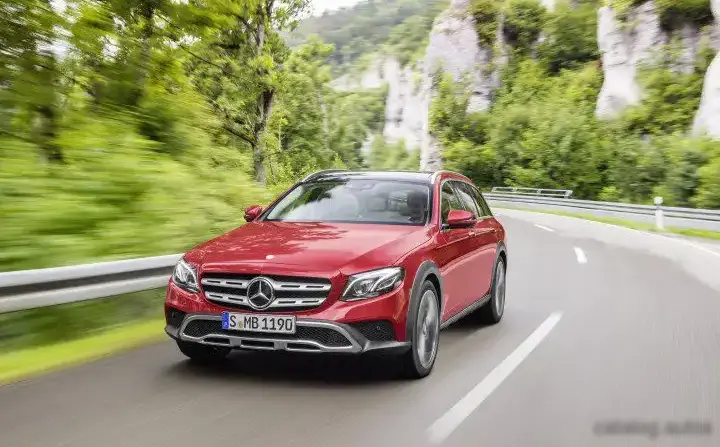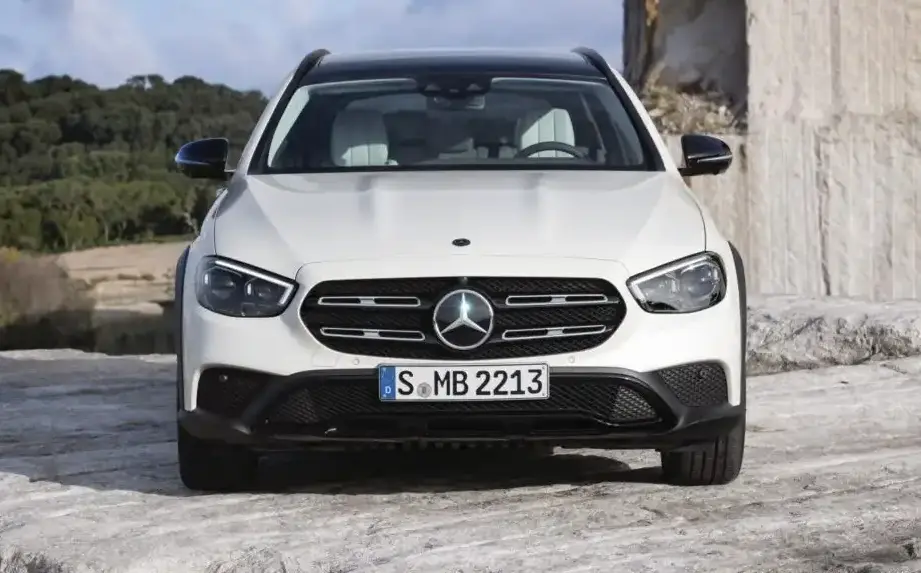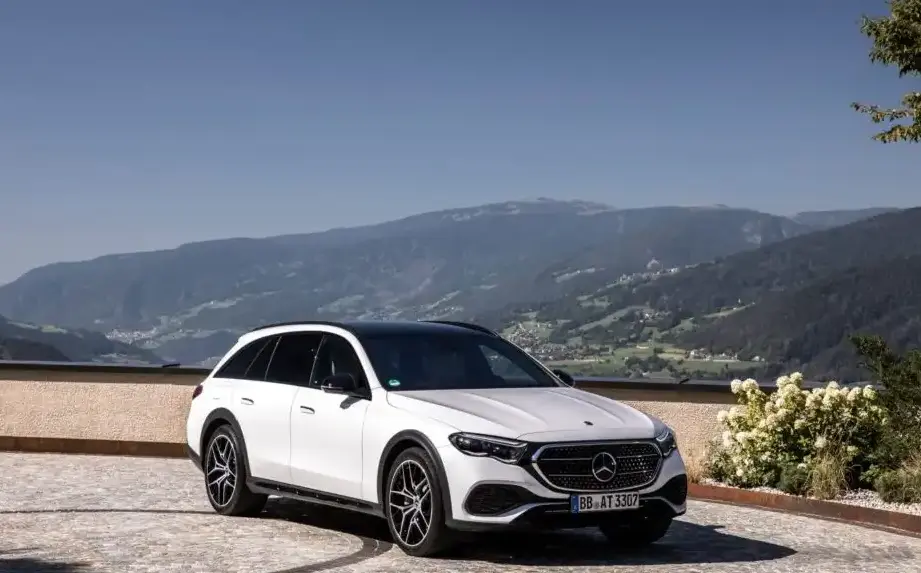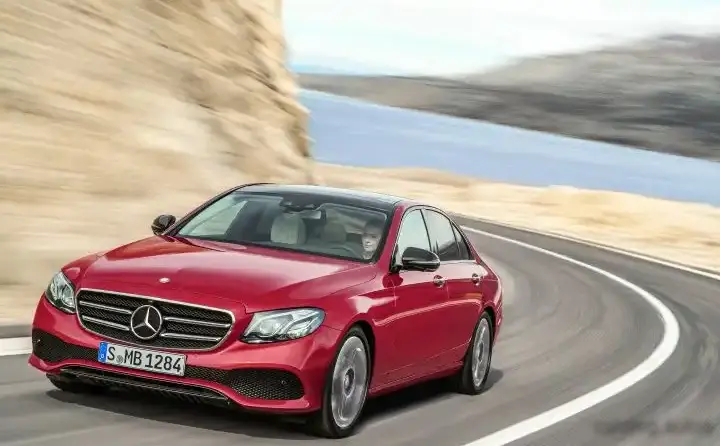
The Mercedes-Benz E-Class W213 E 350 EQ Boost, produced from April 2018 to 2020, represents a significant step in the evolution of the iconic E-Class lineage. Positioned as a mid-to-upper range offering within the W213 generation, this variant combined a 2.0-liter turbocharged inline-four engine with a 48-volt mild hybrid system, marketed as EQ Boost. It aimed to deliver a balance of performance, efficiency, and refinement, appealing to buyers seeking a sophisticated executive sedan. The E 350 EQ Boost served as a bridge between the more economical base models and the higher-performance AMG variants, offering a compelling alternative with its unique powertrain configuration.
Technical Specifications
| Brand | Mercedes-Benz |
| Model | E-class |
| Generation | E-class (W213) |
| Type | E 350 (299 Hp) EQ Boost 9G-TRONIC |
| Start of production | April, 2018 |
| End of production | 2020 |
| Powertrain Architecture | MHEV (Mild Hybrid Electric Vehicle) |
| Body type | Sedan |
| Seats | 5 |
| Doors | 4 |
| Fuel consumption at Low speed (WLTP) | 7.4 l/100 km (31.8 US mpg) |
| Fuel consumption at very high speed (WLTP) | 8.5 l/100 km (27.7 US mpg) |
| CO2 emissions (WLTP) | 168-194 g/km |
| Fuel consumption (economy) – urban | 8.8-9.7 l/100 km (26.7 – 24.2 US mpg) |
| Fuel consumption (economy) – extra urban | 5.2-6.0 l/100 km (45.2 – 39.2 US mpg) |
| Fuel consumption (economy) – combined | 6.6-7.4 l/100 km (35.6 – 31.8 US mpg) |
| CO2 emissions | 150-169 g/km |
| Fuel Type | Petrol (Gasoline) |
| Acceleration 0 – 100 km/h | 5.9 sec |
| Acceleration 0 – 62 mph | 5.9 sec |
| Acceleration 0 – 60 mph | 5.6 sec |
| Maximum speed | 250 km/h (155.34 mph) |
| Emission standard | Euro 6d-TEMP-EVAP-ISC |
| Weight-to-power ratio | 5.6 kg/Hp |
| Weight-to-torque ratio | 4.2 kg/Nm |
| Battery voltage | 48 V |
| Electric motor power | 14 Hp |
| Power | 299 Hp |
| Torque | 400 Nm @ 3000-4000 rpm (295.02 lb.-ft. @ 3000-4000 rpm) |
| Engine displacement | 1991 cm3 (121.5 cu. in.) |
| Number of cylinders | 4 |
| Engine configuration | Inline |
| Fuel injection system | Direct injection |
| Engine oil capacity | 7 l (7.4 US qt | 6.16 UK qt) |
| Coolant capacity | 11 l (11.62 US qt | 9.68 UK qt) |
| Kerb Weight | 1660 kg (3659.67 lbs.) |
| Max. weight | 2395 kg (5280.07 lbs.) |
| Max load | 735 kg (1620.4 lbs.) |
| Trunk (boot) space – minimum | 540 l (19.07 cu. ft.) |
| Fuel tank capacity | 66 l (17.44 US gal | 14.52 UK gal) |
| Permitted trailer load with brakes (12%) | 2100 kg (4629.71 lbs.) |
| Length | 4923 mm (193.82 in.) |
| Width | 1852 mm (72.91 in.) |
| Width including mirrors | 2065 mm (81.3 in.) |
| Height | 1468 mm (57.8 in.) |
| Wheelbase | 2939 mm (115.71 in.) |
| Number of gears and type of gearbox | 9 gears, automatic transmission G-TRONIC |
Powertrain & Engine Architecture
At the heart of the E 350 EQ Boost lies the M 264 2.0-liter inline-four engine. This engine utilizes direct injection and is equipped with a twin-scroll turbocharger and intercooler, contributing to its responsive power delivery. The engine produces 299 horsepower and 400 Nm (295 lb-ft) of torque between 3000 and 4000 rpm. The “EQ Boost” component is a 48-volt mild hybrid system. This system incorporates a belt-driven starter-generator (BSG) that adds up to 14 horsepower and 150 Nm (111 lb-ft) of torque temporarily. The BSG allows for functions like extended coasting, smooth engine restarts, and regenerative braking, enhancing fuel efficiency. The engine is paired with Mercedes-Benz’s 9G-TRONIC nine-speed automatic transmission, known for its smooth shifts and wide gear ratio spread. This transmission is longitudinally mounted, driving the rear wheels.
Driving Characteristics
The E 350 EQ Boost offers a refined and capable driving experience. The combination of the turbocharged engine and the EQ Boost system provides ample power for both city driving and highway cruising. Acceleration from 0 to 60 mph is achieved in approximately 5.6 seconds. The 9G-TRONIC transmission contributes to a smooth and seamless power delivery, with well-chosen gear ratios that optimize both performance and fuel economy. Compared to the base E 300, the E 350 EQ Boost offers noticeably more power and a more responsive feel. While not as overtly sporty as the AMG-tuned models, the E 350 EQ Boost provides a comfortable and engaging driving experience. The mild hybrid system subtly enhances the driving experience by providing a boost during acceleration and allowing for smoother engine restarts.
Equipment & Trim Levels
The E 350 EQ Boost typically came well-equipped with standard features such as leather upholstery, heated front seats, a premium sound system, and a comprehensive suite of safety technologies including automatic emergency braking, lane keeping assist, and adaptive cruise control. The MBUX infotainment system with its voice control functionality was also standard. Optional extras included features like a panoramic sunroof, upgraded leather options, a head-up display, and advanced driver-assistance systems. Trim levels varied depending on the market, but generally included options for different interior finishes, wheel designs, and exterior styling packages.
Chassis & Braking
The W213 E-Class features an independent multi-link suspension at both the front and rear, providing a comfortable and controlled ride. The E 350 EQ Boost’s suspension was typically tuned to balance comfort and handling. The braking system consists of ventilated discs on all four wheels, providing ample stopping power. Anti-lock braking system (ABS) and electronic stability control (ESC) are standard safety features. The steering system is a rack-and-pinion setup with electric power steering, offering precise and responsive steering feel.
Market Reception & Comparison
The E 350 EQ Boost was generally well-received by automotive critics. It was praised for its refined powertrain, comfortable ride, and advanced technology. The mild hybrid system was seen as a positive step towards improving fuel efficiency without sacrificing performance. Compared to other trims in the E-Class lineup, the E 350 EQ Boost offered a compelling balance of performance and efficiency. It was more powerful and responsive than the base E 300, but less expensive and more fuel-efficient than the higher-performance AMG models. Fuel economy figures ranged from 6.6 to 7.4 l/100 km (35.6 to 31.8 US mpg) combined, depending on driving conditions.
Legacy
The Mercedes-Benz E 350 EQ Boost represents an important step in the adoption of mild hybrid technology in the luxury sedan segment. The M 264 engine and 9G-TRONIC transmission have proven to be reliable powertrains, and the EQ Boost system has generally been trouble-free. On the used car market, the E 350 EQ Boost holds its value well, appealing to buyers seeking a well-equipped, efficient, and refined luxury sedan. While not a groundbreaking performance car, it offers a compelling combination of features and capabilities that continue to make it a desirable option in the used car market today.