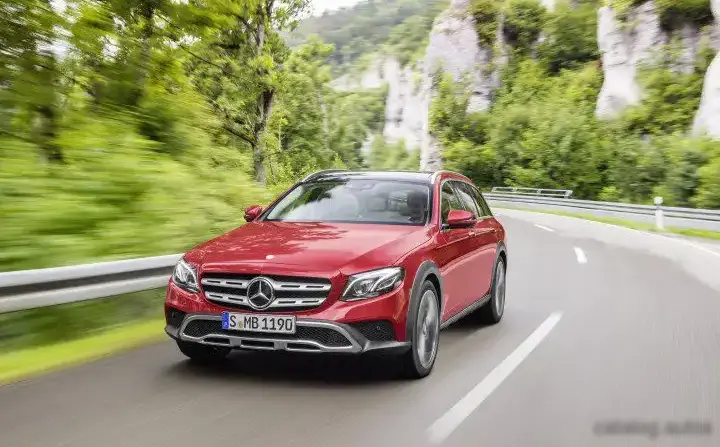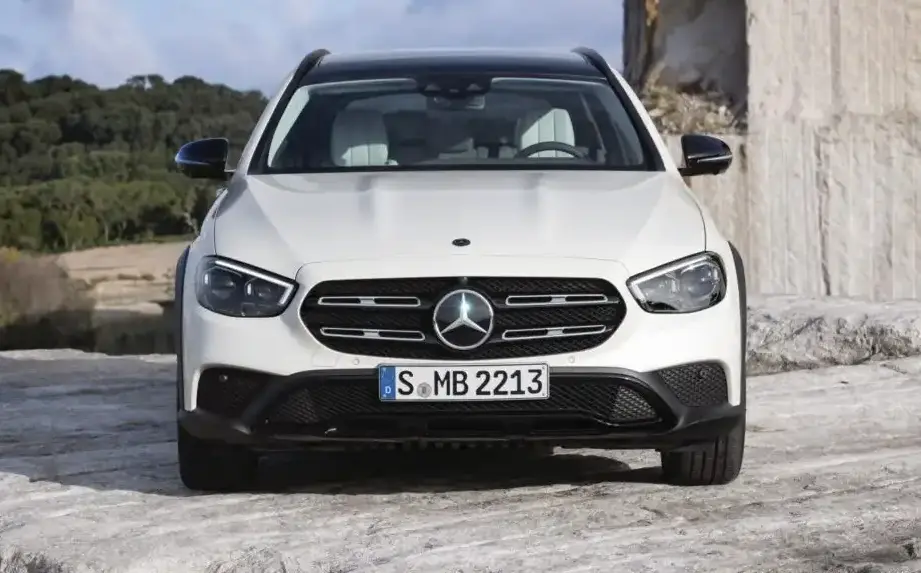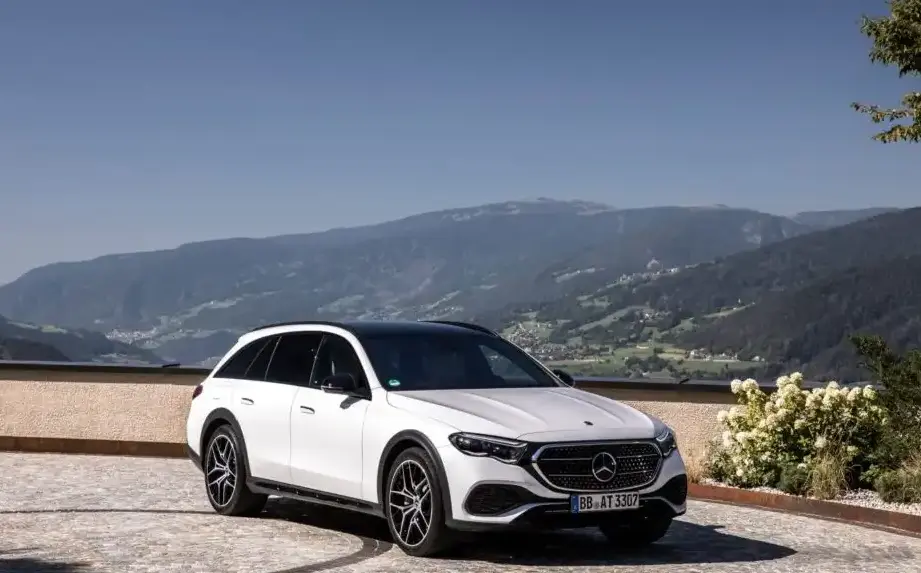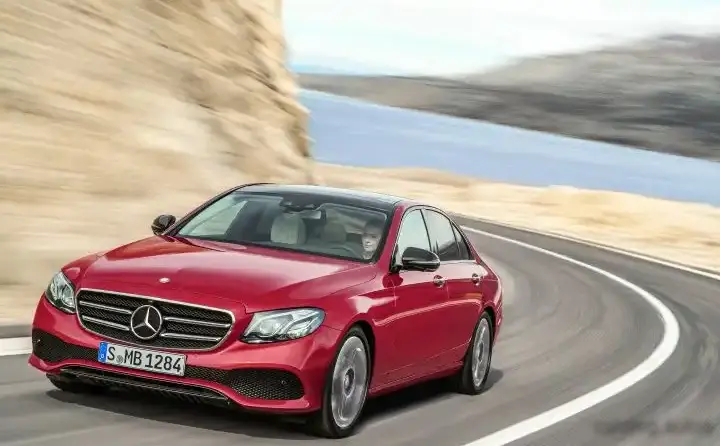
The Mercedes-Benz E 400 4MATIC, produced between July 2016 and April 2018, was a high-performance variant within the W213 E-Class range. Positioned as a step up from the E 300 models and below the AMG-tuned E 53, the E 400 offered a compelling blend of luxury, performance, and all-weather capability. It served as a flagship engine option for those seeking substantial power without the outright sportiness – and price tag – of the full AMG models. The W213 generation represented a significant evolution for the E-Class, incorporating advanced technology and a more modern design language while retaining the model’s reputation for refinement and build quality.
Technical Specifications
| Brand | Mercedes-Benz |
| Model | E-class |
| Generation | E-class (W213) |
| Type | E 400 V6 3.5 (333 Hp) 4MATIC 9G-TRONIC |
| Start of production | July, 2016 |
| End of production | April, 2018 |
| Powertrain Architecture | Internal Combustion engine |
| Body type | Sedan |
| Seats | 5 |
| Doors | 4 |
| Fuel consumption (urban) | 10.5-10.8 l/100 km (22.4 – 21.8 US mpg) |
| Fuel consumption (extra urban) | 5.9-6.3 l/100 km (39.9 – 37.3 US mpg) |
| Fuel consumption (combined) | 7.6-7.9 l/100 km (30.9 – 29.8 US mpg) |
| CO2 emissions | 173-179 g/km |
| Fuel Type | Petrol (Gasoline) |
| Acceleration 0 – 100 km/h | 5.2 sec |
| Acceleration 0 – 62 mph | 5.2 sec |
| Acceleration 0 – 60 mph | 4.9 sec |
| Maximum speed | 250 km/h (155.34 mph) |
| Emission standard | Euro 6 |
| Weight-to-power ratio | 5.2 kg/Hp |
| Weight-to-torque ratio | 3.6 kg/Nm |
| Power | 333 Hp @ 5250-6000 rpm |
| Torque | 480 Nm @ 1200-4000 rpm (354.03 lb.-ft. @ 1200-4000 rpm) |
| Engine layout | Front, Longitudinal |
| Engine Model/Code | M 276.823 |
| Engine displacement | 3498 cm3 (213.46 cu. in.) |
| Number of cylinders | 6 |
| Engine configuration | V-engine |
| Cylinder Bore | 92.9 mm (3.66 in.) |
| Piston Stroke | 86 mm (3.39 in.) |
| Compression ratio | 10.5:1 |
| Number of valves per cylinder | 4 |
| Fuel injection system | Direct injection |
| Engine aspiration | BiTurbo, Intercooler |
| Valvetrain | DOHC |
| Engine oil capacity | 6.5 l (6.87 US qt | 5.72 UK qt) |
| Coolant | 12 l (12.68 US qt | 10.56 UK qt) |
| Kerb Weight | 1745 kg (3847.07 lbs.) |
| Max. weight | 2460 kg (5423.37 lbs.) |
| Max load | 715 kg (1576.31 lbs.) |
| Trunk (boot) space | 540 l (19.07 cu. ft.) |
| Fuel tank capacity | 66 l (17.44 US gal | 14.52 UK gal) |
| Max. roof load | 100 kg (220.46 lbs.) |
| Permitted trailer load (braked) | 2100 kg (4629.71 lbs.) |
| Permitted trailer load (unbraked) | 750 kg (1653.47 lbs.) |
| Length | 4923 mm (193.82 in.) |
| Width | 1852 mm (72.91 in.) |
| Width (with mirrors) | 2065 mm (81.3 in.) |
| Height | 1468 mm (57.8 in.) |
| Wheelbase | 2939 mm (115.71 in.) |
| Rear track | 1619 mm (63.74 in.) |
| Front overhang | 841 mm (33.11 in.) |
| Rear overhang | 1143 mm (45 in.) |
| Drag coefficient (Cd) | 0.27 |
| Turning circle | 11.9 m (39.04 ft.) |
| Drivetrain | All wheel drive (4×4) |
| Gearbox | 9 gears, automatic transmission G-TRONIC |
| Front suspension | Coil spring, Independent multi-link suspension, Transverse stabilizer, Air Suspension – Optional |
| Rear suspension | Independent multi-link spring suspension with stabilizer, Air Suspension – Optional |
| Front brakes | Ventilated discs |
| Rear brakes | Ventilated discs |
Powertrain & Engine Architecture
The heart of the E 400 4MATIC was the M276.823 3.5-liter V6 engine. This engine, a member of Mercedes-Benz’s modular engine family, featured direct fuel injection, twin turbochargers, and a sophisticated valvetrain with four valves per cylinder. The twin-turbo setup, utilizing smaller turbochargers, provided excellent response and minimized turbo lag, delivering a broad torque curve. The engine produced 333 horsepower at 5250-6000 rpm and 354 lb-ft of torque between 1200-4000 rpm. This power was channeled through Mercedes-Benz’s 9G-TRONIC nine-speed automatic transmission, which offered smooth and efficient gear changes. The 9G-TRONIC was known for its wide gear ratio spread, contributing to both fuel economy and performance. The 4MATIC all-wheel-drive system provided enhanced traction and stability, particularly in inclement weather conditions.
Driving Characteristics
The E 400 4MATIC offered a refined and effortless driving experience. The combination of the potent V6 engine and the nine-speed automatic transmission resulted in brisk acceleration – 0 to 60 mph in approximately 4.9 seconds. While not as overtly sporty as the AMG variants, the E 400 provided ample power for confident overtaking and highway cruising. The 9G-TRONIC transmission was generally smooth and responsive, although some drivers noted occasional hesitancy during downshifts. The 4MATIC system provided a secure and planted feel, inspiring confidence in various driving conditions. Compared to the base E 300 models, the E 400 offered a significant performance upgrade, while remaining more comfortable and less focused on outright track performance than the E 53.
Equipment & Trim Levels
The E 400 4MATIC typically came well-equipped as standard. Common features included leather upholstery, wood trim, a premium sound system, dual-zone automatic climate control, and a comprehensive suite of safety technologies such as adaptive cruise control, lane-keeping assist, and automatic emergency braking. Optional extras included a panoramic sunroof, upgraded leather, a head-up display, and advanced driver assistance packages. Interior color schemes were customizable, allowing buyers to personalize the cabin to their preferences. The dashboard layout was characterized by a dual 12.3-inch display screen, integrating the instrument cluster and infotainment system into a single, cohesive unit.
Chassis & Braking
The W213 E-Class featured a sophisticated chassis design, utilizing a multi-link suspension system at both the front and rear. The E 400 4MATIC often came equipped with larger brakes compared to the base models, providing enhanced stopping power. Ventilated discs were standard on all four wheels. Optional air suspension was available, offering adjustable ride height and damping for improved comfort and handling. The steering system was a speed-sensitive rack-and-pinion setup with electric power assistance, providing precise and responsive steering feel. Stabilizer bars were fitted front and rear to minimize body roll during cornering.
Market Reception & Comparison
The E 400 4MATIC was generally well-received by automotive critics. It was praised for its powerful engine, refined ride quality, and luxurious interior. However, some reviewers noted that the 9G-TRONIC transmission could occasionally feel hesitant. Compared to the E 300, the E 400 offered a substantial performance boost, justifying its higher price tag for those seeking more power. Against competitors such as the BMW 540i and Audi A6 3.0T, the E 400 held its own in terms of performance and luxury, offering a compelling alternative. Fuel economy was respectable for a V6-powered luxury sedan, averaging around 30 mpg combined.
Legacy
The M276 engine family, including the 3.5-liter variant found in the E 400, has proven to be relatively reliable. While preventative maintenance is crucial, these engines are generally known for their durability. The 9G-TRONIC transmission has also demonstrated good long-term reliability, although some early units experienced software glitches that were addressed through updates. Today, used E 400 4MATIC models represent a good value for buyers seeking a luxurious and capable sedan with a powerful engine. They offer a compelling blend of performance, comfort, and technology, making them a desirable option in the used car market.