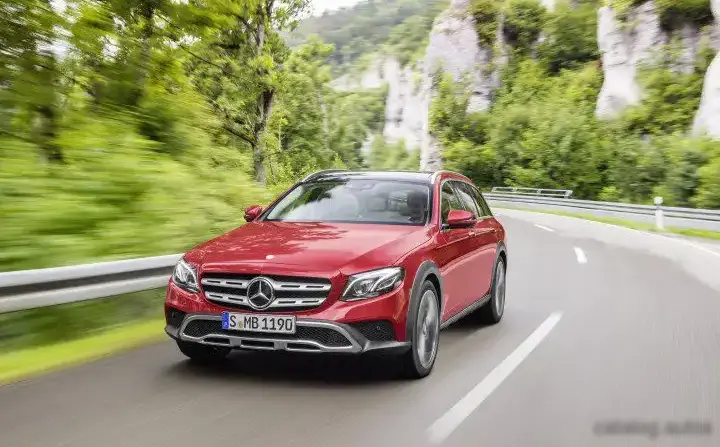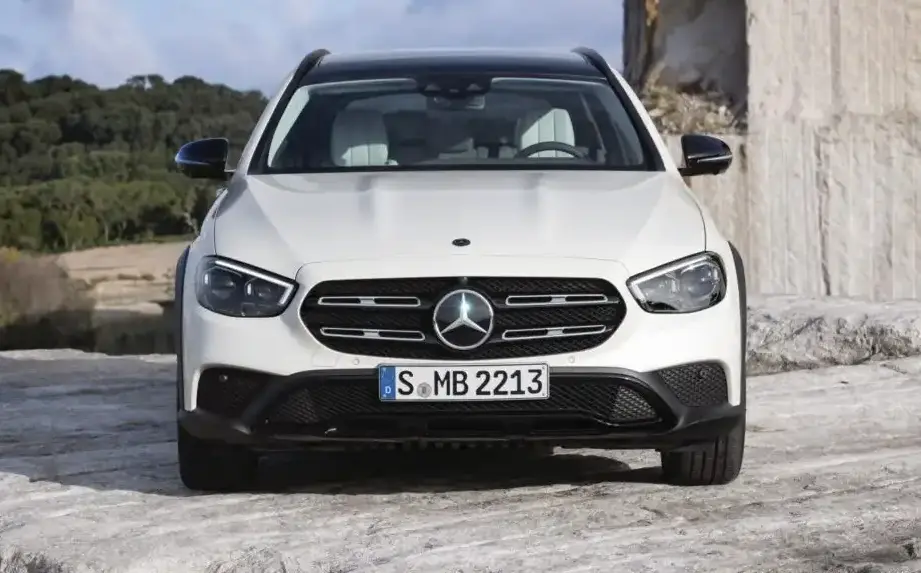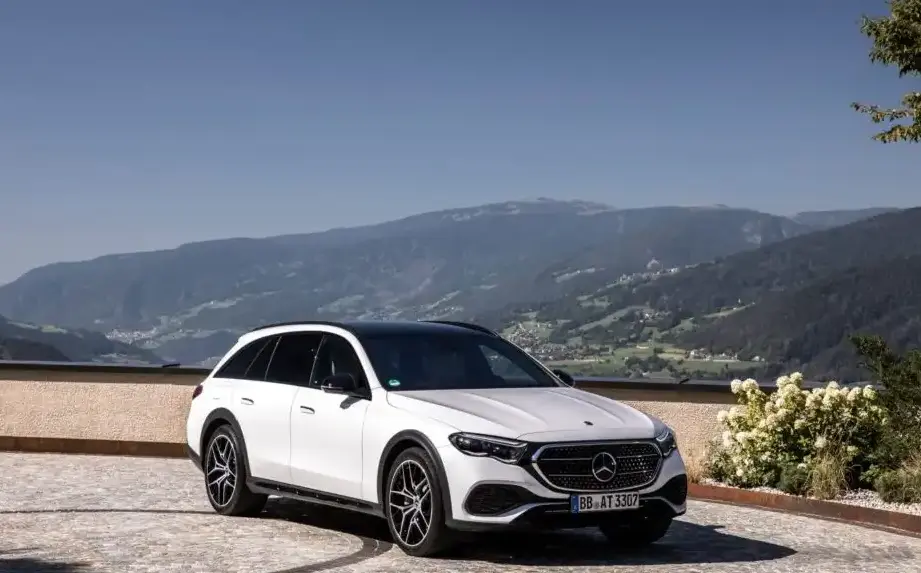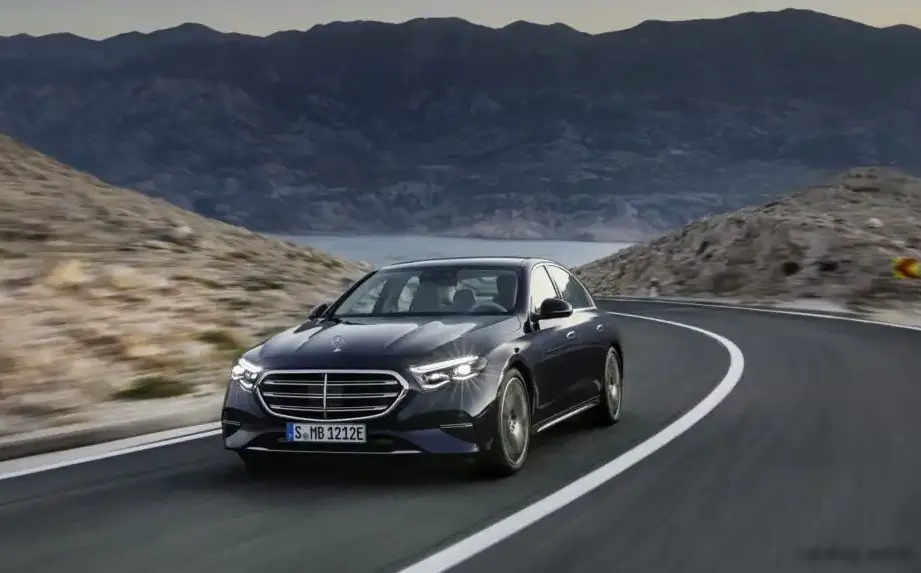
The Mercedes-Benz E-Class W214 E 200, launched in April 2023, represents the entry point into the sixth generation of Mercedes-Benz’s iconic executive sedan. Positioned as a technologically advanced and efficient option, the E 200 combines a 2.0-liter turbocharged four-cylinder engine with a 48-volt mild hybrid system and a 9G-TRONIC automatic transmission. This variant is designed to appeal to buyers seeking a balance of luxury, performance, and fuel economy within the E-Class range, serving as a modern interpretation of the classic Mercedes-Benz touring car.
Technical Specifications
| Brand | Mercedes-Benz |
| Model | E-class |
| Generation | E-class (W214) |
| Type (Engine) | E 200 (204 Hp) Mild Hybrid 9G-TRONIC |
| Start of production | April, 2023 |
| Powertrain Architecture | MHEV (Mild Hybrid Electric Vehicle) |
| Body type | Sedan |
| Seats | 5 |
| Doors | 4 |
| Combined fuel consumption (WLTP) | 6.4-7.3 l/100 km (36.8 – 32.2 US mpg, 44.1 – 38.7 UK mpg, 15.6 – 13.7 km/l) |
| CO2 emissions (WLTP) | 144-166 g/km |
| Fuel Type | Petrol (Gasoline) |
| Acceleration 0 – 100 km/h | 7.5 sec |
| Acceleration 0 – 62 mph | 7.5 sec |
| Acceleration 0 – 60 mph | 7.1 sec |
| Maximum speed | 240 km/h (149.13 mph) |
| Emission standard | Euro 6 |
| Weight-to-power ratio | 8.9 kg/Hp, 111.8 Hp/tonne |
| Weight-to-torque ratio | 5.7 kg/Nm, 175.3 Nm/tonne |
| Battery voltage | 48 V |
| Battery technology | Lithium-ion (Li-Ion) |
| Electric motor power | 23 Hp |
| Electric motor Torque | 205 Nm (151.2 lb.-ft.) |
| Electric motor location | Between the combustion engine and the transmission |
| Power | 204 Hp @ 5800 rpm |
| Torque | 320 Nm @ 1600-4000 rpm (236.02 lb.-ft. @ 1600-4000 rpm) |
| Engine layout | Front, Longitudinal |
| Engine Model/Code | M 254 |
| Engine displacement | 1999 cm3 (121.99 cu. in.) |
| Number of cylinders | 4 |
| Engine configuration | Inline |
| Compression ratio | 10:1 |
| Number of valves per cylinder | 4 |
| Fuel injection system | Direct injection |
| Engine aspiration | Twin-scroll turbo, Intercooler |
| Engine oil capacity | 6 l (6.34 US qt | 5.28 UK qt) |
| Kerb Weight | 1825 kg (4023.44 lbs.) |
| Max. weight | 2450 kg (5401.33 lbs.) |
| Max load | 625 kg (1377.89 lbs.) |
| Trunk (boot) space – minimum | 540 l (19.07 cu. ft.) |
| Fuel tank capacity | 66 l (17.44 US gal | 14.52 UK gal) |
| Length | 4949 mm (194.84 in.) |
| Width | 1880 mm (74.02 in.) |
| Height | 1468 mm (57.8 in.) |
| Wheelbase | 2961 mm (116.57 in.) |
| Front track | 1634 mm (64.33 in.) |
| Rear (Back) track | 1648 mm (64.88 in.) |
| Minimum turning circle | 11.6 m (38.06 ft.) |
| Drivetrain Architecture | Rear wheel drive. MHEV. ICE and electric motor drive the rear wheels. |
| Number of gears and type of gearbox | 9 gears, automatic transmission G-TRONIC |
| Front suspension | Coil spring, Independent multi-link suspension, Transverse stabilizer |
| Rear suspension | Independent multi-link suspension, Transverse stabilizer, Coil spring |
| Front brakes | Ventilated discs |
| Rear brakes | Ventilated discs |
| Assisting systems | ABS (Anti-lock braking system) |
| Steering type | Steering rack and pinion |
| Power steering | Electric Steering |
| Tires size | 225/60 R17 |
| Wheel rims size | 7.5J x 17 ET30 |
Powertrain & Engine Architecture
The heart of the E 200 is the M 254 engine, a 1.999-liter inline-four cylinder gasoline engine. This engine utilizes direct fuel injection and a twin-scroll turbocharger to deliver a balance of power and efficiency. The M 254 benefits from a relatively high compression ratio of 10:1, contributing to its thermal efficiency. Crucially, the E 200 incorporates a 48-volt mild hybrid system. This system features a 23 horsepower electric motor integrated between the engine and the 9G-TRONIC automatic transmission. The electric motor provides assistance during acceleration, allowing for smoother starts and improved fuel economy. The 9G-TRONIC transmission itself is a nine-speed automatic known for its smooth shifting and wide gear ratio spread, optimizing both performance and fuel consumption. The transmission is programmed to work seamlessly with the mild hybrid system, utilizing the electric motor to fill in torque gaps and reduce engine load.
Driving Characteristics
The E 200 offers a refined and comfortable driving experience. While not as overtly sporty as higher-powered E-Class variants, the 204 horsepower and 320 Nm (236 lb-ft) of torque provide adequate performance for everyday driving and highway cruising. Acceleration from 0 to 60 mph takes approximately 7.1 seconds. The 9G-TRONIC transmission contributes to smooth and almost imperceptible gear changes. The mild hybrid system provides a noticeable boost during initial acceleration, enhancing responsiveness. Compared to a manual transmission equipped E 200 (if offered in some markets), the 9G-TRONIC prioritizes comfort and ease of use over outright driver engagement. The gear ratios are tuned for efficiency, meaning the engine operates at lower RPMs during steady-state cruising, further contributing to fuel savings.
Equipment & Trim Levels
The E 200 typically comes standard with a comprehensive suite of features, reflecting Mercedes-Benz’s commitment to luxury and technology. Standard equipment often includes Mercedes-Benz User Experience (MBUX) infotainment system with a large touchscreen display, premium upholstery (typically MB-Tex artificial leather or available leather options), automatic climate control, and a range of safety features such as automatic emergency braking, lane keeping assist, and adaptive cruise control. Optional extras for the E 200 can include features like a panoramic sunroof, upgraded sound system, ventilated and massaging front seats, and advanced driver-assistance systems. Trim levels beyond the base E 200 may offer additional cosmetic enhancements and exclusive features.
Chassis & Braking
The W214 E-Class utilizes a sophisticated chassis design featuring a four-link front suspension and a multi-link rear suspension. This setup provides a comfortable ride while maintaining good handling characteristics. The E 200 typically features ventilated disc brakes on all four wheels, providing ample stopping power. Anti-lock braking system (ABS) and electronic stability control (ESC) are standard safety features. The suspension tuning is geared towards comfort, with a focus on absorbing road imperfections. Stabilizer bars are fitted to both the front and rear axles to minimize body roll during cornering.
Market Reception & Comparison
The E 200 has been generally well-received as a practical and efficient entry point into the E-Class range. Critics have praised its comfortable ride, refined interior, and advanced technology. Compared to higher-output E-Class models like the E 300, the E 200 offers a more affordable price point but sacrifices some performance. In terms of fuel economy, the E 200 typically achieves better figures than its more powerful siblings, thanks to its smaller engine and mild hybrid system. Reliability is expected to be in line with other modern Mercedes-Benz models, with the M 254 engine proving to be a robust and dependable unit.
Legacy
The W214 E 200, with its combination of a turbocharged engine, mild hybrid technology, and a sophisticated automatic transmission, represents a significant step forward in terms of efficiency and refinement. The M 254 engine is expected to become a mainstay in the Mercedes-Benz lineup for years to come. As the W214 E-Class ages, the E 200 variant is likely to become a popular choice in the used car market, offering a compelling blend of luxury, technology, and affordability. Its long-term reliability will be a key factor in its continued appeal to buyers seeking a well-rounded executive sedan.