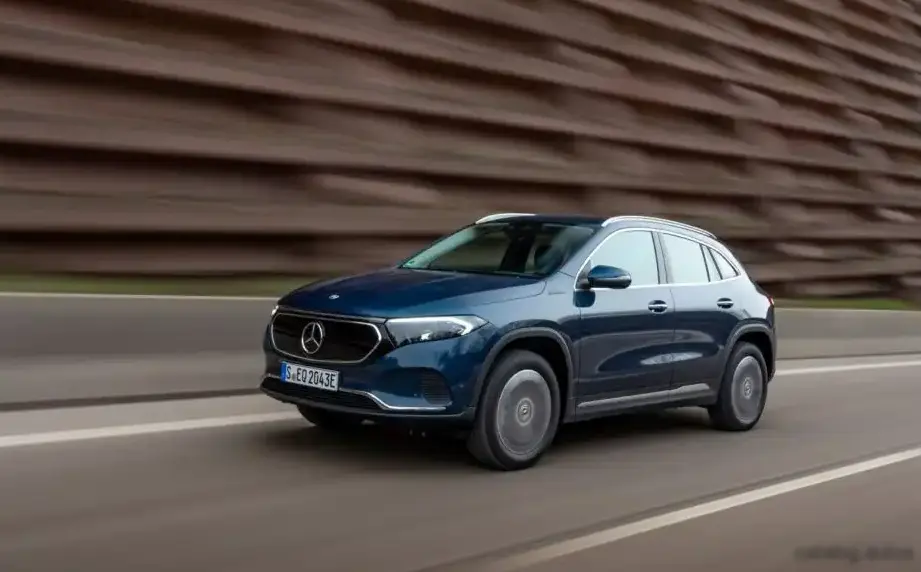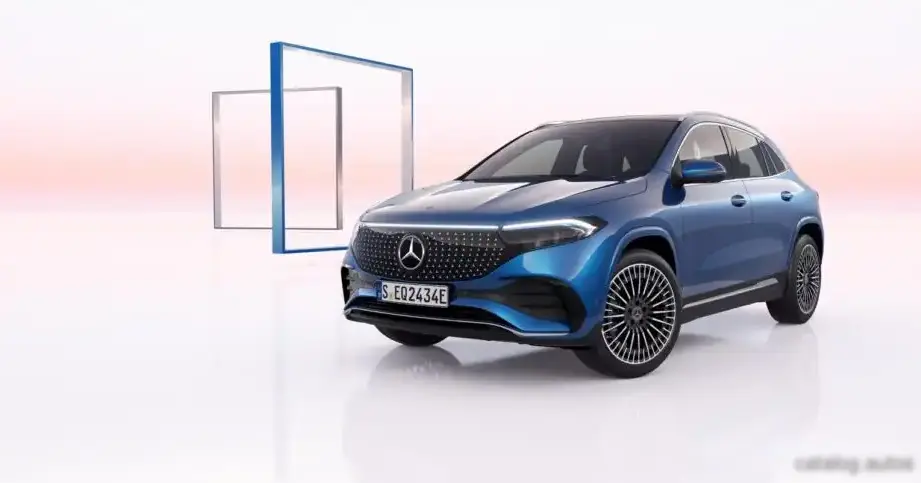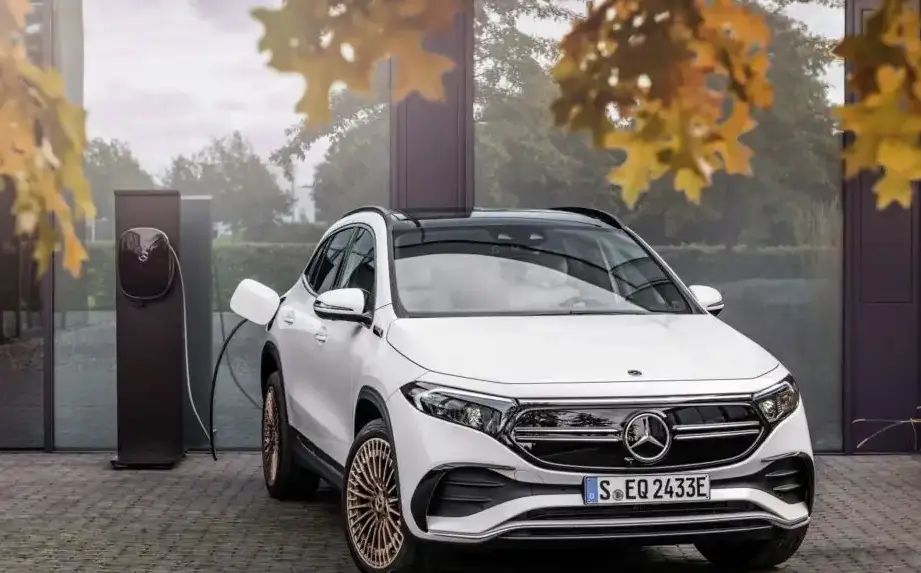
The Mercedes-Benz EQA 250 69.7 kWh, introduced in January 2021 and produced through May 2022, represents Mercedes-Benz’s entry point into the compact luxury all-electric SUV segment. Built on the GLA platform (H243), the EQA 250 aimed to broaden the appeal of electric vehicles by offering a familiar SUV body style combined with the brand’s reputation for quality and technology. This variant occupied the lower-mid range of the initial EQA lineup, positioned below the higher-performance and longer-range models. It was primarily marketed in Europe and other global markets where demand for compact electric SUVs was growing, and later introduced to the US market.
Technical Specifications
| Brand | Mercedes-Benz |
| Model | EQA |
| Generation | EQA (H243) |
| Type (Engine) | EQA 250 69.7 kWh (190 Hp) |
| Start of production | January, 2021 |
| End of production | May, 2022 |
| Powertrain Architecture | BEV (Electric Vehicle) |
| Body type | SUV |
| Seats | 5 |
| Doors | 5 |
| Fuel Type | Electricity |
| Acceleration 0 – 100 km/h | 8.9 sec |
| Acceleration 0 – 62 mph | 8.9 sec |
| Acceleration 0 – 60 mph | 8.5 sec |
| Maximum speed | 160 km/h (99.42 mph) |
| Weight-to-power ratio | 10.3 kg/Hp |
| Weight-to-torque ratio | 5.2 kg/Nm |
| Gross battery capacity | 69.7 kWh |
| Net (usable) battery capacity | 66.5 kWh |
| Battery voltage | 420 V |
| Battery technology | Lithium-ion (Li-Ion) |
| Battery weight | 469 kg (1033.97 lbs) |
| Battery location | Below the floor |
| All-electric range (WLTP) | 426 km (264.7 mi) |
| All-electric range | 486 km (301.99 mi) |
| Average Energy consumption (WLTP) | 17.7 kWh/100 km (28.49 kWh/100 mi) |
| Average Energy consumption | 15.7 kWh/100 km (25.27 kWh/100 mi) |
| Electric motor power | 190 Hp |
| Electric motor Torque | 375 Nm (276.59 lb.-ft.) |
| Electric motor model/code | EM0021 |
| Electric motor location | Front axle, Transverse |
| Electric motor type | Asynchronous |
| System power | 190 Hp |
| System torque | 375 Nm (276.59 lb.-ft.) |
| Kerb Weight | 1965 kg (4332.08 lbs) |
| Max. weight | 2470 kg (5445.42 lbs) |
| Max load | 505 kg (1113.33 lbs) |
| Trunk (boot) space – minimum | 340 l (12.01 cu. ft.) |
| Trunk (boot) space – maximum | 1320 l (46.62 cu. ft.) |
| Length | 4463 mm (175.71 in) |
| Width | 1834 mm (72.2 in) |
| Width including mirrors | 2020 mm (79.53 in) |
| Height | 1620 mm (63.78 in) |
| Wheelbase | 2729 mm (107.44 in) |
| Front track | 1589 mm (62.56 in) |
| Rear (Back) track | 1593 mm (62.72 in) |
| Front overhang | 913 mm (35.94 in) |
| Rear overhang | 821 mm (32.32 in) |
| Ride height (ground clearance) | 154 mm (6.06 in) |
| Minimum turning circle | 11.4 m (37.4 ft) |
| Drivetrain Architecture | One electric motor drives the front wheels. |
| Drive wheel | Front wheel drive |
| Number of gears | 1 |
| Type of gearbox | Automatic transmission |
| Front suspension | Independent, type McPherson with coil spring and anti-roll bar |
| Rear suspension | Independent multi-link spring suspension with stabilizer |
| Front brakes | Ventilated discs |
| Rear brakes | Disc |
| Tires size | 235/55 R18; 235/50 R19; 235/45 R20 |
| Wheel rims size | 7.5J x 18; 7.5J x 19; 8.5J x 20 |
Powertrain & Engine Architecture
The EQA 250 69.7 kWh utilizes a single electric motor, designated EM0021, mounted transversely on the front axle. This asynchronous motor produces 190 horsepower (140 kW) and 375 Nm (276.59 lb-ft) of torque. Power is delivered through a single-speed automatic transmission. The 69.7 kWh battery pack, composed of lithium-ion cells, is positioned under the vehicle floor to optimize space and lower the center of gravity. The battery operates at 420 volts. The car employs a sophisticated thermal management system to maintain optimal battery temperature for both performance and longevity. The onboard charger supports AC charging at up to 11 kW, and DC fast charging at up to 100 kW, allowing for a significant charge in approximately 30 minutes at a compatible charging station.
Driving Characteristics
The EQA 250 offers a smooth and refined driving experience typical of Mercedes-Benz vehicles. Acceleration from 0 to 60 mph takes approximately 8.5 seconds, making it competitive within its segment. While not as brisk as the higher-powered EQA variants, the 250 provides sufficient power for everyday driving and highway merging. The single-speed transmission delivers instant torque, characteristic of electric motors. The front-wheel-drive configuration provides adequate traction in most conditions, though it lacks the all-wheel-drive stability of other EQA models. The low center of gravity, thanks to the battery placement, contributes to stable handling. Regenerative braking is adjustable, allowing drivers to customize the level of deceleration when lifting off the accelerator, enhancing efficiency and extending range.
Equipment & Trim Levels
The EQA 250 typically came standard with features such as Mercedes-Benz’s MBUX infotainment system with a dual 10.25-inch display screen, Apple CarPlay and Android Auto integration, and a suite of driver-assistance systems including automatic emergency braking, lane-keeping assist, and adaptive cruise control. Interior upholstery was generally Artico synthetic leather, with options for genuine leather upgrades. Available options included a panoramic sunroof, premium sound system, and various interior trim packages. The standard dashboard configuration featured a minimalist design with integrated touch controls. Exterior styling included the distinctive black panel grille characteristic of the EQ range.
Chassis & Braking
The EQA 250 utilizes an independent suspension system, with McPherson struts at the front and a multi-link setup at the rear. A stabilizer bar is included on both axles to reduce body roll during cornering. The braking system consists of ventilated discs at the front and solid discs at the rear. ABS (Anti-lock Braking System) is standard. The steering system is an electric power-assisted rack and pinion setup, providing precise and responsive steering feel. Tire sizes varied depending on the trim level, ranging from 235/55 R18 to 235/45 R20.
Market Reception & Comparison
The EQA 250 was generally well-received by automotive critics, who praised its comfortable ride, refined interior, and user-friendly technology. However, some reviewers noted that its acceleration was not as impressive as some competitors, and its range was somewhat limited compared to other electric SUVs. Compared to the EQA 300 and 350 variants, the 250 offered a more affordable entry point into the EQA range, but at the expense of performance and range. Its fuel economy, measured in kWh per 100 km, was competitive with other electric vehicles in its class. Reliability reports have been generally positive, with few major issues reported.
Legacy
The Mercedes-Benz EQA 250 69.7 kWh played a significant role in expanding Mercedes-Benz’s electric vehicle offerings and attracting a wider range of customers to the brand’s EQ lineup. While superseded by newer models with improved range and performance, the EQA 250 remains a popular choice in the used car market, offering a compelling combination of luxury, technology, and affordability. The powertrain has proven to be relatively reliable, and the availability of replacement parts is good. As the demand for electric vehicles continues to grow, the EQA 250 is likely to remain a relevant and desirable option for buyers seeking a compact luxury electric SUV.