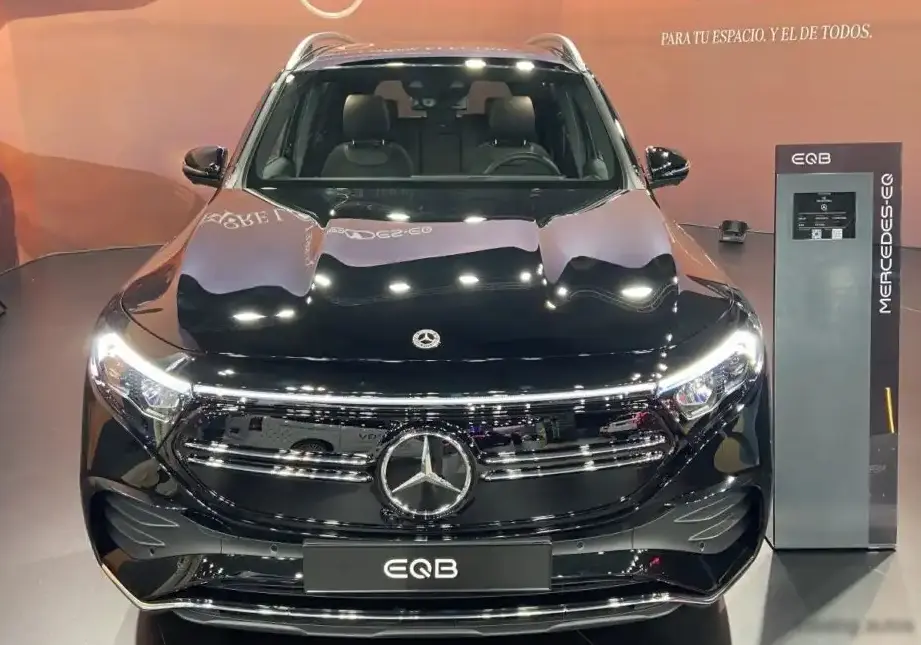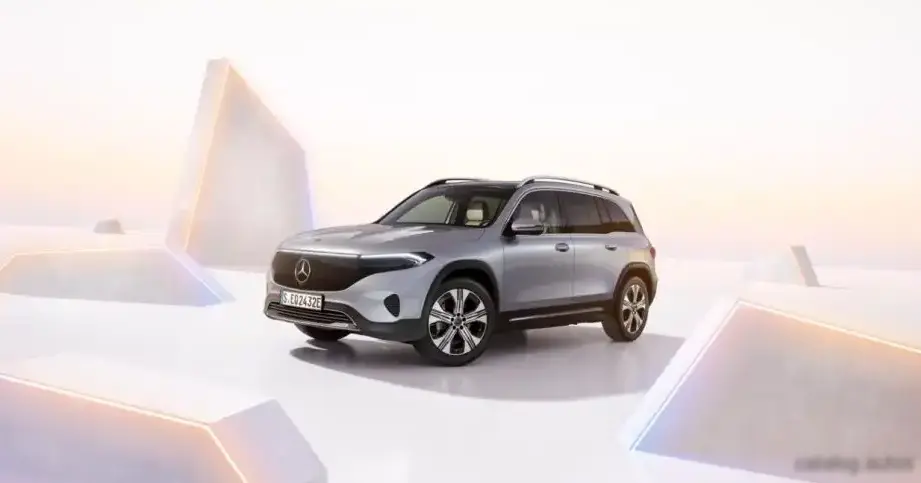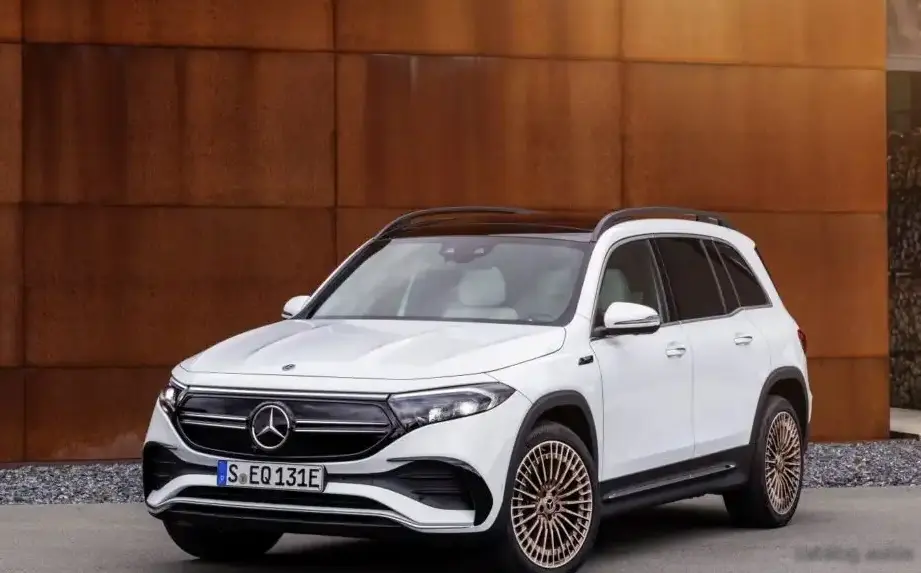
The Mercedes-Benz EQB 250+ 73.9 kWh, produced from October 2022 to October 2023, serves as a crucial entry point into the all-electric EQB (X243) compact SUV range. Designed to broaden the EQB lineup’s appeal, the 250+ balances range, interior space, and affordability. Built on the Mercedes-Benz Modular Electric Architecture (MEA) platform – shared with other compact EQ models – the EQB 250+ targets families and individuals desiring a zero-emission vehicle without sacrificing passenger or cargo capacity. The EQB, in general, was primarily marketed in Europe and other global markets, with limited availability in the United States.
Technical Specifications
| Brand | Mercedes-Benz |
| Model | EQB |
| Generation | EQB (X243) |
| Type (Engine) | EQB 250+ 73.9 kWh (190 Hp) |
| Start of production | October, 2022 |
| End of production | October, 2023 |
| Powertrain Architecture | BEV (Electric Vehicle) |
| Body type | SUV |
| Seats | 5-7 |
| Doors | 5 |
| Fuel Type | Electricity |
| Acceleration 0 – 100 km/h | 8.9 sec |
| Acceleration 0 – 62 mph | 8.9 sec |
| Acceleration 0 – 60 mph | 8.5 sec |
| Maximum speed | 160 km/h (99.42 mph) |
| Weight-to-power ratio | 10.7 kg/Hp, 93.1 Hp/tonne |
| Weight-to-torque ratio | 5.3 kg/Nm, 188.7 Nm/tonne |
| Gross battery capacity | 73.9 kWh |
| Net (usable) battery capacity | 70.5 kWh |
| Battery technology | Lithium-ion (Li-Ion) |
| Battery weight | 395 kg (870.83 lbs) |
| Battery location | Below the floor |
| All-electric range (WLTP) | 452-507 km (280.86 – 315.04 mi) |
| Average Energy consumption (WLTP) | 16.1-18.1 kWh/100 km (25.91 – 29.13 kWh/100 mi) |
| MPGe | 130 – 116 |
| km/kWh | 6.2 – 5.5 |
| mi/kWh | 3.9 – 3.4 |
| Electric motor power | 190 Hp |
| Electric motor Torque | 385 Nm (283.96 lb.-ft.) |
| Electric motor model/code | EM0026 |
| Electric motor location | Front axle, Transverse |
| Electric motor type | Synchronous |
| System power | 190 Hp |
| System torque | 385 Nm (283.96 lb.-ft.) |
| Kerb Weight | 2040 kg (4497.43 lbs) |
| Max. weight | 2520 kg (5555.65 lbs) |
| Max load | 480 kg (1058.22 lbs) |
| Trunk (boot) space – minimum | 465-495 l (16.42 – 17.48 cu. ft.) |
| Trunk (boot) space – maximum | 1620-1710 l (57.21 – 60.39 cu. ft.) |
| Max. roof load | 75 kg (165.35 lbs) |
| Length | 4684 mm (184.41 in) |
| Width | 1834 mm (72.2 in) |
| Width including mirrors | 2020 mm (79.53 in) |
| Height | 1667 mm (65.63 in) |
| Wheelbase | 2829 mm (111.38 in) |
| Front track | 1585 mm (62.4 in) |
| Front overhang | 913 mm (35.94 in) |
| Rear overhang | 942 mm (37.09 in) |
| Ride height (ground clearance) | 154 mm (6.06 in) |
| Minimum turning circle | 11.7 m (38.39 ft) |
| Drivetrain Architecture | One electric motor drives the front wheels. |
| Drive wheel | Front wheel drive |
| Number of gears | 1 |
| Gearbox type | automatic transmission |
| Front suspension | Independent, type McPherson with coil spring and anti-roll bar |
| Rear suspension | Independent multi-link spring suspension with stabilizer |
| Front brakes | Ventilated discs |
| Rear brakes | Disc |
| Steering type | Steering rack and pinion |
| Power steering | Electric Steering |
| Tires size | 235/55 R18; 235/50 R19; 235/45 R20 |
| Wheel rims size | 7.5J x 18; 7.5J x 19; 8.5J x 20 |
Powertrain & Engine Architecture
The EQB 250+ employs a single electric motor, designated EM0026, mounted transversely on the front axle. This motor generates 190 horsepower and 385 Nm (283.96 lb-ft) of torque. The powertrain draws power from a 73.9 kWh lithium-ion battery pack, offering a usable capacity of 70.5 kWh. The battery is positioned under the vehicle floor, lowering the center of gravity and maximizing interior space. The EQB 250+ utilizes a single-speed automatic transmission, common in electric vehicles, providing smooth acceleration. The motor is a synchronous design, recognized for its efficiency and power density. The vehicle supports DC fast charging, enabling a substantial range increase in a relatively short timeframe.
Driving Characteristics
The EQB 250+ delivers a comfortable and refined driving experience. Acceleration from 0 to 60 mph takes around 8.5 seconds, sufficient for daily commutes but not particularly performance-oriented. The single-speed transmission provides linear power delivery, and the instant torque inherent in electric motors ensures responsive acceleration at lower speeds. Compared to the dual-motor EQB 350 4MATIC, the 250+ offers reduced overall performance but prioritizes driving efficiency. The front-wheel-drive configuration contributes to predictable handling, though it may lack the all-weather capabilities of the all-wheel-drive version. The regenerative braking system allows for one-pedal driving, enhancing efficiency and convenience.
Equipment & Trim Levels
The EQB 250+ typically includes standard features like the Mercedes-Benz User Experience (MBUX) infotainment system with a touchscreen display, Apple CarPlay and Android Auto compatibility, and a comprehensive suite of advanced driver-assistance systems (ADAS) – including automatic emergency braking, lane-keeping assist, and adaptive cruise control. Interior upholstery generally consists of Artico synthetic leather, with options for genuine leather upgrades. Available options encompass a panoramic sunroof, a premium sound system, and heated/ventilated front seats. The EQB’s flexible seating arrangement, with an optional third row, was a significant selling point, accommodating up to seven passengers.
Chassis & Braking
The EQB 250+ features an independent suspension system, utilizing McPherson struts at the front and a multi-link setup at the rear. This configuration provides a comfortable ride and good handling. Stabilizer bars are incorporated on both axles to minimize body roll during cornering. The braking system comprises ventilated discs at the front and solid discs at the rear. ABS (Anti-lock Braking System) is standard, ensuring safe and controlled braking in diverse conditions. The vehicle’s relatively low center of gravity, thanks to the underfloor battery pack, enhances its stability.
Market Reception & Comparison
The EQB 250+ received generally positive reviews for its practicality, spaciousness, and comfortable ride. However, some critics pointed out its comparatively modest performance relative to other electric SUVs in its segment. Energy consumption, measured in kWh per 100 km, was competitive with other electric vehicles, ranging from 16.1 to 18.1 kWh/100 km (25.91 – 29.13 kWh/100 mi). Compared to the EQB 350 4MATIC, the 250+ offered a lower price and slightly extended range, making it appealing to budget-conscious buyers. The EQB also competed with other compact electric SUVs like the Tesla Model Y and the Hyundai Kona Electric.
Legacy
The Mercedes-Benz EQB 250+ 73.9 kWh represents a significant milestone in Mercedes-Benz’s electrification efforts. While not the most powerful or technologically advanced electric SUV available, it offered a compelling combination of practicality, affordability, and efficiency. The powertrain has demonstrated generally good reliability, with few widespread issues reported. In the used car market, the EQB 250+ remains a popular choice for buyers seeking a versatile and environmentally friendly vehicle. Its spacious interior and comfortable ride continue to attract families and individuals, and its relatively low running costs make it an attractive long-term investment.