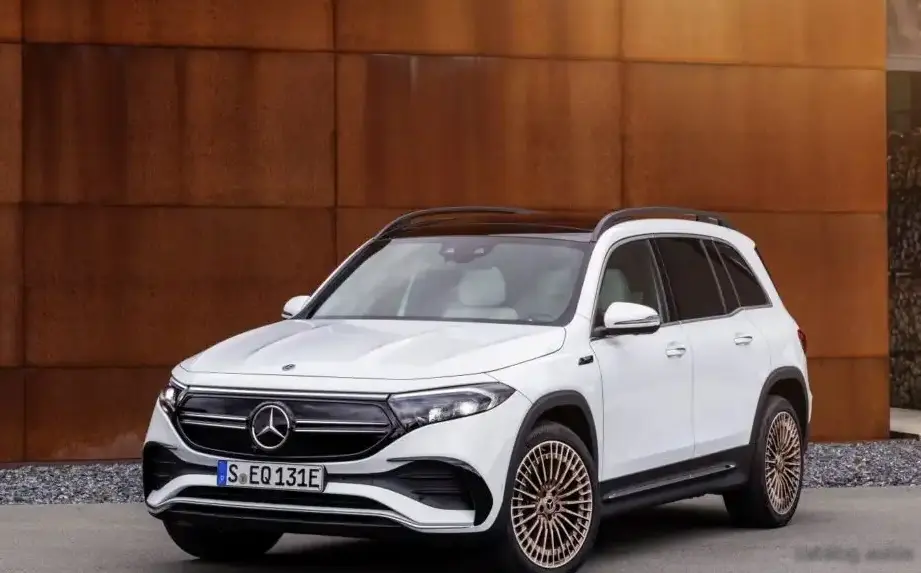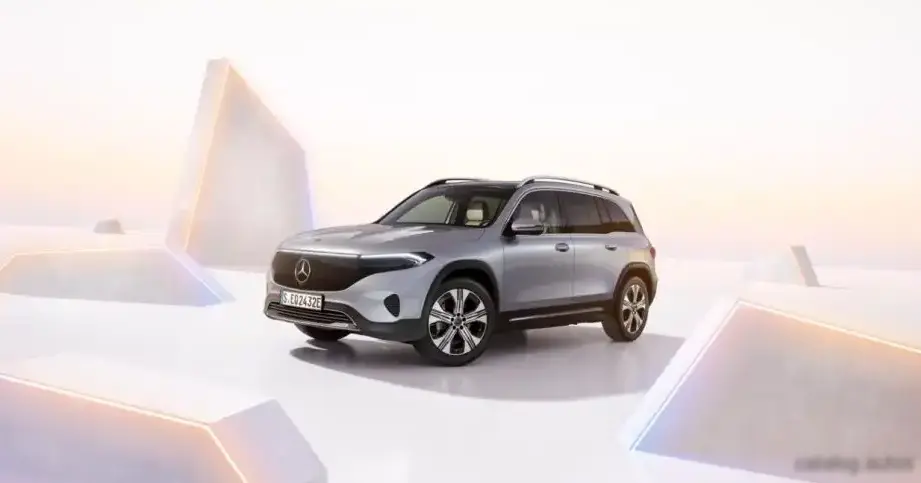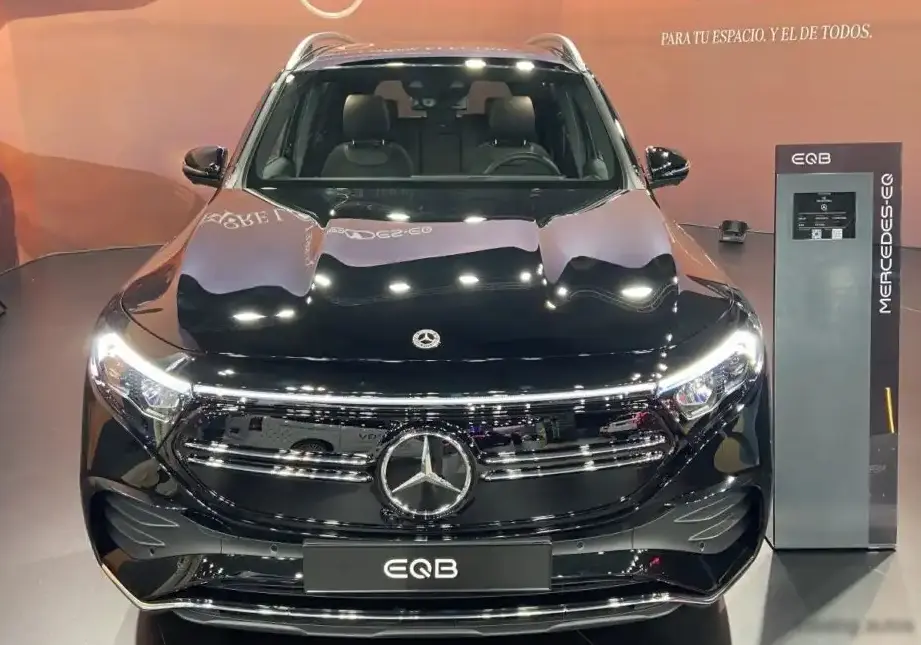
The Mercedes-Benz EQB 350 4MATIC, produced from 2021 through October 2023, represents a significant entry in the burgeoning all-electric compact SUV segment. Based on the X243 platform – a derivative of the GLB – the EQB aimed to offer the practicality of a small SUV with the benefits of a fully electric powertrain. The 350 4MATIC variant, equipped with a 69.7 kWh battery pack and dual electric motors, positioned itself as a mid-range offering within the EQB lineup, balancing range, performance, and price. It was primarily marketed in Europe and other global markets, with limited availability in the United States.
Technical Specifications
| Brand | Mercedes-Benz |
| Model | EQB |
| Generation | EQB (X243) |
| Type | EQB 350 69.7 kWh (292 Hp) 4MATIC |
| Start of production | 2021 |
| End of production | October, 2023 |
| Powertrain Architecture | BEV (Electric Vehicle) |
| Body type | SUV |
| Seats | 5-7 |
| Doors | 5 |
| Fuel Type | Electricity |
| Acceleration 0 – 100 km/h | 6.2 sec |
| Acceleration 0 – 62 mph | 6.2 sec |
| Acceleration 0 – 60 mph | 5.9 sec |
| Maximum speed | 160 km/h (99.42 mph) |
| Weight-to-power ratio | 7.2 kg/Hp, 139 Hp/tonne |
| Weight-to-torque ratio | 4 kg/Nm, 247.6 Nm/tonne |
| Gross battery capacity | 69.7 kWh |
| Net (usable) battery capacity | 66.5 kWh |
| Battery voltage | 420 V |
| Battery technology | Lithium-ion (Li-Ion) |
| Battery location | Below the floor |
| All-electric range (WLTP) | 395-423 km (245.44 – 262.84 mi) |
| All-electric range | 478 km (297.02 mi) |
| Average Energy consumption (WLTP) | 18.1-19.4 kWh/100 km (29.13 – 31.22 kWh/100 mi) |
| Average Energy consumption | 16.2 kWh/100 km (26.07 kWh/100 mi) |
| System power | 292 Hp |
| System torque | 520 Nm (383.53 lb.-ft.) |
| Kerb Weight | 2100 kg (4629.71 lbs.) |
| Max. weight | 2580 kg (5687.93 lbs.) |
| Max load | 480 kg (1058.22 lbs.) |
| Trunk (boot) space – minimum | 465-495 l (16.42 – 17.48 cu. ft.) |
| Trunk (boot) space – maximum | 1620-1710 l (57.21 – 60.39 cu. ft.) |
| Max. roof load | 75 kg (165.35 lbs.) |
| Length | 4684 mm (184.41 in.) |
| Width | 1834 mm (72.2 in.) |
| Width including mirrors | 2020 mm (79.53 in.) |
| Height | 1667 mm (65.63 in.) |
| Wheelbase | 2829 mm (111.38 in.) |
| Front track | 1585 mm (62.4 in.) |
| Rear (Back) track | 1584 mm (62.36 in.) |
| Front overhang | 913 mm (35.94 in.) |
| Rear overhang | 942 mm (37.09 in.) |
| Ride height (ground clearance) | 154 mm (6.06 in.) |
| Drag coefficient (Cd) | 0.28 |
| Minimum turning circle | 11.7 m (38.39 ft.) |
| Front suspension | Independent, type McPherson with coil spring and anti-roll bar |
| Rear suspension | Independent multi-link spring suspension with stabilizer |
| Front brakes | Ventilated discs |
| Rear brakes | Disc |
| Drive wheel | All wheel drive (4×4) |
| Tires size | 235/55 R18; 253/50 R19; 235/45 R20 |
| Wheel rims size | 7.5J x 18; 7.5J x 19; 8.5J x 20 |
Powertrain & Engine Architecture
The EQB 350 4MATIC utilizes a dual-motor, all-wheel-drive (AWD) powertrain. Each axle is driven by a permanent magnet synchronous motor. The combined system output is 292 horsepower and 520 Nm (383.53 lb.-ft.) of torque. Power is delivered to all four wheels, providing enhanced traction and stability. The 69.7 kWh lithium-ion battery pack is located under the vehicle floor, contributing to a low center of gravity and maximizing interior space. The battery operates at 420 volts. Charging is accomplished via CCS (Combined Charging System) compatibility, allowing for both AC and DC fast charging. The vehicle supports up to 100 kW DC fast charging, enabling a 10-80% charge in approximately 32 minutes under ideal conditions. The powertrain does not utilize a traditional multi-speed transmission; instead, it employs a single-speed reduction gear for each axle.
Driving Characteristics
The EQB 350 4MATIC offers brisk acceleration, achieving 0-60 mph in around 5.9 seconds. The instant torque delivery characteristic of electric motors provides responsive acceleration in everyday driving situations. The AWD system contributes to confident handling in various weather conditions. While not a performance-oriented vehicle, the EQB 350 provides adequate power for highway merging and overtaking. Compared to the lower-powered EQB 250, the 350 offers a noticeable improvement in acceleration and overall responsiveness. The single-speed transmission means there’s no gear shifting, resulting in a smooth and linear power delivery. Regenerative braking is adjustable, allowing drivers to customize the level of deceleration when lifting off the throttle, enhancing efficiency and extending range.
Equipment & Trim Levels
The EQB 350 4MATIC typically came well-equipped as standard. Features included Mercedes-Benz User Experience (MBUX) infotainment system with a dual 10.25-inch display screen, Apple CarPlay and Android Auto integration, heated front seats, and a panoramic sunroof. Available options included a third-row seat (increasing seating capacity to seven), premium audio system, and advanced driver-assistance systems such as adaptive cruise control and lane-keeping assist. Interior upholstery was typically Artico leatherette, with options for genuine leather. Trim levels varied slightly depending on the market, but generally offered packages that bundled popular options together.
Chassis & Braking
The EQB 350 4MATIC utilizes an independent suspension system at all four wheels. The front suspension employs a McPherson strut design with coil springs and an anti-roll bar, while the rear features a multi-link setup with a stabilizer bar. This configuration provides a comfortable ride and predictable handling. Braking duties are handled by ventilated disc brakes at the front and solid disc brakes at the rear. ABS (Anti-lock Braking System) is standard, along with electronic brake-force distribution and brake assist. The steering system is an electric power-assisted rack and pinion system, offering precise and responsive steering feel.
Market Reception & Comparison
The EQB 350 4MATIC was generally well-received by automotive critics, who praised its practicality, comfortable ride, and efficient powertrain. However, some reviewers noted that its interior materials and overall refinement were not quite on par with more premium Mercedes-Benz models. Compared to the EQB 250, the 350 offered a significant performance upgrade, justifying the higher price for drivers prioritizing acceleration and responsiveness. Against competitors like the Tesla Model Y and the Hyundai IONIQ 5, the EQB 350 offered a more traditional SUV experience with a focus on comfort and practicality. Fuel economy, expressed as MPGe, ranged from 116-108, depending on driving conditions and WLTP testing standards.
Legacy
The Mercedes-Benz EQB 350 4MATIC represents an important step in Mercedes-Benz’s electrification strategy. While production ended in October 2023, the model continues to appear on the used car market. The powertrain has proven to be relatively reliable, with few widespread issues reported. The EQB’s compact size and versatile interior make it an appealing option for urban dwellers and small families seeking a practical and efficient electric vehicle. Its relatively affordable price point, compared to other luxury electric SUVs, further contributes to its appeal in the used car market. The EQB laid the groundwork for future electric SUVs from Mercedes-Benz, demonstrating the brand’s commitment to sustainable mobility.