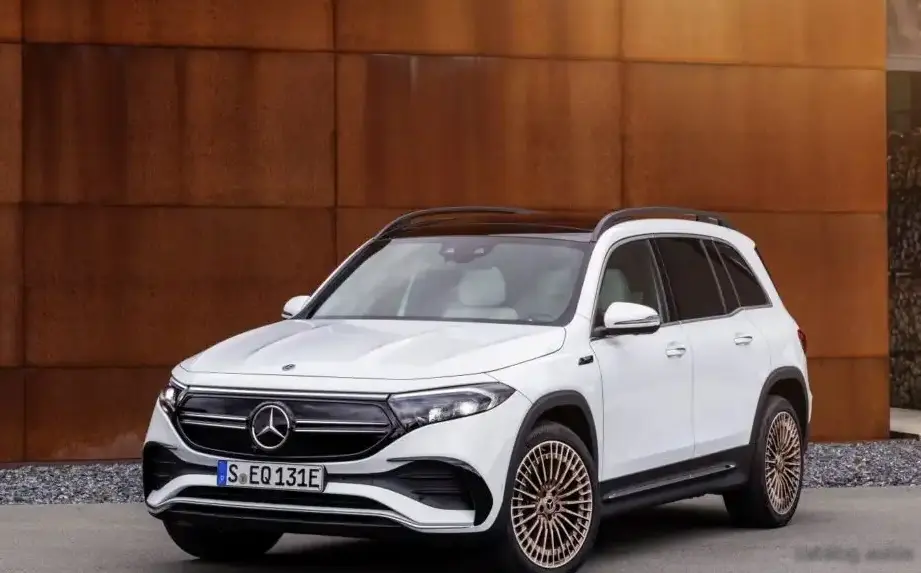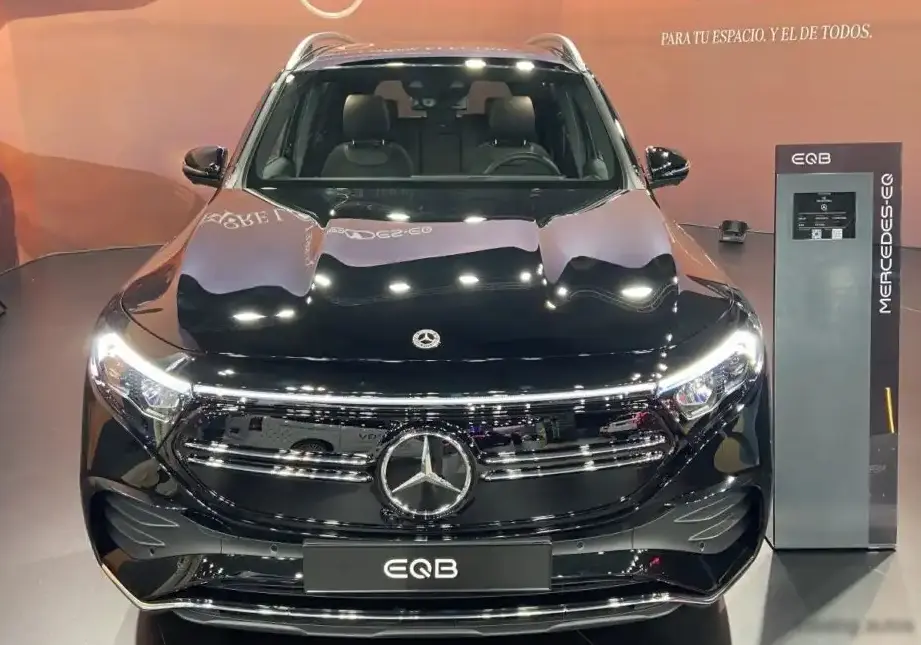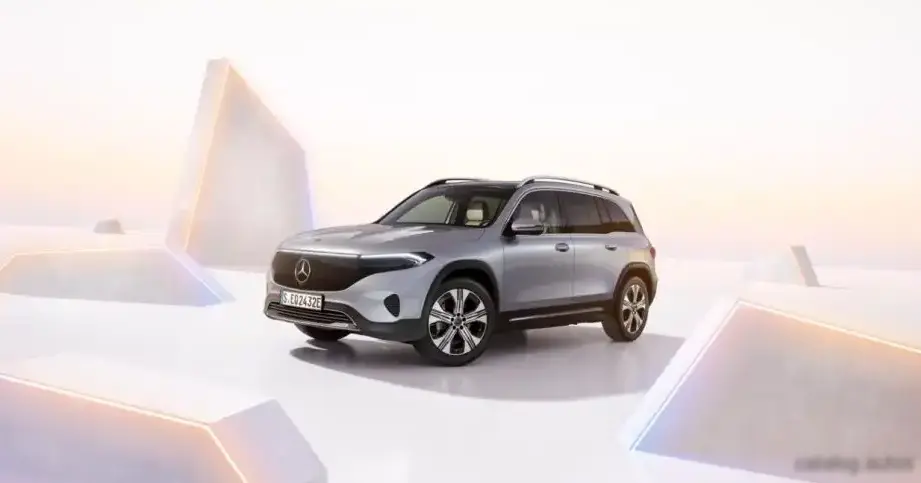
The Mercedes-Benz EQB 250+ 73.9 kWh, introduced in October 2023 as part of the X243 facelift, represents a key variant within the all-electric EQB compact SUV range. Positioned as a mid-range offering, it balances practicality, range, and affordability within the Mercedes-Benz electric vehicle lineup. Production continued through September 2025, making it a relatively short-lived but significant model in the brand’s transition to electric mobility. The EQB, in general, aimed to provide a more accessible entry point into the luxury electric SUV segment, offering optional seven-seat configuration – a rarity in the class – and the prestige of the three-pointed star.
Technical Specifications
| Brand | Mercedes-Benz |
| Model | EQB |
| Generation | EQB (X243, facelift 2023) |
| Type (Engine) | EQB 250+ 73.9 kWh (190 Hp) |
| Start of production | October, 2023 |
| End of production | September, 2025 |
| Powertrain Architecture | BEV (Electric Vehicle) |
| Body type | SUV |
| Seats | 5 |
| Doors | 5 |
| Fuel Type | Electricity |
| Acceleration 0 – 100 km/h | 8.9 sec |
| Acceleration 0 – 62 mph | 8.9 sec |
| Acceleration 0 – 60 mph | 8.5 sec |
| Maximum speed | 160 km/h (99.42 mph) |
| Weight-to-power ratio | 10.7 kg/Hp, 93.6 Hp/tonne |
| Weight-to-torque ratio | 5.3 kg/Nm, 189.7 Nm/tonne |
| Gross battery capacity | 73.9 kWh |
| Net (usable) battery capacity | 70.5 kWh |
| Battery voltage | 400 V |
| Battery technology | Lithium-ion (Li-Ion) |
| Battery location | Below the floor |
| All-electric range (WLTP) | 463-536 km (287.69 – 333.05 mi) |
| Average Energy consumption (WLTP) | 15.2-17.5 kWh/100 km (24.46 – 28.16 kWh/100 mi) |
| MPGe | 138 – 120 |
| km/kWh | 6.6 – 5.7 |
| mi/kWh | 4.1 – 3.6 |
| Electric motor power | 190 Hp |
| Electric motor Torque | 385 Nm (283.96 lb.-ft.) |
| Electric motor model/code | EM0026 |
| Electric motor location | Front axle, Transverse |
| Electric motor type | Synchronous |
| System power | 190 Hp |
| System torque | 385 Nm (283.96 lb.-ft.) |
| Kerb Weight | 2030 kg (4475.38 lbs.) |
| Max. weight | 2540 kg (5599.74 lbs.) |
| Max load | 510 kg (1124.36 lbs.) |
| Trunk (boot) space – minimum | 495 l (17.48 cu. ft.) |
| Trunk (boot) space – maximum | 1710 l (60.39 cu. ft.) |
| Max. roof load | 75 kg (165.35 lbs.) |
| Permitted trailer load with brakes (12%) | 1400 kg (3086.47 lbs.) |
| Permitted trailer load without brakes | 750 kg (1653.47 lbs.) |
| Permitted towbar download | 100 kg (220.46 lbs.) |
| Length | 4684 mm (184.41 in.) |
| Width | 1834 mm (72.2 in.) |
| Width including mirrors | 2020 mm (79.53 in.) |
| Height | 1654 mm (65.12 in.) |
| Wheelbase | 2829 mm (111.38 in.) |
| Front track | 1584-1589 mm (62.36 – 62.56 in.) |
| Rear (Back) track | 1580-1593 mm (62.2 – 62.72 in.) |
| Front overhang | 913 mm (35.94 in.) |
| Rear overhang | 942 mm (37.09 in.) |
| Minimum turning circle | 11.7 m (38.39 ft.) |
| Front suspension | Independent, type McPherson with coil spring and anti-roll bar |
| Rear suspension | Independent multi-link spring suspension with stabilizer |
| Front brakes | Ventilated discs |
| Rear brakes | Disc |
| Drive wheel | Front wheel drive |
| Number of gears | 1 |
| Gearbox type | automatic transmission |
| Tires size | 215/60 R18; 235/55 R18; 235/50 R19; 235/45 R20 |
| Wheel rims size | 6.5J x 18; 7.5J x 18; 7.5J x 19; 8.5J x 20 |
Powertrain & Engine Architecture
The EQB 250+ is powered by a single electric motor, designated EM0026, located on the front axle in a transverse configuration. This synchronous motor produces 190 horsepower and 385 Nm (283.96 lb.-ft.) of torque. The powertrain operates on a 400V architecture, utilizing a lithium-ion battery pack with a gross capacity of 73.9 kWh and a usable capacity of 70.5 kWh. The battery is positioned under the vehicle floor, contributing to a lower center of gravity and improved handling. The single-speed automatic transmission delivers power to the front wheels. The motor doesn’t have a traditional multi-gear transmission; instead, it utilizes a single-speed reduction gear to provide a wide range of torque from a standstill.
Driving Characteristics
The EQB 250+ offers a comfortable and refined driving experience, typical of Mercedes-Benz vehicles. Acceleration from 0 to 60 mph takes approximately 8.5 seconds, and the top speed is electronically limited to 99.42 mph. While not a performance-oriented EV, the instant torque delivery of the electric motor provides adequate responsiveness for everyday driving situations. Compared to higher-output EQB variants, the 250+ prioritizes efficiency and range over outright speed. The front-wheel-drive configuration contributes to a slightly less dynamic feel than all-wheel-drive models, particularly in challenging weather conditions. The single-speed transmission provides seamless acceleration, but lacks the gear changes found in traditional internal combustion engine vehicles.
Equipment & Trim Levels
The EQB 250+ typically came standard with features such as Mercedes-Benz User Experience (MBUX) infotainment system with a touchscreen display, automatic climate control, and a suite of safety features including automatic emergency braking, lane keeping assist, and adaptive cruise control. Interior upholstery was generally Artico synthetic leather, with options for genuine leather upgrades. Available options included a panoramic sunroof, premium sound system, and various driver assistance packages. The dashboard layout was modern and minimalist, with a focus on digital displays and intuitive controls. The optional third-row seating, while compact, allowed the EQB to accommodate up to seven passengers.
Chassis & Braking
The EQB 250+ features an independent suspension system, with McPherson struts at the front and a multi-link setup at the rear. Stabilizer bars are included on both axles to reduce body roll during cornering. The braking system consists of ventilated discs at the front and solid discs at the rear. Anti-lock braking system (ABS) is standard. The suspension is tuned for comfort, providing a smooth ride over various road surfaces. Steering is provided by an electric power steering system, offering precise and responsive control.
Market Reception & Comparison
The EQB 250+ was generally well-received by critics for its practicality, comfortable ride, and relatively affordable price point within the luxury electric SUV segment. Its compact size and optional seven-seat configuration made it a unique offering in the market. Compared to other EQB variants, such as the EQB 300 4MATIC, the 250+ offered a lower price of entry but with reduced performance and all-wheel-drive capability. Fuel economy, measured in MPGe, ranged from 120 to 138, and energy consumption varied between 15.2 and 17.5 kWh per 100 kilometers. Competitors included the Tesla Model Y, Audi Q4 e-tron, and Volvo XC40 Recharge.
Legacy
The Mercedes-Benz EQB 250+ 73.9 kWh, while a relatively short-lived model, represents an important step in Mercedes-Benz’s electrification strategy. Its combination of practicality, luxury, and affordability made it an attractive option for buyers seeking a compact electric SUV. Early reports suggest good long-term reliability of the powertrain, typical of Mercedes-Benz electric motors. On the used car market, the EQB 250+ remains a competitive option, offering a good balance of features and value. As battery technology continues to evolve, the EQB’s range and charging capabilities may become less competitive over time, but its overall build quality and brand prestige should ensure continued demand.