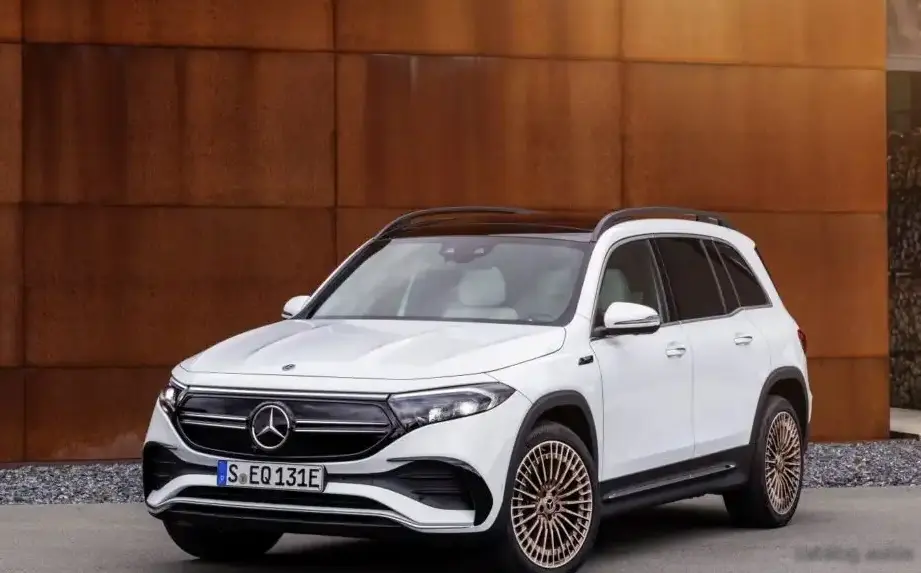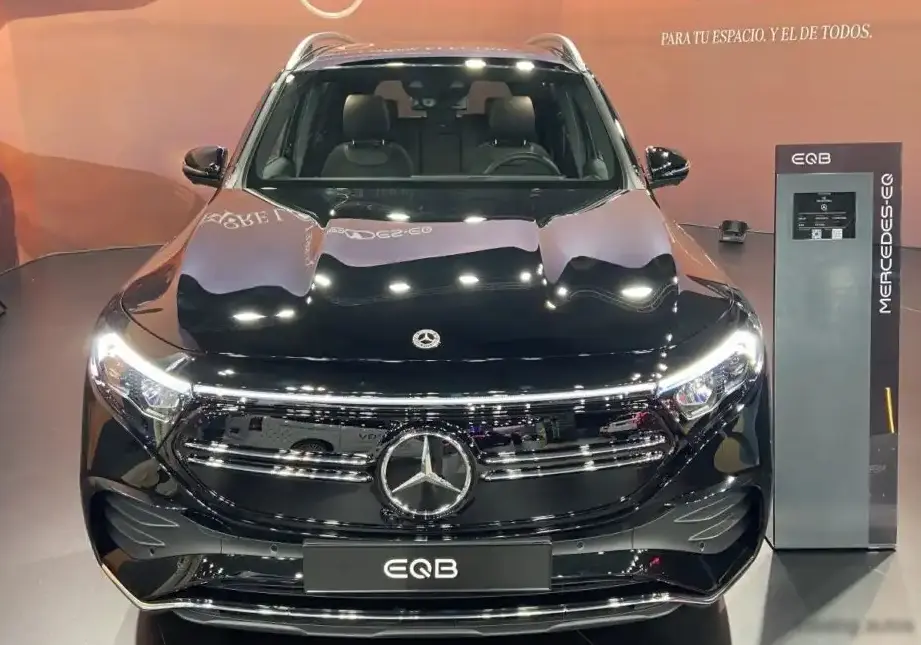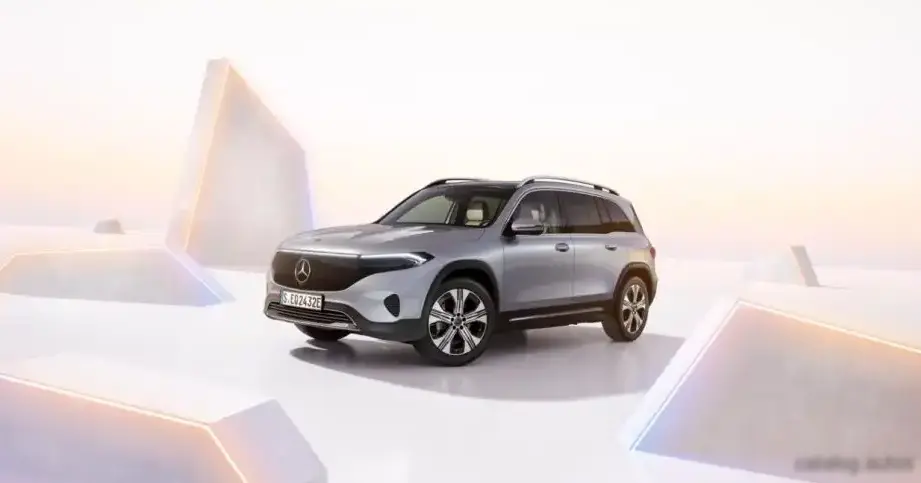
The Mercedes-Benz EQB 300 69.7 kWh 4MATIC, introduced in October 2023 as part of the X243 facelift, represents a significant entry in the compact luxury electric SUV segment. Positioned as a mid-range offering within the EQB lineup, it bridges the gap between the standard EQB 250 and potential future higher-performance variants. This model, built on the Electric Vehicle Architecture (EVA) platform shared with other Mercedes-EQ vehicles, aims to provide a practical and efficient all-electric experience with the versatility of all-wheel drive. Production continued until January 2025, marking a relatively short production run for this specific configuration.
Technical Specifications
| Brand | Mercedes-Benz |
| Model | EQB |
| Generation | EQB (X243, facelift 2023) |
| Type | EQB 300 69.7 kWh (228 Hp) 4MATIC |
| Start of production | October, 2023 |
| End of production | January, 2025 |
| Powertrain Architecture | BEV (Electric Vehicle) |
| Body type | SUV |
| Seats | 5 |
| Doors | 5 |
| Fuel Type | Electricity |
| Acceleration 0 – 100 km/h | 8 sec |
| Acceleration 0 – 62 mph | 8 sec |
| Acceleration 0 – 60 mph | 7.6 sec |
| Maximum speed | 160 km/h (99.42 mph) |
| Weight-to-power ratio | 9.2 kg/Hp, 109.1 Hp/tonne |
| Weight-to-torque ratio | 5.4 kg/Nm, 186.6 Nm/tonne |
| Gross battery capacity | 69.7 kWh |
| Net (usable) battery capacity | 66.5 kWh |
| Battery voltage | 400 V |
| Battery technology | Lithium-ion (Li-Ion) |
| Battery location | Below the floor |
| All-electric range (WLTP) | 397-447 km (246.68 – 277.75 mi) |
| Average Energy consumption (WLTP) | 17.2-19.2 kWh/100 km (27.68 – 30.9 kWh/100 mi) |
| MPGe | 122 – 109 |
| km/kWh | 5.8 – 5.2 |
| mi/kWh | 3.6 – 3.2 |
| Electric motor 1 model/code | EM0022 |
| Electric motor 1 location | Rear axle, Transverse |
| Electric motor 1 type | Synchronous |
| Electric motor 2 model/code | EM0021 |
| Electric motor 2 location | Front axle, Transverse |
| Electric motor 2 type | Asynchronous |
| System power | 228 Hp |
| System torque | 390 Nm (287.65 lb.-ft.) |
| Kerb Weight | 2090 kg (4607.66 lbs.) |
| Max. weight | 2600 kg (5732.02 lbs.) |
| Max load | 510 kg (1124.36 lbs.) |
| Trunk (boot) space – minimum | 495 l (17.48 cu. ft.) |
| Trunk (boot) space – maximum | 1710 l (60.39 cu. ft.) |
| Max. roof load | 75 kg (165.35 lbs.) |
| Permitted trailer load with brakes (12%) | 1700 kg (3747.86 lbs.) |
| Permitted trailer load without brakes | 750 kg (1653.47 lbs.) |
| Permitted towbar download | 100 kg (220.46 lbs.) |
| Length | 4684 mm (184.41 in.) |
| Width | 1834 mm (72.2 in.) |
| Width including mirrors | 2020 mm (79.53 in.) |
| Height | 1654 mm (65.12 in.) |
| Wheelbase | 2829 mm (111.38 in.) |
| Front track | 1584-1589 mm (62.36 – 62.56 in.) |
| Rear (Back) track | 1580-1593 mm (62.2 – 62.72 in.) |
| Front overhang | 913 mm (35.94 in.) |
| Rear overhang | 942 mm (37.09 in.) |
| Minimum turning circle | 11.7 m (38.39 ft.) |
| Front suspension | Independent, type McPherson with coil spring and anti-roll bar |
| Rear suspension | Independent multi-link spring suspension with stabilizer |
| Front brakes | Ventilated discs |
| Rear brakes | Disc |
| Steering type | Steering rack and pinion |
| Power steering | Electric |
| Tires size | 235/55 R18; 235/50 R19; 235/45 R20 |
| Wheel rims size | 7.5J x 18; 7.5J x 19; 8.5J x 20 |
| Gears | 1, automatic transmission |
Powertrain & Engine Architecture
The EQB 300 69.7 kWh 4MATIC utilizes a dual-motor, all-wheel-drive powertrain. Unlike traditional internal combustion engines, it features an asynchronous motor on the front axle (EM0021) and a synchronous motor on the rear axle (EM0022). This configuration allows for variable torque distribution, enhancing traction and stability. The combined system output is 228 horsepower and 390 Nm (287.65 lb.-ft.) of torque. The 69.7 kWh gross (66.5 kWh net) lithium-ion battery pack is positioned under the vehicle floor, contributing to a low center of gravity and maximizing interior space. The battery operates at 400V. The powertrain lacks a traditional multi-speed gearbox, employing a single-speed reduction gear for each axle. Energy recuperation is a key feature, allowing the vehicle to recover energy during deceleration, increasing efficiency.
Driving Characteristics
The EQB 300 4MATIC offers a smooth and refined driving experience. Acceleration from 0-60 mph takes approximately 7.6 seconds, and 0-100 km/h in 8 seconds, making it competitive within its segment. While not a performance-oriented EV, the instant torque delivery of the electric motors provides brisk acceleration in everyday driving situations. The all-wheel-drive system provides confident handling in various weather conditions. Compared to the EQB 250, the 300 offers noticeably more power and quicker acceleration. The single-speed transmission means power delivery is linear, without the gear changes found in conventional automatic transmissions. The regenerative braking system can be adjusted for different levels of intensity, allowing drivers to customize the driving experience.
Equipment & Trim Levels
The EQB 300 4MATIC typically came standard with features such as Mercedes-Benz User Experience (MBUX) infotainment system with a touchscreen display, Apple CarPlay and Android Auto integration, a digital instrument cluster, and a suite of advanced driver-assistance systems (ADAS) including automatic emergency braking, lane-keeping assist, and adaptive cruise control. Interior upholstery was generally Artico synthetic leather, with options for genuine leather upgrades. Available options included a panoramic sunroof, premium sound system, and heated/ventilated front seats. The trim level often included unique exterior styling elements, such as specific wheel designs and chrome accents.
Chassis & Braking
The EQB 300 4MATIC features an independent suspension system at all four wheels. The front utilizes a McPherson strut setup with coil springs and an anti-roll bar, while the rear employs a multi-link suspension with a stabilizer bar. This configuration provides a comfortable ride and good handling characteristics. Braking duties are handled by ventilated discs at the front and solid discs at the rear. The vehicle is equipped with ABS (Anti-lock Braking System) and electronic stability control. Steering is provided by a power-assisted rack and pinion system.
Market Reception & Comparison
The EQB 300 4MATIC was generally well-received by automotive critics, praised for its practicality, comfortable ride, and advanced technology. However, some reviewers noted that its acceleration wasn’t as brisk as some competitors, and its range was somewhat limited compared to other EVs in its class. Compared to the EQB 250, the 300 offered a significant performance upgrade, justifying the higher price point for buyers prioritizing acceleration. Fuel economy, expressed as energy consumption, ranged from 17.2-19.2 kWh/100 km, translating to approximately 122-109 MPGe. Reliability reports have been generally positive, with few major issues reported.
Legacy
The Mercedes-Benz EQB 300 69.7 kWh 4MATIC represents an important step in Mercedes-Benz’s electrification strategy. While its production run was relatively short, it established the EQB as a viable option in the compact luxury EV SUV segment. On the used car market, these models are becoming increasingly sought after, particularly those with low mileage and well-maintained service records. The powertrain’s proven reliability and the growing demand for electric vehicles suggest that the EQB 300 4MATIC will hold its value well in the coming years. The vehicle’s blend of practicality, technology, and comfort continues to appeal to a wide range of buyers.