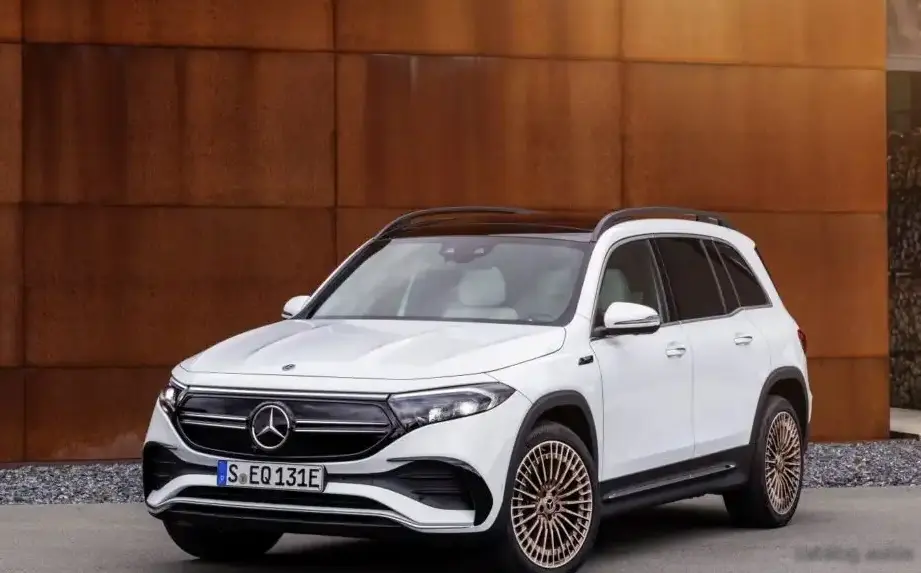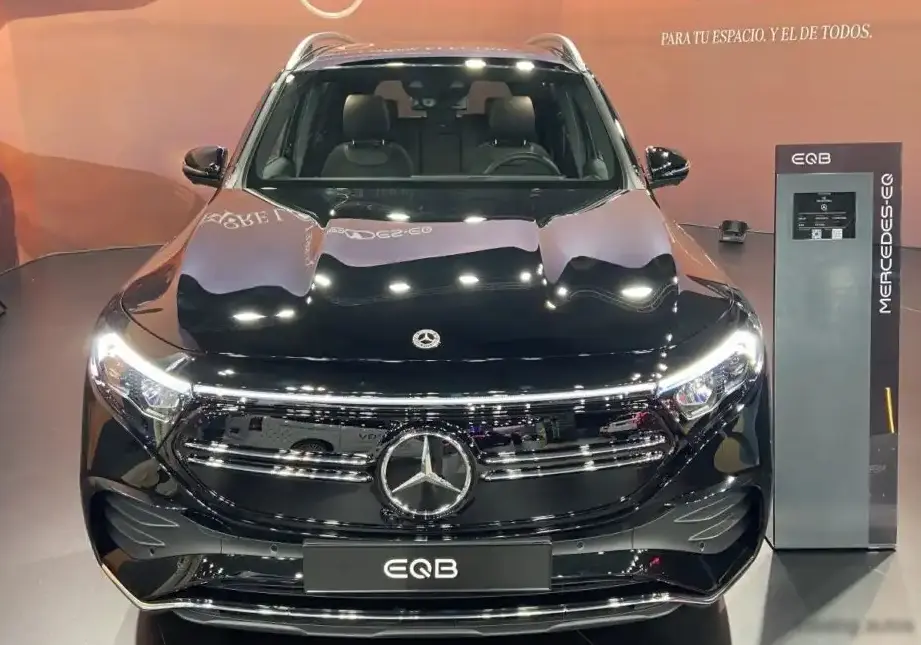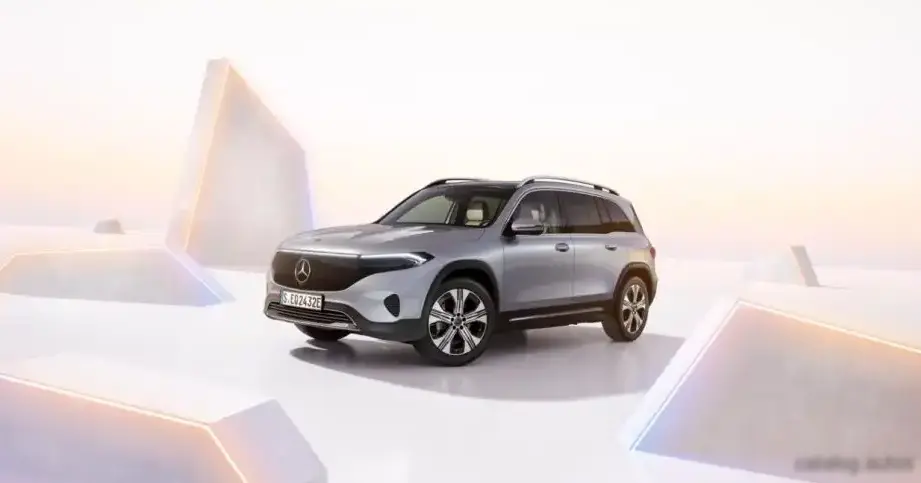
The Mercedes-Benz EQB 350 4MATIC, introduced in October 2023 as part of the X243 facelift, represents a significant offering in the compact luxury electric SUV segment. Positioned as a mid-range trim within the EQB lineup, it bridges the gap between the standard EQB models and the higher-performance variants. This version, equipped with a 69.7 kWh battery pack and dual electric motors, delivers all-wheel drive capability and a balance of range, performance, and practicality. Production continued until July 2024, making it a relatively short-lived iteration of the EQB.
Technical Specifications
| Brand | Mercedes-Benz |
| Model | EQB |
| Generation | EQB (X243, facelift 2023) |
| Type | EQB 350 69.7 kWh (292 Hp) 4MATIC |
| Start of production | October, 2023 |
| End of production | July, 2024 |
| Powertrain Architecture | BEV (Electric Vehicle) |
| Body type | SUV |
| Seats | 5 |
| Doors | 5 |
| Fuel Type | Electricity |
| Acceleration 0 – 100 km/h | 6.2 sec |
| Acceleration 0 – 62 mph | 6.2 sec |
| Acceleration 0 – 60 mph | 5.9 sec |
| Maximum speed | 160 km/h (99.42 mph) |
| Weight-to-power ratio | 7.2 kg/Hp, 139.7 Hp/tonne |
| Weight-to-torque ratio | 4 kg/Nm, 248.8 Nm/tonne |
| Gross battery capacity | 69.7 kWh |
| Net (usable) battery capacity | 66.5 kWh |
| Battery voltage | 400 V |
| Battery technology | Lithium-ion (Li-Ion) |
| Battery location | Below the floor |
| All-electric range (WLTP) | 397-447 km (246.68 – 277.75 mi) |
| Average Energy consumption (WLTP) | 17.2-19.2 kWh/100 km (27.68 – 30.9 kWh/100 mi) |
| MPGe | 122 – 109 |
| km/kWh | 5.8 – 5.2 |
| mi/kWh | 3.6 – 3.2 |
| Electric motor 1 model/code | EM0022 |
| Electric motor 1 location | Rear axle, Transverse |
| Electric motor 1 type | Synchronous |
| Electric motor 2 model/code | EM0021 |
| Electric motor 2 location | Front axle, Transverse |
| Electric motor 2 type | Asynchronous |
| System power | 292 Hp |
| System torque | 520 Nm (383.53 lb.-ft.) |
| Kerb Weight | 2090 kg (4607.66 lbs.) |
| Max. weight | 2600 kg (5732.02 lbs.) |
| Max load | 510 kg (1124.36 lbs.) |
| Trunk (boot) space – minimum | 495 l (17.48 cu. ft.) |
| Trunk (boot) space – maximum | 1710 l (60.39 cu. ft.) |
| Max. roof load | 75 kg (165.35 lbs.) |
| Permitted trailer load with brakes (12%) | 1700 kg (3747.86 lbs.) |
| Permitted trailer load without brakes | 750 kg (1653.47 lbs.) |
| Permitted towbar download | 100 kg (220.46 lbs.) |
| Length | 4684 mm (184.41 in.) |
| Width | 1834 mm (72.2 in.) |
| Width including mirrors | 2020 mm (79.53 in.) |
| Height | 1654 mm (65.12 in.) |
| Wheelbase | 2829 mm (111.38 in.) |
| Front track | 1584-1589 mm (62.36 – 62.56 in.) |
| Rear (Back) track | 1580-1593 mm (62.2 – 62.72 in.) |
| Front overhang | 913 mm (35.94 in.) |
| Rear overhang | 942 mm (37.09 in.) |
| Minimum turning circle | 11.7 m (38.39 ft.) |
| Front suspension | Independent, type McPherson with coil spring and anti-roll bar |
| Rear suspension | Independent multi-link spring suspension with stabilizer |
| Front brakes | Ventilated discs |
| Rear brakes | Disc |
| Steering type | Steering rack and pinion |
| Power steering | Electric |
| Tires size | 235/55 R18; 235/50 R19; 235/45 R20 |
| Wheel rims size | 7.5J x 18; 7.5J x 19; 8.5J x 20 |
| Number of gears and type of gearbox | 1, automatic transmission |
Powertrain & Engine Architecture
The EQB 350 4MATIC utilizes a dual-motor, all-wheel-drive powertrain. Unlike traditional internal combustion engines, it features an electric motor driving each axle – a synchronous motor at the rear and an asynchronous motor at the front. This configuration allows for precise torque distribution and enhanced traction. The 69.7 kWh lithium-ion battery pack is positioned under the vehicle floor, contributing to a low center of gravity and maximizing interior space. The battery operates at 400V. The system delivers a combined output of 292 horsepower and 520 Nm (383.53 lb.-ft.) of torque. The single-speed automatic transmission is inherent to electric vehicle design, providing seamless acceleration without gear changes.
Driving Characteristics
The EQB 350 4MATIC offers brisk acceleration, achieving 0-60 mph in approximately 5.9 seconds. The instant torque delivery characteristic of electric motors provides responsive performance in everyday driving situations. While not as overtly sporty as some performance-focused EVs, the EQB 350 provides ample power for highway merging and overtaking. Compared to the lower-powered EQB 250 variants, the 350 offers a noticeable improvement in acceleration and overall responsiveness. The all-wheel-drive system enhances stability and confidence in adverse weather conditions. The single-speed transmission provides a smooth, linear power delivery, though some drivers may miss the tactile feedback of a multi-gear setup.
Equipment & Trim Levels
The EQB 350 4MATIC typically came standard with features such as Mercedes-Benz’s MBUX infotainment system with a touchscreen display, Apple CarPlay and Android Auto integration, and a suite of advanced driver-assistance systems (ADAS) including automatic emergency braking, lane-keeping assist, and adaptive cruise control. Interior upholstery was generally Artico synthetic leather, with options for genuine leather upgrades. Common optional extras included a panoramic sunroof, premium sound system, and heated/ventilated front seats. The trim level generally included features like ambient lighting, dual 10.25-inch displays, and keyless entry.
Chassis & Braking
The EQB 350 4MATIC features an independent suspension setup at all four corners, utilizing McPherson struts at the front and a multi-link system at the rear. This configuration provides a comfortable ride quality while maintaining reasonable handling characteristics. Stabilizer bars are included both front and rear to reduce body roll during cornering. The braking system consists of ventilated discs at the front and solid discs at the rear, coupled with ABS (Anti-lock Braking System) and electronic brake-force distribution. The vehicle’s relatively high weight (2090 kg / 4607.66 lbs.) necessitates a robust braking system to ensure adequate stopping power.
Market Reception & Comparison
The EQB 350 4MATIC was generally well-received by automotive critics, who praised its spacious interior, comfortable ride, and respectable range. However, some reviewers noted that its acceleration, while adequate, wasn’t as exhilarating as some competitors. Compared to the EQB 250, the 350 offered a significant performance upgrade, justifying the higher price tag for drivers prioritizing acceleration. In terms of fuel economy (electricity consumption), the EQB 350 achieved an average of 17.2-19.2 kWh/100 km, translating to approximately 122-109 MPGe. Reliability reports have been generally positive, with typical EV-related issues (battery degradation, software glitches) being the most common concerns.
Legacy
The EQB 350 4MATIC, despite its short production run, represents an important step in Mercedes-Benz’s electrification strategy. Its combination of practicality, luxury, and all-wheel-drive capability appealed to a broad range of buyers. On the used car market, these models are becoming increasingly sought after, particularly those with low mileage and well-maintained batteries. The powertrain, while not groundbreaking, has proven to be relatively reliable, and the availability of replacement parts and service support is generally good. As the EV market matures, the EQB 350 4MATIC is likely to be remembered as a well-rounded and capable electric SUV.