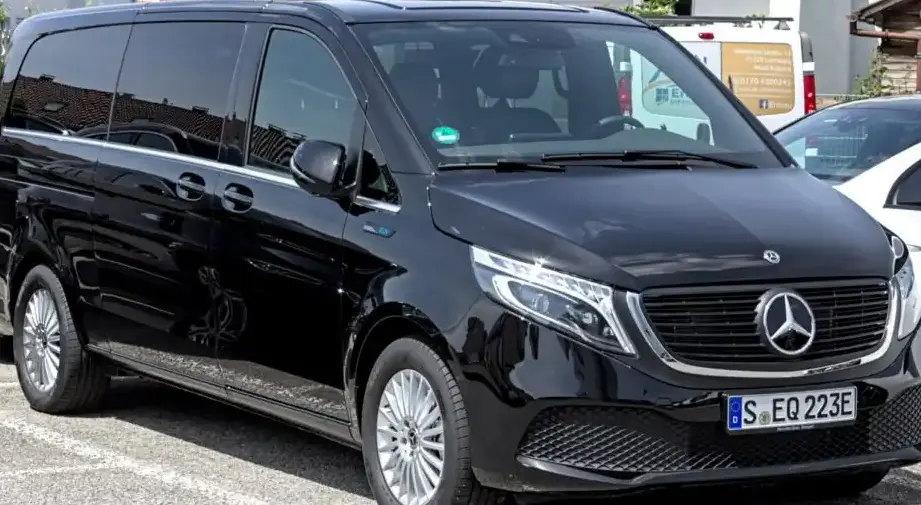
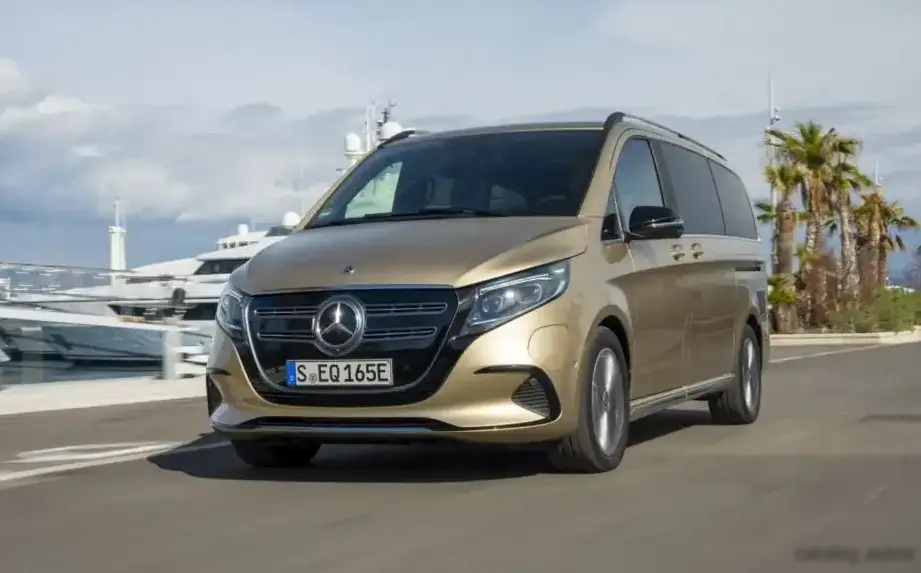
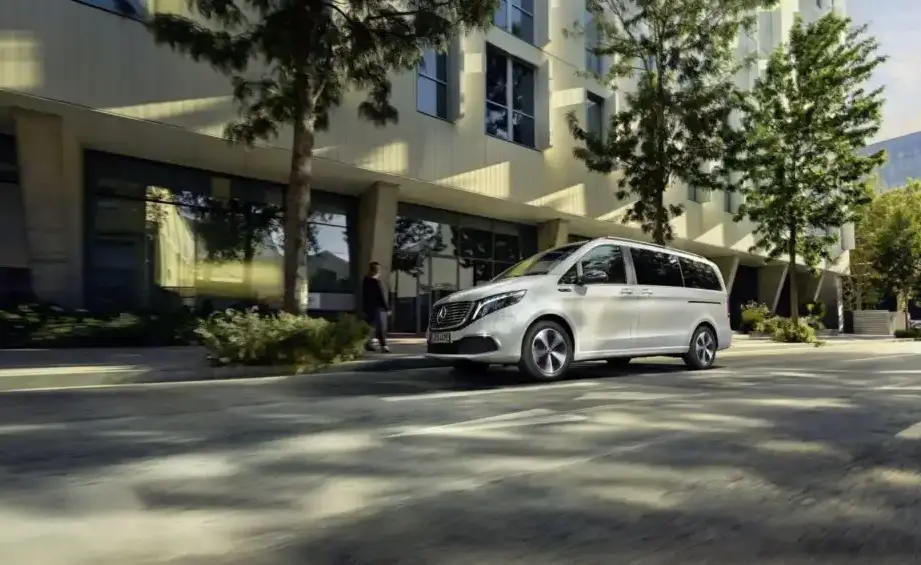
The Mercedes-Benz EQV 300 Extra Long, introduced in January 2024 as part of the V447 facelift, represents the brand’s entry into the all-electric multi-purpose vehicle (MPV) segment. Positioned as a premium people-mover, the EQV aims to provide the space and versatility of a traditional van with the environmental benefits of a battery-electric powertrain. This particular variant, equipped with a 100 kWh battery and a 204 horsepower electric motor, is designed for families, businesses, and shuttle services requiring a spacious and comfortable zero-emission vehicle. The Extra Long wheelbase distinguishes it from the standard EQV, offering increased passenger and cargo capacity. It builds upon the foundation of the V-Class platform, transitioning it to a fully electric drivetrain.
Technical Specifications
| Brand | Mercedes-Benz |
| Model | EQV |
| Generation | EQV (V447, facelift 2024) Extra Long |
| Type (Engine) | EQV 300 100 kWh (204 Hp) |
| Start of production | January, 2024 |
| Powertrain Architecture | BEV (Electric Vehicle) |
| Body type | MPV, Van |
| Seats | 6-8 |
| Doors | 5 |
| Fuel Type | Electricity |
| Acceleration 0 – 100 km/h | 12.2 sec |
| Acceleration 0 – 62 mph | 12.2 sec |
| Acceleration 0 – 60 mph | 11.6 sec |
| Maximum speed | 140 km/h (86.99 mph) |
| Weight-to-power ratio | 13.3 kg/Hp, 75 Hp/tonne |
| Weight-to-torque ratio | 7.5 kg/Nm, 134.2 Nm/tonne |
| Gross battery capacity | 100 kWh |
| Net (usable) battery capacity | 90 kWh |
| Battery voltage | 352 V |
| Battery technology | Lithium-ion (Li-Ion) |
| Battery weight | 700 kg (1543.24 lbs) |
| Battery location | Below the floor |
| All-electric range (WLTP) | 342-370 km (212.51 – 229.91 mi) |
| Average Energy consumption (WLTP) | 26.7-28.9 kWh/100 km (42.97 – 46.51 kWh/100 mi) |
| Energy consumption (MPGe) | 78 – 72 |
| Energy consumption (km/kWh) | 3.7 – 3.5 |
| Energy consumption (mi/kWh) | 2.3 – 2.2 |
| Electric motor power | 204 Hp |
| Electric motor Torque | 365 Nm (269.21 lb.-ft.) |
| Electric motor model/code | EM6001 |
| Electric motor location | Front axle, Transverse |
| Electric motor type | Asynchronous |
| System power | 204 Hp |
| System torque | 365 Nm (269.21 lb.-ft.) |
| Kerb Weight | 2720-2785 kg (5996.57 – 6139.87 lbs) |
| Max. weight | 3500 kg (7716.18 lbs) |
| Max load | 715-780 kg (1576.31 – 1719.61 lbs) |
| Trunk (boot) space – minimum | 1410 l (49.79 cu. ft.) |
| Trunk (boot) space – maximum | 5010 l (176.93 cu. ft.) |
| Max. roof load | 150 kg (330.69 lbs) |
| Length | 5370 mm (211.42 in) |
| Width | 1928 mm (75.91 in) |
| Width including mirrors | 2244 mm (88.35 in) |
| Height | 1901 mm (74.84 in) |
| Wheelbase | 3430 mm (135.04 in) |
| Front overhang | 895 mm (35.24 in) |
| Rear overhang | 1045 mm (41.14 in) |
| Drag coefficient (Cd) | 0.34 |
| Minimum turning circle | 13.7 m (44.95 ft) |
| Drivetrain Architecture | One electric motor drives the front wheels. |
| Drive wheel | Front wheel drive |
| Number of gears | 1 |
| Gearbox type | Automatic transmission |
| Front suspension | Independent, type McPherson with coil spring and anti-roll bar, Air Suspension – Optional |
| Rear suspension | Trailing arm, Air Suspension – Optional |
| Tires size | 245/55 R17; 245/50 R18 |
| Wheel rims size | 7J x 17; 7.5J x 18 |
INTRODUCTION
The Mercedes-Benz EQV 300 Extra Long represents a significant step in the electrification of the luxury MPV segment. Introduced in 2024 as a facelift to the V447 series, it builds upon the established V-Class platform, replacing the internal combustion engine with a fully electric drivetrain. The “Extra Long” designation indicates an extended wheelbase, providing increased interior space and passenger comfort. This variant, with its 100 kWh battery and 204 hp electric motor, is positioned as a versatile option for families, executive transport, and commercial applications where a zero-emission vehicle is desired. It competes with other premium electric vans and MPVs, offering a blend of luxury, practicality, and environmental responsibility.
Powertrain & Engine Architecture
The EQV 300 Extra Long utilizes a single asynchronous electric motor, designated EM6001, mounted transversely at the front axle. This motor produces 204 horsepower and 365 Nm (269.21 lb.-ft.) of torque. Power is delivered through a single-speed automatic transmission to the front wheels. The heart of the system is the 100 kWh lithium-ion battery pack, providing a usable capacity of 90 kWh. This battery is located under the floor of the vehicle, contributing to a lower center of gravity and improved stability. The battery operates at 352 volts. The EQV 300 does not employ regenerative braking to the extent of some other EVs, focusing more on conventional friction brakes. The charging system supports both AC and DC fast charging, allowing for convenient replenishment of the battery at home or on the road.
Driving Characteristics
The EQV 300 Extra Long prioritizes comfort and refinement over outright performance. Acceleration from 0-60 mph takes approximately 11.6 seconds, and the top speed is electronically limited to 140 km/h (86.99 mph). The single-speed transmission provides smooth and linear acceleration, but lacks the gear changes found in traditional automatic transmissions. The front-wheel-drive configuration offers predictable handling, although it can exhibit some torque steer under hard acceleration. The weight of the battery pack, approximately 700 kg (1543.24 lbs), contributes to a noticeable heft, particularly during cornering. Compared to higher-powered V-Class variants, the EQV 300 offers a more relaxed driving experience, focusing on efficiency and quiet operation. The instant torque delivery of the electric motor provides adequate power for everyday driving situations.
Equipment & Trim Levels
The EQV 300 Extra Long comes standard with a comprehensive suite of features, reflecting its premium positioning. Interior appointments typically include comfortable seating for up to eight passengers, depending on the configuration. Standard upholstery is often a high-quality fabric, with leather options available as upgrades. The dashboard features a modern design with a large touchscreen infotainment system, supporting Apple CarPlay and Android Auto. Other standard features include climate control, a rearview camera, and a range of safety systems, such as automatic emergency braking and lane-keeping assist. Optional extras include air suspension for a smoother ride, premium sound system, and various interior customization options. The Extra Long variant specifically benefits from increased legroom and cargo space compared to the standard wheelbase EQV.
Chassis & Braking
The EQV 300 Extra Long utilizes an independent McPherson strut suspension at the front, with a trailing arm suspension at the rear. Air suspension is available as an optional upgrade, providing adjustable ride height and improved comfort. The braking system consists of disc brakes at the front and drum brakes at the rear, although larger disc brakes are available on higher trim levels. Anti-lock braking system (ABS) and electronic stability control (ESC) are standard features. The steering system is a rack-and-pinion type with electric power assistance. The vehicle is typically equipped with 245/55 R17 or 245/50 R18 tires, mounted on 7J x 17 or 7.5J x 18 alloy wheels, respectively. The suspension is tuned to prioritize ride comfort, absorbing bumps and imperfections in the road surface effectively.
Market Reception & Comparison
The Mercedes-Benz EQV 300 Extra Long has been generally well-received by critics, praised for its spacious interior, comfortable ride, and zero-emission powertrain. However, some reviewers have noted its relatively high price compared to traditional MPVs and its limited driving range. Compared to other EQV variants, the 300 model offers a balance between performance and efficiency. The 250 variant offers less power, while the 350 provides more, but at a higher cost. Fuel economy, expressed as energy consumption, ranges from 26.7-28.9 kWh/100 km, translating to approximately 78-72 MPGe. Reliability is still being assessed, as the EQV is a relatively new model, but Mercedes-Benz’s reputation for build quality suggests a high level of durability.
Legacy
The Mercedes-Benz EQV 300 Extra Long represents a pivotal step in the brand’s commitment to electric mobility. Its long-term reliability will depend on the durability of the battery pack and the electric motor. As battery technology continues to improve and charging infrastructure expands, the EQV is likely to become an increasingly attractive option for buyers seeking a spacious, luxurious, and environmentally friendly MPV. On the used car market, the EQV 300 Extra Long is expected to hold its value well, particularly as demand for electric vehicles continues to grow. The powertrain, while not offering blistering performance, is expected to be relatively maintenance-free compared to traditional internal combustion engines, further enhancing its appeal.