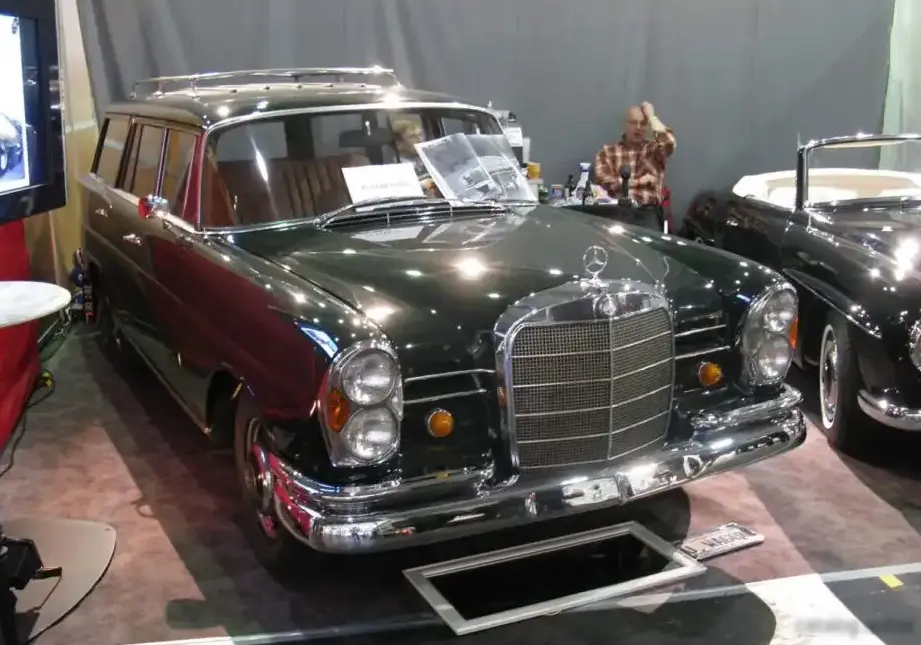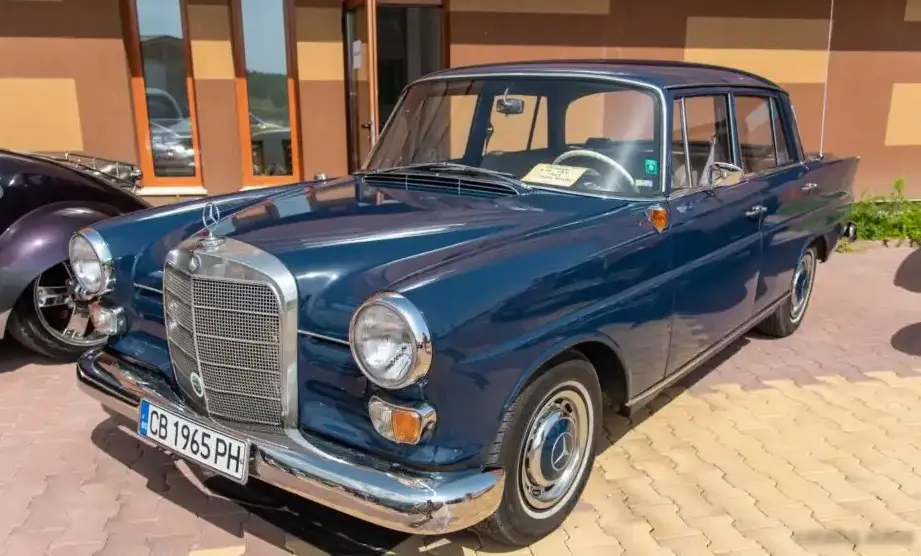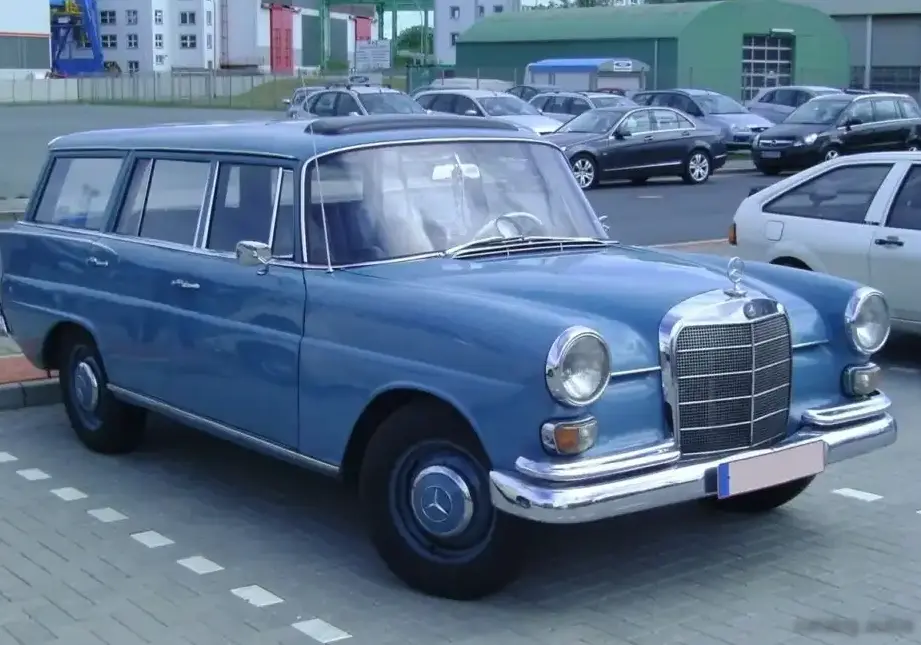
The Mercedes-Benz W110 “Fintail” Universal 200 D, produced between 1966 and 1968, represents a practical and durable iteration of the iconic Fintail series. Positioned as the diesel-powered wagon variant, it offered a more economical and utilitarian alternative to the gasoline-powered models. The Universal (estate) body style broadened the appeal of the W110, catering to families and those requiring increased cargo capacity. This particular 200 D model, equipped with a modest 55 horsepower diesel engine, was aimed at buyers prioritizing fuel efficiency and reliability over outright performance. It sat at the entry-level of the W110 Universal range, offering a more affordable option compared to the higher-specification petrol versions.
Technical Specifications
| Brand | Mercedes-Benz |
| Model | Fintail |
| Generation | Fintail Universal (W110) |
| Type (Engine) | 200 D (55 Hp) |
| Start of production | 1966 |
| End of production | 1968 |
| Powertrain Architecture | Internal Combustion engine |
| Body type | Station wagon (estate) |
| Seats | 5 |
| Doors | 5 |
| Fuel Type | Diesel |
| Maximum speed | 130 km/h (80.78 mph) |
| Weight-to-power ratio | 27.4 kg/Hp, 36.5 Hp/tonne |
| Weight-to-torque ratio | 13.3 kg/Nm, 75.1 Nm/tonne |
| Power | 55 Hp @ 4200 rpm |
| Power per litre | 27.7 Hp/l |
| Torque | 113 Nm @ 2400 rpm (83.34 lb.-ft. @ 2400 rpm) |
| Engine layout | Front, Longitudinal |
| Engine Model/Code | OM 621 VIII / 621.918 |
| Engine displacement | 1988 cm3 (121.32 cu. in.) |
| Number of cylinders | 4 |
| Engine configuration | Inline |
| Cylinder Bore | 87 mm (3.43 in.) |
| Piston Stroke | 83.6 mm (3.29 in.) |
| Compression ratio | 21:1 |
| Number of valves per cylinder | 2 |
| Fuel injection system | Precombustion chamber injection |
| Engine aspiration | Naturally aspirated engine |
| Valvetrain | SOHC |
| Kerb Weight | 1505 kg (3317.96 lbs.) |
| Max. weight | 2155 kg (4750.96 lbs.) |
| Max load | 650 kg (1433 lbs.) |
| Fuel tank capacity | 65 l (17.17 US gal | 14.3 UK gal) |
| Length | 4740 mm (186.61 in.) |
| Width | 1795 mm (70.67 in.) |
| Height | 1530 mm (60.24 in.) |
| Wheelbase | 2700 mm (106.3 in.) |
| Front track | 1482 mm (58.35 in.) |
| Rear (Back) track | 1485 mm (58.46 in.) |
| Drivetrain Architecture | The Internal combustion engine (ICE) drives the rear wheels of the vehicle. |
| Drive wheel | Rear wheel drive |
| Number of gears and type of gearbox | 4 gears, manual transmission |
| Front suspension | Double wishbone, Transverse stabilizer |
| Rear suspension | Air suspension, Trailing arm |
| Front brakes | Disc |
| Rear brakes | Drum |
| Steering type | Cone worm with recirculation balls |
| Wheel rims size | 5J x 15 |
Powertrain & Engine Architecture
The heart of the 200 D Universal is the OM 621.918, a 1.988-liter inline-four diesel engine. This engine, a mainstay of Mercedes-Benz’s diesel offerings in the 1960s, utilized precombustion chamber injection. This system, common for diesel engines of the era, involved injecting fuel into a small precombustion chamber connected to the main cylinder, promoting more complete combustion. The engine featured a single overhead camshaft (SOHC) operating two valves per cylinder. Its robust construction and relatively simple design contributed to its longevity and reliability. The 55 horsepower output was achieved at 4200 rpm, while peak torque of 113 Nm (83.34 lb-ft) arrived at 2400 rpm. The engine was mounted longitudinally in the front of the vehicle, driving the rear wheels.
Driving Characteristics
The 200 D Universal, with its 55 horsepower and manual transmission, was not designed for rapid acceleration. Performance was best described as adequate for its intended purpose – providing reliable and economical transportation. The four-speed manual gearbox offered a reasonable spread of ratios, but required frequent shifting to maintain momentum, especially when loaded or tackling inclines. Compared to the gasoline-powered W110 models, the 200 D offered significantly less power, resulting in a slower 0-60 mph time. However, the diesel engine’s torque characteristics provided decent pulling power at lower engine speeds. The driving experience was characterized by a noticeable diesel clatter and a less refined feel compared to its petrol counterparts.
Equipment & Trim Levels
The 200 D Universal was generally equipped with a fairly basic level of trim, reflecting its position as the entry-level wagon variant. Standard features typically included cloth upholstery, a simple dashboard layout with basic instrumentation, and manually operated windows and door locks. While not lavishly appointed, the interior was functional and durable. Optional extras, such as a sunroof, upgraded upholstery, and a radio, were available to enhance comfort and convenience. The Fintail design, characterized by its distinctive rear fins, was consistent across all W110 models, but the 200 D often featured simpler exterior trim compared to the higher-specification versions.
Chassis & Braking
The W110 Universal chassis featured independent front suspension with double wishbones and a transverse stabilizer, providing a reasonable level of ride comfort and handling. The rear suspension employed a trailing arm setup with air suspension, a relatively advanced feature for the time, designed to maintain a level ride height even when the vehicle was heavily loaded. Braking duties were handled by disc brakes at the front and drum brakes at the rear. The braking system, while adequate for the vehicle’s weight and performance, lacked the stopping power of more modern systems. Steering was accomplished via a cone worm and recirculation balls system, offering a somewhat indirect but stable feel.
Market Reception & Comparison
The Mercedes-Benz W110 Fintail Universal 200 D was well-received in the European market as a practical and economical family vehicle. Critics praised its durability, fuel efficiency, and spacious interior. However, the modest power output and relatively basic trim levels were noted. Compared to the 200 and 230 gasoline-powered models, the 200 D offered significantly lower performance but superior fuel economy. Against competitors like the Volvo 122 Amazon Estate, the W110 offered a more refined driving experience and a higher level of perceived quality, albeit at a higher price point. The 200 D was often favored by those who prioritized long-term reliability and low running costs over outright performance.
Legacy
The Mercedes-Benz W110 Fintail series, including the 200 D Universal, holds a significant place in automotive history as a pioneering example of a modern, mass-produced family car. The OM 621 diesel engine proved to be exceptionally durable, with many examples still running today. In the used car market, the 200 D Universal is sought after by enthusiasts and collectors for its classic styling, robust construction, and historical significance. While maintenance can be challenging due to the age of the vehicle, the availability of spare parts and a dedicated community of owners ensures that these cars can be kept on the road for years to come. The W110 Fintail laid the groundwork for future generations of Mercedes-Benz estate cars, establishing a reputation for quality, reliability, and practicality.