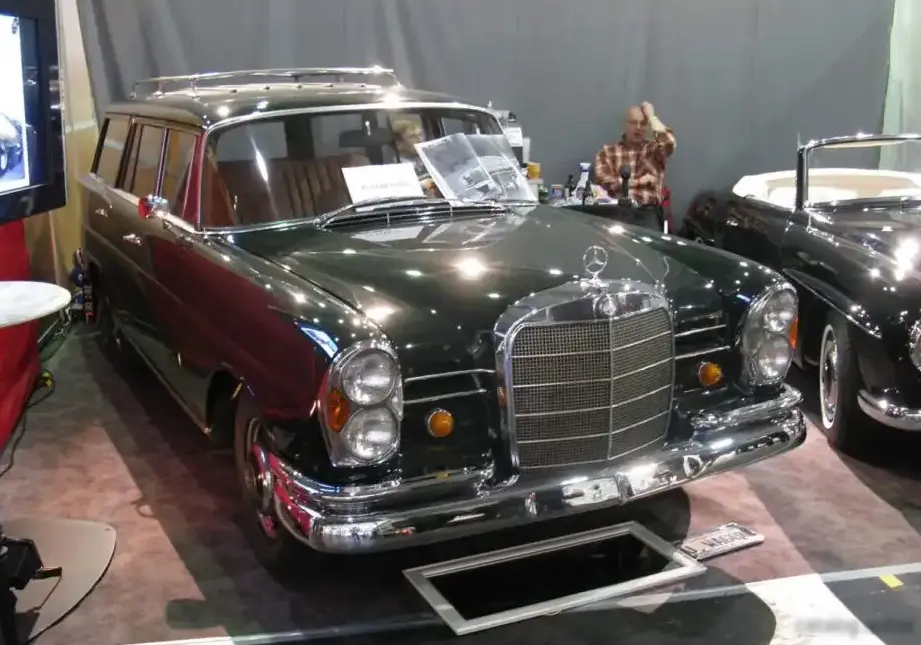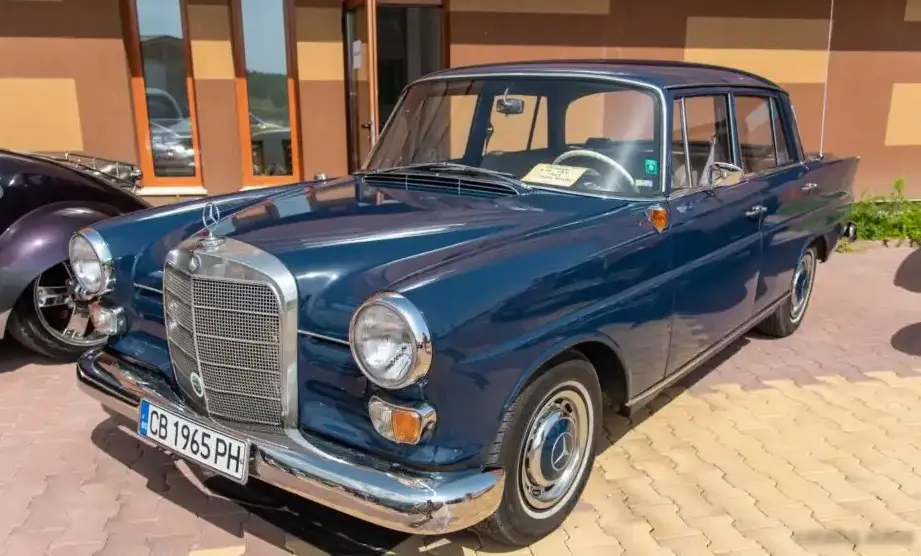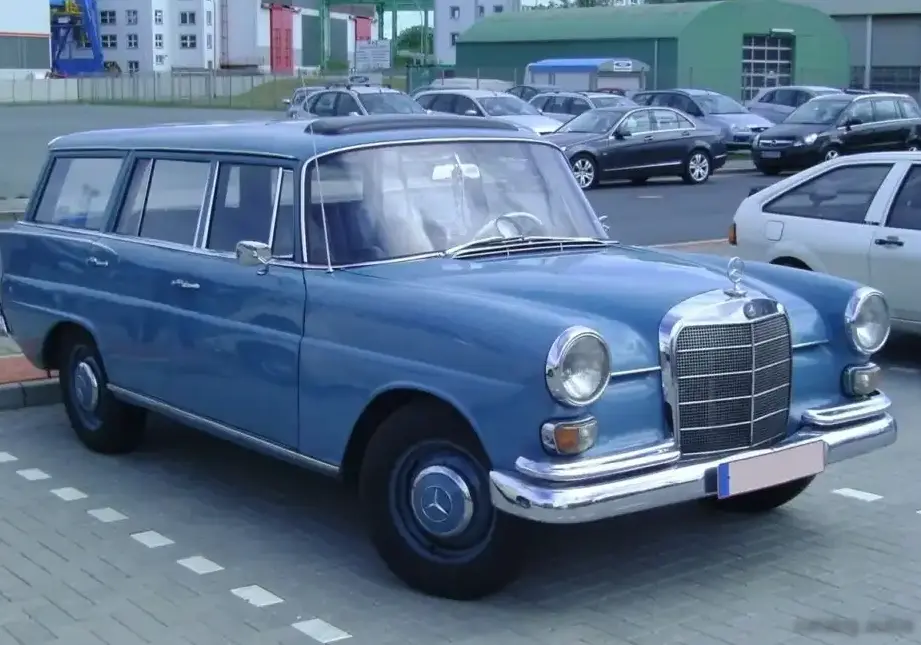
The Mercedes-Benz W110 “Fintail” Universal 230, produced between 1966 and 1968, represents a significant evolution of the mid-size Mercedes-Benz lineup. Positioned as a practical and comfortable family vehicle, the Universal (estate/station wagon) body style offered increased cargo capacity compared to the sedan. The 230 variant, powered by the M180 engine producing 120 horsepower, occupied a middle ground within the W110 range, offering a balance between performance and affordability. It was a key model in Mercedes-Benz’s strategy to broaden its appeal beyond the luxury market, offering a more accessible entry point into the brand while maintaining a high standard of engineering and build quality. The Fintail designation comes from the distinctive, pronounced fins integrated into the rear fenders, a styling cue characteristic of the era.
Technical Specifications
| Brand | Mercedes-Benz |
| Model | Fintail |
| Generation | Fintail Universal (W110) |
| Type (Engine) | 230 (120 Hp) |
| Start of production | 1966 |
| End of production | 1968 |
| Powertrain Architecture | Internal Combustion engine |
| Body type | Station wagon (estate) |
| Seats | 5 |
| Doors | 5 |
| Fuel Type | Petrol (Gasoline) |
| Maximum speed | 175 km/h (108.74 mph) |
| Weight-to-power ratio | 12.4 kg/Hp, 80.8 Hp/tonne |
| Weight-to-torque ratio | 8.3 kg/Nm, 119.9 Nm/tonne |
| Power | 120 Hp @ 5400 rpm |
| Power per litre | 52 Hp/l |
| Torque | 178 Nm @ 4000 rpm (131.29 lb.-ft. @ 4000 rpm) |
| Engine layout | Front, Longitudinal |
| Engine Model/Code | M 180 X / 180.949 |
| Engine displacement | 2306 cm3 (140.72 cu. in.) |
| Number of cylinders | 6 |
| Engine configuration | Inline |
| Cylinder Bore | 82 mm (3.23 in.) |
| Piston Stroke | 72.8 mm (2.87 in.) |
| Compression ratio | 9:1 |
| Number of valves per cylinder | 2 |
| Fuel injection system | Carburettor |
| Engine aspiration | Naturally aspirated engine |
| Valvetrain | SOHC |
| Kerb Weight | 1485 kg (3273.86 lbs.) |
| Max. weight | 2140 kg (4717.89 lbs.) |
| Max load | 655 kg (1444.03 lbs.) |
| Fuel tank capacity | 65 l (17.17 US gal | 14.3 UK gal) |
| Length | 4740 mm (186.61 in.) |
| Width | 1795 mm (70.67 in.) |
| Height | 1530 mm (60.24 in.) |
| Wheelbase | 2700 mm (106.3 in.) |
| Front track | 1482 mm (58.35 in.) |
| Rear (Back) track | 1485 mm (58.46 in.) |
| Drivetrain Architecture | The Internal combustion engine (ICE) drives the rear wheels of the vehicle. |
| Drive wheel | Rear wheel drive |
| Number of gears and type of gearbox | 4 gears, manual transmission |
| Front suspension | Double wishbone, Transverse stabilizer |
| Rear suspension | Air suspension, Trailing arm |
| Front brakes | Disc |
| Rear brakes | Drum |
| Steering type | Cone worm with recirculation balls |
| Wheel rims size | 5J x 15 |
Powertrain & Engine Architecture
The heart of the W110 230 Universal is the M180.949, a 2.3-liter inline-six cylinder engine. This engine, a development of earlier Mercedes-Benz six-cylinder designs, featured a single overhead camshaft (SOHC) operating two valves per cylinder. Fuel delivery was managed by a Solex carburetor, a common setup for the period. The engine’s robust construction and relatively simple design contributed to its longevity and ease of maintenance. The M180 engine was known for its smooth operation and willingness to rev, although it wasn’t a particularly high-performance unit. The 120 horsepower output was sufficient for comfortable cruising and everyday driving, but it didn’t offer the spirited acceleration of some of its competitors. The engine was mounted longitudinally in the front of the vehicle, driving the rear wheels. The four-speed manual transmission was standard, providing a direct connection between the engine and the drivetrain.
Driving Characteristics
The 230 Universal, with its 120 hp engine and manual transmission, offered a composed and predictable driving experience. While not sporty, it provided ample power for highway cruising and navigating city streets. The four-speed gearbox, while not offering the close ratios of more modern transmissions, was well-suited to the engine’s torque curve. Gear changes were smooth and precise, contributing to a relaxed driving style. Compared to the more powerful 280 variants, the 230 felt less strained during acceleration, but also lacked the same level of outright performance. The Universal’s suspension, featuring double wishbones at the front and an air suspension system at the rear, provided a comfortable ride, absorbing bumps and imperfections in the road surface effectively. The air suspension, while innovative for its time, required periodic maintenance to ensure proper operation.
Equipment & Trim Levels
The W110 230 Universal was generally well-equipped for its time, although options were available to enhance comfort and convenience. Standard features typically included cloth upholstery, a wood-trimmed dashboard, and basic instrumentation. The interior was spacious and practical, reflecting the vehicle’s role as a family car. Optional extras included a sunroof, power windows, and upgraded audio systems. The trim level of the 230 Universal was generally considered mid-range within the W110 lineup. It offered a step up in terms of engine performance and features compared to the base 200 model, but lacked the luxury appointments of the 280 variants.
Chassis & Braking
The W110 Universal featured a robust chassis construction, providing a solid foundation for the vehicle’s body. The front suspension utilized a double wishbone design with a transverse stabilizer bar, contributing to stable handling. The rear suspension employed an air suspension system with trailing arms, offering a comfortable ride and the ability to adjust ride height. Braking duties were handled by disc brakes at the front and drum brakes at the rear. While adequate for the vehicle’s weight and performance, the braking system wasn’t particularly powerful by modern standards. Steering was accomplished via a cone worm and recirculation balls system, providing a relatively direct and precise feel.
Market Reception & Comparison
The Mercedes-Benz W110 230 Universal was generally well-received by critics and buyers alike. It was praised for its comfortable ride, spacious interior, and build quality. However, some critics noted that the engine lacked the performance of some of its competitors, and the air suspension system required regular maintenance. Compared to other models in the W110 range, the 230 Universal offered a good balance between performance, features, and price. It was a popular choice for families who needed a practical and reliable vehicle with a touch of luxury. Fuel economy was reasonable for the era, although not exceptional. Reliability was generally good, although the air suspension system could be prone to issues if not properly maintained.
Legacy
The Mercedes-Benz W110 “Fintail” Universal 230 holds a respected place in automotive history as a well-engineered and durable vehicle. The M180 engine, while not a powerhouse, proved to be remarkably reliable and capable of high mileage with proper maintenance. Today, the W110 Universal is a sought-after classic car, appreciated by enthusiasts for its distinctive styling, comfortable ride, and historical significance. Parts availability is generally good, although some components, particularly those related to the air suspension system, can be difficult to find. Well-maintained examples command a premium in the used car market, reflecting their enduring appeal and the enduring reputation of the Mercedes-Benz brand. The Fintail series, and the Universal variant in particular, represents a pivotal moment in Mercedes-Benz’s history, bridging the gap between post-war luxury and the more accessible, mass-market vehicles of the future.