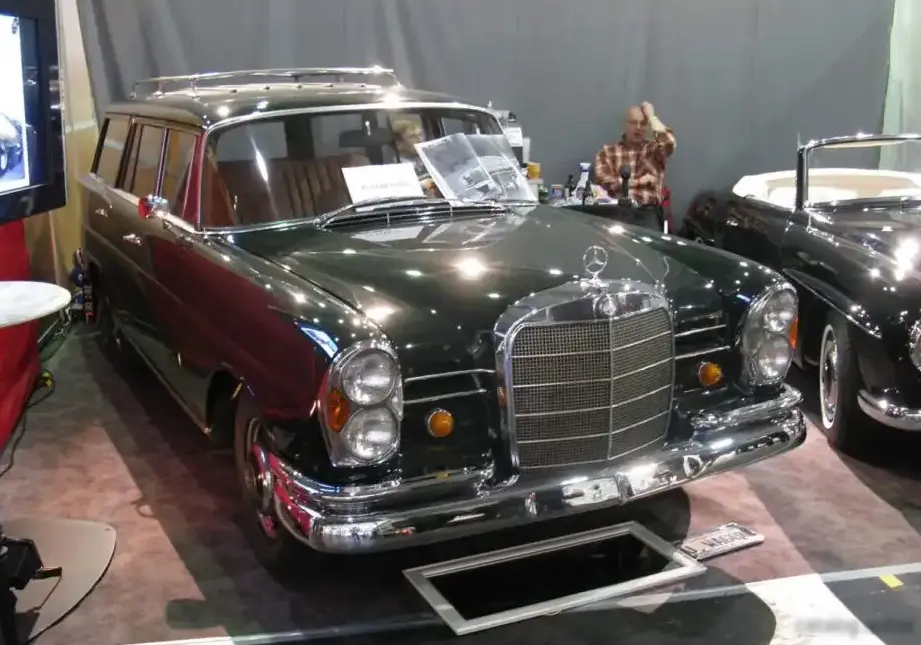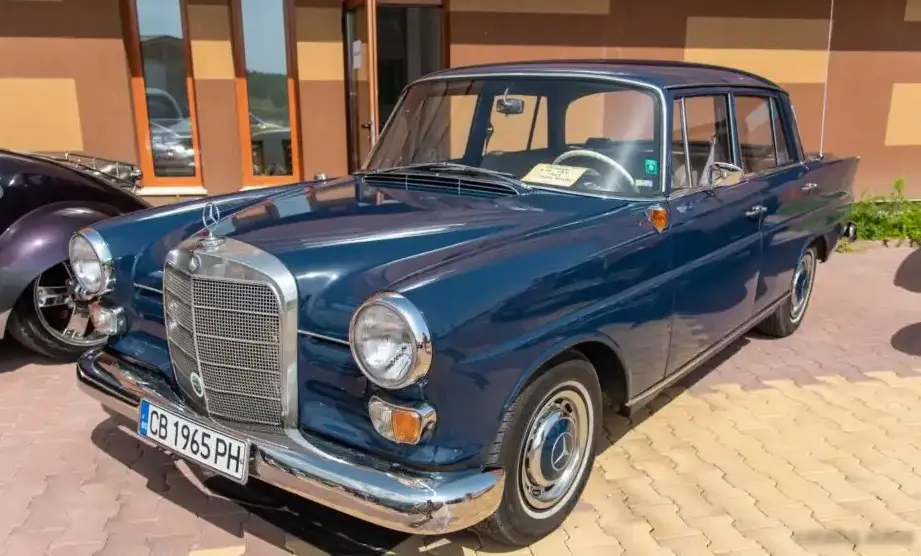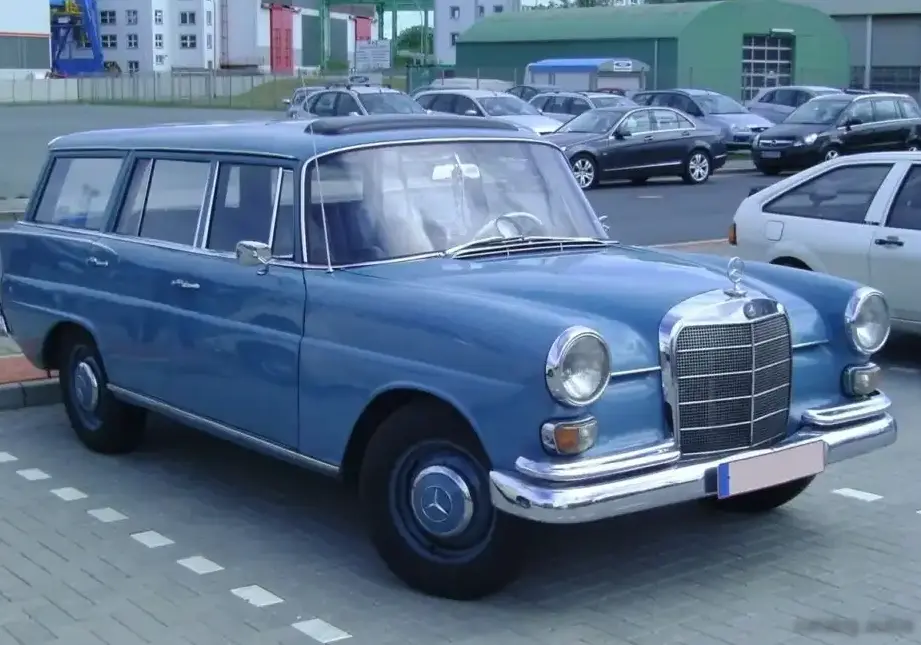
The Mercedes-Benz W110 “Fintail” Universal, specifically the 230 variant with an automatic transmission, represented a significant step forward in practicality and comfort for the German automaker during the mid-1960s. Produced from 1966 to 1968, this model combined the distinctive styling of the Fintail sedan with the versatility of a station wagon (estate) body style. It occupied a middle ground in the W110 lineup, offering a balance between performance and affordability, appealing to families and those requiring ample cargo space. The 230 Automatic was positioned above the base 200 models but below the more powerful and luxurious 230E and 230S.
Technical Specifications
| Brand | Mercedes-Benz |
| Model | Fintail |
| Generation | Fintail Universal (W110) |
| Type (Engine) | 230 (120 Hp) Automatic |
| Start of production | 1966 |
| End of production | 1968 |
| Powertrain Architecture | Internal Combustion engine |
| Body type | Station wagon (estate) |
| Seats | 5 |
| Doors | 5 |
| Fuel Type | Petrol (Gasoline) |
| Maximum speed | 170 km/h (105.63 mph) |
| Weight-to-power ratio | 12.4 kg/Hp, 80.8 Hp/tonne |
| Weight-to-torque ratio | 8.3 kg/Nm, 119.9 Nm/tonne |
| Power | 120 Hp @ 5400 rpm |
| Power per litre | 52 Hp/l |
| Torque | 178 Nm @ 4000 rpm (131.29 lb.-ft. @ 4000 rpm) |
| Engine layout | Front, Longitudinal |
| Engine Model/Code | M 180 X / 180.949 |
| Engine displacement | 2306 cm3 (140.72 cu. in.) |
| Number of cylinders | 6 |
| Engine configuration | Inline |
| Cylinder Bore | 81.99 mm (3.23 in.) |
| Piston Stroke | 72.8 mm (2.87 in.) |
| Compression ratio | 9:1 |
| Number of valves per cylinder | 2 |
| Fuel injection system | Carburettor |
| Engine aspiration | Naturally aspirated engine |
| Valvetrain | SOHC |
| Kerb Weight | 1485 kg (3273.86 lbs.) |
| Max. weight | 2140 kg (4717.89 lbs.) |
| Max load | 655 kg (1444.03 lbs.) |
| Fuel tank capacity | 65 l (17.17 US gal | 14.3 UK gal) |
| Length | 4740 mm (186.61 in.) |
| Width | 1795 mm (70.67 in.) |
| Height | 1530 mm (60.24 in.) |
| Wheelbase | 2700 mm (106.3 in.) |
| Front track | 1482 mm (58.35 in.) |
| Rear (Back) track | 1485 mm (58.46 in.) |
| Drivetrain Architecture | The Internal combustion engine (ICE) drives the rear wheels of the vehicle. |
| Drive wheel | Rear wheel drive |
| Number of gears and type of gearbox | 4 gears, automatic transmission |
| Front suspension | Double wishbone, Transverse stabilizer |
| Rear suspension | Air suspension, Trailing arm |
| Front brakes | Disc |
| Rear brakes | Drum |
| Steering type | Cone worm with recirculation balls |
| Wheel rims size | 5J x 15 |
Powertrain & Engine Architecture
The heart of the 230 Universal Automatic was the M180.949, a 2.3-liter inline-six cylinder engine. This engine, a development of the earlier M180 series, featured a single overhead camshaft (SOHC) operating two valves per cylinder. Fuel delivery was managed by a Solex carburetor, a common setup for the era. The engine produced 120 horsepower at 5400 rpm and 178 Nm (131.29 lb-ft) of torque at 4000 rpm. The automatic transmission was a four-speed hydraulic unit, offering smooth, if not particularly sporty, gear changes. This transmission was a significant selling point for buyers prioritizing comfort and ease of driving over outright performance.
Driving Characteristics
The 230 Universal Automatic offered a comfortable and refined driving experience, typical of Mercedes-Benz vehicles of the period. While not a performance machine, the 120 hp engine provided adequate power for cruising on the Autobahn or navigating city streets. The automatic transmission, while smooth, did result in some power loss compared to the available manual transmission. Acceleration was respectable, but the car felt more at home maintaining a steady speed than engaging in spirited driving. The gear ratios were optimized for fuel efficiency and comfortable cruising, rather than rapid acceleration. Compared to the more powerful 230E, the 230 Automatic felt noticeably less responsive, but it offered a more relaxed driving experience.
Equipment & Trim Levels
The 230 Universal Automatic came reasonably well-equipped for its time. Standard features included comfortable cloth upholstery, a wood-trimmed dashboard, and a comprehensive instrument panel. The Fintail design, characterized by its distinctive rear fins, was carried over to the Universal model. Optional extras included a sunroof, whitewall tires, a radio, and upgraded interior trim. The interior was spacious and practical, reflecting the car’s station wagon body style. The rear seats could be folded down to create a larger cargo area, enhancing the vehicle’s versatility.
Chassis & Braking
The W110 Universal featured a robust chassis with independent front suspension utilizing double wishbones and a transverse stabilizer. The rear suspension employed a trailing arm setup with air suspension, providing a comfortable ride, especially when fully loaded. Braking was accomplished via disc brakes on the front wheels and drum brakes on the rear. While adequate for the car’s weight and performance, the drum brakes on the rear were a limitation compared to all-disc setups found on some contemporary vehicles. Steering was via a cone worm and recirculation balls system, offering precise control but requiring a fair amount of effort at low speeds.
Market Reception & Comparison
The Mercedes-Benz W110 Fintail Universal 230 Automatic was generally well-received by critics and buyers alike. It was praised for its practicality, comfort, and build quality. However, some reviewers noted that the automatic transmission dulled the engine’s performance somewhat. Compared to the manual transmission versions of the 230, the automatic offered less engaging driving experience. Fuel economy was reasonable for the time, but not exceptional. The 230 Automatic was positioned as a premium family vehicle, competing with other European station wagons such as the Volvo 145 and the Peugeot 404 Familiale.
Legacy
The Mercedes-Benz W110 Fintail Universal 230 Automatic holds a respected place in automotive history. It represents a pivotal moment in Mercedes-Benz’s development, bridging the gap between the post-war sedans and the more modern vehicles of the 1970s. The M180 engine proved to be remarkably durable, and many examples are still on the road today. While maintenance can be challenging due to the car’s age, parts availability is generally good. In the used car market, well-maintained examples of the 230 Universal Automatic are highly sought after by collectors and enthusiasts, commanding premium prices. The combination of classic Mercedes-Benz styling, practicality, and relative reliability ensures that this model will continue to be appreciated for years to come.