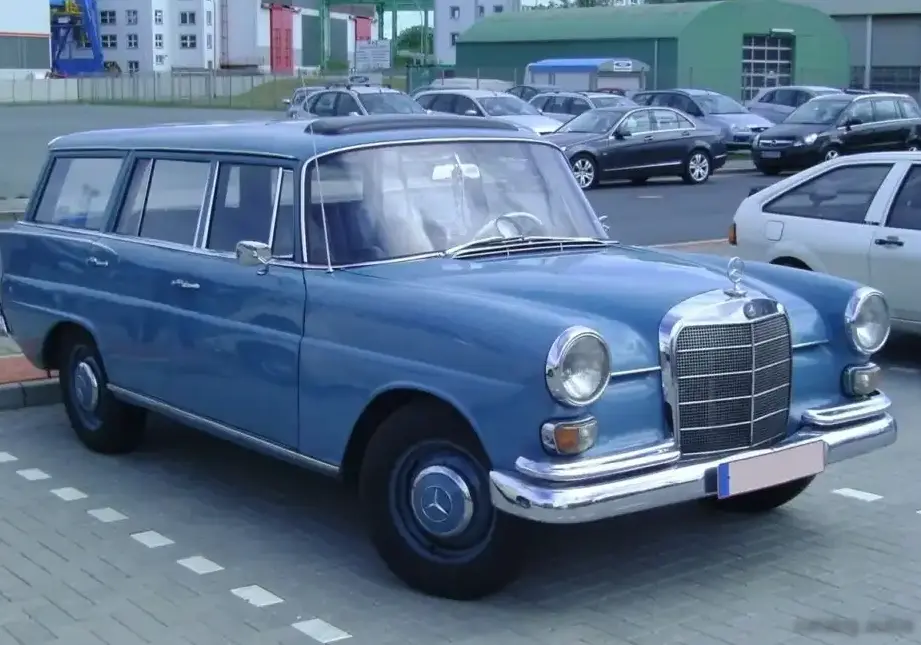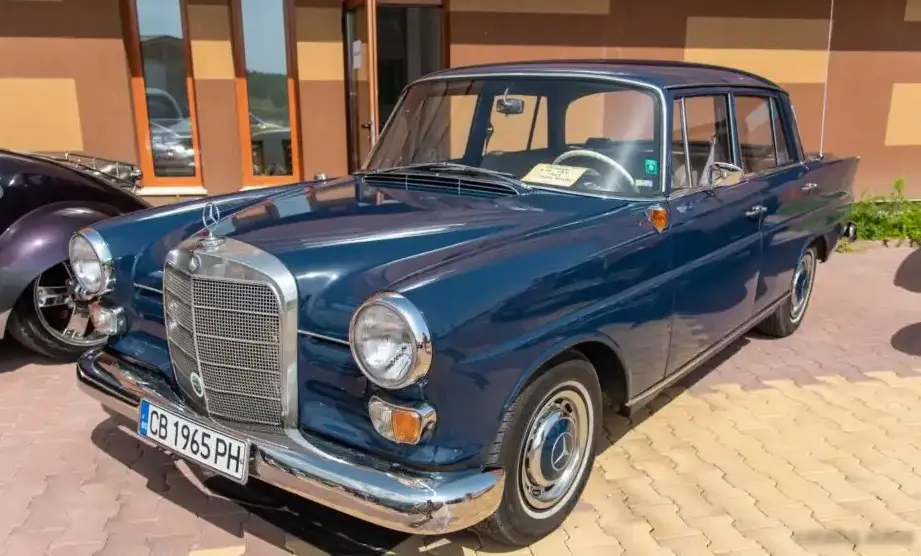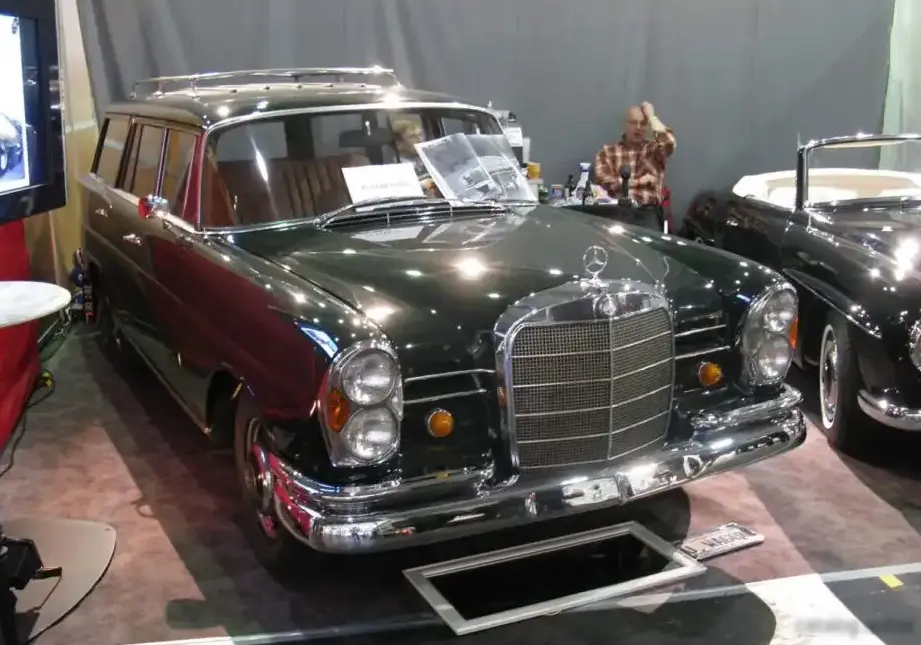
The Mercedes-Benz W111 Fintail Universal 230 S, produced between 1966 and 1968, represents a significant evolution of the iconic “Fintail” sedan series. This variant, distinguished by its station wagon (estate) body style, offered a practical and luxurious option for families and those requiring substantial cargo space. Positioned as a mid-range offering within the W111 Universal lineup, the 230 S combined a robust inline-six engine with a focus on comfortable touring. It was a key model in Mercedes-Benz’s strategy to broaden the appeal of the W111 platform, offering a blend of prestige and utility. The “Fintail” nickname derives from the distinctive, fin-like rear wings that characterized the design.
Technical Specifications
| Brand | Mercedes-Benz |
| Model | Fintail |
| Generation | Fintail Universal (W111) |
| Type (Engine) | 230 S (120 Hp) |
| Start of production | 1966 |
| End of production | 1968 |
| Powertrain Architecture | Internal Combustion engine |
| Body type | Station wagon (estate) |
| Seats | 5 |
| Doors | 5 |
| Fuel consumption (combined) | 11.5 l/100 km (20.5 US mpg, 24.6 UK mpg, 8.7 km/l) |
| Fuel Type | Petrol (Gasoline) |
| Maximum speed | 175 km/h (108.74 mph) |
| Weight-to-power ratio | 12.7 kg/Hp, 78.9 Hp/tonne |
| Weight-to-torque ratio | 8.5 kg/Nm, 117.1 Nm/tonne |
| Power | 120 Hp @ 5400 rpm |
| Power per litre | 52 Hp/l |
| Torque | 178 Nm @ 4000 rpm (131.29 lb.-ft. @ 4000 rpm) |
| Engine layout | Front, Longitudinal |
| Engine Model/Code | M 180 VIII / 180.947 |
| Engine displacement | 2306 cm3 (140.72 cu. in.) |
| Number of cylinders | 6 |
| Engine configuration | Inline |
| Cylinder Bore | 82 mm (3.23 in.) |
| Piston Stroke | 72.8 mm (2.87 in.) |
| Compression ratio | 9:1 |
| Number of valves per cylinder | 2 |
| Fuel injection system | Carburettor |
| Engine aspiration | Naturally aspirated engine |
| Valvetrain | SOHC |
| Kerb Weight | 1520 kg (3351.03 lbs.) |
| Max. weight | 2170 kg (4784.03 lbs.) |
| Max load | 650 kg (1433 lbs.) |
| Fuel tank capacity | 65 l (17.17 US gal | 14.3 UK gal) |
| Length | 4885 mm (192.32 in.) |
| Width | 1795 mm (70.67 in.) |
| Height | 1530 mm (60.24 in.) |
| Wheelbase | 2750 mm (108.27 in.) |
| Front track | 1482 mm (58.35 in.) |
| Rear track | 1485 mm (58.46 in.) |
| Drivetrain Architecture | Rear wheel drive |
| Drive wheel | Rear wheel drive |
| Number of gears and type of gearbox | 4 gears, manual transmission |
| Front suspension | Double wishbone, Transverse stabilizer |
| Rear suspension | Hydro-pneumatic element, Trailing arm |
| Front brakes | Disc |
| Rear brakes | Drum |
| Steering type | Cone worm with recirculation balls |
Powertrain & Engine Architecture
The heart of the 230 S Universal was the M180.947 engine, a 2.3-liter inline-six cylinder powerplant. This engine, a descendant of Mercedes-Benz’s long-standing six-cylinder tradition, featured a single overhead camshaft (SOHC) valvetrain operating two valves per cylinder. Fuel delivery was managed by a Solex carburetor, a common setup for the era. The engine produced 120 horsepower at 5400 rpm and 178 Nm (131.29 lb-ft) of torque at 4000 rpm. The engine’s longitudinal front-mounted layout contributed to a balanced weight distribution. The standard transmission for the 230 S was a four-speed manual gearbox, providing drivers with direct control over the engine’s power. While an automatic transmission was available as an option, the manual was favored by enthusiasts for its responsiveness.
Driving Characteristics
The 230 S Universal, equipped with the manual transmission, offered a refined and capable driving experience. While not overtly sporty, the engine provided sufficient power for comfortable highway cruising and effortless overtaking. The four-speed manual gearbox, while not particularly modern by today’s standards, was precise and allowed drivers to effectively utilize the engine’s torque. The car’s relatively long wheelbase and well-tuned suspension – featuring double wishbones at the front and a trailing arm setup with hydro-pneumatic elements at the rear – contributed to a smooth and stable ride. Compared to the higher-output 280 S variants, the 230 S felt less urgent in acceleration, but its lighter weight and more economical fuel consumption made it a practical choice for everyday driving.
Equipment & Trim Levels
The 230 S Universal was well-equipped for its time, reflecting Mercedes-Benz’s commitment to luxury and comfort. Standard features included comfortable cloth upholstery, wood trim on the dashboard and door panels, and a comprehensive instrument cluster. The spacious interior offered ample room for passengers and cargo, making it ideal for families. Optional extras included leather upholstery, a sunroof, and a Becker radio. The Universal body style itself was considered a premium offering, adding to the car’s appeal. The trim level was generally consistent across the 230 S Universal models, with options being the primary means of personalization.
Chassis & Braking
The W111 Universal chassis was a robust and well-engineered structure, providing a solid foundation for the vehicle. The front suspension utilized double wishbones and a transverse stabilizer bar to minimize body roll and enhance handling. The rear suspension employed a trailing arm design with hydro-pneumatic elements, offering a comfortable and controlled ride. Braking duties were handled by disc brakes at the front and drum brakes at the rear. While the drum brakes at the rear were less effective than discs, they were adequate for the car’s weight and performance. The steering system was a cone worm with recirculation balls, providing precise and predictable steering feel.
Market Reception & Comparison
The Mercedes-Benz W111 Fintail Universal 230 S was generally well-received by critics and buyers alike. It was praised for its spacious interior, comfortable ride, and robust build quality. Compared to the 280 S Universal, the 230 S offered a more affordable entry point into the Fintail Universal range, appealing to a broader audience. Its fuel economy, while not exceptional by modern standards, was better than that of the larger-engined models. Reliability was generally good, although maintenance costs could be relatively high due to the car’s complexity and the cost of spare parts. The 230 S Universal competed with other premium station wagons of the era, such as the Volvo 145 and the Peugeot 404 Break.
Legacy
The Mercedes-Benz W111 Fintail Universal 230 S remains a sought-after classic car today. Its combination of style, luxury, and practicality has ensured its enduring appeal. The M180 engine, while not the most powerful of its time, is known for its durability and relatively straightforward maintenance. Well-maintained examples of the 230 S Universal are increasingly valuable in the collector car market. The car’s historical significance as a pioneering luxury station wagon and its iconic “Fintail” design contribute to its lasting legacy. Finding parts can be a challenge, but a dedicated network of suppliers and enthusiasts ensures that these cars can be kept on the road for years to come.