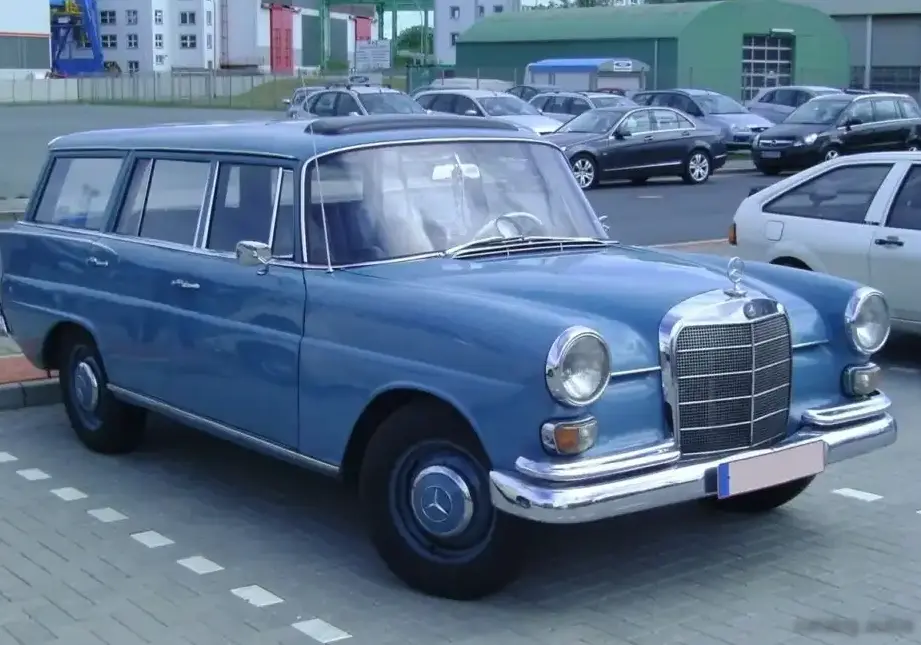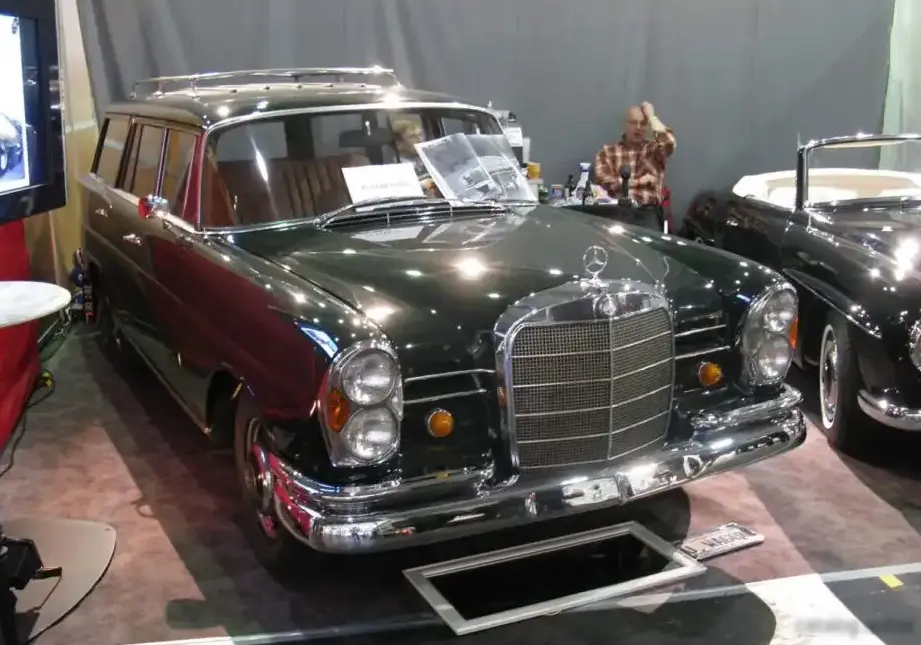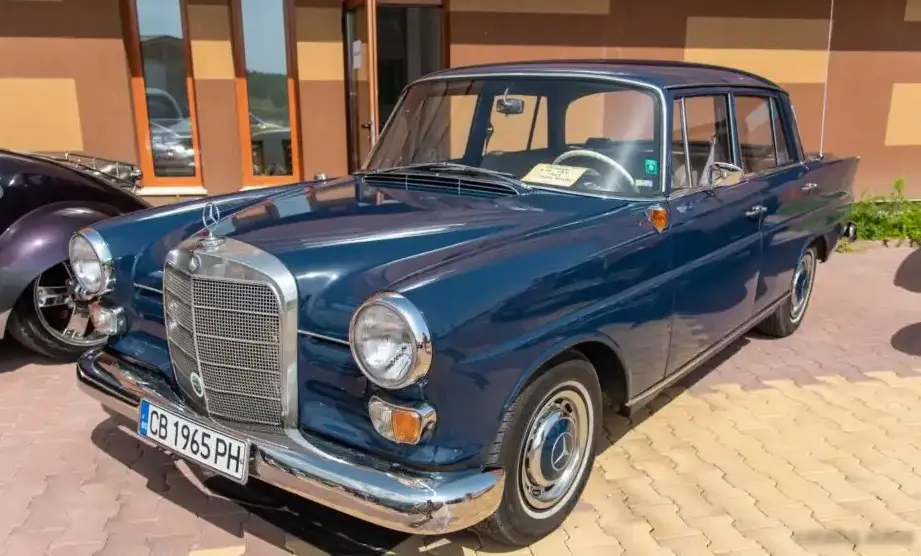
The Mercedes-Benz W110 “Fintail” 190 Dc, produced from April 1961 to August 1965, represents a pivotal moment in the company’s post-war democratization of luxury. Positioned as the entry-level model within the W110 series, the 190 Dc offered a more affordable alternative to the larger, more opulent 200 and 220 models. It was a key component in expanding Mercedes-Benz’s reach to a broader customer base, particularly in markets where fuel economy and practicality were paramount. The “Fintail” nickname derives from the distinctive, gently sloping tailfins that characterized the design, a stylistic feature common in automobiles of the early 1960s. This model was primarily sold in Europe, offering a diesel-powered option in a segment largely dominated by gasoline engines.
Technical Specifications
| Brand | Mercedes-Benz |
| Model | Fintail |
| Generation | Fintail (W110) |
| Type (Engine) | 190 Dc (55 Hp) |
| Start of production | April, 1961 |
| End of production | August, 1965 |
| Powertrain Architecture | Internal Combustion engine |
| Body type | Sedan |
| Seats | 5 |
| Doors | 4 |
| Fuel consumption (combined) | 7.6 l/100 km |
| Fuel consumption (US mpg) | 30.9 US mpg |
| Fuel consumption (UK mpg) | 37.2 UK mpg |
| Fuel consumption (km/l) | 13.2 km/l |
| Fuel Type | Diesel |
| Acceleration 0 – 100 km/h | 30 sec |
| Acceleration 0 – 62 mph | 30 sec |
| Acceleration 0 – 60 mph | 28.5 sec |
| Maximum speed | 125 km/h (77.67 mph) |
| Weight-to-power ratio | 23.6 kg/Hp |
| Weight-to-torque ratio | 11 kg/Nm |
| Power | 55 Hp @ 4200 rpm |
| Power per litre | 27.7 Hp/l |
| Torque | 118 Nm @ 2400 rpm (87.03 lb.-ft. @ 2400 rpm) |
| Engine layout | Front, Longitudinal |
| Engine Model/Code | OM 621 III / 621.912 |
| Engine displacement | 1988 cm3 (121.32 cu. in.) |
| Number of cylinders | 4 |
| Engine configuration | Inline |
| Cylinder Bore | 87 mm (3.43 in.) |
| Piston Stroke | 83.6 mm (3.29 in.) |
| Compression ratio | 21:1 |
| Number of valves per cylinder | 2 |
| Fuel injection system | Precombustion chamber injection |
| Engine aspiration | Naturally aspirated engine |
| Valvetrain | SOHC |
| Kerb Weight | 1300 kg (2866.01 lbs.) |
| Max. weight | 1750 kg (3858.09 lbs.) |
| Max load | 450 kg (992.08 lbs.) |
| Fuel tank capacity | 52 l (13.74 US gal | 11.44 UK gal) |
| Length | 4730 mm (186.22 in.) |
| Width | 1795 mm (70.67 in.) |
| Height | 1495 mm (58.86 in.) |
| Wheelbase | 2700 mm (106.3 in.) |
| Front track | 1468 mm (57.8 in.) |
| Rear track | 1485 mm (58.46 in.) |
| Drivetrain Architecture | The Internal combustion engine (ICE) drives the rear wheels of the vehicle. |
| Drive wheel | Rear wheel drive |
| Number of gears | 4 gears, manual transmission |
| Front suspension | Double wishbone, Transverse stabilizer |
| Rear suspension | Trailing arm |
| Front brakes | Disc |
| Rear brakes | Drum |
| Steering type | Cone worm with recirculation balls |
| Wheel rims size | 5J x 13 |
Powertrain & Engine Architecture
The heart of the 190 Dc is the OM 621.912, a 1.988-liter (121.32 cubic inches) inline-four diesel engine. This engine, a descendant of Mercedes-Benz’s long-running OM 621 series, utilized a precombustion chamber injection system. This system, common in diesel engines of the era, involved injecting fuel into a small precombustion chamber connected to the main cylinder, where it was partially ignited before entering the main combustion chamber. This improved cold-starting and combustion efficiency. The engine produced 55 horsepower at 4200 rpm and 118 Nm (87 lb-ft) of torque at 2400 rpm. The high compression ratio of 21:1 was typical for diesel engines of the time, contributing to their fuel efficiency. The engine featured a single overhead camshaft (SOHC) valvetrain operating two valves per cylinder. The 190 Dc was exclusively offered with a four-speed manual transmission, delivering power to the rear wheels.
Driving Characteristics
The 190 Dc’s driving experience was defined by its modest power output and emphasis on fuel economy. Acceleration was leisurely, taking approximately 30 seconds to reach 60 mph. However, the diesel engine’s strong low-end torque made it surprisingly capable in everyday driving situations, particularly when navigating hilly terrain. The four-speed manual transmission required frequent shifting, but the gear ratios were well-matched to the engine’s characteristics. Compared to the more powerful 200 and 220 models, the 190 Dc offered a more economical and practical driving experience, albeit at the expense of outright performance. The rear-wheel-drive configuration provided predictable handling, although it lacked the sophistication of more modern suspension systems.
Equipment & Trim Levels
As the entry-level model, the 190 Dc was equipped with a relatively basic level of standard features. The interior typically featured cloth upholstery and a simple dashboard layout. Standard equipment included manually adjustable seats, a steering wheel, and basic instrumentation. Optional extras included a radio, heater, and whitewall tires. The trim levels were fairly limited, with most customization options revolving around exterior paint colors and interior fabric choices. The focus was on providing a functional and durable vehicle rather than luxurious appointments.
Chassis & Braking
The W110 chassis featured independent front suspension with double wishbones and a transverse stabilizer, providing a comfortable ride. The rear suspension utilized a trailing arm setup. Braking was accomplished via disc brakes at the front and drum brakes at the rear. The steering system employed a cone worm with recirculation balls, offering reasonably precise control. The 190 Dc’s relatively light weight (approximately 1300 kg or 2866 lbs) helped to compensate for its modest power output, contributing to acceptable braking performance and handling.
Market Reception & Comparison
The 190 Dc was generally well-received by critics for its fuel efficiency and practicality. It offered a compelling alternative to gasoline-powered vehicles, particularly in Europe where diesel fuel was relatively inexpensive. However, its modest performance was often criticized. Compared to the 200 and 220 models, the 190 Dc was significantly slower and less refined. However, it was also considerably more affordable, making it accessible to a wider range of buyers. Its fuel economy of 7.6 l/100 km (30.9 US mpg) was a significant advantage in the early 1960s.
Legacy
The Mercedes-Benz W110 190 Dc, while not the most powerful or glamorous model in the Fintail lineup, played a crucial role in establishing Mercedes-Benz as a manufacturer of accessible luxury vehicles. The OM 621 diesel engine proved to be remarkably durable and reliable, and many examples remain on the road today. In the used car market, the 190 Dc is valued for its simplicity, fuel efficiency, and classic Mercedes-Benz styling. While maintenance can be challenging due to the age of the vehicle, the availability of spare parts and a dedicated community of enthusiasts ensures that these cars can be kept running for years to come. The 190 Dc represents a significant chapter in Mercedes-Benz’s history, demonstrating the company’s commitment to providing quality and reliability to a broader audience.