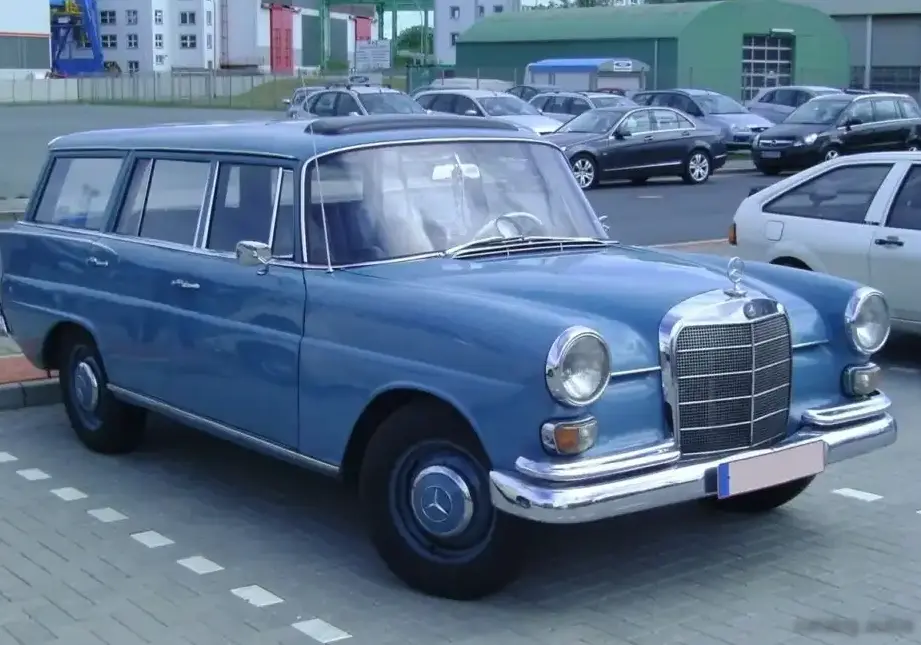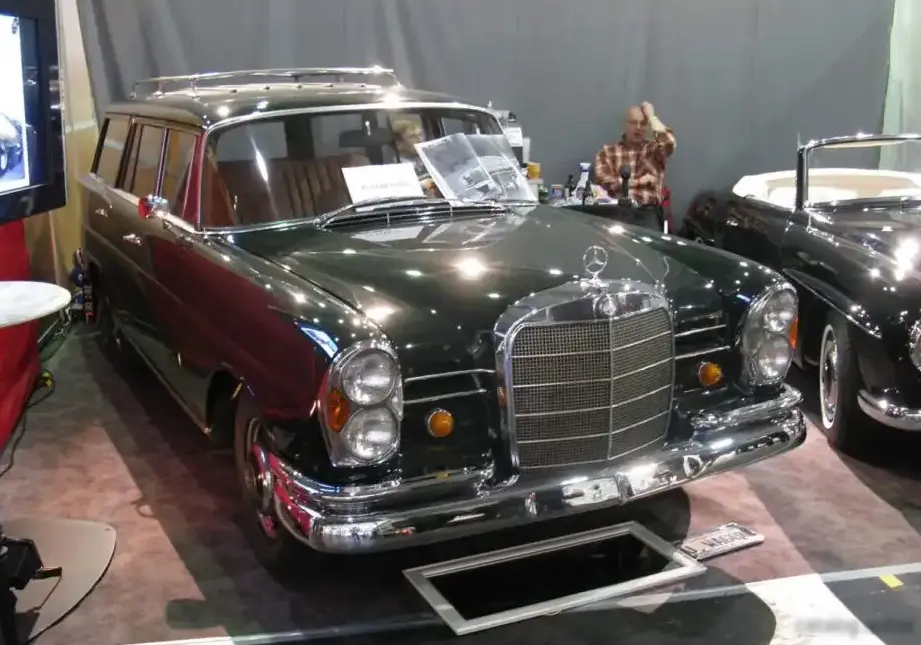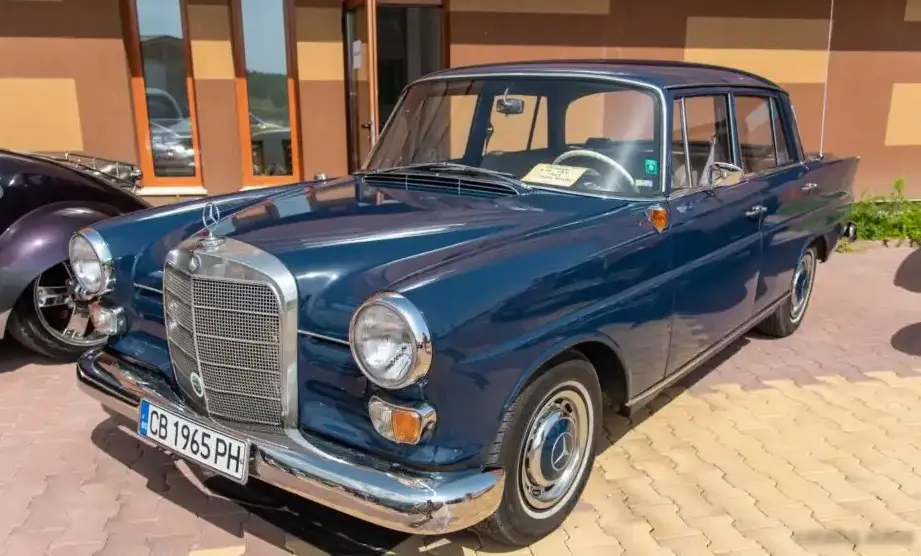
The Mercedes-Benz W110 “Fintail” 190 Dc, equipped with a 55 horsepower diesel engine and automatic transmission, represents a significant entry point into the post-war Mercedes-Benz lineup. Produced from July 1963 to August 1965, this variant occupied the lower end of the W110 range, offering economical transportation within the context of the burgeoning West German economic miracle. The W110 series, internally designated as the “Fintail” due to its distinctive rear end styling, was intended as a more affordable alternative to the larger and more luxurious W111 “S-Class” models. The 190 Dc Automatic was aimed at buyers prioritizing fuel efficiency and ease of use over outright performance, a common consideration in the European market at the time.
Technical Specifications
| Brand | Mercedes-Benz |
| Model | Fintail |
| Generation | Fintail (W110) |
| Type (Engine) | 190 Dc (55 Hp) Automatic |
| Start of production | July, 1963 |
| End of production | August, 1965 |
| Powertrain Architecture | Internal Combustion engine |
| Body type | Sedan |
| Seats | 5 |
| Doors | 4 |
| Fuel consumption (combined) | 7.6 l/100 km |
| Fuel consumption (US mpg) | 30.9 US mpg |
| Fuel consumption (UK mpg) | 37.2 UK mpg |
| Fuel consumption (km/l) | 13.2 km/l |
| Fuel Type | Diesel |
| Acceleration 0 – 100 km/h | 30.7 sec |
| Acceleration 0 – 62 mph | 30.7 sec |
| Acceleration 0 – 60 mph | 29.2 sec |
| Maximum speed | 123 km/h (76.43 mph) |
| Weight-to-power ratio | 23.6 kg/Hp |
| Hp/tonne | 42.3 Hp/tonne |
| Weight-to-torque ratio | 11 kg/Nm |
| Nm/tonne | 90.8 Nm/tonne |
| Power | 55 Hp @ 4200 rpm |
| Power per litre | 27.7 Hp/l |
| Torque | 118 Nm @ 2400 rpm (87.03 lb.-ft. @ 2400 rpm) |
| Engine layout | Front, Longitudinal |
| Engine Model/Code | OM 621 III / 621.912 |
| Engine displacement | 1988 cm3 (121.32 cu. in.) |
| Number of cylinders | 4 |
| Engine configuration | Inline |
| Cylinder Bore | 87 mm (3.43 in.) |
| Piston Stroke | 83.6 mm (3.29 in.) |
| Compression ratio | 21:1 |
| Number of valves per cylinder | 2 |
| Fuel injection system | Precombustion chamber injection |
| Engine aspiration | Naturally aspirated engine |
| Valvetrain | SOHC |
| Kerb Weight | 1300 kg (2866.01 lbs.) |
| Max. weight | 1800 kg (3968.32 lbs.) |
| Max load | 500 kg (1102.31 lbs.) |
| Fuel tank capacity | 52 l (13.74 US gal | 11.44 UK gal) |
| Length | 4730 mm (186.22 in.) |
| Width | 1795 mm (70.67 in.) |
| Height | 1495 mm (58.86 in.) |
| Wheelbase | 2700 mm (106.3 in.) |
| Front track | 1482 mm (58.35 in.) |
| Rear track | 1485 mm (58.46 in.) |
| Drivetrain Architecture | The Internal combustion engine (ICE) drives the rear wheels of the vehicle. |
| Drive wheel | Rear wheel drive |
| Number of gears | 4 gears, automatic transmission |
| Front suspension | Double wishbone, Transverse stabilizer |
| Rear suspension | Trailing arm |
| Front brakes | Disc |
| Rear brakes | Drum |
| Steering type | Cone worm with recirculation balls |
| Wheel rims size | 5J x 13 |
Introduction
The Mercedes-Benz W110 190 Dc Automatic, produced between 1963 and 1965, was a crucial model in solidifying Mercedes-Benz’s reputation for building durable and reliable automobiles. It represented a downsized and more affordable offering compared to the flagship W111 series. The “Dc” designation indicated the diesel engine variant, and the inclusion of an automatic transmission was relatively uncommon for diesel-powered vehicles of this era, making it a somewhat unique offering. The W110 platform, shared with the petrol-powered 190 D and 200 models, provided a modern, albeit conservative, design that appealed to a broad spectrum of buyers.
Powertrain & Engine Architecture
The heart of the 190 Dc Automatic was the OM 621.912, a 1.988-liter (121.32 cubic inches) inline-four cylinder diesel engine. This engine was a further development of the OM 621 series, known for its robustness and longevity. It employed precombustion chamber injection, a system where fuel is injected into a small auxiliary chamber within the cylinder head, promoting more complete combustion, especially crucial for diesel engines. The engine produced 55 horsepower at 4200 rpm and 118 Nm (87.03 lb-ft) of torque at 2400 rpm. The automatic transmission was a four-speed hydraulic unit, a relatively sophisticated feature for a diesel car of the time. While not known for its speed, the transmission provided smooth and effortless gear changes, enhancing the car’s ease of driving. The engine’s longitudinal front-engine layout and rear-wheel drive configuration were typical for European cars of this period.
Driving Characteristics
The 190 Dc Automatic’s driving experience was defined by its relaxed and unhurried nature. With only 55 horsepower propelling a roughly 1300 kg (2866 lbs) vehicle, acceleration was modest. Zero to 60 mph took approximately 29.2 seconds, and top speed was around 123 km/h (76.43 mph). The automatic transmission, while convenient, did sap some power compared to the available manual transmission. However, the engine’s strong low-end torque made it surprisingly capable in everyday driving situations, particularly for navigating hilly terrain. The gear ratios were optimized for fuel economy and smooth cruising rather than spirited performance. Compared to the petrol-powered 190 D or 200, the 190 Dc Automatic offered significantly better fuel economy but at the expense of acceleration and overall responsiveness.
Equipment & Trim Levels
The 190 Dc Automatic was generally equipped with a fairly basic level of trim, reflecting its position as an entry-level model. Standard features included cloth upholstery, a simple dashboard layout with basic instrumentation, and manually operated windows. The interior was functional and durable, prioritizing practicality over luxury. Optional extras included a sunroof, upgraded upholstery materials, and a radio. The exterior typically featured black paint, although other colors were available. Chrome trim was used sparingly, contributing to the car’s understated elegance. The Fintail’s distinctive rear window design, with its pronounced “fins,” was a defining styling element.
Chassis & Braking
The W110 chassis featured independent front suspension with double wishbones and a transverse stabilizer, providing a comfortable ride. The rear suspension utilized a trailing arm setup. Braking was accomplished via disc brakes at the front and drum brakes at the rear. The steering system was a cone worm with recirculation balls, offering reasonable precision but requiring a fair amount of effort. The 190 Dc Automatic’s suspension was tuned for comfort and stability, prioritizing a smooth ride over sporty handling. The relatively modest weight of the vehicle helped to compensate for the limited braking power of the drum brakes at the rear.
Market Reception & Comparison
The 190 Dc Automatic was generally well-received by critics and buyers alike, particularly those seeking an economical and reliable family car. Its fuel efficiency was a major selling point, especially in a Europe still recovering from post-war austerity. Compared to the petrol-powered W110 models, the 190 Dc offered significantly lower running costs. However, its performance was noticeably slower. The automatic transmission was seen as a convenience feature, but some reviewers noted that it diminished the car’s already limited acceleration. The 190 Dc Automatic competed with other compact diesel sedans of the era, such as the Volkswagen Beetle Diesel and the Peugeot 404 Diesel, offering a more refined and luxurious experience than its rivals.
Legacy
The Mercedes-Benz W110 190 Dc Automatic has earned a reputation for exceptional durability and reliability. Many examples are still on the road today, a testament to the quality of engineering and construction. The OM 621 diesel engine is particularly renowned for its longevity, often exceeding 300,000 miles without major overhaul. In the used car market, the 190 Dc Automatic is sought after by enthusiasts and collectors who appreciate its classic styling, simple mechanics, and robust construction. While not a performance car, it represents a significant piece of Mercedes-Benz history and a reminder of a time when durability and reliability were paramount.