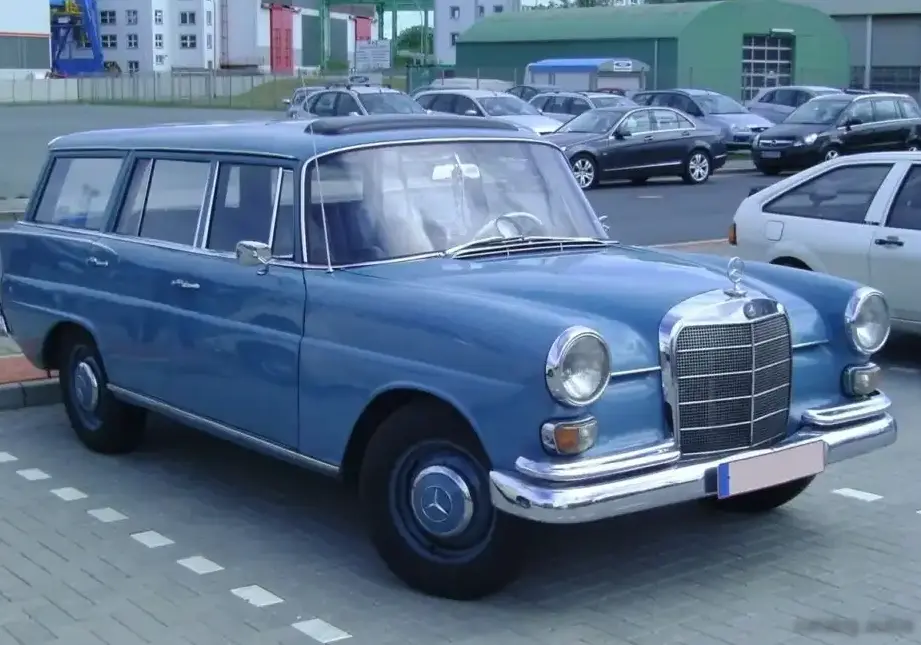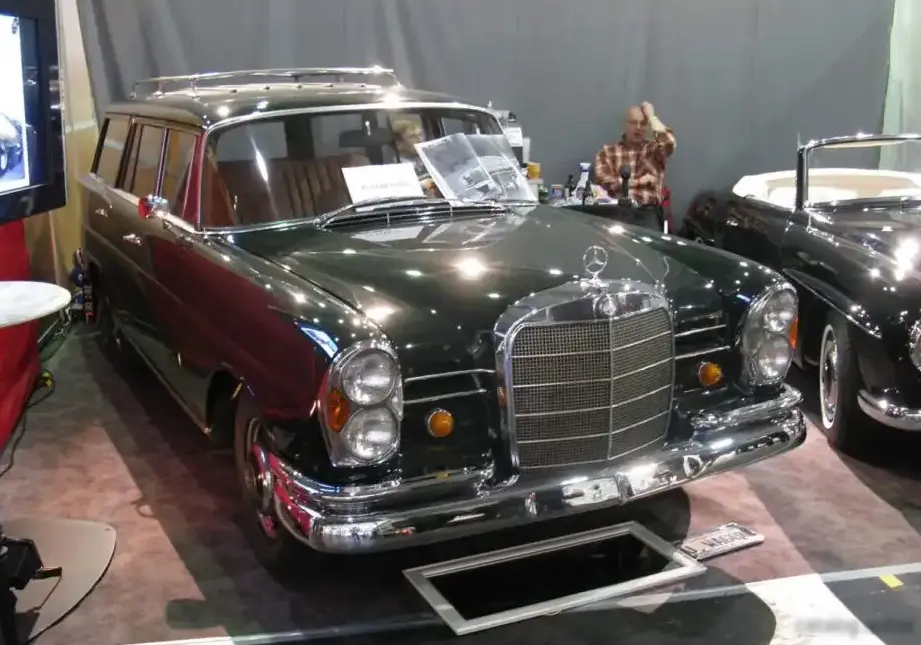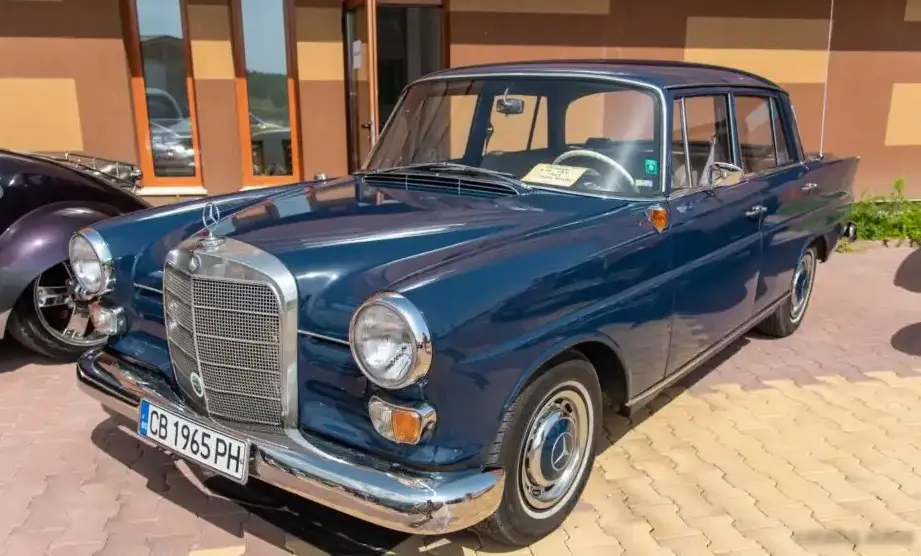
The Mercedes-Benz W110, commonly known as the “Fintail” due to its distinctive rear fin-like extensions, was produced from 1961 to 1968. The 200 D variant, powered by a 2.0-liter diesel engine producing 55 horsepower, entered production in July 1965 and continued until February 1968. This model occupied the entry-level position within the W110 range, offering a more economical alternative to the gasoline-powered versions. It represented a significant step towards diesel power for Mercedes-Benz, aiming to provide durability and fuel efficiency in a practical family sedan.
Technical Specifications
| Brand | Mercedes-Benz |
| Model | Fintail |
| Generation | Fintail (W110) |
| Type (Engine) | 200 D (55 Hp) |
| Start of production | July, 1965 |
| End of production | February, 1968 |
| Powertrain Architecture | Internal Combustion engine |
| Body type | Sedan |
| Seats | 5 |
| Doors | 4 |
| Fuel consumption (combined) | 8.1 l/100 km (29 US mpg, 34.9 UK mpg, 12.3 km/l) |
| Fuel Type | Diesel |
| Acceleration 0 – 100 km/h | 28.1 sec |
| Acceleration 0 – 62 mph | 28.1 sec |
| Acceleration 0 – 60 mph | 26.7 sec |
| Maximum speed | 130 km/h (80.78 mph) |
| Weight-to-power ratio | 24.1 kg/Hp, 41.5 Hp/tonne |
| Weight-to-torque ratio | 11.2 kg/Nm, 89.1 Nm/tonne |
| Power | 55 Hp @ 4200 rpm |
| Power per litre | 27.7 Hp/l |
| Torque | 118 Nm @ 2400 rpm (87.03 lb.-ft. @ 2400 rpm) |
| Engine layout | Front, Longitudinal |
| Engine Model/Code | OM 621 VIII / 621.918 |
| Engine displacement | 1988 cm3 (121.32 cu. in.) |
| Number of cylinders | 4 |
| Engine configuration | Inline |
| Cylinder Bore | 87 mm (3.43 in.) |
| Piston Stroke | 83.6 mm (3.29 in.) |
| Compression ratio | 21:1 |
| Number of valves per cylinder | 2 |
| Fuel injection system | Precombustion chamber injection |
| Engine aspiration | Naturally aspirated engine |
| Valvetrain | SOHC |
| Kerb Weight | 1325 kg (2921.12 lbs.) |
| Max. weight | 1825 kg (4023.44 lbs.) |
| Max load | 500 kg (1102.31 lbs.) |
| Fuel tank capacity | 65 l (17.17 US gal | 14.3 UK gal) |
| Length | 4730 mm (186.22 in.) |
| Width | 1795 mm (70.67 in.) |
| Height | 1495 mm (58.86 in.) |
| Wheelbase | 2700 mm (106.3 in.) |
| Front track | 1482 mm (58.35 in.) |
| Rear (Back) track | 1485 mm (58.46 in.) |
| Drivetrain Architecture | The Internal combustion engine (ICE) drives the rear wheels of the vehicle. |
| Drive wheel | Rear wheel drive |
| Number of gears and type of gearbox | 4 gears, manual transmission |
| Front suspension | Double wishbone, Transverse stabilizer |
| Rear suspension | Trailing arm |
| Front brakes | Disc |
| Rear brakes | Drum |
| Steering type | Cone worm with recirculation balls |
| Wheel rims size | 5J x 13 |
Powertrain & Engine Architecture
The heart of the 200 D is the OM 621 VIII, a 1.988-liter (121.32 cubic inches) inline-four diesel engine. This engine utilized precombustion chamber injection, a common diesel technology of the era. Fuel was injected into a precombustion chamber, where it was partially ignited before entering the main combustion chamber, promoting more complete combustion. The engine featured a single overhead camshaft (SOHC) operating two valves per cylinder. The OM 621 was known for its robustness and longevity, though it was not a particularly powerful engine. Its 55 horsepower at 4200 rpm and 87 lb-ft of torque at 2400 rpm were modest, even for the mid-1960s.
Driving Characteristics
The 200 D’s performance was decidedly unhurried. Acceleration from 0 to 60 mph took around 26.7 seconds, and its top speed was approximately 81 mph. The four-speed manual transmission, standard on this model, had relatively widely spaced gear ratios, emphasizing fuel economy over spirited driving. Compared to the gasoline-powered 200, the diesel offered significantly less power but a noticeable improvement in fuel efficiency. The diesel’s torque characteristics meant it felt stronger at lower engine speeds, making it suitable for everyday driving and hauling passengers, but it lacked the responsiveness of its petrol counterparts. The manual transmission allowed for greater driver control, but the engine’s limited power meant frequent downshifting was often necessary, especially on inclines.
Equipment & Trim Levels
The 200 D was positioned as the entry-level Fintail, and its standard equipment reflected this. It typically included cloth upholstery, basic instrumentation, and a relatively spartan interior. However, it still offered the hallmarks of Mercedes-Benz quality and build. Optional extras included a sunroof, whitewall tires, a radio, and upgraded interior trim. The dashboard layout was functional and straightforward, prioritizing practicality over luxury. The Fintail’s interior space was considered generous for its time, comfortably accommodating five passengers.
Chassis & Braking
The W110 chassis featured independent front suspension with double wishbones and a transverse stabilizer, providing a comfortable ride. The rear suspension utilized a trailing arm setup. Braking was accomplished via disc brakes at the front and drum brakes at the rear. The steering system was a cone worm with recirculation balls, offering reasonable precision but requiring a fair amount of effort. The 200 D’s weight of approximately 2921 lbs meant the braking system was adequate for normal driving conditions, but it wasn’t particularly powerful.
Market Reception & Comparison
The 200 D was well-received in Europe, particularly in markets where diesel fuel was readily available and affordable. It appealed to buyers seeking a durable, economical, and reliable family car. Critics acknowledged its modest performance but praised its fuel efficiency and robust construction. Compared to the gasoline-powered 200, the diesel offered significantly better fuel economy, making it a popular choice for high-mileage drivers. However, the gasoline models provided a more refined driving experience and superior acceleration. The 200 D also differed from the later 220 D models, which featured a larger displacement engine and increased power.
Legacy
The Mercedes-Benz W110 200 D holds a significant place in automotive history as one of the early examples of a mass-produced diesel-powered passenger car. The OM 621 engine proved to be exceptionally durable, and many examples remain on the road today. While not a performance icon, the 200 D established Mercedes-Benz’s reputation for building reliable and fuel-efficient diesel vehicles. In the used car market, well-maintained examples of the 200 D are sought after by enthusiasts and collectors, appreciating its simplicity, durability, and classic Mercedes-Benz styling. The engine’s longevity means that parts availability, while not always easy, is generally better than for some other vehicles of the same era.