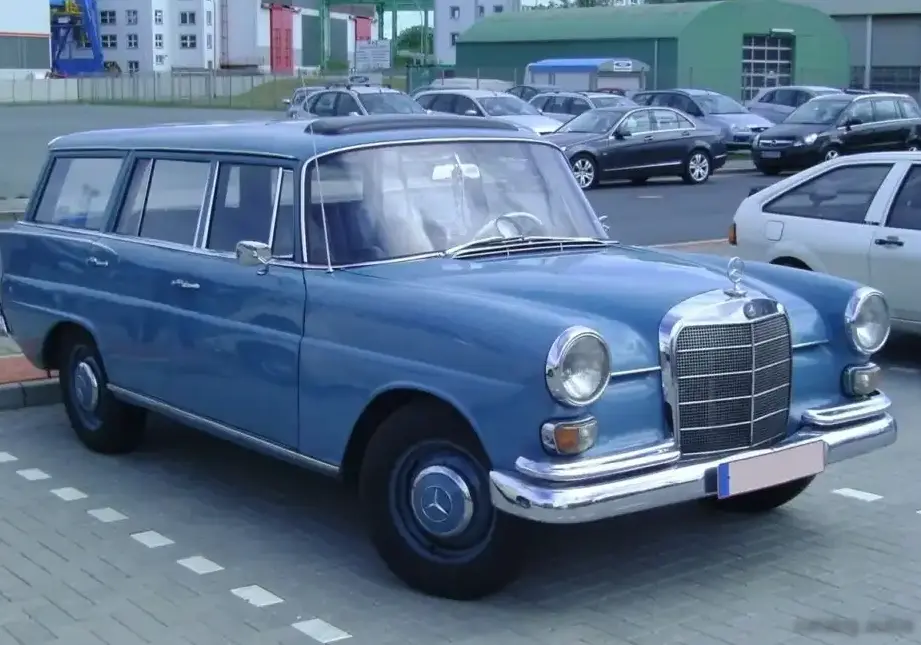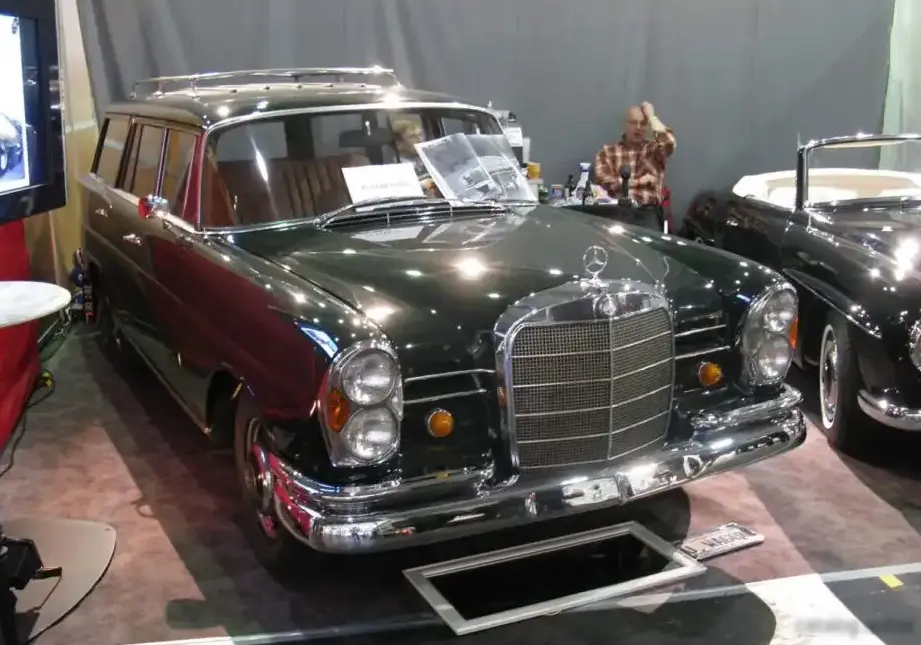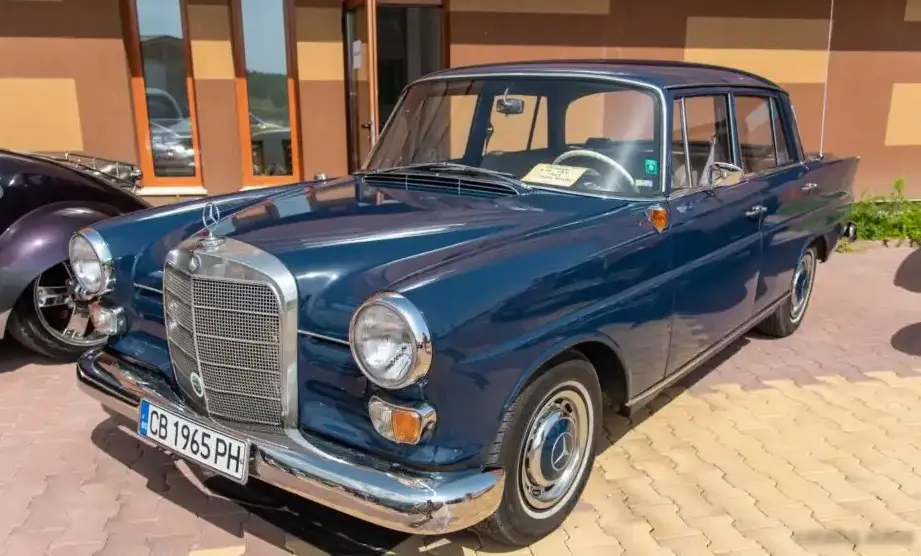
The Mercedes-Benz W110, commonly known as the “Fintail” due to its distinctive rear end styling, was produced from 1959 to 1968. The 200 D Automatic, introduced in July 1965 and continuing through February 1968, represented a significant offering within the W110 range. Positioned as a more economical and comfortable option, it catered to buyers seeking a diesel-powered sedan with the convenience of an automatic transmission. This variant occupied a middle ground in the lineup, slotting below the more powerful 200 and 230 models, but above the base 190 D. The Fintail series was a crucial step for Mercedes-Benz, bridging the gap between the post-war models and the more modern designs of the “New Generation” cars.
Technical Specifications
| Brand | Mercedes-Benz |
| Model | Fintail |
| Generation | Fintail (W110) |
| Type (Engine) | 200 D (55 Hp) Automatic |
| Start of production | July, 1965 |
| End of production | February, 1968 |
| Powertrain Architecture | Internal Combustion engine |
| Body type | Sedan |
| Seats | 5 |
| Doors | 4 |
| Fuel consumption (combined) | 8.1 l/100 km (29 US mpg, 34.9 UK mpg, 12.3 km/l) |
| Fuel Type | Diesel |
| Acceleration 0 – 100 km/h | 30.2 sec |
| Acceleration 0 – 62 mph | 30.2 sec |
| Acceleration 0 – 60 mph | 28.7 sec |
| Maximum speed | 127 km/h (78.91 mph) |
| Weight-to-power ratio | 24.1 kg/Hp, 41.5 Hp/tonne |
| Weight-to-torque ratio | 11.2 kg/Nm, 89.1 Nm/tonne |
| Power | 55 Hp @ 4200 rpm |
| Power per litre | 27.7 Hp/l |
| Torque | 118 Nm @ 2400 rpm (87.03 lb.-ft. @ 2400 rpm) |
| Engine layout | Front, Longitudinal |
| Engine Model/Code | OM 621 VIII / 621.918 |
| Engine displacement | 1988 cm3 (121.32 cu. in.) |
| Number of cylinders | 4 |
| Engine configuration | Inline |
| Cylinder Bore | 87 mm (3.43 in.) |
| Piston Stroke | 83.6 mm (3.29 in.) |
| Compression ratio | 21:1 |
| Number of valves per cylinder | 2 |
| Fuel injection system | Precombustion chamber injection |
| Engine aspiration | Naturally aspirated engine |
| Valvetrain | SOHC |
| Kerb Weight | 1325 kg (2921.12 lbs.) |
| Max. weight | 1825 kg (4023.44 lbs.) |
| Max load | 500 kg (1102.31 lbs.) |
| Fuel tank capacity | 65 l (17.17 US gal | 14.3 UK gal) |
| Length | 4730 mm (186.22 in.) |
| Width | 1795 mm (70.67 in.) |
| Height | 1495 mm (58.86 in.) |
| Wheelbase | 2700 mm (106.3 in.) |
| Front track | 1482 mm (58.35 in.) |
| Rear (Back) track | 1485 mm (58.46 in.) |
| Drivetrain Architecture | The Internal combustion engine (ICE) drives the rear wheels of the vehicle. |
| Drive wheel | Rear wheel drive |
| Number of gears and type of gearbox | 4 gears, automatic transmission |
| Front suspension | Double wishbone, Transverse stabilizer |
| Rear suspension | Trailing arm |
| Front brakes | Disc |
| Rear brakes | Drum |
| Steering type | Cone worm with recirculation balls |
| Wheel rims size | 5J x 13 |
Powertrain & Engine Architecture
The heart of the 200 D Automatic is the OM 621 VIII, a 1.988-liter (121.32 cubic inches) inline-four diesel engine. This engine, a mainstay of Mercedes-Benz’s diesel offerings for many years, utilized precombustion chamber injection. This system, common for diesel engines of the era, involved injecting fuel into a small precombustion chamber connected to the main cylinder, where it was partially ignited before entering the main combustion chamber. This improved cold-starting and combustion efficiency. The engine produced 55 horsepower at 4200 rpm and 118 Nm (87 lb-ft) of torque at 2400 rpm. The four-speed automatic transmission was a significant feature, offering a level of convenience not typically found in diesel-powered vehicles of the time. It was a hydraulic torque converter transmission, providing smooth, albeit not particularly quick, gear changes.
Driving Characteristics
The 200 D Automatic was not designed for outright performance. Its 0-60 mph time of around 28.7 seconds and top speed of 78.91 mph reflect its focus on fuel economy and comfortable cruising. The automatic transmission, while convenient, did sap some power compared to the available manual transmission. Gear ratios were optimized for relaxed driving, with a focus on maximizing fuel efficiency rather than providing rapid acceleration. The engine’s torque, however, provided adequate pulling power for everyday driving and highway cruising. Compared to the more powerful 200 and 230 models, the 200 D Automatic felt noticeably slower, but it offered a smoother and more refined driving experience, particularly in city traffic.
Equipment & Trim Levels
The 200 D Automatic came reasonably well-equipped for its time. Standard features included comfortable cloth upholstery, a wood-trimmed dashboard, and a steering wheel. While not lavish, the interior was well-built and functional. Optional extras included a sunroof, whitewall tires, and a radio. The trim level was generally consistent across the 200 D Automatic models, with variations primarily stemming from customer-selected options. The emphasis was on providing a comfortable and practical family sedan.
Chassis & Braking
The W110 chassis featured independent front suspension with double wishbones and a transverse stabilizer, providing a comfortable ride. The rear suspension utilized a trailing arm setup. Braking was accomplished via disc brakes on the front wheels and drum brakes on the rear. This configuration was typical for cars of this era and weight class. The steering was a cone worm with recirculation balls, offering a relatively direct feel, though it required some effort at low speeds. The car’s weight of approximately 1325 kg (2921 lbs) contributed to its stable handling characteristics.
Market Reception & Comparison
The 200 D Automatic was generally well-received by critics and buyers alike. It was praised for its fuel economy, comfortable ride, and the convenience of the automatic transmission. However, its relatively slow acceleration was a common criticism. Compared to the manual transmission versions of the 200 D, the automatic offered less spirited performance. Against the higher-powered 200 and 230 models, it lacked the same level of refinement and performance. However, it offered a more affordable entry point into the Mercedes-Benz range, appealing to a broader customer base. Fuel economy was a key selling point, averaging around 29 US mpg.
Legacy
The Mercedes-Benz W110 Fintail, and specifically the 200 D Automatic, holds a significant place in automotive history. It represented a step forward in diesel technology and automatic transmission availability. The OM 621 engine, while simple by modern standards, proved to be remarkably durable and reliable. Today, well-maintained examples of the 200 D Automatic are sought after by classic car enthusiasts. While parts availability can be a challenge, the engine’s robust design and relatively simple mechanics make it a relatively easy car to maintain. The Fintail’s distinctive styling and comfortable driving experience continue to appeal to those seeking a classic Mercedes-Benz with a unique character. The 200 D Automatic remains a testament to Mercedes-Benz’s commitment to quality and engineering excellence.