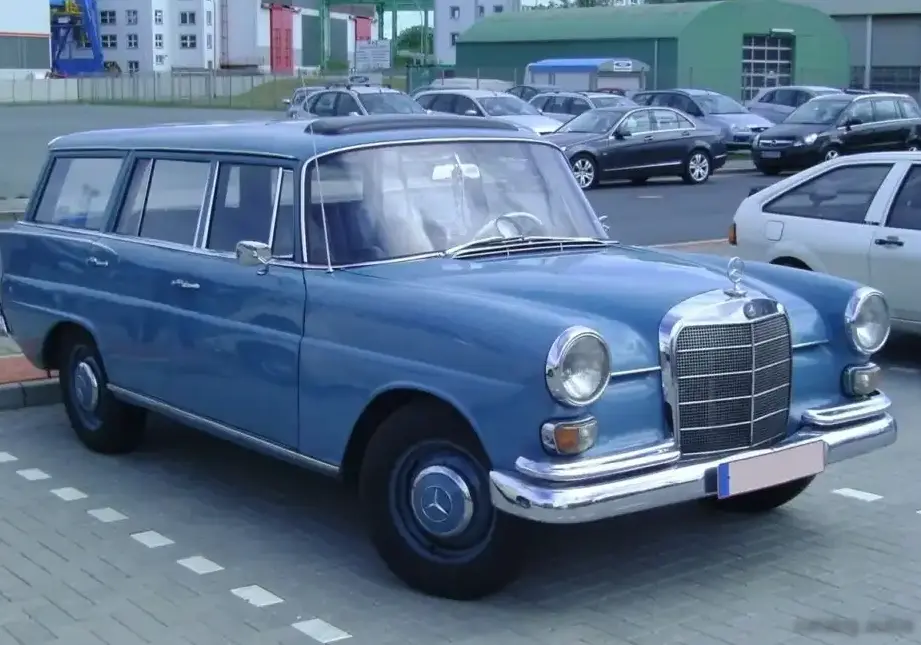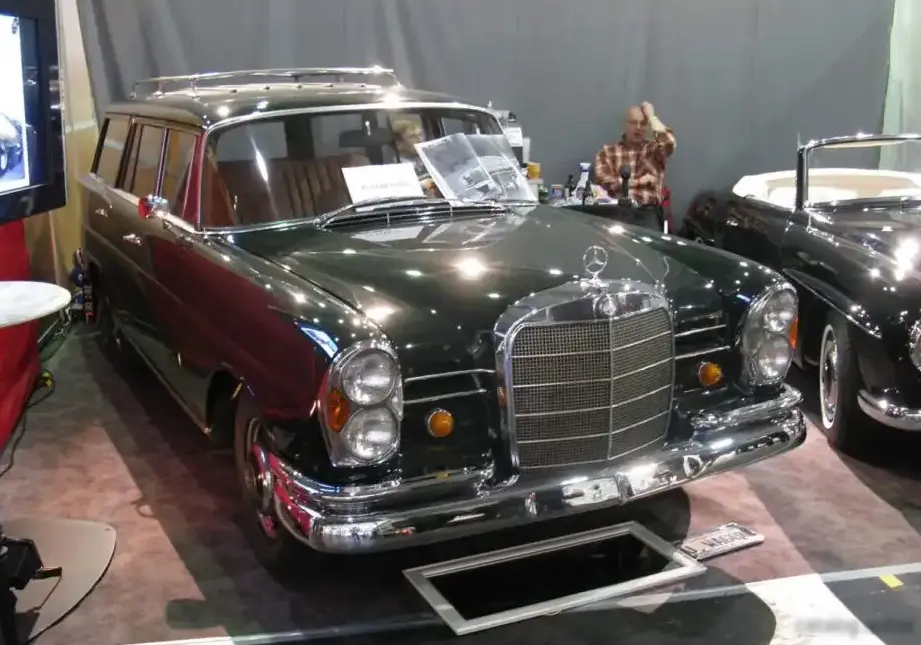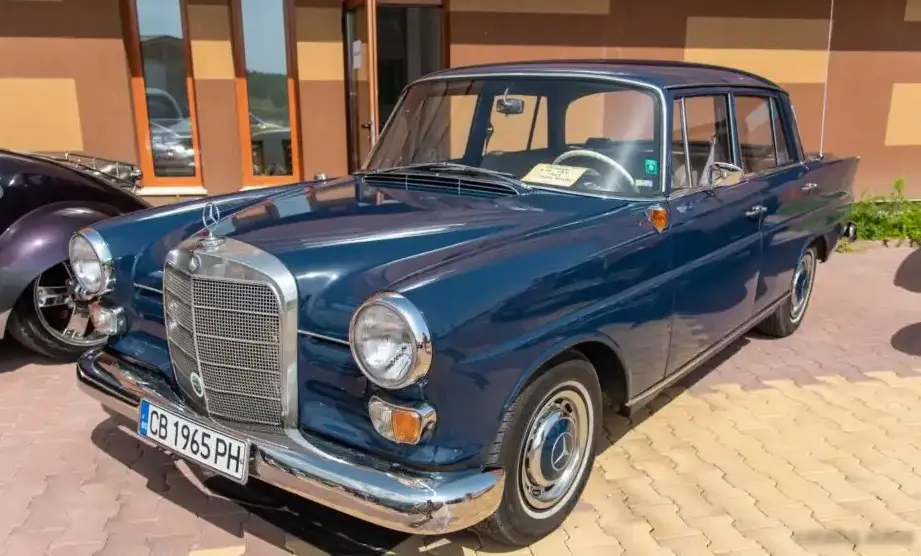
The Mercedes-Benz W110, commonly known as the “Fintail” due to its distinctive rear fin-like extensions, represented a significant step forward for Mercedes-Benz in the mid-1960s. Produced from 1962 to 1968, the W110 was designed as a more affordable alternative to the larger and more luxurious W111 “S-Class” models. The 230 variant, powered by the M180 engine producing 105 horsepower, was introduced in July 1965 and remained in production until July 1966. It occupied a middle ground within the W110 range, offering a balance between performance and economy, and aimed at buyers seeking a comfortable and reliable family sedan with a touch of prestige. This model played a crucial role in expanding Mercedes-Benz’s market share, particularly in the burgeoning post-war economies of Europe and beyond.
Technical Specifications
| Brand | Mercedes-Benz |
| Model | Fintail |
| Generation | Fintail (W110) |
| Type (Engine) | 230 (105 Hp) |
| Start of production | July, 1965 |
| End of production | July, 1966 |
| Powertrain Architecture | Internal Combustion engine |
| Body type | Sedan |
| Seats | 5 |
| Doors | 4 |
| Fuel consumption (combined) | 11.2 l/100 km (21 US mpg, 25.2 UK mpg, 8.9 km/l) |
| Fuel Type | Petrol (Gasoline) |
| Acceleration 0 – 100 km/h | 12.8 sec |
| Acceleration 0 – 62 mph | 12.8 sec |
| Acceleration 0 – 60 mph | 12.2 sec |
| Maximum speed | 175 km/h (108.74 mph) |
| Weight-to-power ratio | 12.4 kg/Hp, 80.5 Hp/tonne |
| Weight-to-torque ratio | 7.5 kg/Nm, 133.3 Nm/tonne |
| Power | 105 Hp @ 5200 rpm |
| Power per litre | 45.5 Hp/l |
| Torque | 174 Nm @ 3600 rpm (128.34 lb.-ft. @ 3600 rpm) |
| Engine layout | Front, Longitudinal |
| Engine Model/Code | M 180 I / 180.945 |
| Engine displacement | 2306 cm3 (140.72 cu. in.) |
| Number of cylinders | 6 |
| Engine configuration | Inline |
| Cylinder Bore | 82 mm (3.23 in.) |
| Piston Stroke | 72.8 mm (2.87 in.) |
| Compression ratio | 9:1 |
| Number of valves per cylinder | 2 |
| Fuel injection system | Carburettor |
| Engine aspiration | Naturally aspirated engine |
| Valvetrain | SOHC |
| Kerb Weight | 1305 kg (2877.03 lbs.) |
| Max. weight | 1805 kg (3979.34 lbs.) |
| Max load | 500 kg (1102.31 lbs.) |
| Fuel tank capacity | 65 l (17.17 US gal | 14.3 UK gal) |
| Length | 4730 mm (186.22 in.) |
| Width | 1795 mm (70.67 in.) |
| Height | 1495 mm (58.86 in.) |
| Wheelbase | 2700 mm (106.3 in.) |
| Front track | 1482 mm (58.35 in.) |
| Rear (Back) track | 1485 mm (58.46 in.) |
| Drivetrain Architecture | The Internal combustion engine (ICE) drives the rear wheels of the vehicle. |
| Drive wheel | Rear wheel drive |
| Number of gears and type of gearbox | 4 gears, manual transmission |
| Front suspension | Double wishbone, Transverse stabilizer |
| Rear suspension | Trailing arm |
| Front brakes | Disc |
| Rear brakes | Drum |
| Steering type | Cone worm with recirculation balls |
| Wheel rims size | 5J x 13 |
Powertrain & Engine Architecture
The heart of the 230 was the M180.945, a 2.3-liter inline-six cylinder engine. This engine featured a single overhead camshaft (SOHC) valvetrain operating two valves per cylinder. Fuel delivery was managed by a Solex carburetor, a common setup for the era. The engine produced 105 horsepower at 5200 rpm and 174 Nm (128.34 lb-ft) of torque at 3600 rpm. The engine’s longitudinal front-mounted layout was typical for Mercedes-Benz at the time. The 230 was equipped with a four-speed manual transmission as standard. While an automatic transmission was offered as an option, it was a relatively basic three-speed unit. The automatic transmission, while providing convenience, did noticeably impact acceleration and fuel economy compared to the manual version.
Driving Characteristics
The 230, with its 105 hp and manual transmission, offered a respectable, though not exhilarating, driving experience. Acceleration from 0 to 60 mph took around 12.2 seconds, and the top speed was approximately 108.74 mph. The engine provided adequate power for highway cruising and everyday driving, but it wasn’t particularly responsive. The manual transmission allowed for greater control and a more engaging driving experience, while the optional automatic transmission prioritized comfort and ease of use. Compared to the more powerful 230S (with fuel injection) or the later 250 models, the 230 felt somewhat underpowered, especially when fully loaded with passengers and luggage. However, its relatively light weight for a car of its size helped to mitigate this somewhat.
Equipment & Trim Levels
The 230 was positioned as a mid-range offering within the W110 lineup. Standard equipment included comfortable cloth upholstery, a wood-trimmed dashboard, and basic instrumentation. The interior was well-appointed for its time, emphasizing practicality and durability. Optional extras included a sunroof, whitewall tires, a radio, and upgraded upholstery materials. The Fintail’s interior was known for its spaciousness and relatively simple, functional design. The 230 didn’t boast the lavish features of the W111 “S-Class” models, but it provided a comfortable and refined environment for passengers.
Chassis & Braking
The W110 featured a robust chassis with independent front suspension utilizing double wishbones and a transverse stabilizer. The rear suspension employed a trailing arm setup. This suspension configuration provided a comfortable ride, although it wasn’t particularly sporty. The 230 was equipped with disc brakes on the front wheels and drum brakes on the rear. This braking setup was adequate for the car’s weight and performance, but it lacked the stopping power of more modern braking systems. Steering was accomplished via a cone worm and recirculation balls system, which provided a relatively heavy but precise feel.
Market Reception & Comparison
The Mercedes-Benz 230 was generally well-received by automotive critics. It was praised for its build quality, reliability, and comfortable ride. However, some critics noted its relatively modest performance compared to competitors. Compared to the other W110 variants, the 230 offered a good balance between price and features. The 200 model was more affordable but lacked the 230’s extra power, while the 230S offered superior performance but came at a higher cost. Fuel economy was reasonable for the time, averaging around 21 US mpg. The 230 proved to be a popular choice for families and business professionals seeking a reliable and prestigious sedan.
Legacy
The Mercedes-Benz W110 Fintail, and the 230 variant specifically, holds a significant place in automotive history. It represented a pivotal moment for Mercedes-Benz, demonstrating the company’s ability to produce high-quality, reliable vehicles at a more accessible price point. The M180 engine proved to be remarkably durable, and many examples are still on the road today. In the used car market, well-maintained 230s are sought after by collectors and enthusiasts. While not as highly valued as the W111 “S-Class” models, the Fintail offers a unique blend of classic Mercedes-Benz styling, engineering, and affordability. Its simple mechanical design makes it relatively easy to maintain, and its enduring reputation for reliability ensures its continued appeal for years to come.