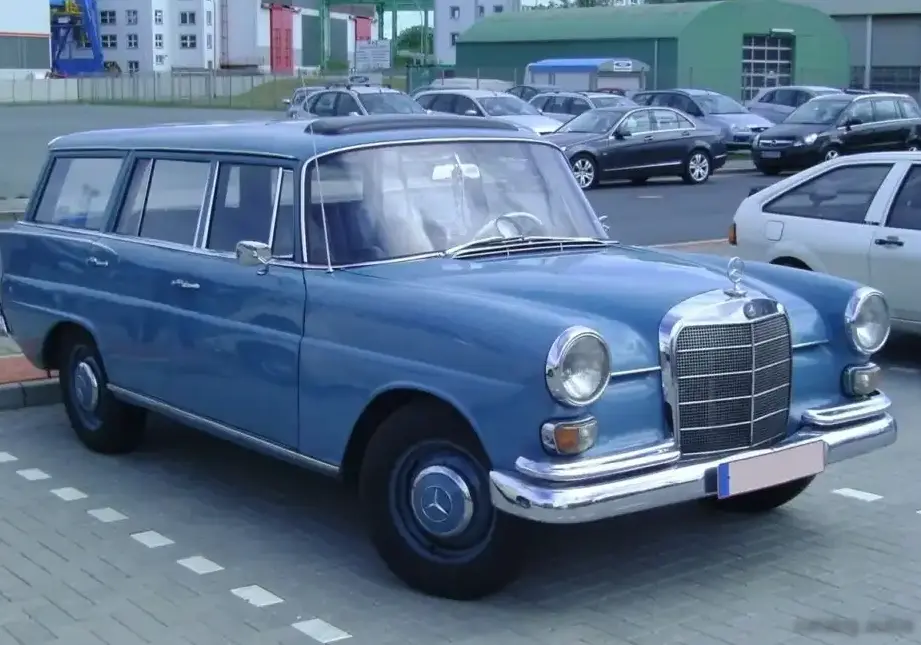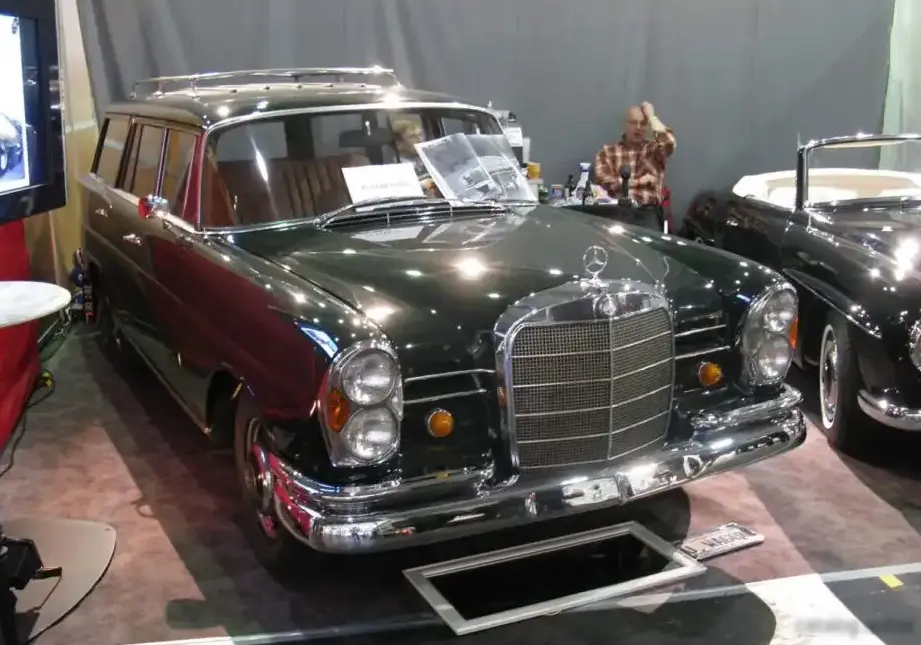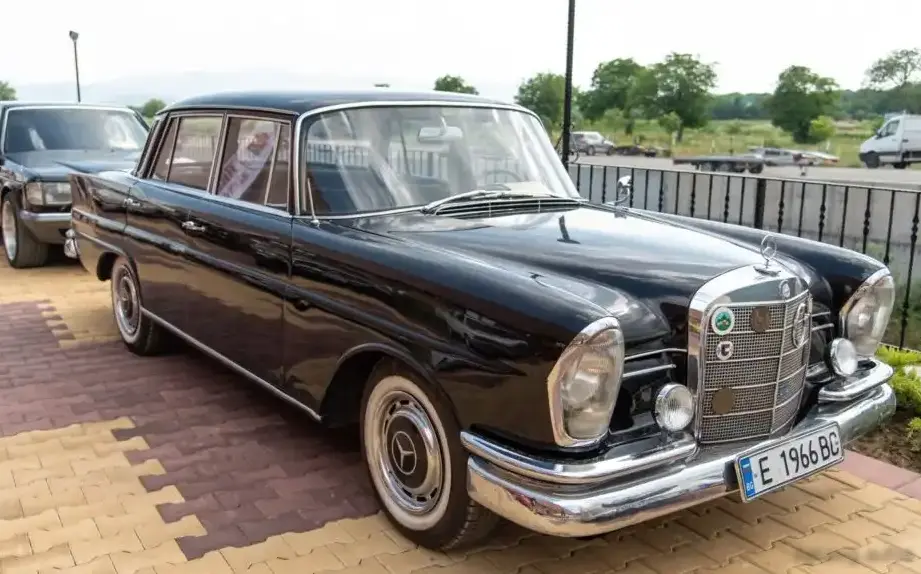
The Mercedes-Benz W111 “Fintail” 220 b Automatic, produced between May 1959 and August 1965, represents a pivotal moment in the post-war evolution of Mercedes-Benz sedans. Positioned as a mid-range offering within the W111 series – which also included the 220 and 220S – the 220 b Automatic aimed to provide a comfortable and refined driving experience for families and executives. It was a key model in establishing Mercedes-Benz’s reputation for quality and engineering in the burgeoning American market, as well as solidifying its position in Europe. The “Fintail” designation comes from the distinctive, subtly finned rear wings that characterized the model, a design element that would become synonymous with this generation of Mercedes-Benz vehicles.
Technical Specifications
| Brand | Mercedes-Benz |
| Model | Fintail |
| Generation | Fintail (W111) |
| Type (Engine) | 220 b (95 Hp) Automatic |
| Start of production | May, 1959 |
| End of production | August, 1965 |
| Powertrain Architecture | Internal Combustion engine |
| Body type | Sedan |
| Seats | 5 |
| Doors | 4 |
| Fuel consumption (combined) | 11.2 l/100 km |
| Fuel consumption (US mpg) | 21 US mpg |
| Fuel consumption (UK mpg) | 25.2 UK mpg |
| Fuel consumption (km/l) | 8.9 km/l |
| Fuel Type | Petrol (Gasoline) |
| Acceleration 0 – 100 km/h | 16 sec |
| Acceleration 0 – 62 mph | 16 sec |
| Acceleration 0 – 60 mph | 15.2 sec |
| Maximum speed | 150 km/h (93.21 mph) |
| Weight-to-power ratio | 13.9 kg/Hp, 72 Hp/tonne |
| Weight-to-torque ratio | 7.8 kg/Nm, 128 Nm/tonne |
| Power | 95 Hp @ 4800 rpm |
| Power per litre | 43.3 Hp/l |
| Torque | 169 Nm @ 3200 rpm (124.65 lb.-ft. @ 3200 rpm) |
| Engine layout | Front, Longitudinal |
| Engine Model/Code | M 180 IV / 180.940 |
| Engine displacement | 2195 cm3 (133.95 cu. in.) |
| Number of cylinders | 6 |
| Engine configuration | Inline |
| Cylinder Bore | 80 mm (3.15 in.) |
| Piston Stroke | 72.8 mm (2.87 in.) |
| Compression ratio | 8.7:1 |
| Number of valves per cylinder | 2 |
| Fuel injection system | Carburettor |
| Engine aspiration | Naturally aspirated engine |
| Valvetrain | SOHC |
| Kerb Weight | 1320 kg (2910.1 lbs.) |
| Max. weight | 1835 kg (4045.48 lbs.) |
| Max load | 515 kg (1135.38 lbs.) |
| Fuel tank capacity | 65 l (17.17 US gal | 14.3 UK gal) |
| Length | 4875 mm (191.93 in.) |
| Width | 1795 mm (70.67 in.) |
| Height | 1510 mm (59.45 in.) |
| Wheelbase | 2750 mm (108.27 in.) |
| Front track | 1470 mm (57.87 in.) |
| Rear track | 1485 mm (58.46 in.) |
| Drivetrain Architecture | The Internal combustion engine (ICE) drives the rear wheels of the vehicle. |
| Drive wheel | Rear wheel drive |
| Number of gears and type of gearbox | 4 gears, automatic transmission |
| Front suspension | Double wishbone, Transverse stabilizer |
| Rear suspension | Trailing arm |
| Front brakes | Disc |
| Rear brakes | Drum |
| Steering type | Cone worm with recirculation balls |
Powertrain & Engine Architecture
The 220 b Automatic was powered by the M180 IV inline-six cylinder engine, displacing 2.2 liters (2195 cc). This engine, designated with the code 180.940, produced 95 horsepower at 4800 rpm and 169 Nm (124.65 lb-ft) of torque at 3200 rpm. It featured a single overhead camshaft (SOHC) valvetrain and utilized a Solex carburetor for fuel delivery. The engine’s design emphasized smooth operation and reliability over outright performance. The automatic transmission was a four-speed hydraulic unit, offering a more relaxed driving experience compared to the available manual transmission. This transmission was a significant selling point for American buyers, who increasingly favored automatic gearboxes during this period.
Driving Characteristics
The 220 b Automatic, with its 95 hp and automatic transmission, wasn’t designed for sporty driving. Acceleration was leisurely, taking approximately 16 seconds to reach 100 km/h (62 mph). The automatic transmission, while providing convenience, did sap some power compared to the manual versions. Gear ratios were optimized for comfortable cruising rather than rapid acceleration. The focus was on providing a smooth, quiet ride, and the car excelled in this regard. Compared to the more powerful 220S, the 220 b Automatic offered a more economical and accessible entry point into the Mercedes-Benz range.
Equipment & Trim Levels
The 220 b Automatic came reasonably well-equipped for its time. Standard features included comfortable cloth upholstery, a wood-trimmed dashboard, and hydraulic disc brakes on the front wheels. Rear brakes were drums. Optional extras included a sunroof, whitewall tires, a radio, and upgraded upholstery materials. The interior was generally understated and elegant, reflecting Mercedes-Benz’s commitment to quality and refinement. The trim level was generally consistent across the 220 b Automatic models, with options providing personalization rather than significant feature differentiation.
Chassis & Braking
The W111 chassis featured independent suspension at the front, utilizing double wishbones and a transverse stabilizer bar. The rear suspension employed a trailing arm setup. This configuration provided a comfortable ride and reasonable handling. The front brakes were disc brakes, offering superior stopping power compared to the drum brakes at the rear. Steering was accomplished via a cone worm and recirculation balls system, providing a relatively direct feel. The chassis was robustly built, contributing to the car’s longevity and durability.
Market Reception & Comparison
The 220 b Automatic was generally well-received by critics and buyers alike. It was praised for its comfortable ride, build quality, and refined interior. However, its performance was often criticized as being somewhat underwhelming, particularly when compared to more powerful competitors. Fuel economy, at 11.2 l/100 km (21 US mpg), was typical for a car of its size and era. Compared to the manual transmission versions of the 220 b, the automatic offered less spirited performance but greater convenience. The 220S, with its larger engine and more luxurious appointments, represented a step up in terms of both performance and price.
Legacy
The Mercedes-Benz W111 Fintail 220 b Automatic holds a significant place in automotive history. It represents a transitional period for Mercedes-Benz, bridging the gap between post-war austerity and the more luxurious models of the 1960s. The M180 engine proved to be remarkably durable, and many examples of the 220 b Automatic are still on the road today. In the used car market, these vehicles are sought after by collectors and enthusiasts who appreciate their classic styling, engineering, and historical significance. While maintenance can be more involved than with modern vehicles, the 220 b Automatic remains a testament to Mercedes-Benz’s commitment to quality and longevity. Parts availability is generally good, thanks to a dedicated community of enthusiasts and suppliers.