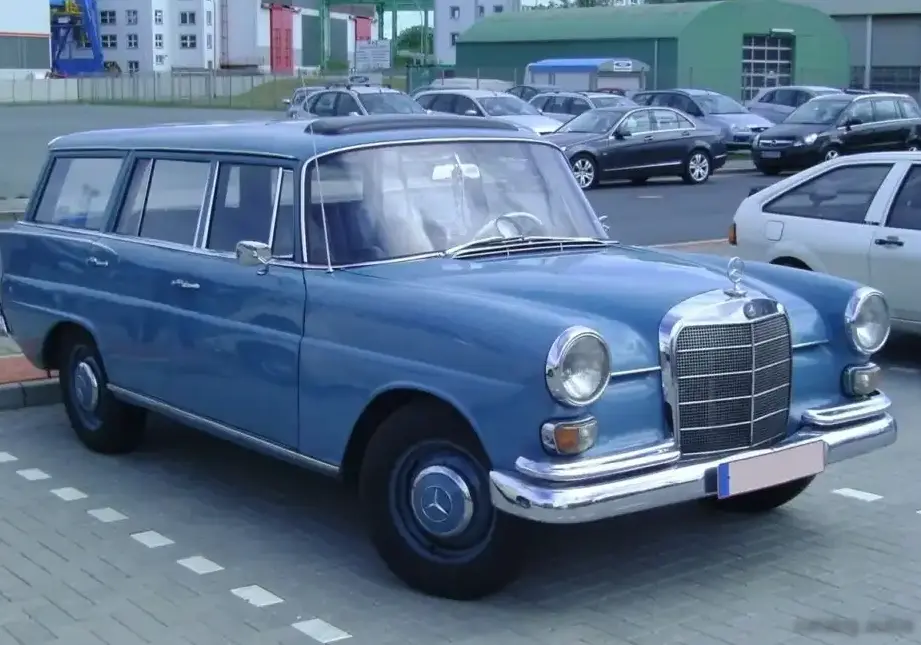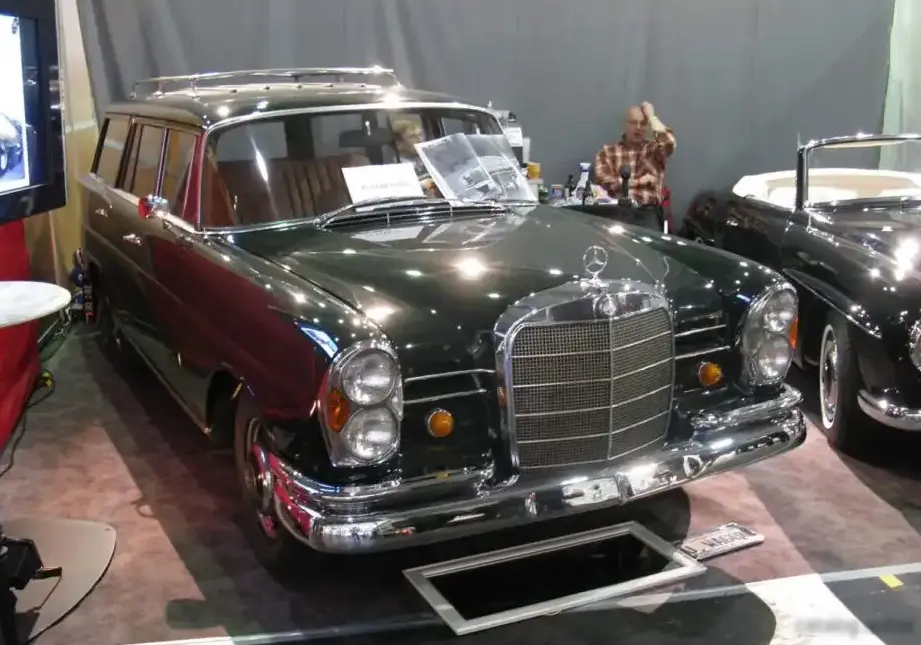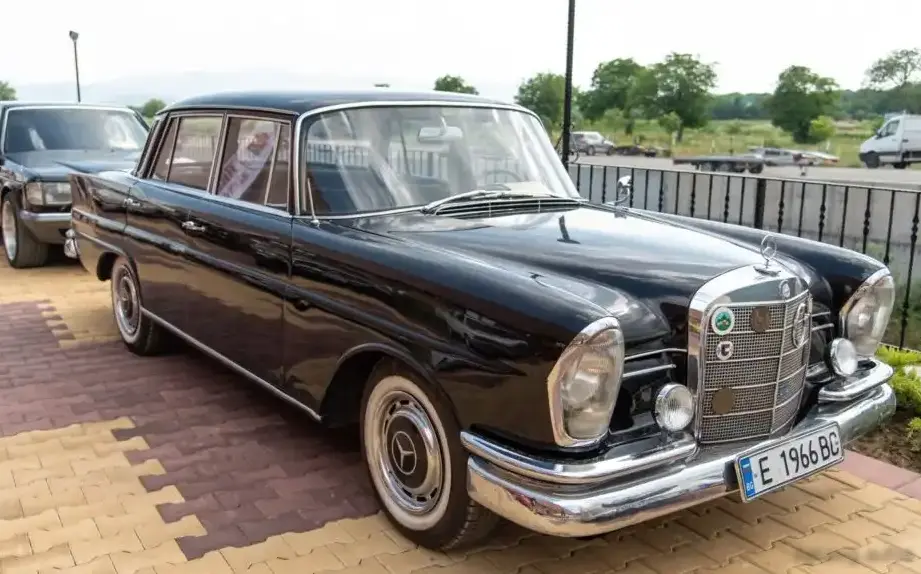
The Mercedes-Benz W111 “Fintail” 220 SEb, produced between August 1959 and August 1965, represents a pivotal moment in the evolution of Mercedes-Benz’s post-war luxury sedan offerings. Positioned as a mid-range model within the W111 series – which also included the 220S and the flagship 300SE – the 220 SEb offered a compelling blend of comfort, performance, and advanced (for the time) technology. It was a key model for Mercedes-Benz in both domestic European markets and increasingly, in the United States, establishing the brand’s reputation for engineering excellence and build quality. The “b” designation denoted a series of improvements over the initial 220 SE, including an upgraded engine and refinements to the fuel injection system.
Technical Specifications
| Brand | Mercedes-Benz |
| Model | Fintail |
| Generation | Fintail (W111) |
| Type (Engine) | 220 SEb (120 Hp) |
| Start of production | August, 1959 |
| End of production | August, 1965 |
| Powertrain Architecture | Internal Combustion engine |
| Body type | Sedan |
| Seats | 5 |
| Doors | 4 |
| Fuel consumption (combined) | 10.7 l/100 km |
| Fuel consumption (US mpg) | 22 US mpg |
| Fuel consumption (UK mpg) | 26.4 UK mpg |
| Fuel consumption (km/l) | 9.3 km/l |
| Fuel Type | Petrol (Gasoline) |
| Acceleration 0 – 100 km/h | 12.8 sec |
| Acceleration 0 – 62 mph | 12.8 sec |
| Acceleration 0 – 60 mph | 12.2 sec |
| Maximum speed | 170 km/h (105.63 mph) |
| Weight-to-power ratio | 11.3 kg/Hp, 88.2 Hp/tonne |
| Weight-to-torque ratio | 7.2 kg/Nm, 139 Nm/tonne |
| Power | 120 Hp @ 4800 rpm |
| Power per litre | 54.7 Hp/l |
| Torque | 189 Nm @ 3900 rpm (139.4 lb.-ft. @ 3900 rpm) |
| Engine layout | Front, Longitudinal |
| Engine Model/Code | M 127 III / 127.982 |
| Engine displacement | 2195 cm3 (133.95 cu. in.) |
| Number of cylinders | 6 |
| Engine configuration | Inline |
| Cylinder Bore | 80 mm (3.15 in.) |
| Piston Stroke | 72.8 mm (2.87 in.) |
| Compression ratio | 8.7:1 |
| Number of valves per cylinder | 2 |
| Fuel injection system | Multi-port manifold injection |
| Engine aspiration | Naturally aspirated engine |
| Valvetrain | SOHC |
| Kerb Weight | 1360 kg (2998.29 lbs.) |
| Max. weight | 1875 kg (4133.67 lbs.) |
| Max load | 515 kg (1135.38 lbs.) |
| Fuel tank capacity | 65 l (17.17 US gal | 14.3 UK gal) |
| Length | 4875 mm (191.93 in.) |
| Width | 1795 mm (70.67 in.) |
| Height | 1510 mm (59.45 in.) |
| Wheelbase | 2750 mm (108.27 in.) |
| Front track | 1470 mm (57.87 in.) |
| Rear track | 1485 mm (58.46 in.) |
| Drivetrain Architecture | The Internal combustion engine (ICE) drives the rear wheels of the vehicle. |
| Drive wheel | Rear wheel drive |
| Number of gears and type of gearbox | 4 gears, manual transmission |
| Front suspension | Double wishbone, Transverse stabilizer |
| Rear suspension | Trailing arm |
| Front brakes | Disc |
| Rear brakes | Drum |
| Steering type | Cone worm with recirculation balls |
Powertrain & Engine Architecture
The heart of the 220 SEb is the M127.982, a 2.2-liter (2195 cc) inline-six cylinder engine. This engine was a significant upgrade from the earlier 220 SE, featuring a revised cylinder head and, crucially, a Bosch mechanical multi-port fuel injection system. This system, while complex for its time, provided more precise fuel delivery than carburetors, resulting in improved performance and fuel efficiency. The engine employed a single overhead camshaft (SOHC) valvetrain, operating two valves per cylinder. The engine produced 120 horsepower at 4800 rpm and 189 Nm (139.4 lb-ft) of torque at 3900 rpm. The engine’s longitudinal front-engine layout and rear-wheel drive configuration were typical for Mercedes-Benz sedans of the era. The 220 SEb was exclusively offered with a four-speed manual transmission.
Driving Characteristics
The 220 SEb offered a refined driving experience, prioritizing comfort and stability over outright sportiness. The 120 hp engine provided adequate, though not exhilarating, performance. Acceleration from 0-60 mph took around 12.2 seconds, and the top speed was approximately 105.63 mph. The four-speed manual transmission, while requiring more driver involvement than an automatic, allowed for precise control of the engine’s power. Compared to the more powerful 220S (which offered a larger engine and higher output), the 220 SEb felt less urgent in acceleration. However, it offered a better balance between performance and fuel economy, making it a more practical choice for everyday driving. The suspension, featuring double wishbones at the front and a trailing arm setup at the rear, provided a comfortable ride, absorbing bumps and imperfections in the road effectively.
Equipment & Trim Levels
The 220 SEb was well-equipped for its time, reflecting Mercedes-Benz’s commitment to luxury and refinement. Standard features included comfortable cloth upholstery, a wood-trimmed dashboard, and hydraulic disc brakes on the front wheels. Rear brakes were drums. Optional extras included leather upholstery, a sunroof, and a Becker radio. The interior was characterized by its elegant simplicity and high-quality materials. The “Fintail” design, with its distinctive rear fins, was a defining styling feature of the W111 series, and the 220 SEb benefited from this iconic look.
Chassis & Braking
The W111 chassis was a robust and well-engineered platform. The 220 SEb featured a separate body-on-frame construction, providing a solid and durable foundation. The front suspension utilized double wishbones with a transverse stabilizer bar, while the rear suspension employed a trailing arm design. This setup provided a good balance of ride comfort and handling. The braking system consisted of hydraulic disc brakes on the front wheels and drum brakes on the rear. While effective for the time, the drum brakes on the rear wheels were a limitation compared to all-disc brake setups found on some competing models.
Market Reception & Comparison
The 220 SEb was generally well-received by automotive critics. It was praised for its comfortable ride, refined interior, and advanced fuel injection system. However, some critics noted that its performance was not as exciting as some of its rivals. Compared to the 220S, the 220 SEb offered a more affordable entry point into the W111 range, making it accessible to a wider range of buyers. Fuel economy was respectable for the era, averaging around 22 US mpg. Reliability was generally good, although the complex fuel injection system required regular maintenance.
Legacy
The Mercedes-Benz W111 220 SEb remains a highly sought-after classic car today. Its combination of elegant styling, robust engineering, and refined driving experience has earned it a devoted following among collectors and enthusiasts. The M127 engine, while requiring periodic maintenance, is known for its durability and longevity. Well-maintained examples of the 220 SEb command significant prices in the used car market, reflecting their enduring appeal and historical significance. The 220 SEb represents a high point in Mercedes-Benz’s post-war engineering and design, and it continues to be admired as a symbol of German automotive excellence.