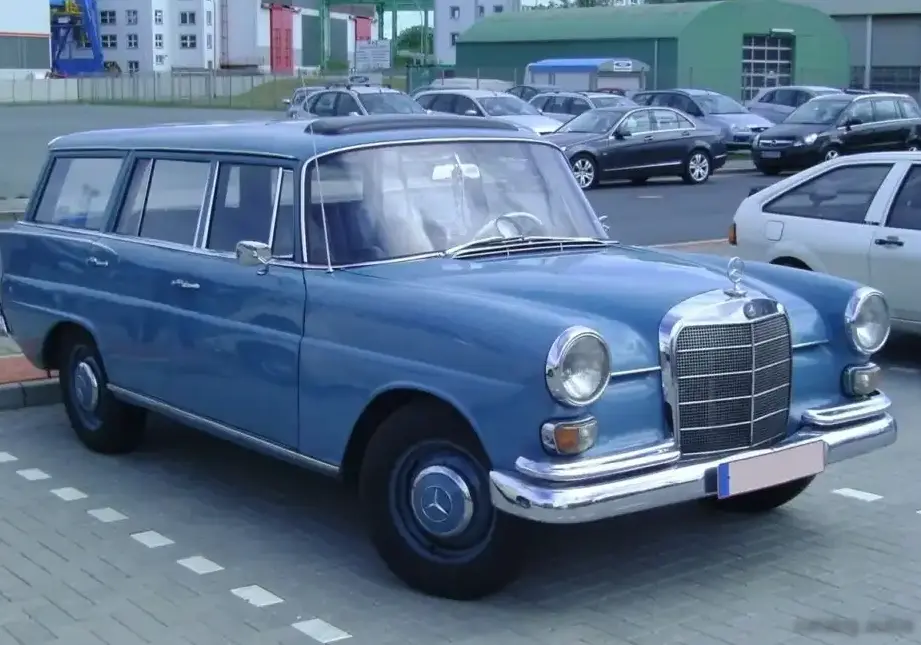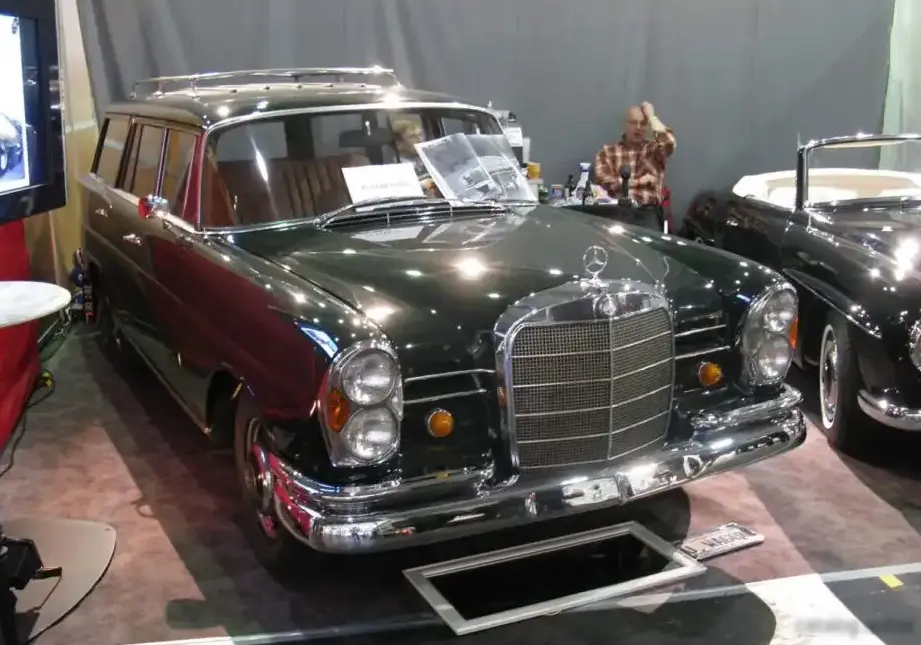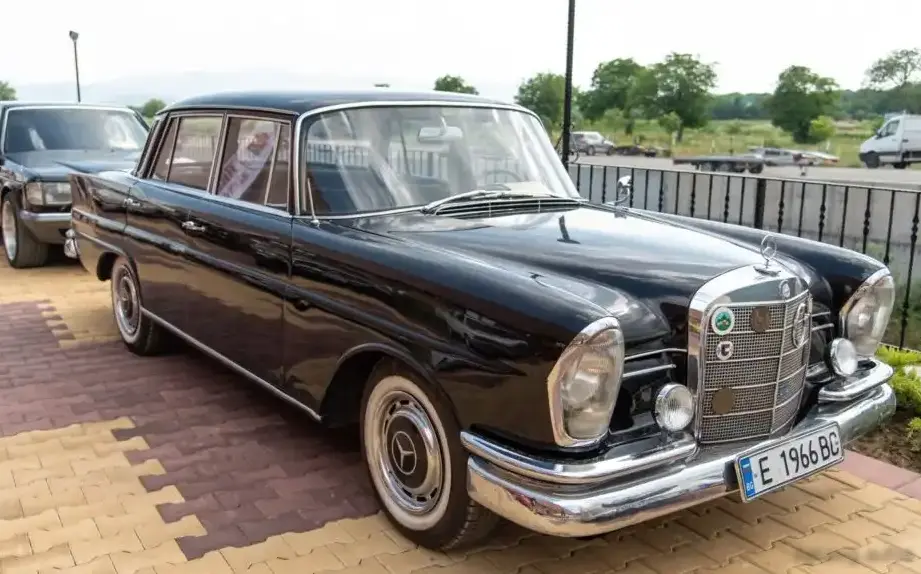
The Mercedes-Benz W111 “Fintail” 230 S Automatic, produced between July 1965 and January 1968, represents a significant evolution in the mid-size luxury sedan market. Positioned as a step up from the 220 S, the 230 S offered increased displacement and power, while retaining the distinctive “fintail” styling that characterized the W111 series. This variant, equipped with the M180 engine and a four-speed automatic transmission, aimed to provide a comfortable and refined driving experience for buyers seeking a blend of performance and convenience. It sat in the middle of the W111 range, offering more power than the base 220 S but remaining more accessible than the flagship 250 S.
Technical Specifications
| Brand | Mercedes-Benz |
| Model | Fintail |
| Generation | Fintail (W111) |
| Type (Engine) | 230 S (120 Hp) Automatic |
| Start of production | July, 1965 |
| End of production | January, 1968 |
| Powertrain Architecture | Internal Combustion engine |
| Body type | Sedan |
| Seats | 5 |
| Doors | 4 |
| Fuel consumption (combined) | 11.2 l/100 km (21 US mpg, 25.2 UK mpg, 8.9 km/l) |
| Fuel Type | Petrol (Gasoline) |
| Acceleration 0 – 100 km/h | 13.9 sec |
| Acceleration 0 – 62 mph | 13.9 sec |
| Acceleration 0 – 60 mph | 13.2 sec |
| Maximum speed | 170 km/h (105.63 mph) |
| Weight-to-power ratio | 11.3 kg/Hp, 88.9 Hp/tonne |
| Weight-to-torque ratio | 7.5 kg/Nm, 132.6 Nm/tonne |
| Power | 120 Hp @ 5400 rpm |
| Power per litre | 52 Hp/l |
| Torque | 179 Nm @ 4000 rpm (132.02 lb.-ft. @ 4000 rpm) |
| Engine layout | Front, Longitudinal |
| Engine Model/Code | M 180 VIII / 180.947 |
| Engine displacement | 2306 cm3 (140.72 cu. in.) |
| Number of cylinders | 6 |
| Engine configuration | Inline |
| Cylinder Bore | 82 mm (3.23 in.) |
| Piston Stroke | 72.8 mm (2.87 in.) |
| Compression ratio | 9:1 |
| Number of valves per cylinder | 2 |
| Fuel injection system | Carburettor |
| Engine aspiration | Naturally aspirated engine |
| Valvetrain | SOHC |
| Kerb Weight | 1350 kg (2976.24 lbs.) |
| Max. weight | 1850 kg (4078.55 lbs.) |
| Max load | 500 kg (1102.31 lbs.) |
| Fuel tank capacity | 65 l (17.17 US gal | 14.3 UK gal) |
| Length | 4875 mm (191.93 in.) |
| Width | 1795 mm (70.67 in.) |
| Height | 1500 mm (59.06 in.) |
| Wheelbase | 2750 mm (108.27 in.) |
| Front track | 1482 mm (58.35 in.) |
| Rear (Back) track | 1485 mm (58.46 in.) |
| Drivetrain Architecture | The Internal combustion engine (ICE) drives the rear wheels of the vehicle. |
| Drive wheel | Rear wheel drive |
| Number of gears and type of gearbox | 4 gears, automatic transmission |
| Front suspension | Double wishbone, Transverse stabilizer |
| Rear suspension | Hydro-pneumatic element, Trailing arm |
| Front brakes | Disc |
| Rear brakes | Drum |
| Steering type | Cone worm with recirculation balls |
Powertrain & Engine Architecture
The heart of the 230 S Automatic is the M180.947, a 2.3-liter inline-six cylinder engine. This engine, a development of the earlier M180 series, featured a single overhead camshaft (SOHC) operating two valves per cylinder. Fuel delivery was managed by a twin-barrel Solex carburetor, a common setup for the era. The engine produced 120 horsepower at 5400 rpm and 179 Nm (132 lb-ft) of torque at 4000 rpm. The automatic transmission was a four-speed unit, providing smooth, albeit not particularly quick, gear changes. This transmission was designed for comfort and ease of use, rather than outright performance.
Driving Characteristics
The 230 S Automatic offered a comfortable and refined driving experience, typical of Mercedes-Benz sedans of the period. However, the combination of the 2.3-liter engine and the automatic transmission resulted in somewhat leisurely acceleration. The 0-60 mph time of around 13.2 seconds reflects this. Compared to the manual transmission versions of the 230 S, the automatic was noticeably slower. The automatic transmission’s gear ratios were geared towards fuel efficiency and smooth cruising, rather than maximizing acceleration. While not a sports sedan, the 230 S Automatic provided ample power for highway driving and everyday commuting. The suspension, featuring double wishbones at the front and a hydro-pneumatic trailing arm setup at the rear, delivered a comfortable ride, absorbing bumps and imperfections in the road effectively.
Equipment & Trim Levels
The 230 S Automatic came standard with a respectable level of equipment for the mid-1960s. This included comfortable cloth upholstery, wood trim on the dashboard and door panels, and a comprehensive instrument cluster. Power steering and power-assisted brakes were often included, enhancing the driving experience. Optional extras included a sunroof, leather upholstery, and a radio. The interior was designed with a focus on luxury and practicality, offering ample space for passengers and luggage. The “fintail” styling extended to the interior, with a clean and elegant design.
Chassis & Braking
The W111 chassis featured a robust construction, providing a solid and stable platform. The front suspension utilized double wishbones with a transverse stabilizer bar, while the rear suspension employed a hydro-pneumatic element and trailing arms. This combination provided a comfortable ride and good handling characteristics. Braking was accomplished via disc brakes at the front and drum brakes at the rear. While adequate for the car’s weight and performance, the drum brakes at the rear were a limitation compared to all-disc setups found on some contemporary vehicles. The steering system was a cone worm with recirculation balls, providing precise and responsive steering.
Market Reception & Comparison
The 230 S Automatic was generally well-received by critics and buyers alike. It was praised for its comfortable ride, refined interior, and build quality. However, the automatic transmission was sometimes criticized for its relatively slow shift times and impact on fuel economy. Compared to the 220 S, the 230 S offered a noticeable increase in performance. Compared to the more expensive 250 S, the 230 S provided a more accessible entry point into the Mercedes-Benz luxury sedan range. Fuel economy was typical for the era, around 11.2 l/100km (21 mpg US), and reliability was generally good, although maintenance costs could be high due to the car’s complexity.
Legacy
The Mercedes-Benz W111 Fintail series, including the 230 S Automatic, is now considered a classic car. The M180 engine, while not known for its high output, is generally regarded as a durable and reliable unit. However, like all classic cars, the 230 S requires regular maintenance to keep it in good running order. Parts availability can be a challenge, but a dedicated network of suppliers and enthusiasts exists to support owners. Today, the 230 S Automatic is a sought-after vehicle among collectors and enthusiasts, appreciated for its elegant styling, comfortable ride, and historical significance. Well-maintained examples command respectable prices in the used car market, reflecting their enduring appeal.