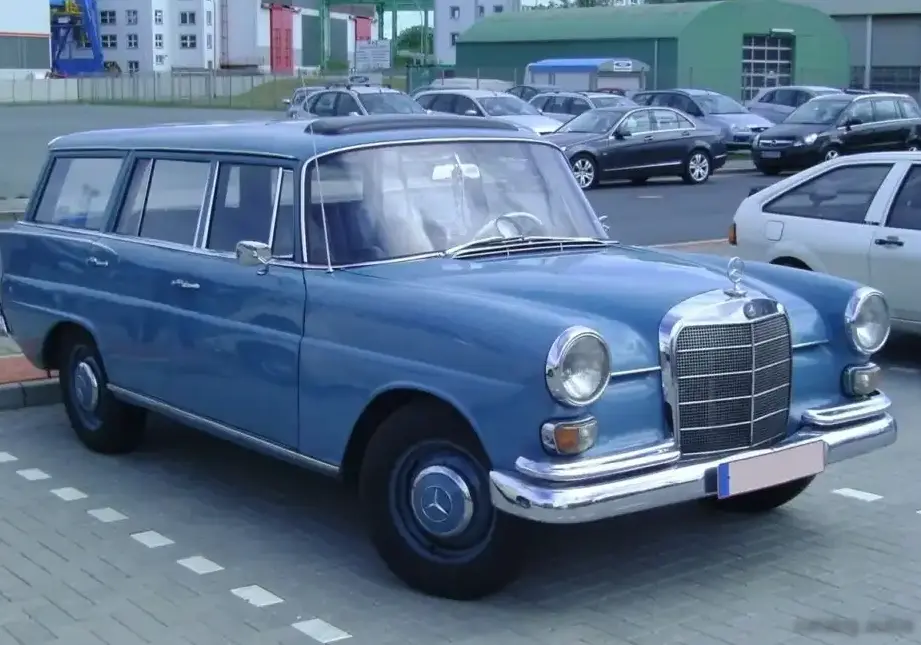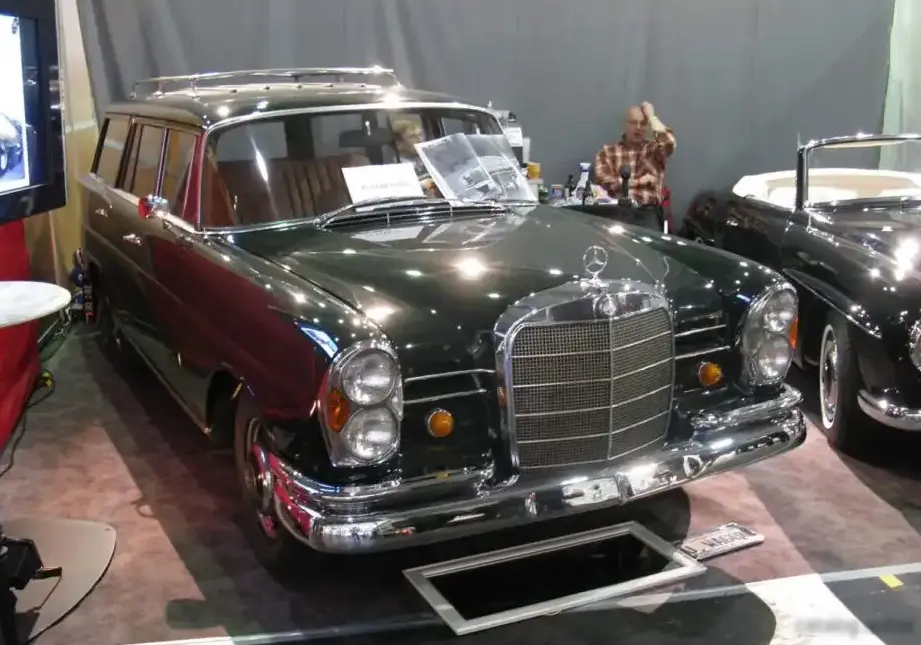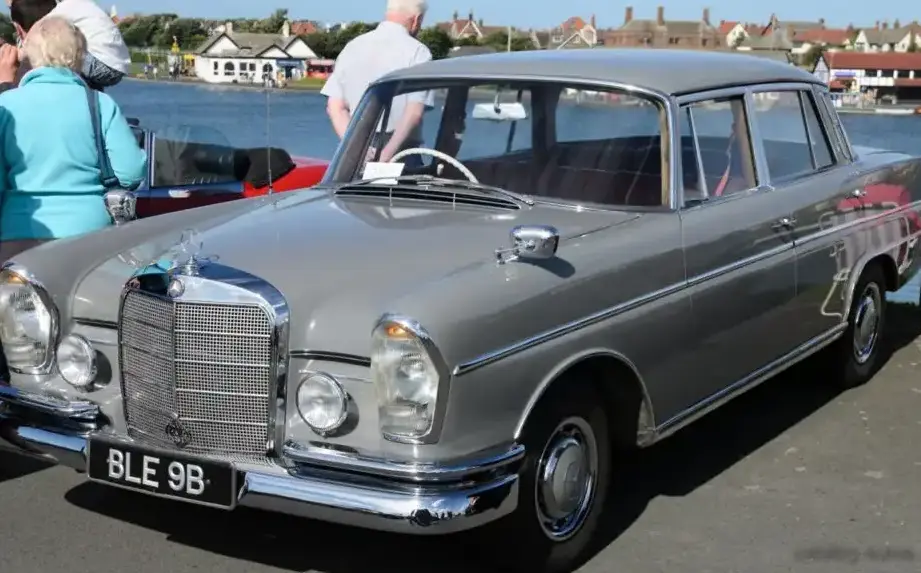
The Mercedes-Benz W112 “Fintail” 300 SE, produced between April 1961 and January 1964, represents a pivotal moment in the evolution of post-war Mercedes-Benz design and engineering. Positioned as a luxury sedan, the 300 SE occupied the upper echelon of the Fintail range, offering a sophisticated blend of performance and comfort. It was built on the W112 chassis, a platform known for its advanced features, and served as a precursor to the later, more widely recognized W108/W109 series. The “Fintail” nickname derives from the distinctive, gently sloping tailfins that characterized the model’s rear styling – a design element that marked a departure from earlier Mercedes-Benz aesthetics.
Technical Specifications
| Brand | Mercedes-Benz |
| Model | Fintail |
| Generation | Fintail (W112) |
| Type (Engine) | 300 SE (160 Hp) |
| Start of production | April, 1961 |
| End of production | January, 1964 |
| Powertrain Architecture | Internal Combustion engine |
| Body type | Sedan |
| Seats | 5 |
| Doors | 4 |
| Fuel Type | Petrol (Gasoline) |
| Acceleration 0 – 100 km/h | 10.9 sec |
| Acceleration 0 – 62 mph | 10.9 sec |
| Acceleration 0 – 60 mph | 10.4 sec |
| Maximum speed | 200 km/h (124.27 mph) |
| Weight-to-power ratio | 9.6 kg/Hp, 104.6 Hp/tonne |
| Weight-to-torque ratio | 6.1 kg/Nm, 164.1 Nm/tonne |
| Power | 160 Hp @ 5000 rpm |
| Power per litre | 53.4 Hp/l |
| Torque | 251 Nm @ 3800 rpm (185.13 lb.-ft. @ 3800 rpm) |
| Engine layout | Front, Longitudinal |
| Engine Model/Code | M 189 I / 189.984 |
| Engine displacement | 2996 cm3 (182.83 cu. in.) |
| Number of cylinders | 6 |
| Engine configuration | Inline |
| Cylinder Bore | 85 mm (3.35 in.) |
| Piston Stroke | 88 mm (3.46 in.) |
| Compression ratio | 8.7:1 |
| Number of valves per cylinder | 2 |
| Fuel injection system | Multi-port manifold injection |
| Engine aspiration | Naturally aspirated engine |
| Valvetrain | SOHC |
| Kerb Weight | 1530 kg (3373.07 lbs.) |
| Max. weight | 2010 kg (4431.29 lbs.) |
| Max load | 480 kg (1058.22 lbs.) |
| Fuel tank capacity | 65 l (17.17 US gal | 14.3 UK gal) |
| Length | 4875 mm (191.93 in.) |
| Width | 1795 mm (70.67 in.) |
| Height | 1455 mm (57.28 in.) |
| Wheelbase | 2750 mm (108.27 in.) |
| Front track | 1482 mm (58.35 in.) |
| Rear (Back) track | 1490 mm (58.66 in.) |
| Drivetrain Architecture | The Internal combustion engine (ICE) drives the rear wheels of the vehicle. |
| Drive wheel | Rear wheel drive |
| Number of gears and type of gearbox | 5 gears, manual transmission |
| Front suspension | Double wishbone, Transverse stabilizer, Air suspension |
| Rear suspension | Air suspension, Transverse stabilizer, Trailing arm |
| Front brakes | Disc |
| Rear brakes | Disc |
| Steering type | Cone worm with recirculation balls |
Powertrain & Engine Architecture
The heart of the 300 SE was the M189 I inline-six cylinder engine, displacing 2,996 cubic centimeters (182.83 cubic inches). This engine was a significant advancement for Mercedes-Benz, featuring a sophisticated Bosch multi-port fuel injection system – a relatively uncommon feature for the time. The injection system, coupled with a compression ratio of 8.7:1, allowed the engine to produce 160 horsepower at 5000 rpm and 251 Nm (185.13 lb-ft) of torque at 3800 rpm. The engine utilized a single overhead camshaft (SOHC) valvetrain, operating two valves per cylinder. The engine was mounted longitudinally in the front of the vehicle, driving the rear wheels. The standard transmission was a five-speed manual, although an optional four-speed automatic transmission was available, though less common.
Driving Characteristics
The 300 SE with the manual transmission offered a refined and capable driving experience. The engine delivered smooth, linear power, making it well-suited for both city driving and long-distance cruising. The five-speed manual allowed for precise control and efficient use of the engine’s power band. While not overtly sporty, the 300 SE provided confident acceleration, reaching 60 mph in approximately 10.4 seconds and achieving a top speed of around 124 mph. The automatic transmission, while offering convenience, did slightly diminish performance and responsiveness compared to the manual version. The car’s weight of approximately 3,373 pounds contributed to a feeling of substantiality and stability on the road.
Equipment & Trim Levels
The 300 SE was generously equipped for its era. Standard features included luxurious cloth upholstery, wood trim on the dashboard and door panels, and a comprehensive instrument cluster. Power-assisted steering and brakes were also standard. Optional extras included leather upholstery, a sunroof, and a Becker radio. The interior was designed with a focus on comfort and elegance, reflecting Mercedes-Benz’s commitment to providing a premium driving experience. The Fintail’s interior was relatively spacious for its time, comfortably accommodating five passengers.
Chassis & Braking
The W112 chassis featured independent suspension all around, utilizing double wishbones with a transverse stabilizer and, notably, air suspension at the rear. This air suspension system provided a remarkably smooth and comfortable ride, automatically adjusting to varying road conditions and load levels. The braking system consisted of disc brakes on all four wheels, a significant upgrade over the drum brakes commonly found on other vehicles of the period. The steering was a cone worm with recirculation balls, providing precise and responsive control.
Market Reception & Comparison
The 300 SE was well-received by automotive critics and buyers alike. It was praised for its refined engine, comfortable ride, and luxurious interior. However, its relatively high price positioned it as a premium vehicle, limiting its appeal to a select clientele. Compared to the lower-trim Fintail models, such as the 220 SE, the 300 SE offered significantly more power and performance. The 300 SE also stood out from its competitors, such as the Jaguar Mark 2, with its advanced fuel injection system and air suspension. Fuel economy, while not a primary concern for buyers in this segment, was reasonable for a vehicle of its size and performance.
Legacy
The Mercedes-Benz W112 300 SE holds a significant place in automotive history as a pioneering example of luxury and engineering innovation. The M189 engine proved to be remarkably durable, and well-maintained examples continue to provide reliable service today. The Fintail’s distinctive styling, while initially controversial, has become increasingly appreciated by collectors and enthusiasts. In the used car market, the 300 SE commands a premium price, reflecting its rarity, historical significance, and enduring appeal. The advancements introduced in the W112, particularly the fuel injection and air suspension, paved the way for future Mercedes-Benz models and cemented the brand’s reputation for quality and innovation.