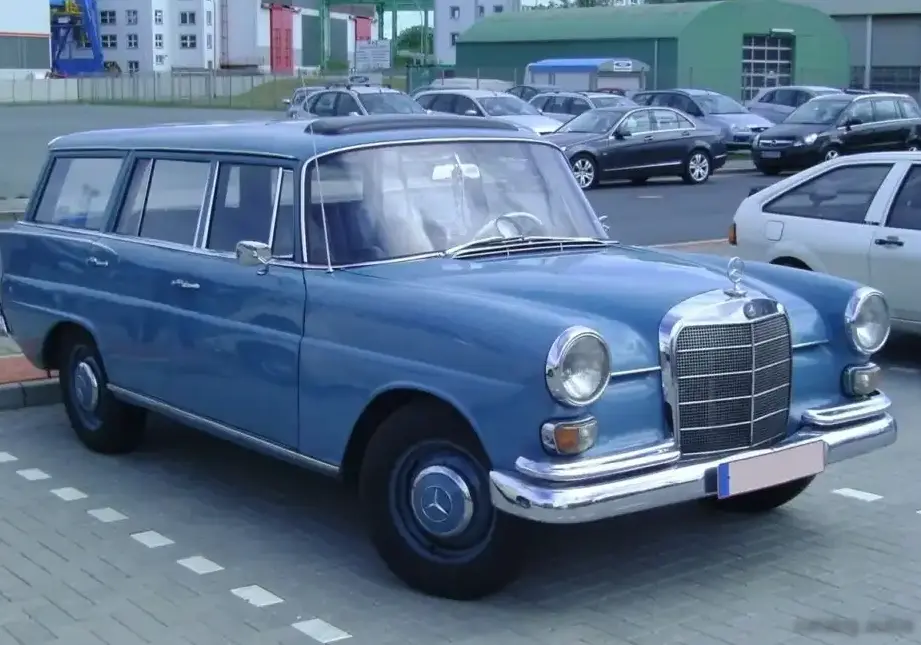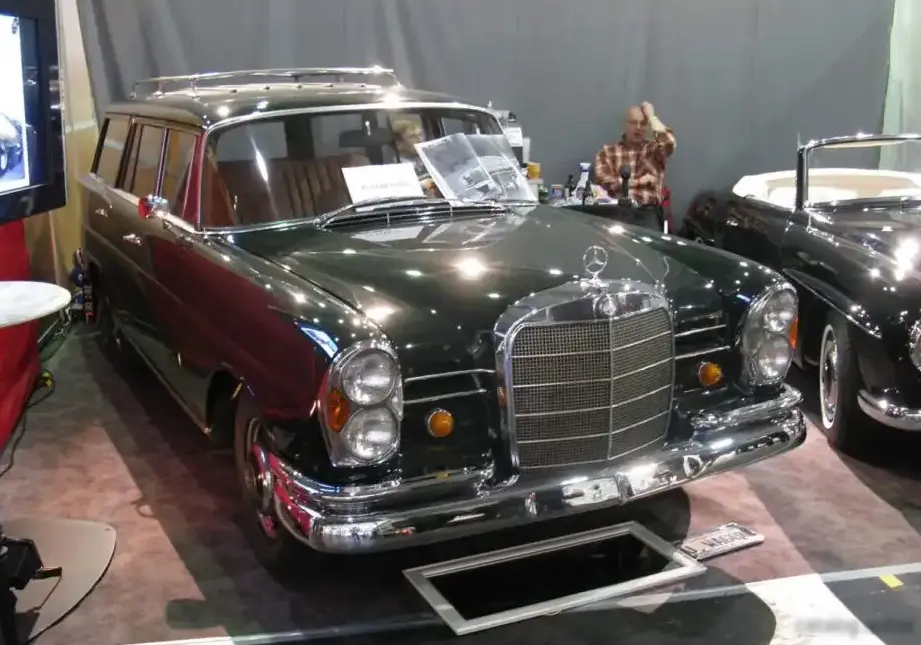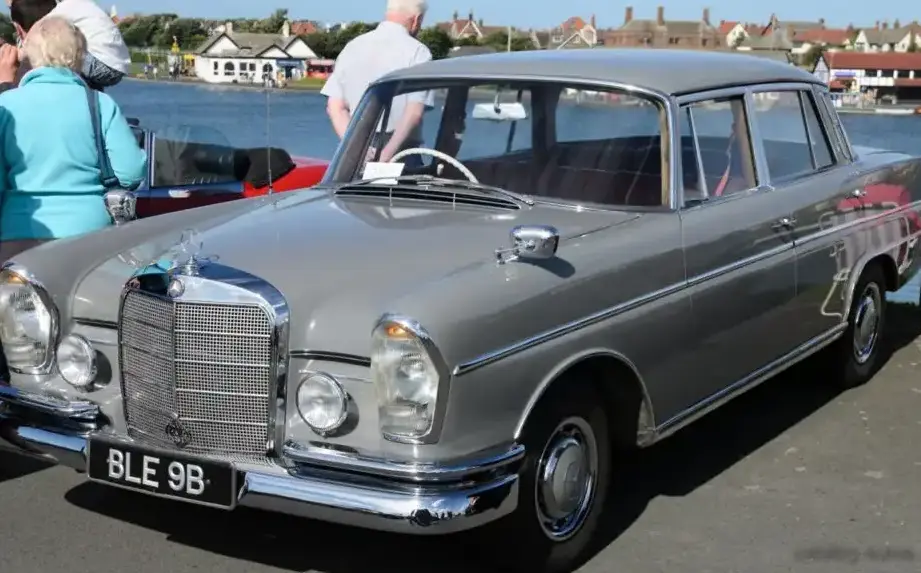
The Mercedes-Benz W112 “Fintail” 300 SE Automatic, produced between April 1961 and January 1964, marked a significant evolution for the German automaker. Serving as a luxury sedan, it bridged the gap between the more spartan “Ponton” series and the forthcoming, more opulent W108/W109 models. The 300 SE, equipped with a 3.0-liter inline-six engine and automatic transmission, represented the top-tier offering within the Fintail range, delivering a balance of performance and refinement. It played a crucial role in solidifying Mercedes-Benz’s reputation for engineering prowess and build quality, particularly in the American market, where large, comfortable sedans were highly valued.
Technical Specifications
| Brand | Mercedes-Benz |
| Model | Fintail |
| Generation | Fintail (W112) |
| Type (Engine) | 300 SE (160 Hp) Automatic |
| Start of production | April, 1961 |
| End of production | January, 1964 |
| Powertrain Architecture | Internal Combustion engine |
| Body type | Sedan |
| Seats | 5 |
| Doors | 4 |
| Fuel consumption (combined) | 14.5 l/100 km |
| Fuel consumption (US mpg) | 16.2 US mpg |
| Fuel consumption (UK mpg) | 19.5 UK mpg |
| Fuel consumption (km/l) | 6.9 km/l |
| Fuel Type | Petrol (Gasoline) |
| Acceleration 0 – 100 km/h | 11.5 sec |
| Acceleration 0 – 62 mph | 11.5 sec |
| Acceleration 0 – 60 mph | 10.9 sec |
| Maximum speed | 175 km/h (108.74 mph) |
| Weight-to-power ratio | 9.6 kg/Hp |
| Weight-to-torque ratio | 6.1 kg/Nm |
| Power | 160 Hp @ 5000 rpm |
| Power per litre | 53.4 Hp/l |
| Torque | 251 Nm @ 3800 rpm (185.13 lb.-ft. @ 3800 rpm) |
| Engine layout | Front, Longitudinal |
| Engine Model/Code | M 189 I / 189.984 |
| Engine displacement | 2996 cm3 (182.83 cu. in.) |
| Number of cylinders | 6 |
| Engine configuration | Inline |
| Cylinder Bore | 85 mm (3.35 in.) |
| Piston Stroke | 88 mm (3.46 in.) |
| Compression ratio | 8.7:1 |
| Number of valves per cylinder | 2 |
| Fuel injection system | Multi-port manifold injection |
| Engine aspiration | Naturally aspirated engine |
| Valvetrain | SOHC |
| Kerb Weight | 1530 kg (3373.07 lbs.) |
| Max. weight | 2010 kg (4431.29 lbs.) |
| Max load | 480 kg (1058.22 lbs.) |
| Fuel tank capacity | 65 l (17.17 US gal | 14.3 UK gal) |
| Length | 4875 mm (191.93 in.) |
| Width | 1795 mm (70.67 in.) |
| Height | 1455 mm (57.28 in.) |
| Wheelbase | 2750 mm (108.27 in.) |
| Front track | 1482 mm (58.35 in.) |
| Rear track | 1490 mm (58.66 in.) |
| Drivetrain Architecture | The Internal combustion engine (ICE) drives the rear wheels of the vehicle. |
| Drive wheel | Rear wheel drive |
| Number of gears and type of gearbox | 4 gears, automatic transmission |
| Front suspension | Double wishbone, Transverse stabilizer, Air suspension |
| Rear suspension | Air suspension, Transverse stabilizer, Trailing arm |
| Front brakes | Disc |
| Rear brakes | Disc |
| Steering type | Cone worm with recirculation balls |
Powertrain & Engine Architecture
The 300 SE’s powertrain revolved around the M189.984 3.0-liter (2996 cc) inline-six engine. This engine represented a departure from previous Mercedes-Benz designs, incorporating a lightweight alloy cylinder head and a sophisticated Bosch mechanical multi-port fuel injection system. This fuel injection, a defining feature of the 300 SE, enabled precise fuel delivery, contributing to smooth power delivery and reasonable fuel economy for the period. The engine generated 160 horsepower at 5000 rpm and 251 Nm (185 lb-ft) of torque at 3800 rpm. A single overhead camshaft (SOHC) controlled two valves per cylinder. The four-speed hydraulic automatic transmission was selected to prioritize a luxurious driving experience, emphasizing comfort over rapid acceleration.
Driving Characteristics
The 300 SE Automatic delivered a refined and comfortable ride. While not designed for sporty driving, the 3.0-liter engine provided sufficient power for relaxed cruising on both Autobahns and American highways. Acceleration from 0 to 60 mph took approximately 10.9 seconds, with a top speed around 109 mph. The automatic transmission, while smooth, did result in a slight performance reduction compared to the available four-speed manual gearbox. Gear ratios were optimized for comfortable cruising, focusing on relaxed highway travel. The car felt substantial and planted on the road, thanks to its considerable weight and advanced suspension system.
Equipment & Trim Levels
The 300 SE Automatic was well-appointed for its era. Standard features included power steering, power-assisted disc brakes on all four wheels, and a luxurious interior featuring leather upholstery. The dashboard was elegantly designed with wood trim and a comprehensive instrument cluster. Optional extras included a sunroof, whitewall tires, and a radio. Interior color and material choices allowed for personalization. As the premium model in the Fintail lineup, the 300 SE’s equipment level reflected its elevated status.
Chassis & Braking
The W112 Fintail boasted a robust chassis with independent suspension on all four wheels. The front suspension utilized a double wishbone setup with a transverse stabilizer and, significantly, air suspension. The rear suspension employed a trailing arm configuration, also with air suspension and a transverse stabilizer. This air suspension system provided an exceptionally smooth and comfortable ride, effectively absorbing road imperfections. The braking system featured disc brakes on all four wheels, offering excellent stopping power for the time, enhanced by power assistance as standard.
Market Reception & Comparison
The 300 SE Automatic was favorably received by both automotive critics and buyers. It was lauded for its luxurious interior, smooth ride quality, and refined engine. However, some reviewers noted that the automatic transmission slightly diminished the engine’s performance potential. Compared to lower-trim Fintail models, such as the 220SE, the 300 SE offered considerably more power and a more luxurious experience. It competed with other luxury sedans of the early 1960s, including the Jaguar Mark 2 and the Cadillac Series 62. Fuel economy, averaging 16.2 US mpg, was typical for a large luxury sedan of that period.
Legacy
The Mercedes-Benz W112 Fintail 300 SE Automatic remains a highly desirable classic car today. Its robust engineering and high build quality have ensured that a significant number of examples are still operational. The M189 engine, while complex, is generally considered reliable with proper maintenance. However, the fuel injection system requires specialized expertise for repairs. The air suspension system, while providing a superior ride, can be prone to leaks and necessitates periodic maintenance. The 300 SE Automatic represents a pivotal moment in Mercedes-Benz history, demonstrating the company’s dedication to luxury, engineering excellence, and innovation. It continues to be cherished by collectors and enthusiasts for its timeless design and refined driving experience.