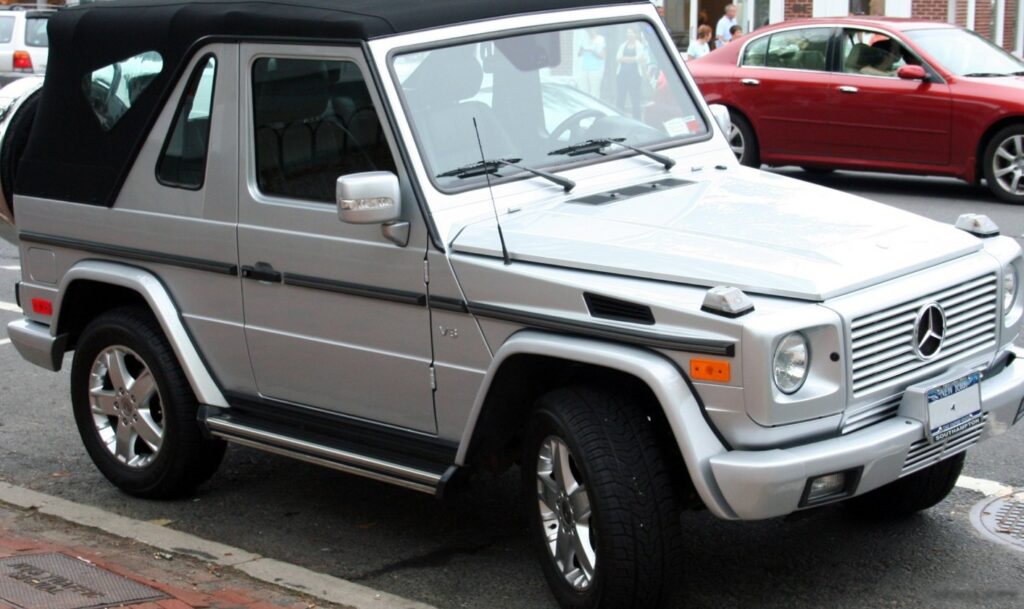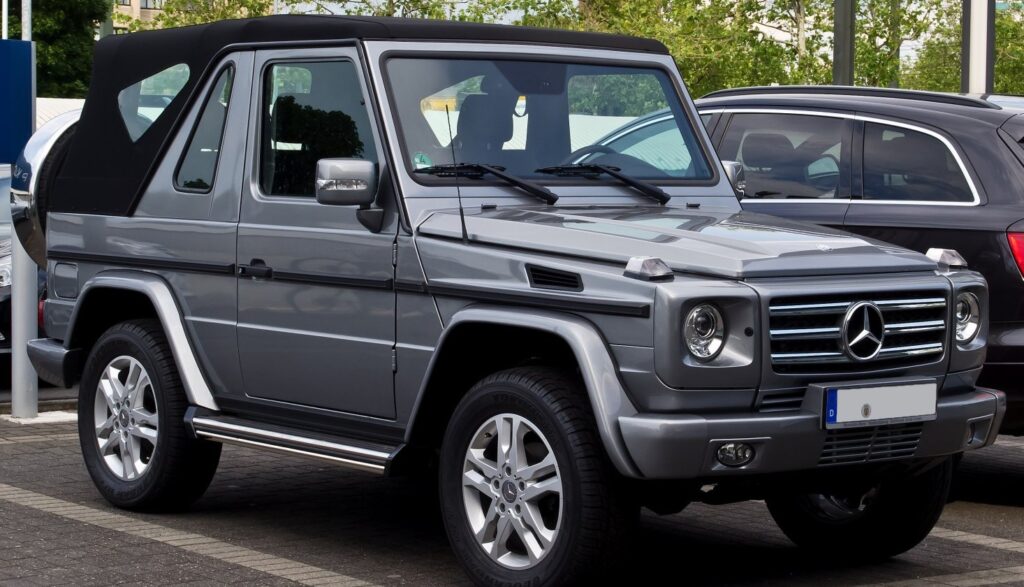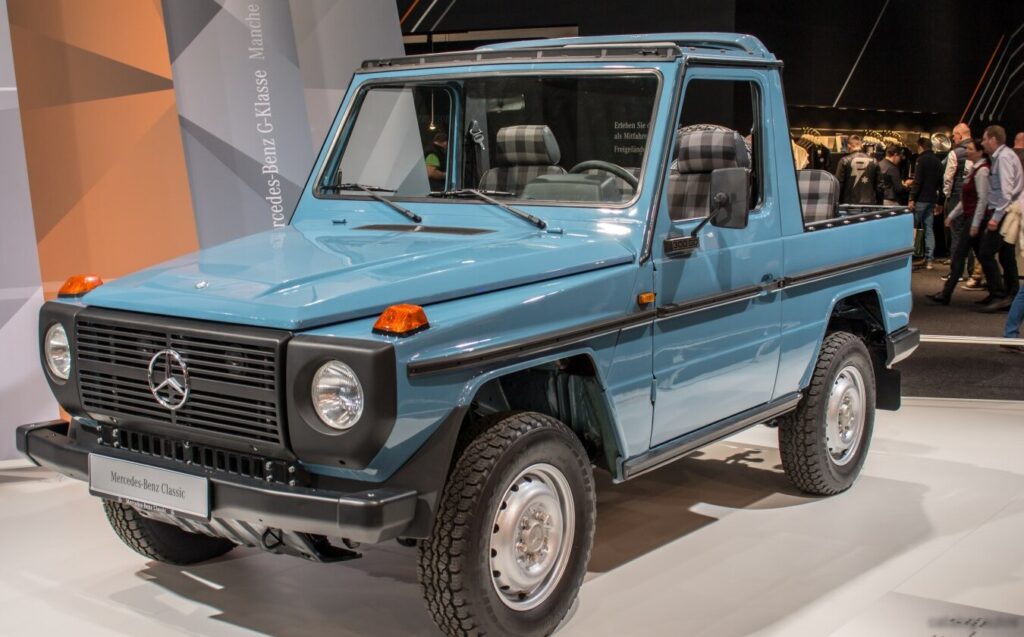
The Mercedes-Benz G-Class Cabriolet 240 GD, produced from 1979 to 1987, represents a unique chapter in the storied history of the G-Wagen. Part of the W460 series, this variant was specifically designed for off-road capability combined with open-air motoring. It served as a more accessible entry point into the G-Class range, offering a robust and utilitarian vehicle to a wider audience than the more expensive, higher-powered models. The 240 GD distinguished itself with its fuel-efficient diesel engine and durable construction, making it a popular choice for both civilian and military applications, particularly in Europe.
Technical Specifications
| Brand | Mercedes-Benz |
| Model | G-class |
| Generation | G-class Cabriolet (W460) |
| Type (Engine) | 240 GD (72 Hp) 4WD |
| Start of production | 1979 |
| End of production | 1987 |
| Powertrain Architecture | Internal Combustion engine |
| Body type | Off-road vehicle, Cabriolet |
| Seats | 5 |
| Doors | 3 |
| Fuel consumption (urban) | 14.2 l/100 km (16.6 US mpg, 19.9 UK mpg, 7 km/l) |
| Fuel consumption (extra urban) | 12 l/100 km (19.6 US mpg, 23.5 UK mpg, 8.3 km/l) |
| Fuel Type | Diesel |
| Maximum speed | 115 km/h (71.46 mph) |
| Weight-to-power ratio | 24 kg/Hp, 41.6 Hp/tonne |
| Weight-to-torque ratio | 12.6 kg/Nm, 79.2 Nm/tonne |
| Power | 72 Hp @ 4400 rpm |
| Power per litre | 30 Hp/l |
| Torque | 137 Nm @ 2400 rpm (101.05 lb.-ft. @ 2400 rpm) |
| Engine layout | Front, Longitudinal |
| Engine Model/Code | OM 616.936 |
| Engine displacement | 2399 cm3 (146.4 cu. in.) |
| Number of cylinders | 4 |
| Engine configuration | Inline |
| Cylinder Bore | 90.9 mm (3.58 in.) |
| Piston Stroke | 92.4 mm (3.64 in.) |
| Compression ratio | 21:1 |
| Number of valves per cylinder | 2 |
| Fuel injection system | Precombustion chamber injection |
| Engine aspiration | Naturally aspirated engine |
| Valvetrain | SOHC |
| Engine oil capacity | 6.5 l (6.87 US qt, 5.72 UK qt) |
| Coolant capacity | 10.7 l (11.31 US qt, 9.41 UK qt) |
| Kerb Weight | 1730 kg (3814 lbs.) |
| Max. weight | 2500 kg (5511.56 lbs.) |
| Max load | 770 kg (1697.56 lbs.) |
| Trunk (boot) space – minimum | 765 l (27.02 cu. ft.) |
| Trunk (boot) space – maximum | 1740 l (61.45 cu. ft.) |
| Fuel tank capacity | 75 l (19.81 US gal, 16.5 UK gal) |
| Permitted trailer load with brakes (12%) | 2500 kg (5511.56 lbs.) |
| Permitted trailer load without brakes | 750 kg (1653.47 lbs.) |
| Length | 4145 mm (163.19 in.) |
| Width | 1700 mm (66.93 in.) |
| Height | 2000 mm (78.74 in.) |
| Wheelbase | 2400 mm (94.49 in.) |
| Front track | 1425 mm (56.1 in.) |
| Rear (Back) track | 1425 mm (56.1 in.) |
| Front overhang | 745 mm (29.33 in.) |
| Rear overhang | 800 mm (31.5 in.) |
| Ride height (ground clearance) | 215 mm (8.46 in.) |
| Minimum turning circle (turning diameter) | 11.4 m (37.4 ft.) |
| Approach angle | 45° |
| Departure angle | 40° |
| Ramp-over (brakeover) angle | 31° |
| Climb angle | 38.7° |
| Wading depth | 600 mm (23.62 in.) |
| Drivetrain Architecture | The Internal combustion engine (ICE) drives the rear wheels permanently, and the front wheels are driven through an electrically or mechanically operated clutch if necessary. |
| Drive wheel | All wheel drive (4×4) |
| Number of gears and type of gearbox | 4 gears, manual transmission |
| Front suspension | Coil spring, Rigid axle suspension, Transverse stabilizer, Trailing arm |
| Rear suspension | Rigid axle suspension, Trailing arm, Coil spring |
| Front brakes | Disc, 303 mm |
| Rear brakes | Drum, 260 mm |
| Steering type | Cone worm with recirculation balls |
| Tires size | 205/80 R16 |
| Wheel rims size | 5.5J x 16 |
INTRODUCTION
The Mercedes-Benz G-Class Cabriolet 240 GD, produced between 1979 and 1987, was a key variant within the initial W460 generation of the G-Wagen. Designed originally for military use, the G-Class quickly gained a following among civilian buyers seeking a rugged, capable, and distinctive vehicle. The 240 GD, powered by the OM 616 diesel engine, offered a balance of affordability and durability, making it a popular choice in European markets where diesel fuel was readily available and taxation favored smaller displacement engines. The Cabriolet body style, with its removable soft top, added a unique element of open-air enjoyment to the G-Class’s already considerable appeal.
Powertrain & Engine Architecture
The heart of the 240 GD is the Mercedes-Benz OM 616.936, a 2.4-liter inline-four cylinder diesel engine. This engine is renowned for its robustness and longevity. It utilizes precombustion chamber injection, a system where fuel is injected into a small precombustion chamber connected to the main cylinder, promoting more complete combustion and reducing engine noise. The engine produces 72 horsepower at 4400 rpm and 137 Nm (101.05 lb-ft) of torque at 2400 rpm. The engine’s relatively low compression ratio of 21:1 contributed to its durability. The 240 GD was typically equipped with a four-speed manual transmission, sending power to all four wheels via a permanent all-wheel-drive system with a mechanically engaged front axle. This system allowed for rear-wheel drive under normal conditions, engaging the front wheels when traction was lost.
Driving Characteristics
The 240 GD Cabriolet’s driving experience is defined by its ruggedness and torque-focused power delivery. With only 72 horsepower, acceleration is modest, but the engine’s 137 Nm of torque provides ample pulling power, especially at lower engine speeds. The four-speed manual transmission requires deliberate shifting, and the gear ratios are optimized for off-road crawling rather than on-road speed. Compared to the later, more powerful G-Class variants like the 280 GE or 300 GD, the 240 GD feels significantly slower. However, its lower weight and simpler mechanicals contribute to a more nimble and engaging driving experience in certain situations. The permanent all-wheel-drive system provides excellent traction on loose surfaces, making it a capable off-roader.
Equipment & Trim Levels
The 240 GD Cabriolet was generally sparsely equipped, reflecting its utilitarian origins. Standard features typically included basic steel wheels, vinyl upholstery, and a simple dashboard layout. The soft top was manually operated. Optional extras included upgraded upholstery, a radio, and auxiliary lighting. Trim levels were minimal; the focus was on functionality and durability rather than luxury. The interior was designed to withstand harsh conditions and was easily washable, a practical consideration for its intended use.
Chassis & Braking
The W460 G-Class chassis is a body-on-frame construction, providing exceptional strength and durability. The 240 GD utilizes a coil spring and rigid axle suspension system at the front, with a transverse stabilizer bar to reduce body roll. The rear suspension also employs a rigid axle setup with coil springs. Braking duties are handled by disc brakes at the front and drum brakes at the rear. The braking system, while adequate for the vehicle’s weight and performance, is not particularly powerful by modern standards. The vehicle’s high ground clearance (215 mm / 8.46 in) and impressive approach, departure, and ramp-over angles contribute to its exceptional off-road capability.
Market Reception & Comparison
The 240 GD Cabriolet was well-received in Europe, particularly among those seeking a practical and capable off-road vehicle. Critics praised its durability, fuel efficiency, and go-anywhere ability. Compared to the more expensive G-Class models, the 240 GD offered a more affordable entry point into the G-Wagen family. However, its relatively low power output and basic equipment levels were points of criticism. Against competitors like the Land Rover Series III or Toyota Land Cruiser, the 240 GD offered a more refined driving experience and a more modern design, but often at a higher price point.
Legacy
The Mercedes-Benz G-Class Cabriolet 240 GD has become a sought-after classic among enthusiasts. The OM 616 diesel engine is known for its exceptional reliability and can often exceed 300,000 miles with proper maintenance. Today, well-maintained examples command a premium in the used car market. The 240 GD represents a unique and authentic piece of G-Class history, embodying the original spirit of the G-Wagen as a rugged, capable, and enduring off-road vehicle. Its simplicity and durability make it a relatively easy vehicle to maintain and repair, further contributing to its enduring appeal.