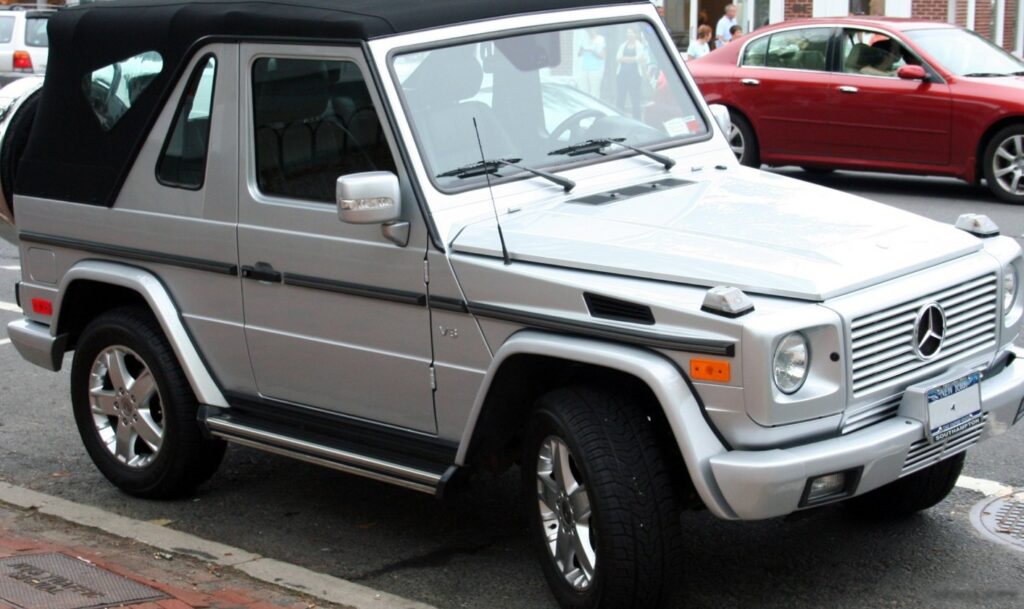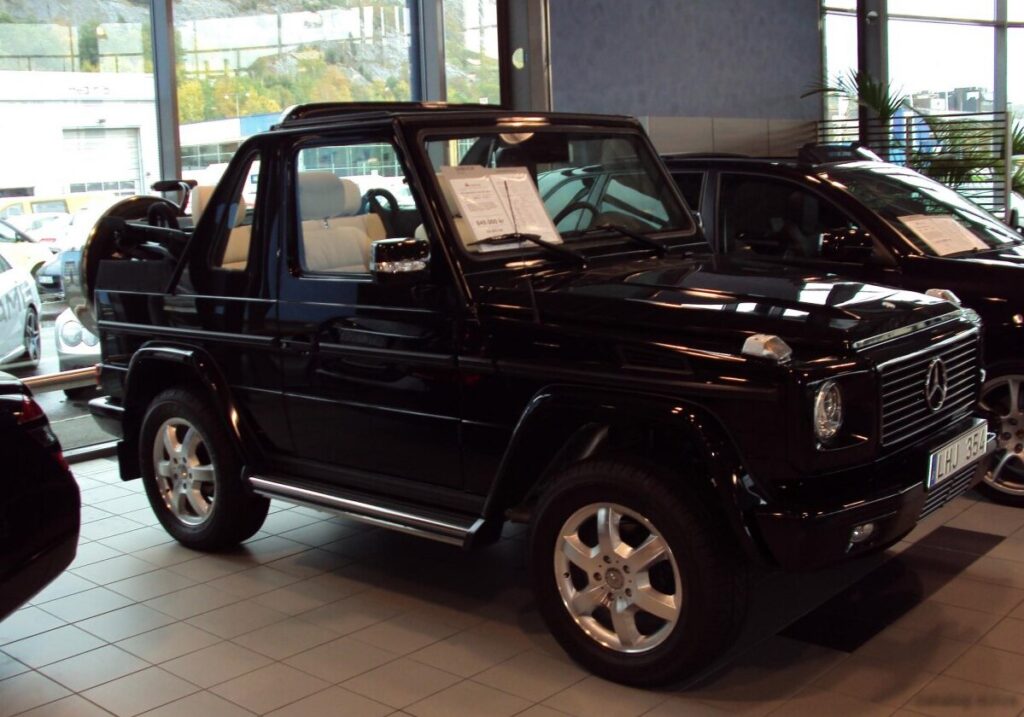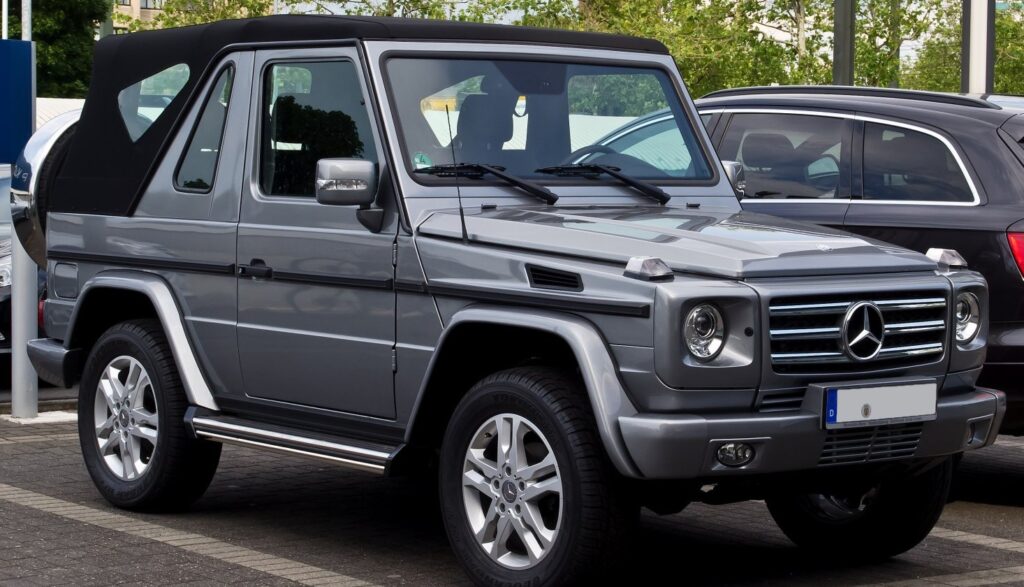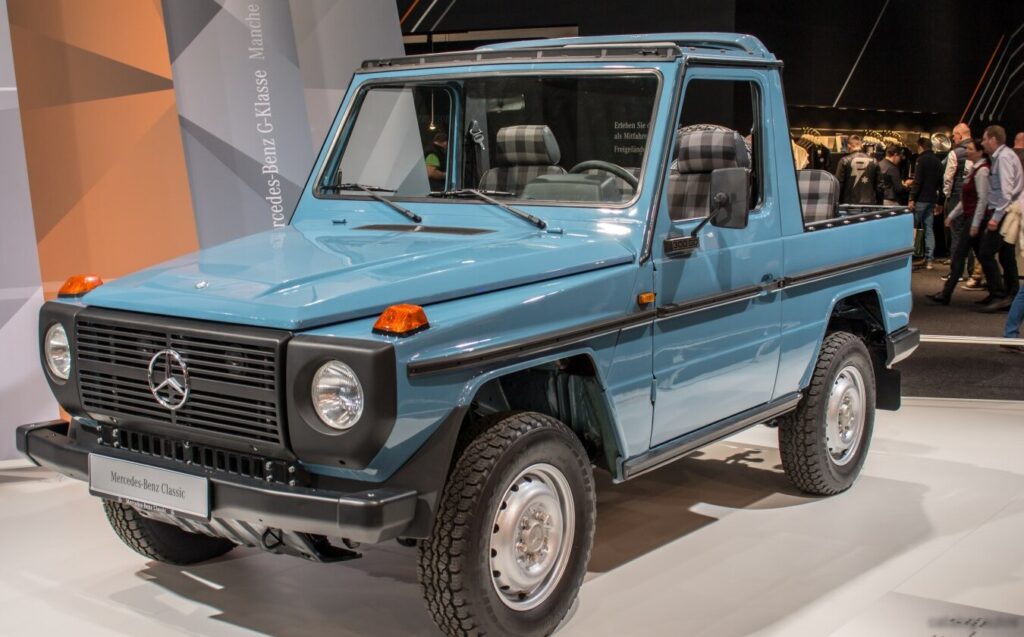
The Mercedes-Benz G-Class Cabriolet (W460) 300 GD, powered by an 88 horsepower diesel engine and featuring a four-wheel-drive system, represents a unique and robust iteration of the iconic “Geländewagen.” Produced from 1979 to 1991, this variant occupied a specific niche within the W460 series, offering open-air motoring combined with the legendary off-road capability for which the G-Class is renowned. It was positioned as a more utilitarian and affordable option compared to the gasoline-powered models, appealing to those prioritizing durability and practicality over outright performance. The 300 GD Cabriolet was primarily sold in Europe, where demand for diesel-powered, all-terrain vehicles was strong, and it quickly gained a reputation for its ruggedness and reliability.
Technical Specifications
| Brand | Mercedes-Benz |
| Model | G-class |
| Generation | G-class Cabriolet (W460) |
| Type (Engine) | 300 GD (88 Hp) 4WD |
| Start of production | 1979 year |
| End of production | 1991 year |
| Powertrain Architecture | Internal Combustion engine |
| Body type | Off-road vehicle, Cabriolet |
| Seats | 5 |
| Doors | 3 |
| Fuel consumption (economy) – urban | 14.6 l/100 km (16.1 US mpg, 19.3 UK mpg, 6.8 km/l) |
| Fuel consumption (economy) – extra urban | 11.9 l/100 km (19.8 US mpg, 23.7 UK mpg, 8.4 km/l) |
| Fuel Type | Diesel |
| Maximum speed | 127 km/h (78.91 mph) |
| Weight-to-power ratio | 20.1 kg/Hp, 49.9 Hp/tonne |
| Weight-to-torque ratio | 10.3 kg/Nm, 97.5 Nm/tonne |
| Power | 88 Hp @ 4400 rpm |
| Power per litre | 29.4 Hp/l |
| Torque | 172 Nm @ 2400 rpm (126.86 lb.-ft. @ 2400 rpm) |
| Engine layout | Front, Longitudinal |
| Engine Model/Code | OM 617.931 |
| Engine displacement | 2998 cm3 (182.95 cu. in.) |
| Number of cylinders | 5 |
| Engine configuration | Inline |
| Cylinder Bore | 90.9 mm (3.58 in.) |
| Piston Stroke | 92.4 mm (3.64 in.) |
| Compression ratio | 21:1 |
| Number of valves per cylinder | 2 |
| Fuel injection system | Precombustion chamber injection |
| Engine aspiration | Naturally aspirated engine |
| Valvetrain | SOHC |
| Engine oil capacity | 7 l (7.4 US qt | 6.16 UK qt) |
| Coolant | 10.7 l (11.31 US qt | 9.41 UK qt) |
| Kerb Weight | 1765 kg (3891.16 lbs.) |
| Max. weight | 2500 kg (5511.56 lbs.) |
| Max load | 735 kg (1620.4 lbs.) |
| Trunk (boot) space – minimum | 765 l (27.02 cu. ft.) |
| Trunk (boot) space – maximum | 1740 l (61.45 cu. ft.) |
| Fuel tank capacity | 75 l (19.81 US gal | 16.5 UK gal) |
| Permitted trailer load with brakes (12%) | 2500 kg (5511.56 lbs.) |
| Permitted trailer load without brakes | 750 kg (1653.47 lbs.) |
| Length | 4145 mm (163.19 in.) |
| Width | 1700 mm (66.93 in.) |
| Height | 2000 mm (78.74 in.) |
| Wheelbase | 2400 mm (94.49 in.) |
| Front track | 1425 mm (56.1 in.) |
| Rear (Back) track | 1425 mm (56.1 in.) |
| Front overhang | 745 mm (29.33 in.) |
| Rear overhang | 800 mm (31.5 in.) |
| Ride height (ground clearance) | 215 mm (8.46 in.) |
| Minimum turning circle (turning diameter) | 11.4 m (37.4 ft.) |
| Approach angle | 45° |
| Departure angle | 40° |
| Ramp-over (brakeover) angle | 31° |
| Climb angle | 38.7° |
| Wading depth | 600 mm (23.62 in.) |
| Drivetrain Architecture | The Internal combustion engine (ICE) drives the rear wheels permanently, and the front wheels are driven through an electrically or mechanically operated clutch if necessary. |
| Drive wheel | All wheel drive (4×4) |
| Number of gears and type of gearbox | 4 gears, manual transmission |
| Front suspension | Coil spring, Rigid axle suspension, Transverse stabilizer, Trailing arm |
| Rear suspension | Rigid axle suspension, Trailing arm, Coil spring |
| Front brakes | Disc, 303 mm |
| Rear brakes | Drum, 260 mm |
| Steering type | Cone worm with recirculation balls |
| Tires size | 205/80 R16 |
| Wheel rims size | 5.5J x 16 |
Powertrain & Engine Architecture
The heart of the 300 GD Cabriolet is the OM 617.931, a 3.0-liter inline five-cylinder diesel engine. This engine is a hallmark of Mercedes-Benz’s diesel engineering from the period, known for its durability and relatively simple design. It utilizes precombustion chamber injection, a system where fuel is injected into a small pre-chamber connected to the main combustion chamber, promoting more complete combustion and reducing engine noise. The engine produces 88 horsepower at 4400 rpm and 172 Nm (126.86 lb-ft) of torque at 2400 rpm. The engine’s robust construction and relatively low compression ratio (21:1) contribute to its longevity. The engine is longitudinally mounted in the front of the vehicle. The 300 GD was typically paired with a four-speed manual transmission, although an automatic transmission was available as an option, albeit less common. The automatic gearbox, while offering convenience, slightly impacted performance and fuel economy.
Driving Characteristics
The 300 GD Cabriolet, with its 88 horsepower and manual transmission, wasn’t designed for rapid acceleration. Its strength lay in its low-end torque, making it capable of tackling challenging terrain and maintaining steady speeds on highways. The four-speed manual gearbox provided a reasonable spread of ratios, but the engine’s limited power meant that frequent downshifting was necessary when encountering hills or overtaking. Compared to the more powerful gasoline-powered G-Class models, the 300 GD felt considerably slower, but it offered superior fuel economy and a more relaxed driving experience. The 4WD system, with its selectable engagement of the front axle, provided excellent traction in off-road conditions.
Equipment & Trim Levels
The 300 GD Cabriolet was generally equipped with a fairly basic level of trim, reflecting its utilitarian nature. Standard features included vinyl upholstery, rubber floor mats, and a simple dashboard layout. Optional extras included upgraded upholstery, power windows, and a more sophisticated audio system. The Cabriolet version, by its nature, featured a manually operated soft top, which could be folded back to provide an open-air driving experience. The interior was designed to be easily cleaned and maintained, prioritizing practicality over luxury.
Chassis & Braking
The W460 G-Class chassis is a body-on-frame construction, providing exceptional strength and durability. The 300 GD featured a rigid axle suspension with coil springs at both the front and rear, offering a comfortable ride even on rough terrain. Front brakes were discs, while the rear brakes were drums. The steering system was a cone worm with recirculation balls, providing a direct but somewhat heavy steering feel. The relatively high ground clearance (215 mm / 8.46 in.) and impressive approach, departure, and ramp-over angles made the 300 GD a highly capable off-road vehicle.
Market Reception & Comparison
The 300 GD Cabriolet was well-received in Europe, particularly among those seeking a rugged and reliable off-road vehicle with good fuel economy. Critics praised its durability and off-road capability, but noted its relatively slow acceleration and basic interior. Compared to the gasoline-powered G-Class models, the 300 GD offered a more affordable entry point into the G-Class family, but at the expense of performance. Compared to other diesel-powered off-road vehicles of the time, the 300 GD stood out for its build quality and sophisticated engineering.
Legacy
The Mercedes-Benz G-Class W460 300 GD Cabriolet has become a sought-after classic among enthusiasts. The OM 617 engine is renowned for its longevity, and well-maintained examples can still provide reliable service today. The combination of open-air motoring and legendary off-road capability makes this variant particularly desirable. While parts availability can be a challenge, the 300 GD’s robust construction and relatively simple design make it a relatively easy vehicle to maintain. Today, these vehicles command a premium in the used car market, reflecting their enduring appeal and iconic status.