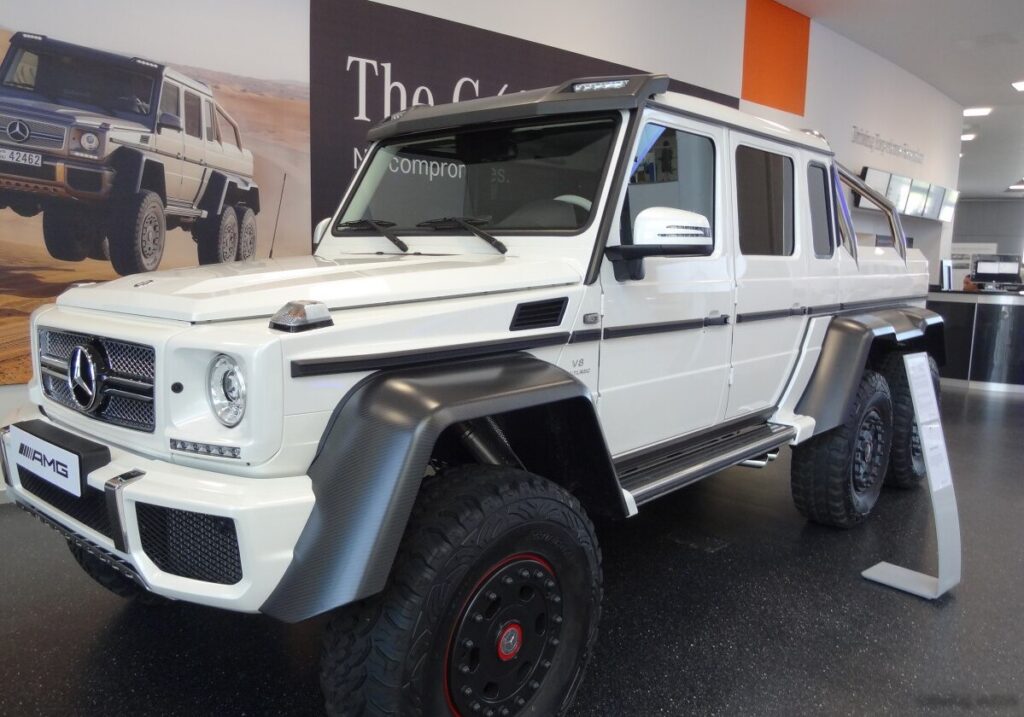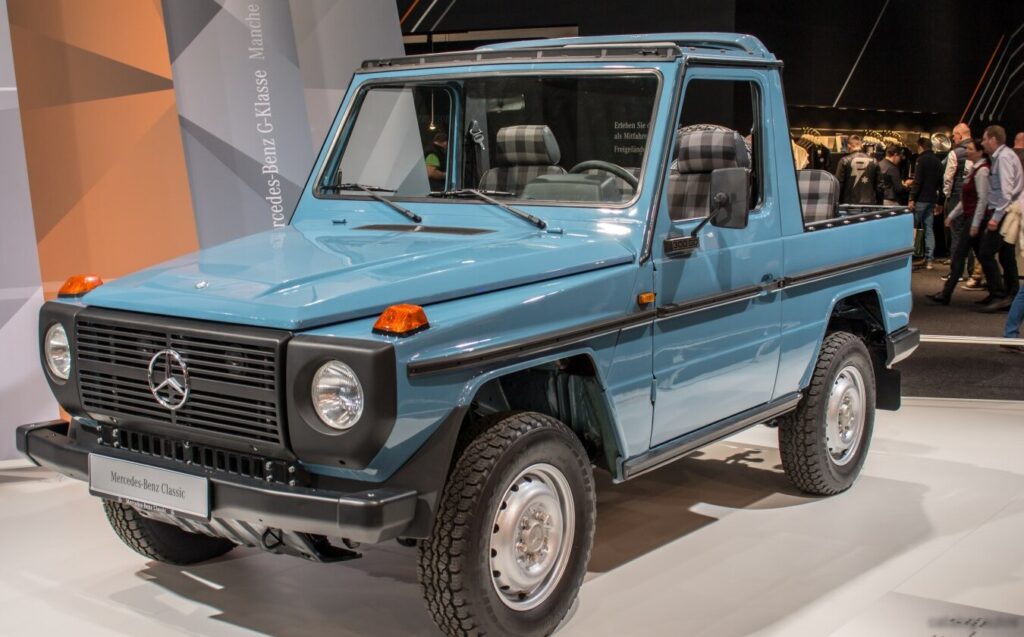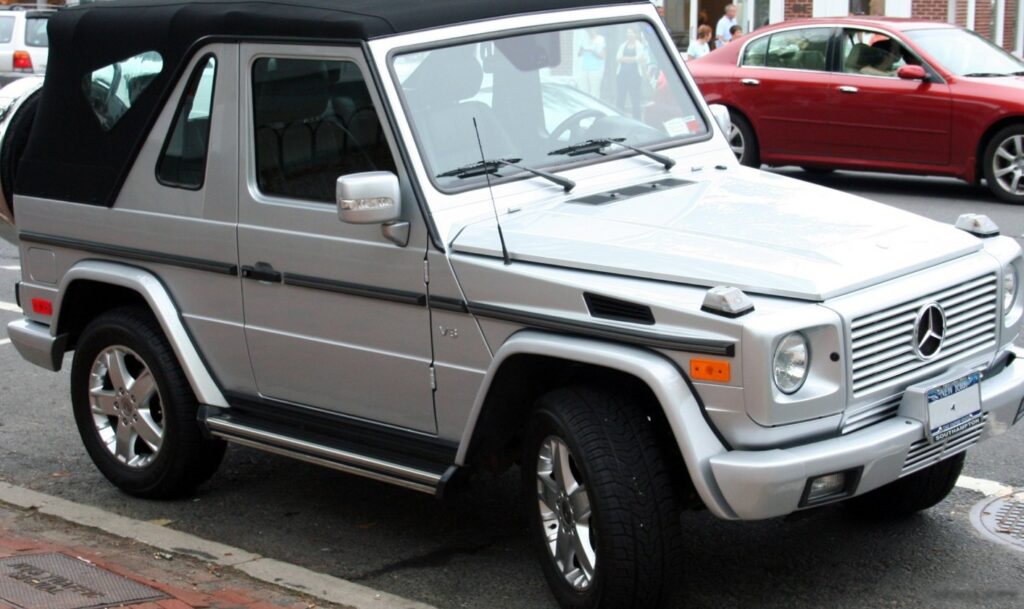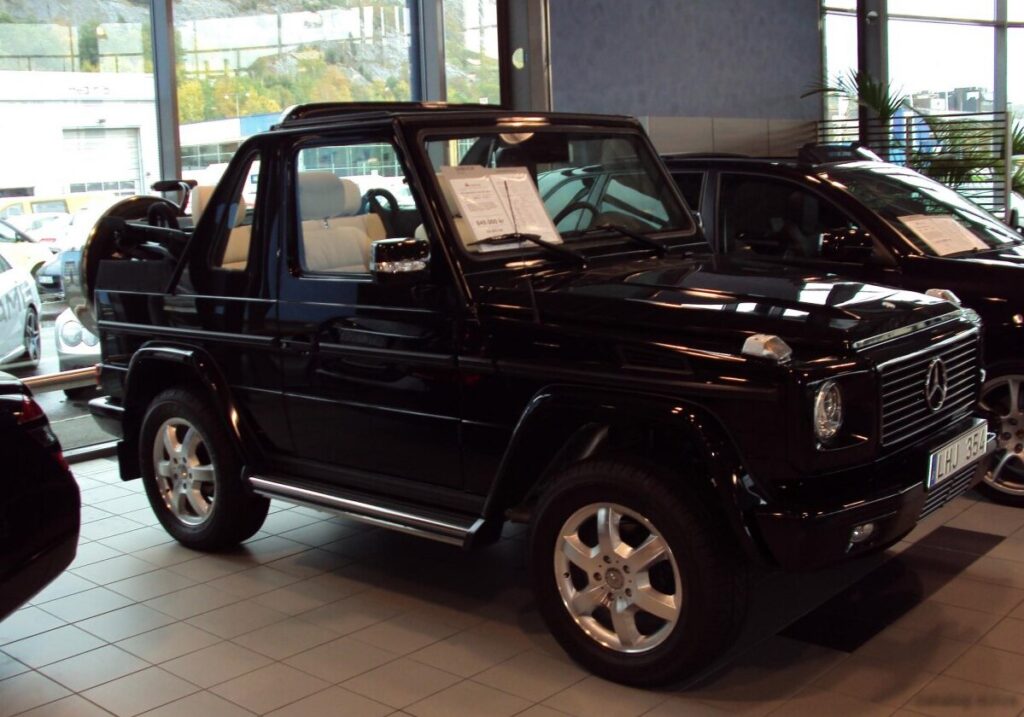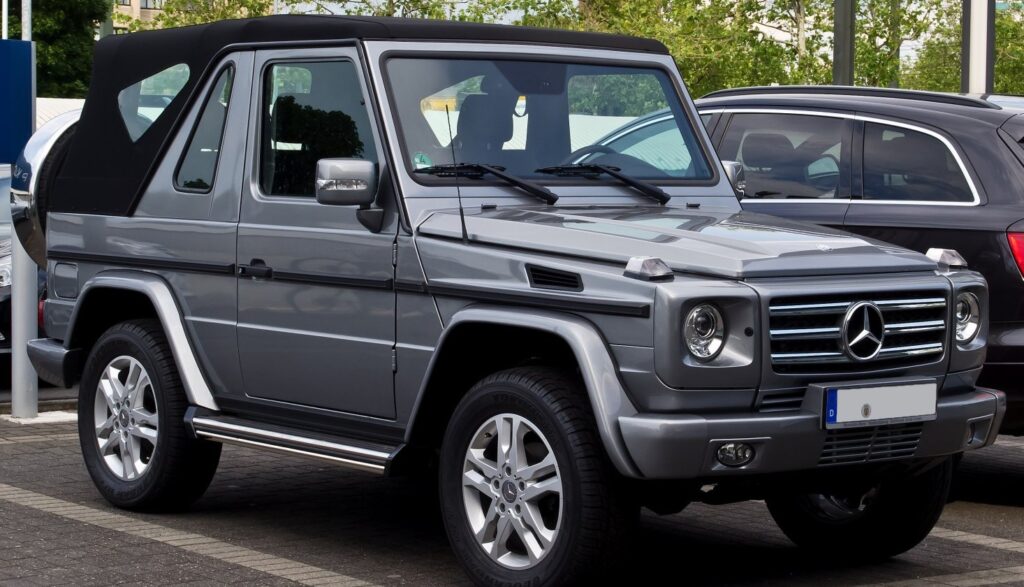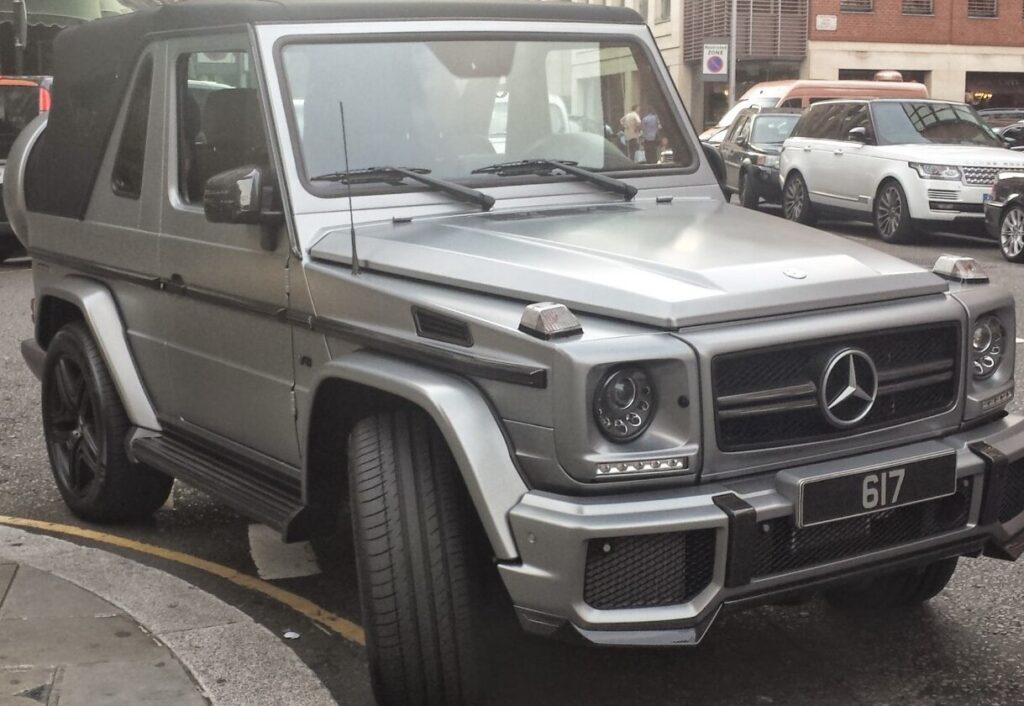
The Mercedes-Benz G-Class Cabriolet (W463, facelift 2012) G 500 V8 Final Edition 200, produced from 2013 to 2014, represents a luxurious and powerful iteration of the iconic G-Wagen. This open-top variant, built on the W463 platform which underwent a significant facelift in 2012, combined the G-Class’s legendary off-road capability with the added enjoyment of open-air driving. The “Final Edition” designation signified a limited-run model celebrating the end of this particular body style, offering a unique blend of performance, exclusivity, and robust construction. It sat at the top of the Cabriolet range, offering the most powerful engine option available.
Technical Specifications
| Brand | Mercedes-Benz |
| Model | G-class |
| Generation | G-class Cabriolet (W463, facelift 2012) |
| Type | G 500 V8 Final Edition 200 (388 Hp) 4MATIC 7G-TRONIC PLUS |
| Start of production | 2013 |
| End of production | 2014 |
| Powertrain Architecture | Internal Combustion engine |
| Body type | Off-road vehicle, Cabriolet |
| Seats | 4 |
| Doors | 2 |
| Fuel consumption (urban) | 20 l/100 km (11.8 US mpg, 14.1 UK mpg, 5 km/l) |
| Fuel consumption (extra urban) | 11.9 l/100 km (19.8 US mpg, 23.7 UK mpg, 8.4 km/l) |
| Fuel consumption (combined) | 14.9 l/100 km (15.8 US mpg, 19 UK mpg, 6.7 km/l) |
| CO2 emissions | 348 g/km |
| Fuel Type | Petrol (Gasoline) |
| Acceleration 0-100 km/h | 5.9 sec |
| Acceleration 0-60 mph | 5.6 sec |
| Maximum speed | 210 km/h (130.49 mph) |
| Emission standard | Euro 5 |
| Weight-to-power ratio | 5.9 kg/Hp |
| Weight-to-torque ratio | 4.3 kg/Nm |
| Power | 388 Hp @ 6000 rpm |
| Torque | 530 Nm @ 2800-4800 rpm (390.91 lb.-ft.) |
| Engine layout | Front, Longitudinal |
| Engine Model/Code | M 273.963 |
| Engine displacement | 5461 cm3 (333.25 cu. in.) |
| Number of cylinders | 8 |
| Engine configuration | V-engine |
| Cylinder Bore | 98 mm (3.86 in.) |
| Piston Stroke | 90.5 mm (3.56 in.) |
| Compression ratio | 10.7:1 |
| Number of valves per cylinder | 4 |
| Fuel injection system | Multi-port manifold injection |
| Engine aspiration | Naturally aspirated engine |
| Valvetrain | DOHC |
| Engine oil capacity | 9 l (9.51 US qt, 7.92 UK qt) |
| Kerb Weight | 2305 kg (5081.66 lbs.) |
| Max. weight | 2850 kg (6283.17 lbs.) |
| Max load | 545 kg (1201.52 lbs.) |
| Trunk space (min) | 238 l (8.4 cu. ft.) |
| Trunk space (max) | 1580 l (55.8 cu. ft.) |
| Fuel tank capacity | 96 l (25.36 US gal, 21.12 UK gal) |
| Length | 4257 mm (167.6 in.) |
| Width | 1760 mm (69.29 in.) |
| Width including mirrors | 2055 mm (80.91 in.) |
| Height | 1951 mm (76.81 in.) |
| Wheelbase | 2400 mm (94.49 in.) |
| Front track | 1475 mm (58.07 in.) |
| Rear track | 1475 mm (58.07 in.) |
| Ride height (ground clearance) | 205 mm (8.07 in.) |
| Drag coefficient (Cd) | 0.54 |
| Minimum turning circle | 11.3 m (37.07 ft.) |
| Approach angle | 36° |
| Departure angle | 27° |
| Ramp-over angle | 23° |
| Climb angle | 38.7° |
| Wading depth | 600 mm (23.62 in.) |
| Drivetrain | All wheel drive (4×4) |
| Number of gears | 7 |
| Gearbox type | Automatic transmission G-TRONIC PLUS |
| Front suspension | Coil spring, Rigid axle suspension, Trailing arm |
| Rear suspension | Rigid axle suspension, Trailing arm, Coil spring |
| Front brakes | Ventilated discs |
| Rear brakes | Disc |
| Tires size | 265/60 R18 |
| Wheel rims size | 7.5J x 18 |
Powertrain & Engine Architecture
The G 500 V8 Final Edition was powered by the M273.963 5.5-liter naturally aspirated V8 engine. This engine, a mainstay in many Mercedes-Benz models of the era, produced 388 horsepower at 6000 rpm and 530 Nm (390.91 lb.-ft.) of torque between 2800 and 4800 rpm. The engine utilized a three-valve per cylinder design (two intake, one exhaust) and multi-port fuel injection. The M273 engine was known for its smooth power delivery and distinctive V8 sound. It was paired exclusively with the 7G-TRONIC PLUS seven-speed automatic transmission, a sophisticated unit that offered smooth and responsive shifting. This transmission featured a torque converter lock-up clutch for improved efficiency at cruising speeds. The 4MATIC all-wheel-drive system distributed power to all four wheels, providing exceptional traction both on and off-road.
Driving Characteristics
The combination of the powerful V8 engine and the 7G-TRONIC PLUS transmission resulted in brisk acceleration. The 0-60 mph sprint was achieved in approximately 5.6 seconds, and the vehicle was electronically limited to a top speed of 130.49 mph. While not a sports car, the G 500 offered ample power for confident overtaking and effortless cruising. The automatic transmission, while smooth, wasn’t particularly focused on maximizing fuel economy. The gear ratios were tuned for a balance of performance and usability, providing strong acceleration in most driving situations. Compared to the G 350 d (diesel) models, the G 500 offered significantly more power and a more responsive driving experience, but at the cost of increased fuel consumption. The G 500 also felt more substantial and less nimble than the smaller-engined variants.
Equipment & Trim Levels
The “Final Edition” trim included a generous array of standard features. Interior appointments typically included high-quality leather upholstery, wood trim, and stainless steel accents. Standard equipment included automatic climate control, power-adjustable seats, a premium sound system, and navigation. The Final Edition also featured unique exterior styling cues, such as special badging and exclusive paint options. Optional extras included a sunroof, upgraded leather packages, and various driver-assistance systems. The open-top Cabriolet configuration added a unique element of luxury and enjoyment, though it did compromise some structural rigidity compared to the hardtop G-Class.
Chassis & Braking
The G 500 V8 Final Edition retained the G-Class’s traditional body-on-frame construction, providing exceptional durability and off-road capability. The suspension consisted of coil springs and rigid axles with trailing arms, offering a comfortable ride despite the vehicle’s robust nature. Braking duties were handled by ventilated discs at the front and solid discs at the rear, equipped with ABS (Anti-lock Braking System). The steering system was a recirculating ball type with hydraulic power assistance. The vehicle’s high weight and off-road focus meant that braking distances were not as short as those of more modern, performance-oriented vehicles.
Market Reception & Comparison
The G 500 V8 Final Edition was well-received by automotive critics, who praised its powerful engine, luxurious interior, and iconic styling. However, its high price tag and relatively poor fuel economy were noted drawbacks. Compared to other luxury SUVs of the time, the G-Class offered a unique combination of off-road capability and on-road refinement. The G 500 was significantly more expensive than the G 350 d, but offered a substantial performance advantage. Fuel economy was considerably worse than the diesel variant, making the G 500 a less practical choice for everyday driving.
Legacy
The Mercedes-Benz G-Class Cabriolet (W463) G 500 V8 Final Edition 200 remains a highly sought-after vehicle among collectors and enthusiasts. The M273 V8 engine, while not the most fuel-efficient, is generally considered reliable with proper maintenance. The 7G-TRONIC transmission has also proven to be durable. Today, these vehicles command premium prices on the used car market, reflecting their rarity, exclusivity, and enduring appeal. The Final Edition represents a significant chapter in the G-Class’s history, marking the end of an era for the open-top variant and solidifying its status as a true automotive icon.