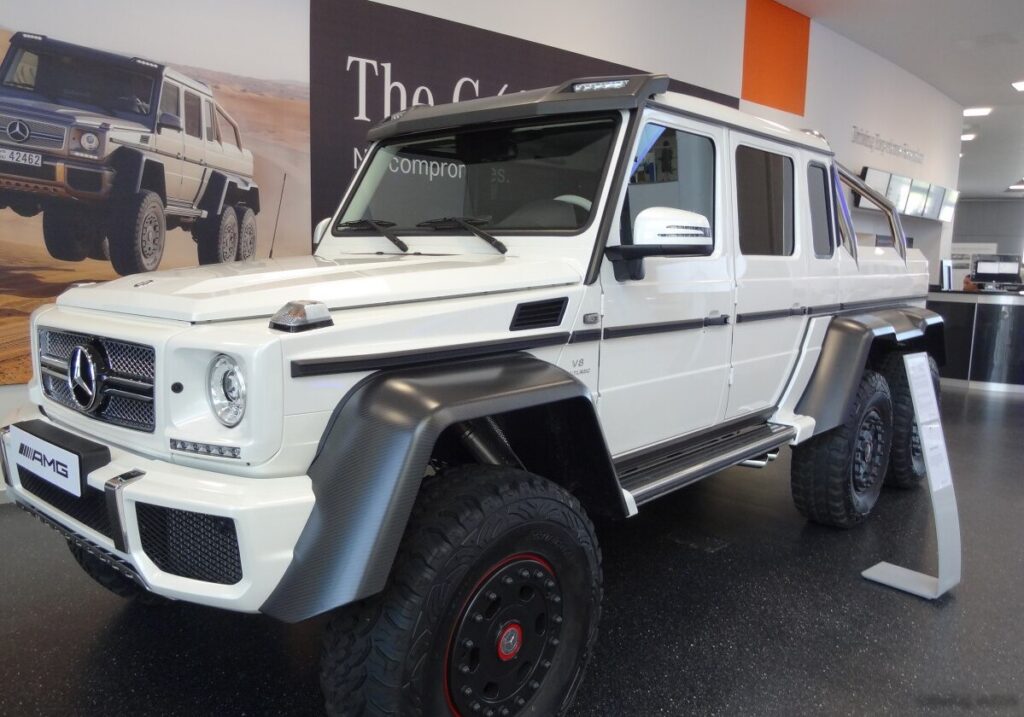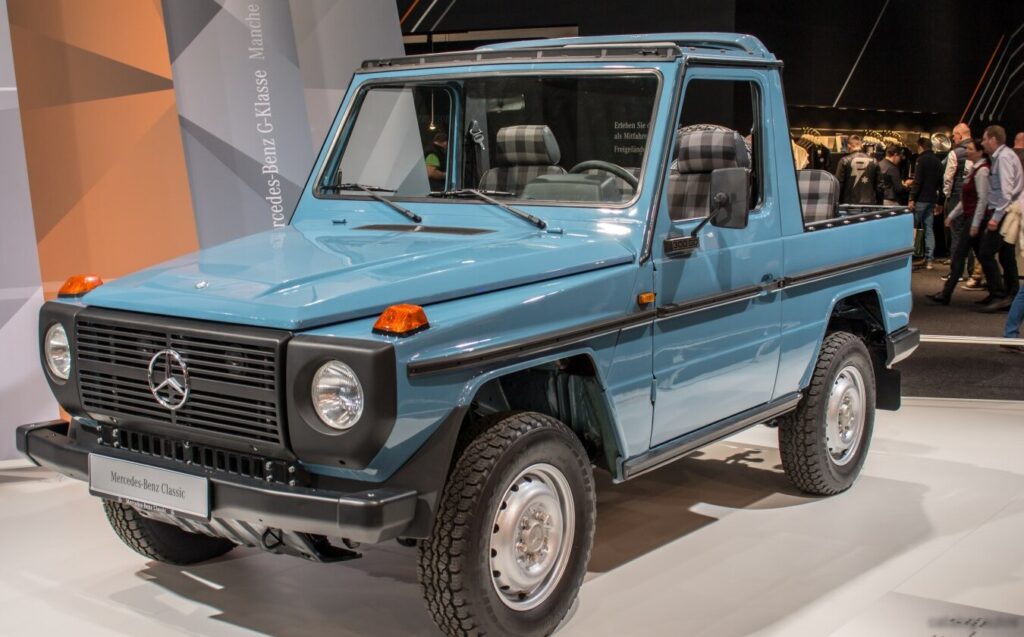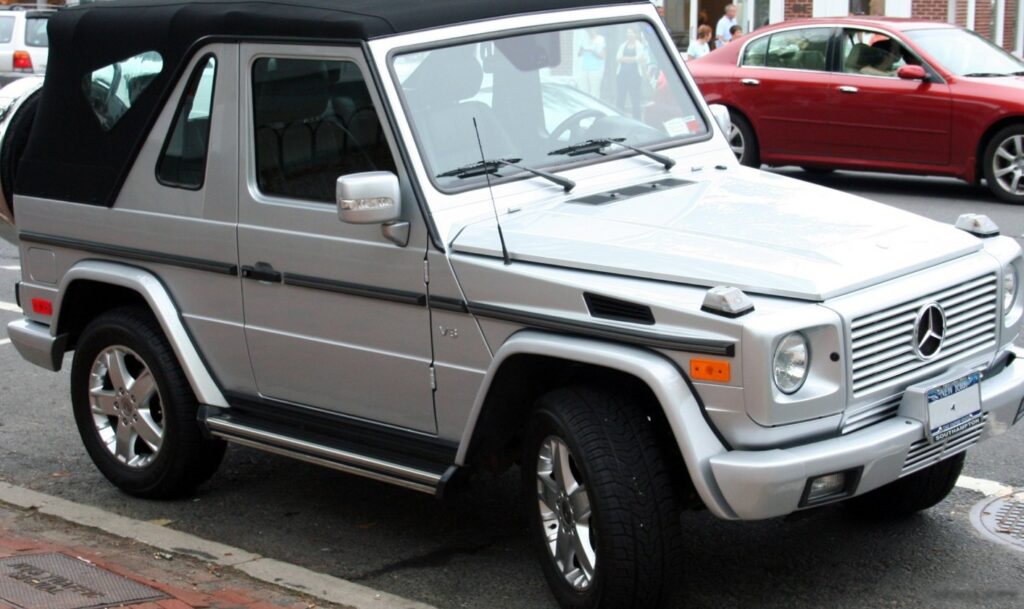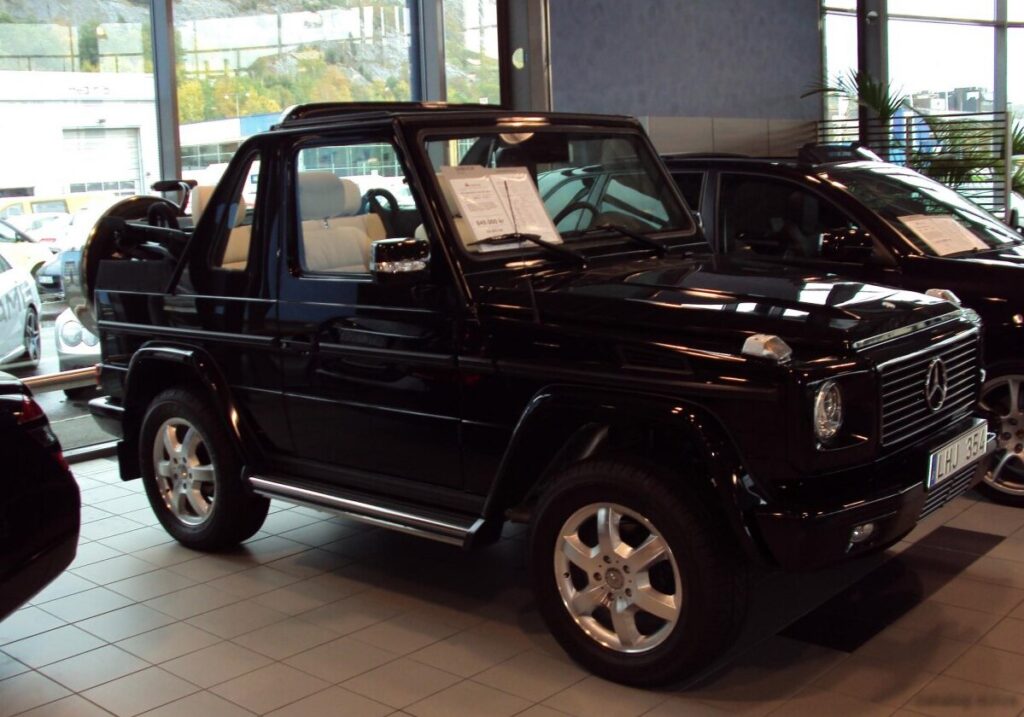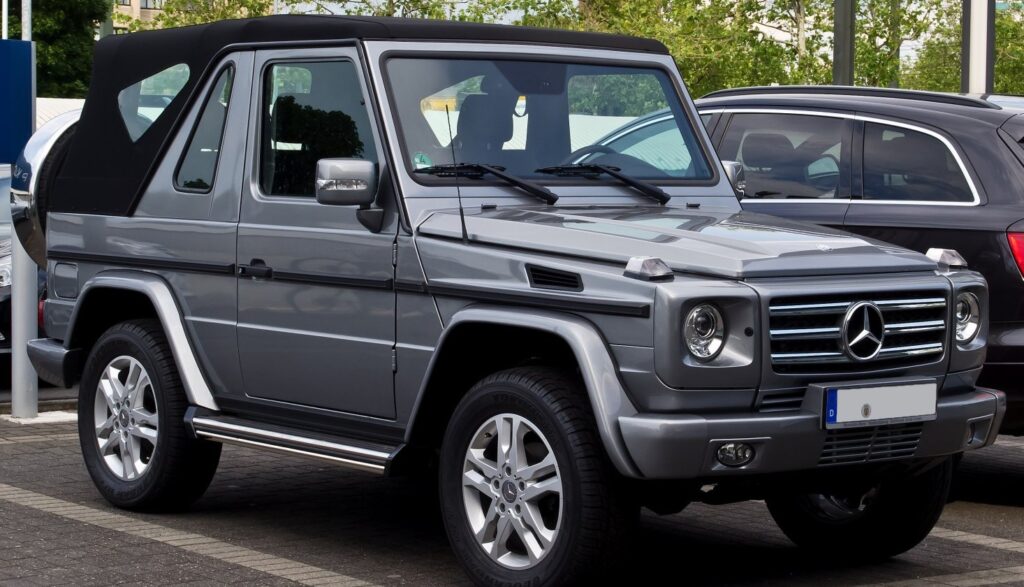
The Mercedes-Benz G-class Long (W463) 300 GE 4MATIC Automatic, produced from April 1990 to September 1993, represents a significant iteration of the iconic G-Wagen. Positioned as a mid-range offering within the expanding G-class lineup, the 300 GE aimed to balance off-road capability with a degree of on-road refinement, appealing to buyers seeking a versatile and durable luxury vehicle. The “Long” designation indicates an extended wheelbase compared to the standard G-Wagen, providing increased interior space and improved ride comfort. This variant played a crucial role in establishing the G-class as a desirable vehicle beyond its original military purpose, particularly in the European market where it gained traction among affluent customers desiring a robust and capable all-terrain vehicle.
Technical Specifications
| Brand | Mercedes-Benz |
| Model | G-class |
| Generation | G-class Long (W463) |
| Type | 300 GE (170 Hp) 4MATIC Automatic |
| Start of production | April, 1990 |
| End of production | September, 1993 |
| Powertrain Architecture | Internal Combustion engine |
| Body type | Off-road vehicle |
| Seats | 5 |
| Doors | 5 |
| Fuel consumption (urban) | 19 l/100 km (12.4 US mpg, 14.9 UK mpg, 5.3 km/l) |
| Fuel consumption (extra urban) | 13.4 l/100 km (17.6 US mpg, 21.1 UK mpg, 7.5 km/l) |
| Fuel Type | Petrol (Gasoline) |
| Acceleration 0 – 100 km/h | 14.8 sec |
| Acceleration 0 – 62 mph | 14.8 sec |
| Acceleration 0 – 60 mph | 14.1 sec |
| Maximum speed | 165 km/h (102.53 mph) |
| Weight-to-power ratio | 13.1 kg/Hp, 76.6 Hp/tonne |
| Weight-to-torque ratio | 9.4 kg/Nm, 105.9 Nm/tonne |
| Power | 170 Hp @ 5500 rpm |
| Power per litre | 57.4 Hp/l |
| Torque | 235 Nm @ 4500 rpm (173.33 lb.-ft. @ 4500 rpm) |
| Engine layout | Front, Longitudinal |
| Engine Model/Code | M 103.987 |
| Engine displacement | 2960 cm3 (180.63 cu. in.) |
| Number of cylinders | 6 |
| Engine configuration | Inline |
| Cylinder Bore | 88.5 mm (3.48 in.) |
| Piston Stroke | 80.2 mm (3.16 in.) |
| Compression ratio | 9.2:1 |
| Number of valves per cylinder | 2 |
| Fuel injection system | Multi-port manifold injection |
| Engine aspiration | Naturally aspirated engine |
| Valvetrain | SOHC |
| Engine oil capacity | 6.5 l (6.87 US qt | 5.72 UK qt) |
| Coolant capacity | 7.8 l (8.24 US qt | 6.86 UK qt) |
| Kerb Weight | 2220 kg (4894.26 lbs.) |
| Max. weight | 2950 kg (6503.64 lbs.) |
| Max load | 730 kg (1609.37 lbs.) |
| Fuel tank capacity | 96 l (25.36 US gal | 21.12 UK gal) |
| Length | 4635 mm (182.48 in.) |
| Width | 1690 mm (66.54 in.) |
| Height | 1936 mm (76.22 in.) |
| Wheelbase | 2850 mm (112.2 in.) |
| Front track | 1425 mm (56.1 in.) |
| Rear track | 1425 mm (56.1 in.) |
| Drivetrain Architecture | All wheel drive (4×4). ICE drives all four wheels permanently. |
| Number of gears | 4 |
| Gearbox type | Automatic transmission |
| Front suspension | Coil spring, Rigid axle, Trailing arm |
| Rear suspension | Rigid axle, Trailing arm, Coil spring |
| Front brakes | Disc |
| Rear brakes | Drum |
| Steering type | Cone worm with recirculation balls |
| Power steering | Hydraulic |
| Tires size | 205/80 R 16 |
| Wheel rims size | 6 J x 16 |
Powertrain & Engine Architecture
The 300 GE utilized the M103.987 engine, a 3.0-liter inline-six cylinder gasoline engine. This engine, a mainstay of Mercedes-Benz’s mid-range offerings during the period, featured a single overhead camshaft (SOHC) valvetrain and Bosch multi-port fuel injection. The M103 was known for its durability and relatively smooth operation, though it wasn’t a particularly high-revving engine. Its 170 horsepower and 235 Nm (173 lb-ft) of torque were adequate for the G-Wagen’s substantial weight, but didn’t deliver particularly brisk acceleration. The engine’s longitudinal mounting and the permanent four-wheel-drive system necessitated a robust transmission. The 300 GE was equipped with a four-speed automatic transmission, which, while providing convenience, did detract somewhat from the engine’s efficiency and responsiveness compared to the available manual gearbox.
Driving Characteristics
The 300 GE Automatic offered a comfortable, if not sporty, driving experience. The automatic transmission smoothed out power delivery, making it well-suited for everyday driving and off-road situations where precise throttle control was beneficial. However, the four-speed automatic’s gear ratios weren’t optimized for maximizing performance. Acceleration from 0-60 mph took around 14.1 seconds, and top speed was limited to 102.53 mph. Compared to the manual transmission version or the later 300 GE with more powerful engines, the automatic felt noticeably slower. The long wheelbase contributed to a more stable ride on paved roads, but also made the vehicle feel larger and less nimble in tight spaces. Off-road, the 300 GE’s permanent four-wheel drive and low-range gearing provided excellent traction and capability.
Equipment & Trim Levels
The 300 GE Long Automatic typically came equipped with a relatively generous level of standard features for the time, reflecting its luxury positioning. Interior appointments included cloth upholstery, although leather was available as an option. Standard features included power windows, central locking, and a basic audio system. Optional extras included air conditioning, a sunroof, upgraded audio systems, and various interior trim upgrades. The “Long” variant specifically offered increased rear passenger legroom compared to the standard G-Wagen, making it more appealing to families or those frequently carrying passengers.
Chassis & Braking
The G-class chassis remained largely unchanged from its original military design, featuring a robust ladder frame construction. Suspension consisted of coil springs and rigid axles front and rear, providing excellent articulation for off-road use. The 300 GE utilized disc brakes on the front wheels and drum brakes on the rear. While adequate for the vehicle’s weight and intended use, the rear drum brakes were a point of criticism compared to the all-disc setups found on some other luxury SUVs of the era. Hydraulic power steering was standard, making the G-Wagen easier to maneuver, especially in off-road conditions.
Market Reception & Comparison
The 300 GE Automatic was generally well-received by automotive critics, who praised its off-road capability, durability, and unique styling. However, the automatic transmission was often criticized for detracting from the engine’s performance and fuel economy. Compared to the manual transmission version, the automatic offered less driver engagement and slightly worse fuel consumption (around 19 l/100km urban, 13.4 l/100km extra-urban). The 300 GE also sat below the more powerful 300 GE Turbo in the lineup, which offered significantly improved performance. The 300 GE appealed to buyers who prioritized comfort and convenience over outright speed and driving dynamics.
Legacy
The Mercedes-Benz G-class Long (W463) 300 GE Automatic has proven to be a remarkably durable vehicle. Well-maintained examples are still in use today, often cherished by enthusiasts for their ruggedness and iconic status. The M103 engine, while not the most technologically advanced, is known for its longevity and relative simplicity, making it easier to maintain than some of its more complex counterparts. In the used car market, the 300 GE commands a premium due to its rarity and collectibility, particularly well-preserved examples with low mileage. It represents a pivotal moment in the G-class’s evolution, transitioning from a purely utilitarian vehicle to a desirable luxury off-roader.