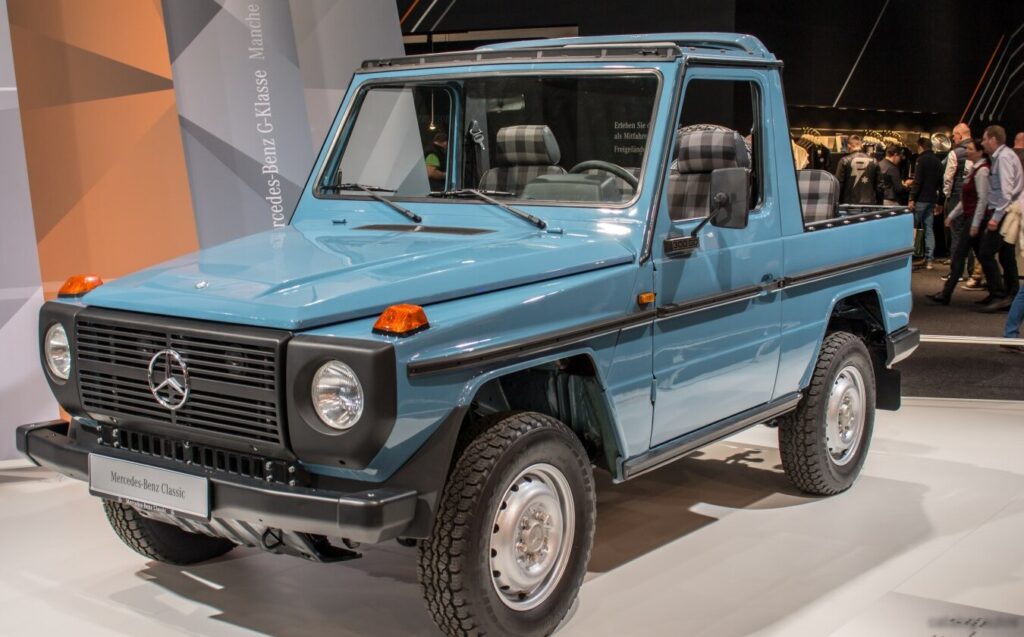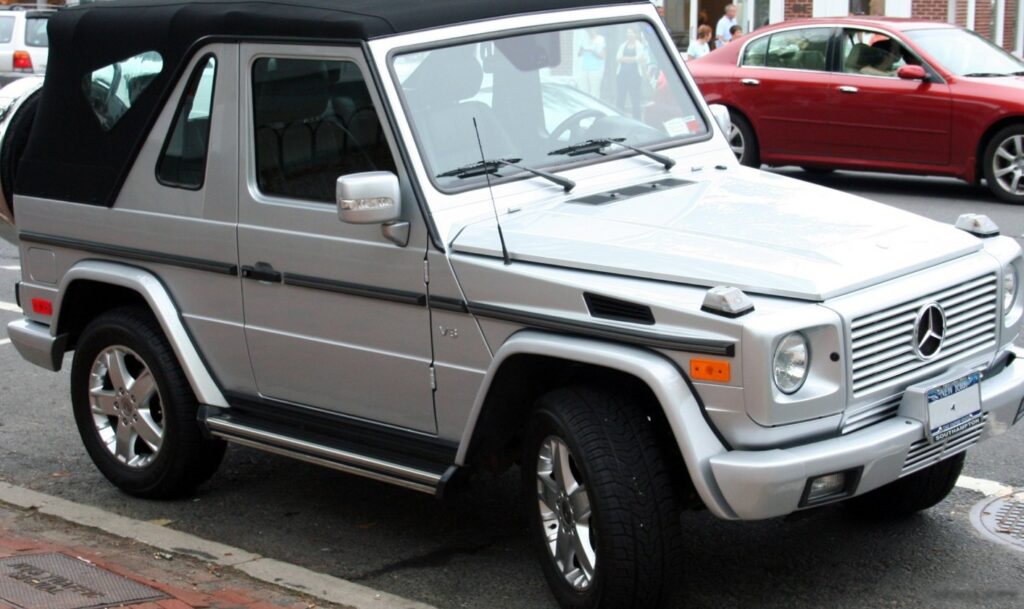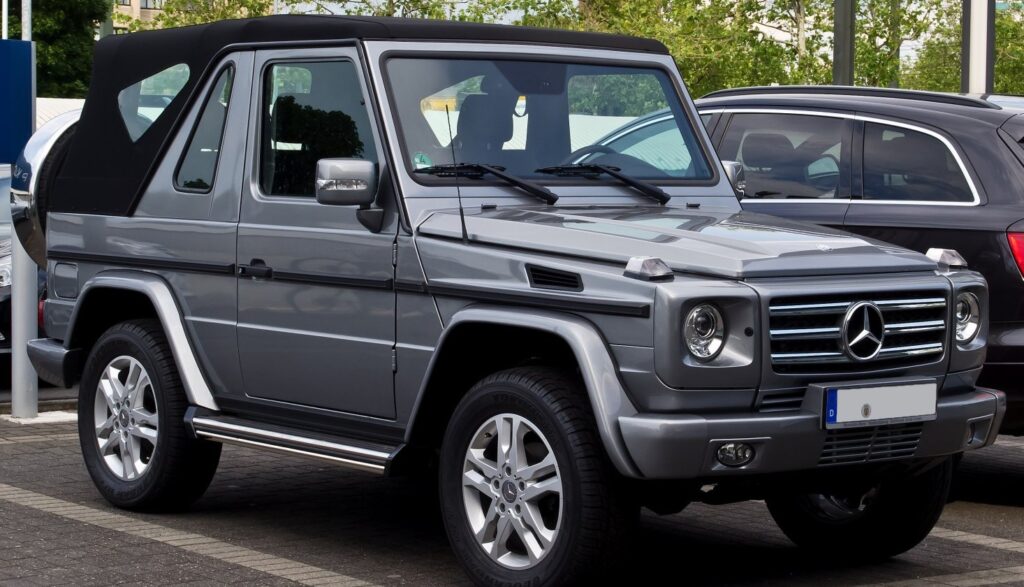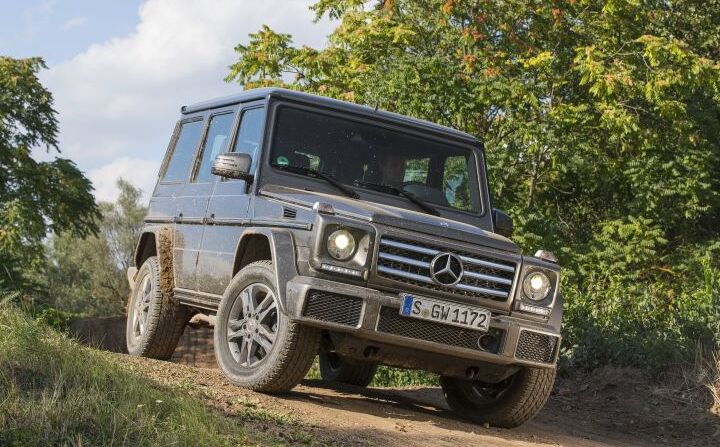
The Mercedes-Benz G-Class Long (W463, facelift 2015) AMG G 63 represents the pinnacle of performance and luxury within the iconic G-Wagen lineage. Produced from 2015 to 2017, this variant builds upon the already capable W463 platform, offering increased interior space and the formidable power of the 5.5-liter twin-turbocharged V8 engine. Positioned as the top-tier model, the AMG G 63 catered to buyers seeking uncompromising off-road capability combined with high-end appointments and blistering acceleration. It served as a statement vehicle, showcasing Mercedes-AMG’s engineering prowess and the G-Class’s enduring appeal.
Technical Specifications
| Brand | Mercedes-Benz |
| Model | G-class |
| Generation | G-class Long (W463, facelift 2015) |
| Type | AMG G 63 V8 (571 Hp) 4MATIC 7G-TRONIC AMG SPEEDSHIFT PLUS |
| Start of production | 2015 |
| End of production | 2017 |
| Powertrain Architecture | Internal Combustion engine |
| Body type | Off-road vehicle |
| Seats | 5 |
| Doors | 5 |
| Fuel consumption (economy) – urban (NEDC) | 17.2 l/100 km (13.7 US mpg, 16.4 UK mpg, 5.8 km/l) |
| Fuel consumption (economy) – extra urban (NEDC) | 11.8 l/100 km (19.9 US mpg, 23.9 UK mpg, 8.5 km/l) |
| Fuel consumption (economy) – combined (NEDC) | 13.8 l/100 km (17 US mpg, 20.5 UK mpg, 7.2 km/l) |
| CO2 emissions (NEDC) | 322 g/km |
| Fuel Type | Petrol (Gasoline) |
| Acceleration 0 – 100 km/h | 5.4 sec |
| Acceleration 0 – 62 mph | 5.4 sec |
| Acceleration 0 – 60 mph | 5.1 sec |
| Maximum speed | 210 km/h (130.49 mph) – Electronically limited |
| Emission standard | Euro 6 |
| Weight-to-power ratio | 4.3 kg/Hp, 230.2 Hp/tonne |
| Weight-to-torque ratio | 3.3 kg/Nm, 306.5 Nm/tonne |
| Power | 571 Hp @ 5500 rpm |
| Power per litre | 104.6 Hp/l |
| Torque | 760 Nm @ 1750-5250 rpm (560.55 lb.-ft. @ 1750-5250 rpm) |
| Engine layout | Front, Longitudinal |
| Engine Model/Code | M 157.984 |
| Engine displacement | 5461 cm3 (333.25 cu. in.) |
| Number of cylinders | 8 |
| Engine configuration | V-engine |
| Cylinder Bore | 98 mm (3.86 in.) |
| Piston Stroke | 90.5 mm (3.56 in.) |
| Compression ratio | 10:1 |
| Number of valves per cylinder | 4 |
| Fuel injection system | Direct injection |
| Engine aspiration | BiTurbo, Intercooler |
| Valvetrain | DOHC |
| Engine oil capacity | 9 l (9.51 US qt | 7.92 UK qt) |
| Kerb Weight | 2480 kg (5467.46 lbs.) |
| Max. weight | 3200 kg (7054.79 lbs.) |
| Max load | 720 kg (1587.33 lbs.) |
| Trunk (boot) space – minimum | 480 l (16.95 cu. ft.) |
| Trunk (boot) space – maximum | 2250 l (79.46 cu. ft.) |
| Fuel tank capacity | 96 l (25.36 US gal | 21.12 UK gal) |
| Max. roof load | 200 kg (440.92 lbs.) |
| Permitted trailer load with brakes (12%) | 3500 kg (7716.18 lbs.) |
| Permitted trailer load without brakes | 750 kg (1653.47 lbs.) |
| Length | 4662 mm (183.54 in.) |
| Width | 1867 mm (73.5 in.) |
| Width including mirrors | 2056 mm (80.94 in.) |
| Height | 1951 mm (76.81 in.) |
| Wheelbase | 2850 mm (112.2 in.) |
| Front track | 1515 mm (59.65 in.) |
| Rear (Back) track | 1515 mm (59.65 in.) |
| Ride height (ground clearance) | 220 mm (8.66 in.) |
| Drag coefficient (Cd) | 0.54 |
| Minimum turning circle (turning diameter) | 13.6 m (44.62 ft.) |
| Approach angle | 27° |
| Departure angle | 27° |
| Ramp-over (brakeover) angle | 24° |
| Climb angle | 38.7° |
| Wading depth | 600 mm (23.62 in.) |
| Drivetrain Architecture | The Internal combustion engine (ICE) drives permanently the four wheels of the vehicle. |
| Drive wheel | All wheel drive (4×4) |
| Number of gears and type of gearbox | 7 gears, automatic transmission G-TRONIC AMG SPEEDSHIFT PLUS |
| Front suspension | Coil spring, Rigid axle suspension, Trailing arm |
| Rear suspension | Rigid axle suspension, Trailing arm, Coil spring |
| Front brakes | Ventilated discs, 375×36 mm |
| Rear brakes | Ventilated discs, 330×22 mm |
| Assisting systems | ABS (Anti-lock braking system) |
| Steering type | Cone worm with recirculation balls |
| Power steering | Hydraulic Steering |
| Tires size | 275/50 R20 |
| Wheel rims size | 9.5J x 20 |
Powertrain & Engine Architecture
The heart of the AMG G 63 is the M 157.984 5.5-liter V8 engine. This powerplant utilizes direct fuel injection and twin turbochargers to produce 571 horsepower at 5500 rpm and a substantial 760 Nm (560.55 lb.-ft.) of torque between 1750 and 5250 rpm. The engine features a compression ratio of 10:1 and a double overhead camshaft (DOHC) valvetrain with four valves per cylinder. The use of intercoolers helps manage intake air temperatures, maximizing efficiency and power output. The engine is longitudinally mounted at the front of the vehicle. Power is transmitted to all four wheels via a 7G-TRONIC AMG SPEEDSHIFT PLUS automatic transmission, offering quick and precise gear changes. This transmission features selectable drive modes, allowing the driver to tailor the shift points to their preferences and driving conditions.
Driving Characteristics
The AMG G 63 delivers a unique driving experience. Despite its considerable weight (2480 kg / 5467.46 lbs), the powerful V8 engine provides exhilarating acceleration, achieving 0-60 mph in approximately 5.1 seconds. The 7G-TRONIC transmission is tuned for performance, offering responsive shifts. However, the G-Class’s boxy shape and high center of gravity contribute to noticeable body roll in corners. The long wheelbase and robust suspension system provide a relatively comfortable ride, even on rough terrain. The 4MATIC all-wheel-drive system ensures excellent traction in various conditions, making it a highly capable off-road vehicle. Compared to the standard G-Class models with smaller engines, the AMG G 63 offers a significantly more powerful and engaging driving experience, albeit with a trade-off in fuel economy.
Equipment & Trim Levels
The AMG G 63 came standard with a comprehensive list of features, reflecting its premium positioning. Interior appointments included leather upholstery, heated and ventilated front seats, and a premium sound system. Standard exterior features included AMG-specific body styling, including flared wheel arches, unique bumpers, and large alloy wheels. Optional extras included a sunroof, upgraded interior trim materials, and various driver-assistance systems. The long wheelbase version offered increased rear passenger legroom compared to the standard G-Class.
Chassis & Braking
The G-Class utilizes a body-on-frame construction, providing exceptional durability and off-road capability. The suspension consists of coil springs and a rigid axle setup at both the front and rear, with trailing arms. This configuration contributes to the vehicle’s robust nature and ability to handle challenging terrain. Braking duties are handled by ventilated disc brakes on all four wheels, measuring 375×36 mm at the front and 330×22 mm at the rear. An anti-lock braking system (ABS) is standard. The steering system employs a cone worm with recirculation balls, providing a direct and responsive feel.
Market Reception & Comparison
The AMG G 63 was generally well-received by automotive critics, who praised its powerful engine, luxurious interior, and exceptional off-road capability. However, its high price tag and relatively poor fuel economy were often cited as drawbacks. Compared to other high-performance SUVs, the G 63 offered a unique combination of luxury and ruggedness. Against the standard G-Class models, the AMG G 63 represented a significant performance upgrade, but at a substantial cost increase. The standard models, particularly those with diesel engines, offered better fuel economy and lower maintenance costs.
Legacy
The W463 AMG G 63 remains a highly sought-after vehicle in the used car market. Its robust construction and powerful engine contribute to its long-term reliability, although maintenance costs can be high due to the complexity of the engine and drivetrain. The AMG G 63 has become a collector’s item, appreciated for its iconic design and unique character. It represents a significant chapter in the G-Class’s history, showcasing the model’s ability to evolve while retaining its core values of durability, capability, and exclusivity.