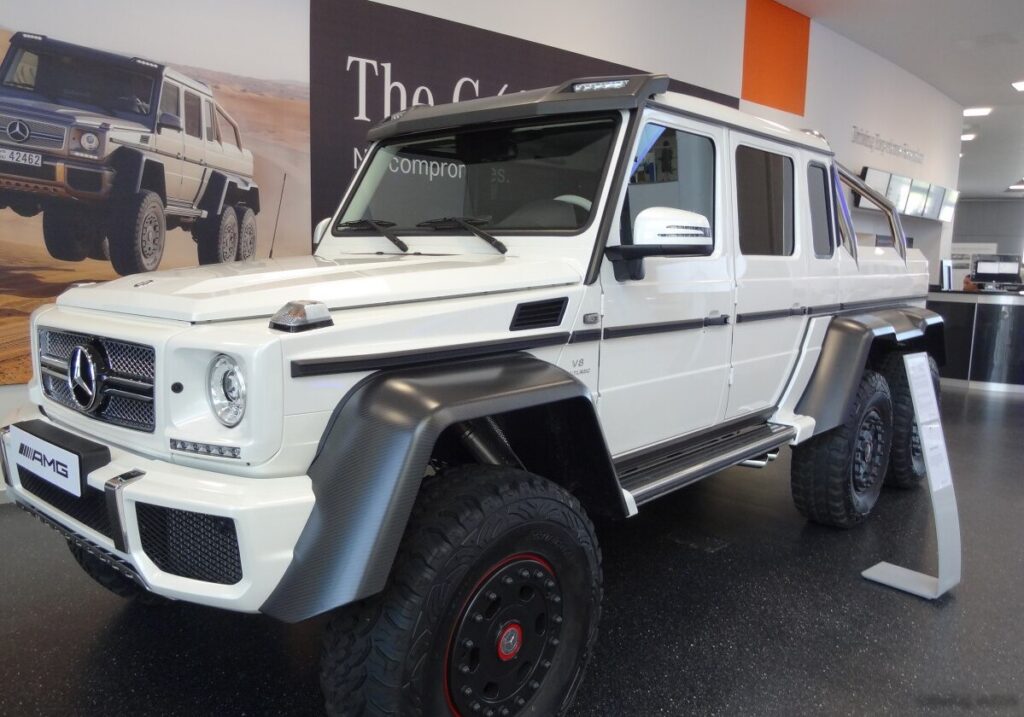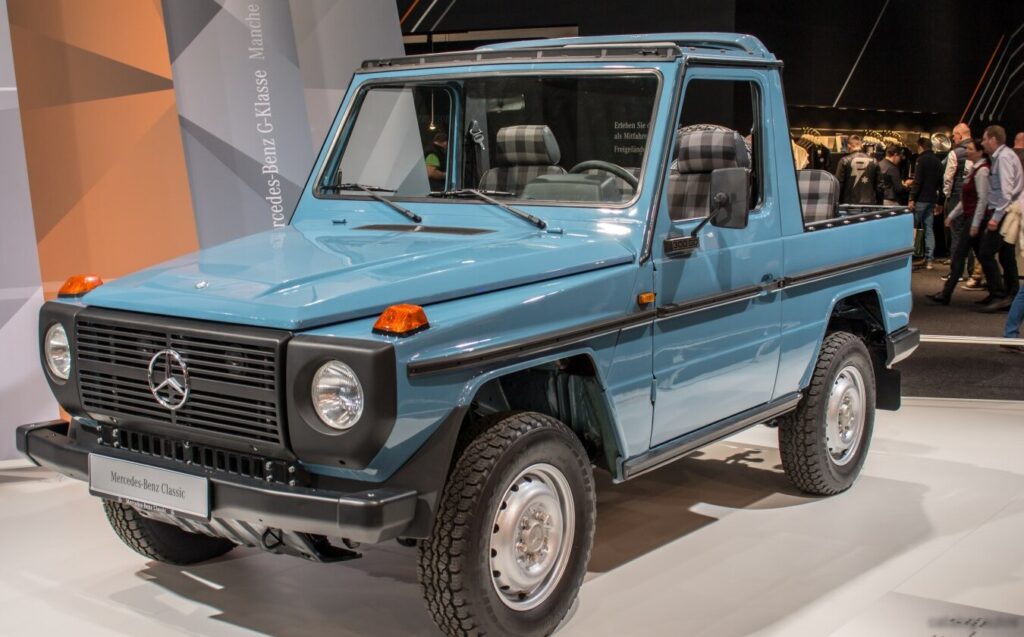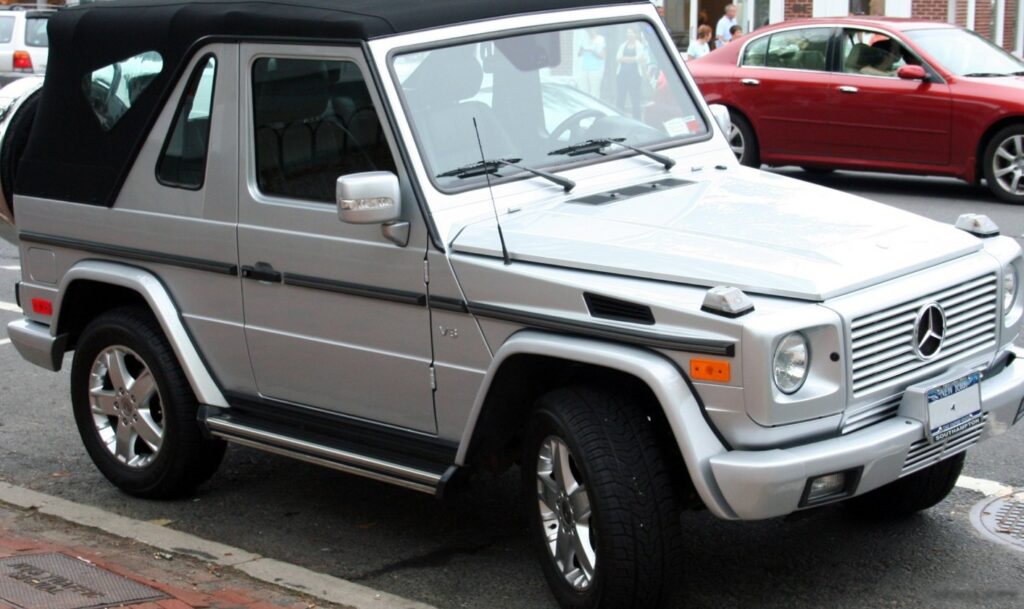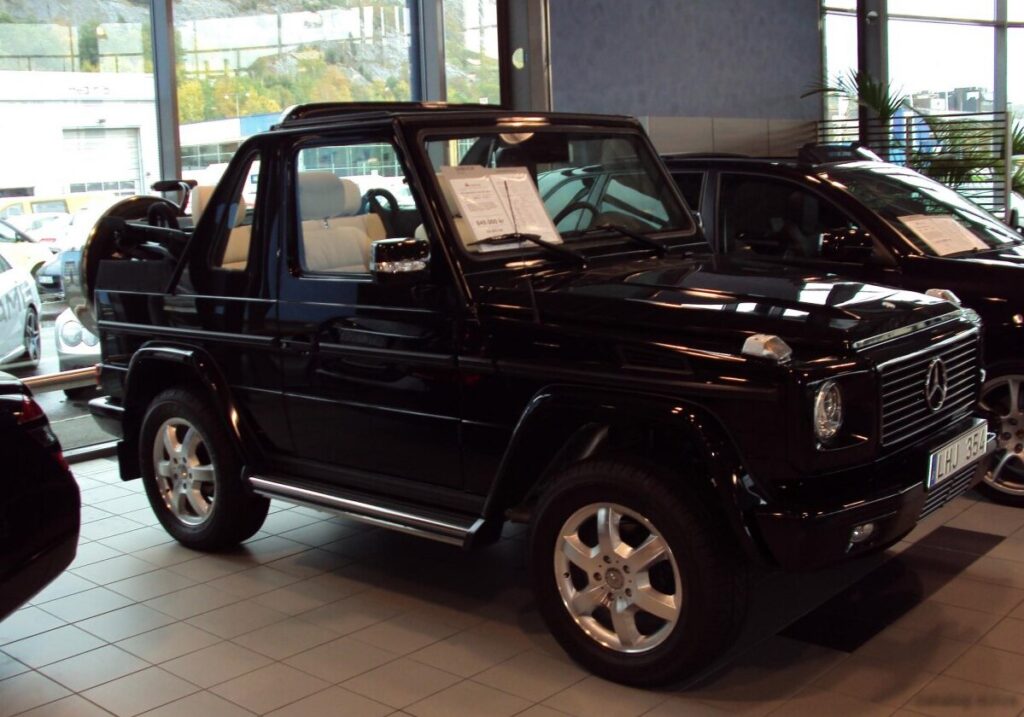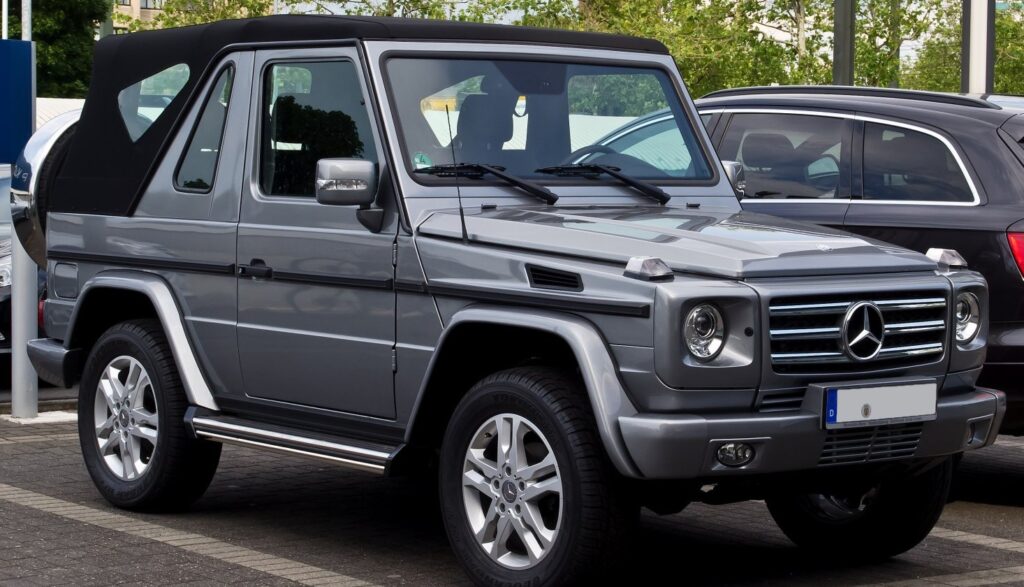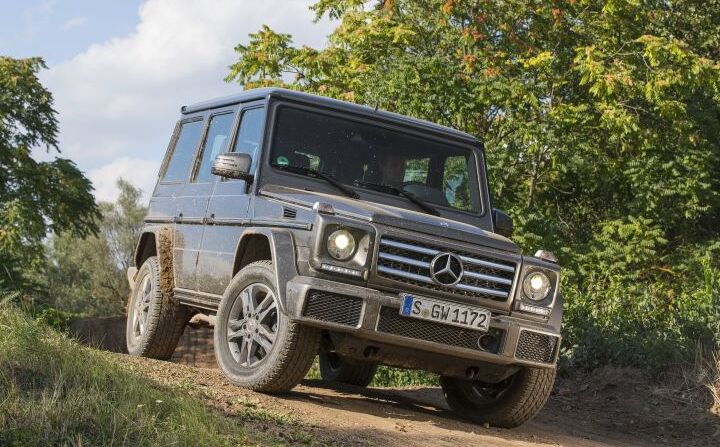
The Mercedes-Benz G 500 V8 4MATIC, part of the long-wheelbase (W463) G-Class facelift introduced in 2015, represents a significant iteration of the iconic off-road vehicle. Produced through 2017, this variant combined the G-Class’s legendary capability with a powerful, modern V8 engine and a sophisticated seven-speed automatic transmission. Positioned as a premium offering within the G-Class range, it catered to buyers seeking both luxurious comfort and robust performance, both on and off-road. The W463 facelift brought updated interior appointments, improved safety features, and refinements to the already capable chassis.
Technical Specifications
| Brand | Mercedes-Benz |
| Model | G-class |
| Generation | G-class Long (W463, facelift 2015) |
| Type (Engine) | G 500 V8 (422 Hp) 4MATIC 7G-TRONIC PLUS |
| Start of production | 2015 |
| End of production | 2017 |
| Powertrain Architecture | Internal Combustion engine |
| Body type | Off-road vehicle |
| Seats | 5 |
| Doors | 5 |
| Fuel consumption (economy) – urban (NEDC) | 14.5 l/100 km (16.2 US mpg, 19.5 UK mpg, 6.9 km/l) |
| Fuel consumption (economy) – extra urban (NEDC) | 11 l/100 km (21.4 US mpg, 25.7 UK mpg, 9.1 km/l) |
| Fuel consumption (economy) – combined (NEDC) | 12.3 l/100 km (19.1 US mpg, 23 UK mpg, 8.1 km/l) |
| CO2 emissions (NEDC) | 289 g/km |
| Fuel Type | Petrol (Gasoline) |
| Acceleration 0 – 100 km/h | 5.9 sec |
| Acceleration 0 – 62 mph | 5.9 sec |
| Acceleration 0 – 60 mph | 5.6 sec |
| Maximum speed | 210 km/h (130.49 mph) – Electronically limited |
| Emission standard | Euro 6 |
| Weight-to-power ratio | 6 kg/Hp, 167.5 Hp/tonne |
| Weight-to-torque ratio | 4.1 kg/Nm, 242.1 Nm/tonne |
| Power | 422 Hp @ 5250-5500 rpm |
| Power per litre | 106 Hp/l |
| Torque | 610 Nm @ 2000-4750 rpm (449.91 lb.-ft. @ 2000-4750 rpm) |
| Engine layout | Front, Longitudinal |
| Engine Model/Code | M 176.980 |
| Engine displacement | 3982 cm3 (243 cu. in.) |
| Number of cylinders | 8 |
| Engine configuration | V-engine |
| Cylinder Bore | 83 mm (3.27 in.) |
| Piston Stroke | 92 mm (3.62 in.) |
| Compression ratio | 10.5:1 |
| Number of valves per cylinder | 4 |
| Fuel injection system | Direct injection |
| Engine aspiration | BiTurbo, Intercooler |
| Valvetrain | DOHC |
| Engine oil capacity | 9 l (9.51 US qt | 7.92 UK qt) |
| Kerb Weight | 2520 kg (5555.65 lbs.) |
| Max. weight | 3200 kg (7054.79 lbs.) |
| Max load | 680 kg (1499.14 lbs.) |
| Trunk (boot) space – minimum | 480 l (16.95 cu. ft.) |
| Trunk (boot) space – maximum | 2250 l (79.46 cu. ft.) |
| Fuel tank capacity | 96 l (25.36 US gal | 21.12 UK gal) |
| Max. roof load | 200 kg (440.92 lbs.) |
| Permitted trailer load with brakes (12%) | 3500 kg (7716.18 lbs.) |
| Permitted trailer load without brakes | 750 kg (1653.47 lbs.) |
| Permitted towbar download | 140 kg (308.65 lbs.) |
| Length | 4764 mm (187.56 in.) |
| Width | 1867 mm (73.5 in.) |
| Width including mirrors | 2056 mm (80.94 in.) |
| Height | 1954 mm (76.93 in.) |
| Wheelbase | 2850 mm (112.2 in.) |
| Front track | 1515 mm (59.65 in.) |
| Rear (Back) track | 1515 mm (59.65 in.) |
| Front overhang | 827 mm (32.56 in.) |
| Rear overhang | 820 mm (32.28 in.) |
| Ride height (ground clearance) | 235 mm (9.25 in.) |
| Drag coefficient (Cd) | 0.54 |
| Minimum turning circle (turning diameter) | 13.6 m (44.62 ft.) |
| Approach angle | 30° |
| Departure angle | 30° |
| Ramp-over (brakeover) angle | 24° |
| Climb angle | 45° |
| Wading depth | 600 mm (23.62 in.) |
| Drivetrain Architecture | The Internal combustion engine (ICE) drives permanently the four wheels of the vehicle. |
| Drive wheel | All wheel drive (4×4) |
| Number of gears and type of gearbox | 7 gears, automatic transmission G-TRONIC PLUS |
| Front suspension | Coil spring, Rigid axle suspension, Trailing arm |
| Rear suspension | Rigid axle suspension, Trailing arm, Coil spring |
| Front brakes | Ventilated discs |
| Rear brakes | Ventilated discs |
| Assisting systems | ABS (Anti-lock braking system) |
| Steering type | Cone worm with recirculation balls |
| Power steering | Hydraulic Steering |
| Tires size | 265/60 R18 |
| Wheel rims size | 7.5J x 18 |
Powertrain & Engine Architecture
The heart of the G 500 V8 is the M176 4.0-liter V8 engine. This engine utilizes direct fuel injection and twin turbochargers to produce 422 horsepower and 610 Nm (449.91 lb-ft) of torque. The engine’s architecture features a hot-side-inside configuration, placing the turbochargers within the V of the engine, contributing to a more compact design and improved responsiveness. The engine employs a dual overhead camshaft (DOHC) valvetrain with four valves per cylinder. The 7G-TRONIC PLUS seven-speed automatic transmission is specifically tuned to handle the engine’s substantial torque output. This transmission offers smooth and precise shifts, and features a manual shift mode for driver control. The transmission is integral to the 4MATIC permanent all-wheel-drive system, distributing power to all four wheels for optimal traction.
Driving Characteristics
The G 500 V8 delivers a markedly different driving experience compared to lower-powered G-Class variants. The substantial torque available from 2000 rpm provides effortless acceleration and strong pulling power, making it well-suited for both on-road cruising and challenging off-road conditions. While the G-Class is not known for its nimble handling, the V8 engine’s power helps to mitigate the vehicle’s considerable weight. The 7G-TRONIC transmission contributes to a refined driving experience, with smooth gear changes. Compared to the six-cylinder models, the V8 offers a significantly more powerful and responsive feel. The gear ratios are optimized for both acceleration and highway cruising, providing a balance between performance and efficiency.
Equipment & Trim Levels
The G 500 V8 typically came well-equipped as standard. Interior features included leather upholstery, heated front seats, automatic climate control, and a premium audio system. The infotainment system, while updated for the 2015 facelift, still reflected the G-Class’s utilitarian roots. Optional extras included a sunroof, upgraded leather packages, parking sensors, and various exterior styling enhancements. The long-wheelbase configuration provided increased rear passenger legroom compared to the standard G-Class, enhancing comfort for occupants. Exterior features included distinctive side-exit exhaust pipes and unique alloy wheel designs.
Chassis & Braking
The G 500 V8 retains the G-Class’s traditional body-on-frame construction, providing exceptional durability and off-road capability. The suspension utilizes coil springs and a rigid axle setup at both the front and rear, offering substantial wheel articulation for navigating rough terrain. Braking duties are handled by ventilated disc brakes on all four wheels, providing ample stopping power. The anti-lock braking system (ABS) is standard, enhancing safety and control. Due to the vehicle’s weight, the braking system is robustly engineered to withstand demanding use. Stabilizer bars are fitted to reduce body roll during cornering.
Market Reception & Comparison
The G 500 V8 was generally well-received by automotive critics, who praised its powerful engine, luxurious interior, and iconic design. However, its high price and relatively poor fuel economy were often noted. Compared to the G 350 d (diesel) variant, the G 500 V8 offered significantly more power and a more refined driving experience, but at the cost of increased fuel consumption. The V8 was also more expensive to maintain due to the complexity of the engine and its associated components. The G 500 V8 appealed to buyers who prioritized performance and exclusivity over fuel efficiency.
Legacy
The M176 V8 engine, as used in the G 500 V8, has proven to be a reliable and durable powerplant when properly maintained. The 7G-TRONIC transmission is also generally considered to be a robust unit. Today, the 2015-2017 G 500 V8 holds its value well in the used car market, appealing to collectors and enthusiasts seeking a unique and capable luxury SUV. Regular maintenance, including oil changes and fluid checks, is crucial to ensure the long-term reliability of this powertrain. The G 500 V8 represents a compelling blend of heritage, performance, and luxury, cementing its place as a desirable iteration of the iconic G-Class.