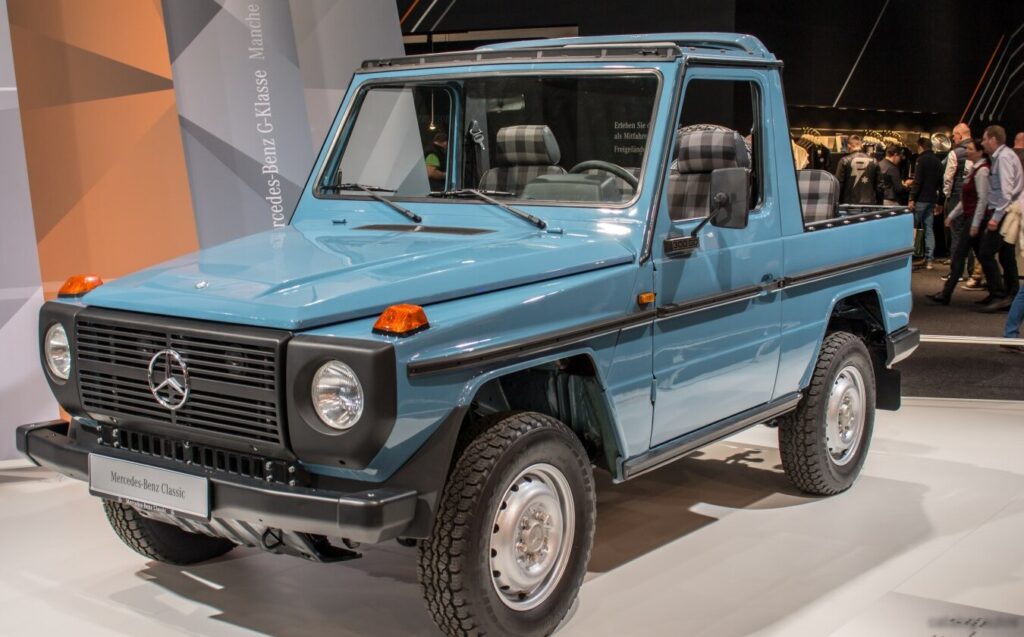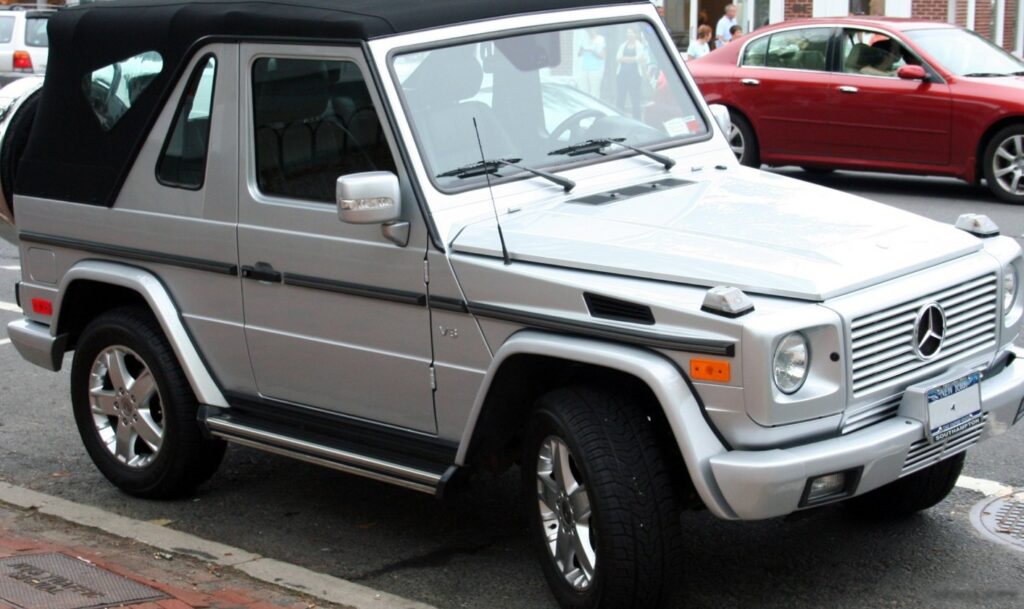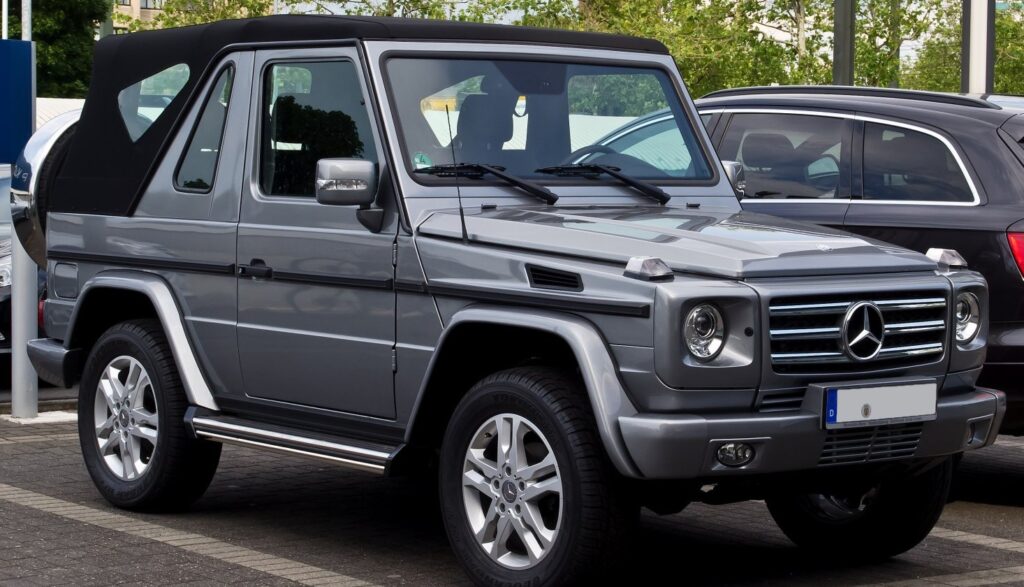
The Mercedes-Benz G 230 Long (W463) 4MATIC, produced from September 1993 to May 1994, represents a unique and relatively short-lived iteration of the iconic G-Class. Positioned as an entry-level offering within the expanding W463 range, the G 230 aimed to broaden the G-Class’s appeal by providing a more affordable and fuel-efficient alternative to the more potent G 300 and G 360 models. The “Long” designation refers to the extended wheelbase version of the W463, offering increased interior space and improved ride comfort. This variant was primarily sold in European markets, where smaller displacement engines were favored due to taxation and fuel economy considerations.
Technical Specifications
| Brand | Mercedes-Benz |
| Model | G-class |
| Generation | G-class Long (W463) |
| Type (Engine) | G 230 (126 Hp) 4MATIC |
| Start of production | September, 1993 |
| End of production | May, 1994 |
| Powertrain Architecture | Internal Combustion engine |
| Body type | Off-road vehicle |
| Seats | 5 |
| Doors | 5 |
| Fuel consumption (urban) | 16.9 l/100 km (13.9 US mpg, 16.7 UK mpg) |
| Fuel consumption (extra urban) | 12.7 l/100 km (18.5 US mpg, 22.2 UK mpg) |
| Fuel Type | Petrol (Gasoline) |
| Acceleration 0 – 100 km/h | 18.7 sec |
| Acceleration 0 – 62 mph | 18.7 sec |
| Acceleration 0 – 60 mph | 17.8 sec |
| Maximum speed | 145 km/h (90.1 mph) |
| Weight-to-power ratio | 17.4 kg/Hp |
| Weight-to-torque ratio | 11.6 kg/Nm |
| Power | 126 Hp @ 5000 rpm |
| Torque | 190 Nm @ 4000 rpm (140.14 lb.-ft. @ 4000 rpm) |
| Engine layout | Front, Longitudinal |
| Engine Model/Code | M 102.989 |
| Engine displacement | 2298 cm3 (140.23 cu. in.) |
| Number of cylinders | 4 |
| Engine configuration | Inline |
| Cylinder Bore | 95.5 mm (3.76 in.) |
| Piston Stroke | 80.2 mm (3.16 in.) |
| Compression ratio | 9:1 |
| Number of valves per cylinder | 2 |
| Fuel injection system | Multi-port manifold injection |
| Engine aspiration | Naturally aspirated engine |
| Valvetrain | SOHC |
| Engine oil capacity | 6 l (6.34 US qt | 5.28 UK qt) |
| Coolant capacity | 5 l (5.28 US qt | 4.4 UK qt) |
| Kerb Weight | 2195 kg (4839.15 lbs.) |
| Max. weight | 2950 kg (6503.64 lbs.) |
| Max load | 755 kg (1664.49 lbs.) |
| Fuel tank capacity | 96 l (25.36 US gal | 21.12 UK gal) |
| Length | 4635 mm (182.48 in.) |
| Width | 1690 mm (66.54 in.) |
| Height | 1936 mm (76.22 in.) |
| Wheelbase | 2850 mm (112.2 in.) |
| Front track | 1425 mm (56.1 in.) |
| Rear track | 1425 mm (56.1 in.) |
| Drivetrain Architecture | All wheel drive (4×4) |
| Number of gears | 5 |
| Gearbox type | Manual transmission |
| Front suspension | Coil spring, Rigid axle suspension, Trailing arm |
| Rear suspension | Rigid axle suspension, Trailing arm, Coil spring |
| Front brakes | Disc |
| Rear brakes | Drum |
| Assisting systems | ABS (Anti-lock braking system) |
| Steering type | Cone worm with recirculation balls |
| Power steering | Hydraulic Steering |
| Tires size | 205/80 R 16 |
| Wheel rims size | 6 J x 16 |
Powertrain & Engine Architecture
The G 230 was powered by the Mercedes-Benz M 102.989 engine, a 2.3-liter inline-four cylinder gasoline engine. This engine, a descendant of the long-running M102 family, featured a single overhead camshaft (SOHC) valvetrain and multi-port fuel injection. While not a high-performance engine, the M 102.989 was known for its durability and relatively smooth operation. The engine produced 126 horsepower at 5000 rpm and 190 Nm (140 lb-ft) of torque at 4000 rpm. The engine’s longitudinal mounting and rear-wheel-drive bias, coupled with a permanent all-wheel-drive system, contributed to the G-Class’s renowned off-road capability. The G 230 utilized a 5-speed manual transmission as standard, providing a relatively direct connection between the engine and the wheels.
Driving Characteristics
The G 230’s driving experience was defined by its utilitarian nature and focus on off-road prowess. With only 126 hp propelling over 2,200 kg (4,850 lbs), acceleration was leisurely, taking approximately 18.7 seconds to reach 100 km/h (62 mph). The 5-speed manual transmission helped to keep the engine in its optimal power band, but the G 230 was never intended to be a sports car. The all-wheel-drive system provided excellent traction on loose surfaces, and the robust suspension allowed for comfortable traversal of rough terrain. Compared to the G 300, the G 230 offered less power and a slower pace, but it also provided better fuel economy and a lower purchase price. The manual transmission, while engaging, required more driver involvement than the automatic options available on other G-Class models.
Equipment & Trim Levels
The G 230 Long was typically equipped with a relatively basic level of standard features, reflecting its position as the entry-level model. Standard equipment generally included cloth upholstery, basic instrumentation, and manually adjustable seats. Power steering and ABS brakes were included as standard safety features. Optional extras included power windows, central locking, a sunroof, and upgraded audio systems. Interior trim options were limited, with a focus on durability and functionality rather than luxury. The exterior was typically finished in solid paint colors, with a range of optional metallic paints available at extra cost.
Chassis & Braking
The G 230 Long retained the traditional G-Class chassis design, featuring a ladder frame construction and rigid axles front and rear. The suspension utilized coil springs and trailing arms, providing a good balance of off-road capability and on-road comfort. Braking duties were handled by disc brakes at the front and drum brakes at the rear. The ABS system helped to maintain steering control during hard braking. The G 230’s robust chassis and suspension allowed it to handle significant loads and withstand the stresses of off-road driving. Stabilizer bars were fitted to reduce body roll during cornering, but the G 230’s high center of gravity and narrow track width limited its on-road handling capabilities.
Market Reception & Comparison
The G 230 Long received mixed reviews from automotive critics. While praised for its off-road capability and durability, it was often criticized for its lack of power and slow acceleration. Compared to the G 300, the G 230 offered a more affordable entry point into the G-Class range, but it came at the cost of performance. Fuel economy was a key selling point for the G 230, particularly in European markets where gasoline prices were high. The G 230’s relatively simple mechanical design and robust construction contributed to its good reliability record. However, the G-Class, in general, was known to be an expensive vehicle to maintain, and the G 230 was no exception.
Legacy
The Mercedes-Benz G 230 Long (W463) 4MATIC, despite its short production run, holds a unique place in G-Class history. It represented an attempt to broaden the appeal of the G-Class by offering a more affordable and fuel-efficient option. Today, the G 230 is a relatively rare and sought-after vehicle among G-Class enthusiasts. Its simple mechanical design and robust construction make it a relatively reliable and easy-to-maintain classic. Well-maintained examples command a premium in the used car market, reflecting the enduring appeal of the G-Class and the rarity of this particular variant. The M102 engine, while not powerful by modern standards, is known for its longevity and relative ease of repair, making the G 230 a viable option for those seeking a classic off-road vehicle.